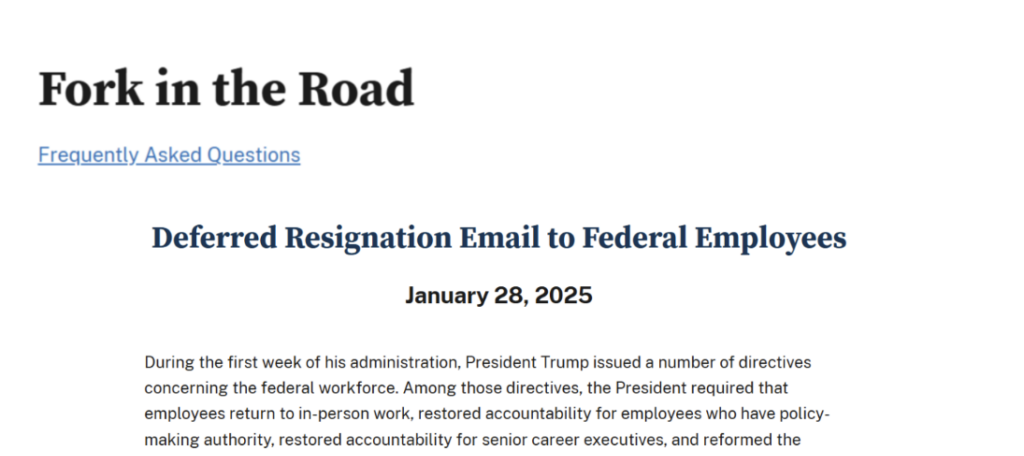
The Great Federal Shakeup: Inside Trump’s Proposed ‘Deferred Resignation’ Blueprint for Civil Servants
WASHINGTON D.C. — In what is shaping up to be the most radical restructuring of the American bureaucracy in over a century, the incoming Trump administration is preparing a carrot-and-stick gambit designed to systematically downsize the federal workforce. Dubbed the "Deferred Resignation Program," this emerging policy blueprint aims to induce voluntary departures among the nation’s 2.2 million civil servants by offering structured severance and transition packages—before wielding the heavier stick of unilateral terminations, agency relocations, and aggressive remote-work rollbacks.
According to transition insiders and policy drafts circulating in Washington, the initiative is being designed in tandem with the newly minted Department of Government Efficiency (DOGE), led by billionaire industrialists Elon Musk and Vivek Ramaswamy. The program represents a sophisticated pivot from traditional, protracted civil service battles, opting instead to incentivize a mass exodus of federal employees through structured, deferred-payout exit packages.
Executive Summary: The Restructuring at a Glance
- The Core Mechanism: Federal employees in targeted, redundant, or non-essential roles will be offered a window to opt into a "deferred resignation." This grants them immediate transition bonuses and temporary health coverage in exchange for waving future litigation claims.
- The DOGE Catalyst: Elon Musk and Vivek Ramaswamy are championing the program as a cost-effective alternative to multi-year court battles over civil service protections.
- The Relocation Threat: For those who refuse the buyout, the administration plans to deploy "administrative relocation"—moving entire agencies out of the Washington D.C. metro area to trigger voluntary attrition.
- Reinstating Schedule F: The carrot of deferred resignation will be backed by the stick of Schedule F, an executive order reclassifying tens of thousands of civil servants as at-will employees, stripped of traditional civil service protections.
The Mechanics of 'Deferred Resignation'
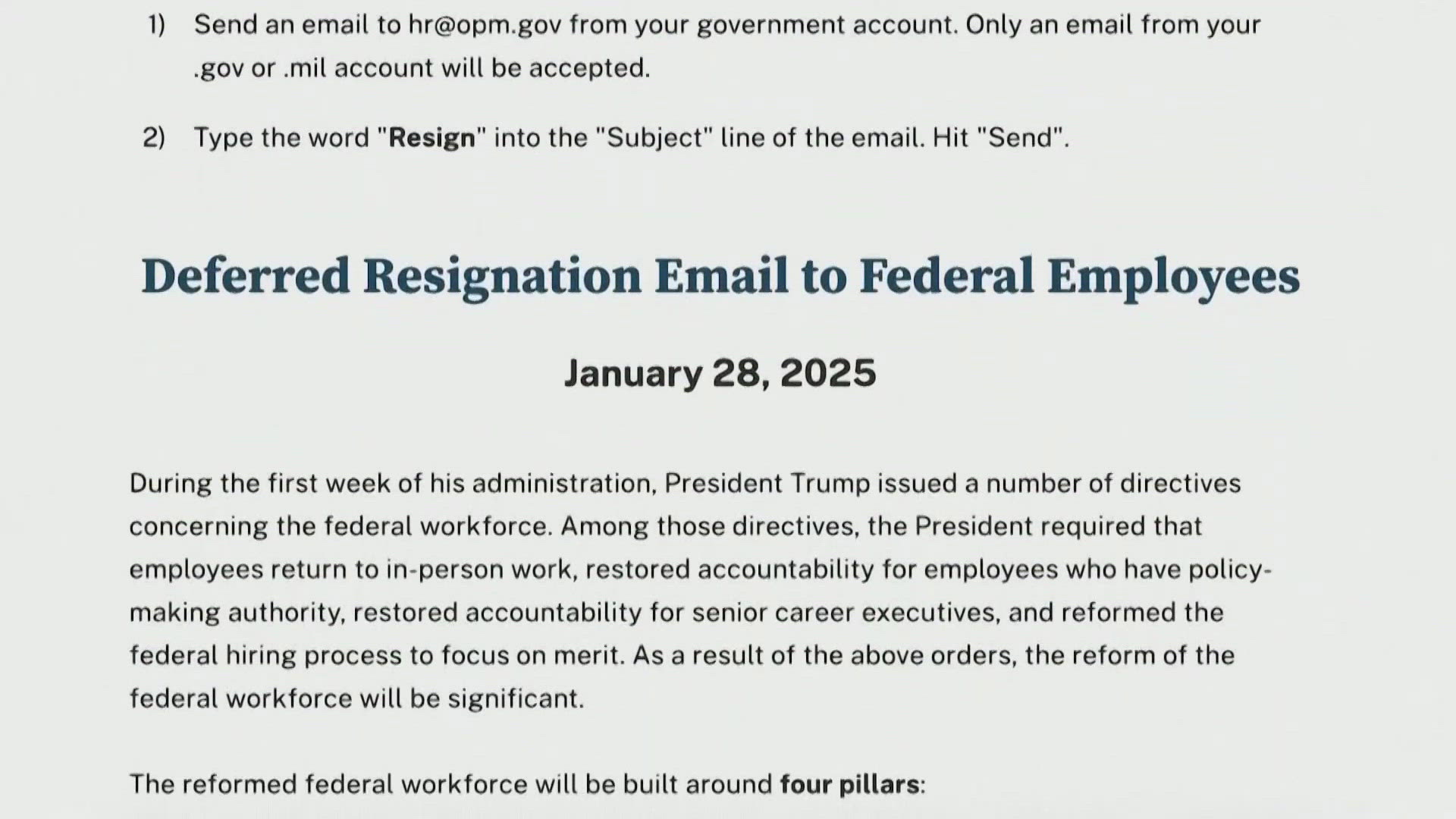
Unlike standard federal buyout programs (known as Voluntary Separation Incentive Payments, or VSIPs), which are capped by law at $25,000—a figure unchanged since 2003—the Trump transition team is reportedly exploring legislative and executive workarounds to offer more lucrative, staggered exit packages.
Under the proposed deferred resignation framework, federal workers who agree to leave voluntarily would receive a structured payout over 12 to 24 months. During this "deferral" period, they would officially transition out of their roles but remain on a transitional payroll, allowing them to bridge the gap to private-sector employment or retirement. The trade-off is clear: workers must sign a binding waiver relinquishing their right to appeal their separation under the Merit Systems Protection Board (MSPB).
"The objective is not just to fire people; it is to induce a rapid, voluntary contraction of the administrative state," said a senior policy advisor familiar with the transition planning, speaking on the condition of anonymity. "If we offer a soft landing, we avoid the legal gridlock that historically paralyzes civil service reform."
DOGE’s Playbook: Applying Silicon Valley Attrition to Washington
The footprint of Elon Musk’s corporate restructuring philosophy is visible across the entire proposal. At companies like Twitter (now X) and Tesla, Musk famously executed rapid headcount reductions by demanding intense work hours, ending remote work, and offering structured severance packages to those who chose not to commit to the new corporate culture.
The Trump-DOGE alliance plans to apply this identical blueprint to the federal government. Transition officials have confirmed that a full-scale ban on remote work for federal employees will be enacted on Day One. By forcing workers back into physical offices five days a week—and in many cases, proposing the relocation of agency headquarters to midwestern or southern states—the administration expects tens of thousands of Washington-based bureaucrats to opt for the deferred resignation program rather than uproot their families.
| Policy Tool | Targeted Impact | Administration's Objective | Primary Hurdle |
|---|---|---|---|
| Deferred Resignation Program | 100,000+ mid-to-senior civil servants | Voluntary, rapid attrition via financial incentives and transition periods. | Congressional funding approval for enhanced severance caps. |
| Schedule F Executive Order | Up to 50,000 policy-influencing roles | Stripping civil service protections to make terminations "at-will." | Immediate lawsuits from public sector unions (AFGE, NTEU). |
| Agency Relocations | USDA, EPA, Bureau of Land Management | Moving headquarters out of D.C. to trigger geographic attrition. | Logistical disruption and loss of institutional knowledge. |
| Mandatory RTO (Return-to-Office) | All eligible federal employees | Ending telework to encourage voluntary resignations of remote staff. | Local real estate capacity and transit bottlenecks. |
The Pushback: Unions and Legal Firewalls Prepare for War
The federal workforce is not planning to go quietly. Public sector unions, including the American Federation of Government Employees (AFGE) and the National Treasury Employees Union (NTEU), are already pooling resources to challenge any efforts to bypass civil service protections. Under current law, civil servants are protected by the Civil Service Reform Act of 1978, which shields them from politically motivated firings and guarantees due process.
Union leaders argue that the "deferred resignation" program is a coercive tactic designed to bypass these protections under the guise of fiscal responsibility. "This is a wolf in sheep's clothing," said a representative from the NTEU. "They are trying to starve agencies of talent by making working conditions intolerable and then offering a check to get people to sign away their constitutional due process rights."
Legal scholars also point out that while the administration can unilaterally order return-to-office mandates and propose agency moves, implementing a broad-scale "deferred resignation" program with enhanced financial payouts will require congressional appropriation. In a divided Congress, securing billions of dollars to pay federal workers to quit could face stiff resistance from Democrats and fiscal-conservative Republicans alike.
The Road Ahead
As the transition team finalizes its executive orders, the "deferred resignation" program represents a critical litmus test for the incoming administration’s governance model. If successful, it could fundamentally shrink the federal footprint in Washington and alter the dynamics of the civil service for a generation. If tied up in the courts, it could lead to unprecedented operational gridlock across critical federal agencies, from the EPA to the Department of Education.
For federal workers, the coming months will present a stark, highly personal choice: adapt to a radically reorganized, office-bound federal workplace, face the threat of unilateral termination under Schedule F, or take the payout and walk away.
Frequently Asked Questions (FAQ)
1. How does the 'Deferred Resignation Program' differ from a standard federal buyout?
Standard federal buyouts (VSIPs) are legally capped at $25,000 and require individual agency approval. The proposed Deferred Resignation Program aims to offer higher, structured payouts over a deferred timeline (such as 12 to 24 months of transitional payroll and benefits) in exchange for employees voluntarily leaving the federal service and signing liability waivers that prevent them from suing the government for wrongful termination.
2. Can the administration force federal workers to accept these packages?
No, the resignation program itself is designed to be voluntary. However, the administration plans to pair this carrot with "sticks"—such as ending remote work, relocating agency offices away from Washington D.C., and reclassifying thousands of roles under Schedule F to make them "at-will." These parallel moves are intentionally designed to make staying in the civil service less attractive, thereby nudging workers to accept the resignation packages.