Executive Takeaways
- The Price War Intensifies: DeepSeek V4-Pro has disrupted the high-end developer market by offering coding capabilities comparable to elite frontier models at a staggering 20x discount.
- CapEx Pressures Mount: Major cloud providers and AI lab incumbents face acute pressure on infrastructure scalability and valuation multiples as enterprise software buyers reject legacy high-cost tiers.
- The 2026 Benchmark Shift: Performance metrics across Claude Opus 4.8, GPT-5.5, DeepSeek V4-Pro, and Qwen 3.6 Max-Preview reveal that architectural efficiency has officially eclipsed raw parameter scaling.
- Strategic Enterprise Pivot: Chief Technology Officers are aggressively reallocating capital toward multi-model orchestration and open-architecture risk mitigation to avoid single-vendor lock-in.
NEW YORK — In the subterranean server racks of Silicon Valley and the glass-walled trading desks of lower Manhattan, a fundamental economic law of artificial intelligence has been shattered. The release of benchmark data and market analysis surrounding the 2026 developer ecosystem—catalyzed by foundational insights published by Tech Insider—reveals that the cost barrier for elite-tier software engineering automation has collapsed by 95%.
At the center of this seismic shift is DeepSeek V4-Pro. Delivering raw programming intelligence that rivals or exceeds historical industry benchmarks, DeepSeek has upended the financial calculus of enterprise software development. For chief financial officers and engineering leaders alike, the choice is no longer just about which model writes the cleanest code; it is about an unprecedented structural arbitrage: accessing elite coding performance at one-twentieth of the capital expenditure.
The Catalytic Shift: How DeepSeek Rewrote the Unit Economics of Code
Test Our Free AI & Tech Utilities Suite
Calculate LLM API token costs, analyze article dwell-time, or simulate tech DCA returns.
For the past four years, the generative AI boom was defined by a simple, capital-intensive thesis: better models required exponentially more compute, larger clusters of high-end GPUs, and progressively higher subscription tiers. Enterprise software buyers accepted high token costs as the price of admission for cutting-edge developer productivity tools. However, the maturation of Mixture-of-Experts (MoE) architectures and advanced inference-time optimization techniques has broken this linear relationship between compute scale and output quality.
According to comprehensive industry tracking, the release cycle featuring models such as Claude Opus 4.8, GPT-5.5, DeepSeek V4-Pro, and Qwen 3.6 Max-Preview has triggered an unprecedented competitive convergence. While Western incumbents like OpenAI and Anthropic have focused on deepening reasoning capabilities and multi-step agentic workflows, challengers like DeepSeek have systematically optimized the underlying cloud compute architecture. By slashing inference overhead and maximizing hardware utilization efficiency, DeepSeek has effectively commoditized high-end code generation.
This development sends immediate shockwaves through enterprise balance sheets. Software development lifecycles (SDLC) that previously required heavy cloud compute budgets can now be executed at a fraction of the cost. Consequently, enterprise tech budgets are undergoing a rapid reallocation, forcing legacy providers to defend their margins against a hyper-efficient competitor that refuses to play by traditional Silicon Valley pricing rules.
Comparative Analysis: The 2026 Frontier Coding Landscape
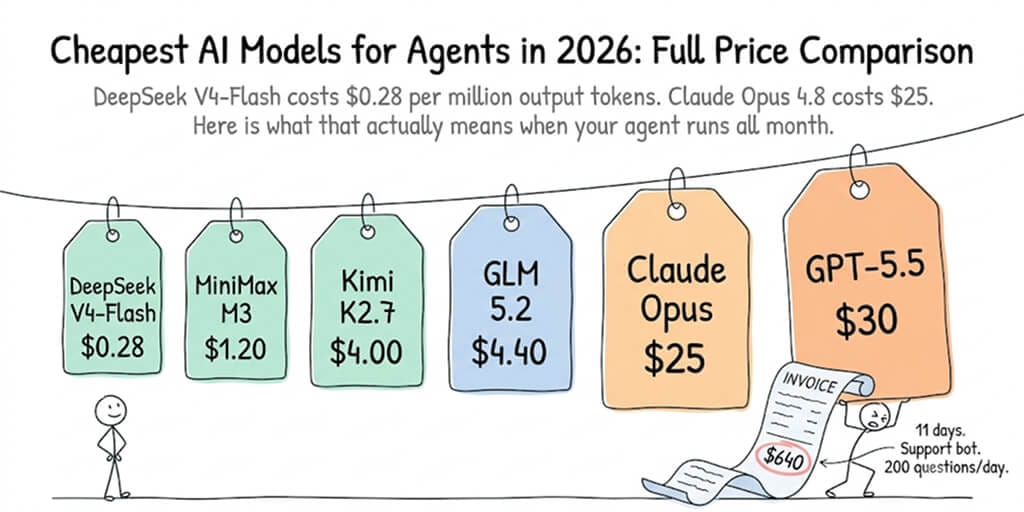
To understand the magnitude of the disruption, one must examine the current technical and economic specifications governing the leading frontier models. The market is no longer driven by raw parameter counts alone, but by token efficiency, reasoning latency, and cost-per-successful-commit.
| Model Specification | Primary Focus / Architecture | Relative Inference Cost | Developer Productivity Index |
|---|---|---|---|
| DeepSeek V4-Pro | Optimized MoE / High-Throughput Reasoning | 1x (Baseline Standard) | Elite (Top Decile) |
| Claude Opus 4.8 | Deep Context Window & Complex Refactoring | ~18x – 22x Higher | Elite (Top Decile) |
| GPT-5.5 | Multi-Agent Orchestration & Enterprise Guardrails | ~15x – 20x Higher | Elite (Top Decile) |
| Qwen 3.6 Max-Preview | Multilingual Code Synthesis & Low Latency | ~3x – 5x Higher | Advanced (High Tier) |
As illustrated by the matrix above, the economic divergence is staggering. While Claude Opus 4.8 and GPT-5.5 maintain dedicated enterprise defenders through robust security wrappers, deep context comprehension, and native tool-use integration, the raw coding output per dollar spent heavily favors DeepSeek V4-Pro. For engineering teams operating under strict margin pressures, this 20x cost differential represents an irresistible lever for operational efficiency.
Industry & Market Implications: Winners, Losers, and Economic Realignment
The democratization of elite-tier coding intelligence carries profound ramifications across public equities, venture capital, and enterprise governance:
- The Winners: Cloud-agnostic enterprises, agile fintech startups, and independent software vendors (ISVs) who can instantly integrate low-cost models into their CI/CD pipelines. By reducing gross margins spent on third-party API calls, these firms can reinvest heavily in product differentiation and go-to-market strategies.
- The Losers: Legacy SaaS platforms that rely on high-margin, proprietary AI add-ons to inflate average revenue per user (ARPU). As enterprise procurement officers realize they can achieve comparable developer output using cost-effective models, pricing power among traditional software vendors is rapidly eroding.
- Infrastructure & Silicon Providers: Semiconductor manufacturers and hyperscalers face a nuanced reality. While raw inference volume will skyrocket due to lower costs, the previous assumption that enterprises would continuously absorb high-margin, premium-priced tokens is being challenged. Efficiency gains mean fewer clusters may be required to process equivalent workloads.
Furthermore, regulatory compliance and risk mitigation remain top of mind for financial institutions and healthcare giants. While cost is paramount, these regulated entities demand strict data privacy guarantees, zero-data-retention policies, and transparent auditing trails—fronts on which both Western incumbents and emerging international players continue to compete fiercely.
Frequently Asked Questions (People Also Ask)
Why is DeepSeek significantly cheaper than models like GPT-5.5 or Claude Opus 4.8?
DeepSeek achieves its dramatic cost reduction primarily through architectural innovations in Mixture-of-Experts (MoE) routing, hardware-software co-design, and high-efficiency inference optimization. By activating only a fraction of its total parameters per token and drastically reducing memory bandwidth bottlenecks during inference, it delivers comparable coding performance while consuming a fraction of the compute resources.
Does using a cheaper coding model compromise code quality or security?
Rigorous benchmarking reveals that DeepSeek V4-Pro matches elite models in syntax generation, algorithmic problem-solving, and standard bug remediation. However, enterprise adoption requires careful evaluation of data privacy compliance, jurisdiction of data processing, and integration with internal security guardrails—factors that CTOs weigh alongside raw cost metrics.
How are major cloud providers and AI labs responding to the 20x price gap?
Incumbents are accelerating their own efficiency roadmaps, introducing tiered pricing models, and emphasizing proprietary enterprise features such as deep multi-agent orchestration, advanced compliance wrappers, and seamless IDE integrations to justify their premium price points.
What should enterprise procurement teams look for when selecting an AI coding assistant in 2026?
Procurement leaders should evaluate total cost of ownership (TCO) inclusive of API consumption, latency metrics, multi-model flexibility to prevent vendor lock-in, and compliance adherence with regional data protection frameworks.
Future Outlook: The Next Milestone in Autonomous Software Engineering
As the industry moves deeper into 2026, the battleground for AI-driven software development is shifting from pure code generation to fully autonomous agentic engineering. The implications of DeepSeek's 20x cost reduction extend far beyond simple autocomplete tools; they lay the economic foundation for autonomous systems that can write, test, debug, and deploy entire microservices with minimal human intervention.
For investors, corporate strategists, and technology leaders, the mandate is clear. The era of unquestioned margin premiums for foundational AI models is coming to an end, replaced by a hyper-competitive, efficiency-driven market. Those who successfully navigate this transition by adopting flexible, multi-model architectures will capture the productivity gains of the next technological revolution without inflating their capital expenditure.