
By The Investigative Desk | Primary Wire Source: Intellectia AI
Published: February 25, 2026
Executive Takeaways
- The Per-Seat Collapse: Traditional Software-as-a-Service (SaaS) per-seat licensing models are rapidly failing as autonomous AI agents execute the workload of entire departments, rendering human headcounts—and subscription seats—obsolete.
- Margin Compression and Valuation Resets: Enterprise buyers are shifting budgets from software licenses to outcome-based contracts and infrastructure scalability, triggering multiple compression across legacy cloud vendors.
- The Winners and Losers: Workflow orchestrators and data-layer gatekeepers are capturing immense enterprise value, while undifferentiated point solutions face terminal disintermediation.
The Structural Fault Lines of Modern Enterprise Software
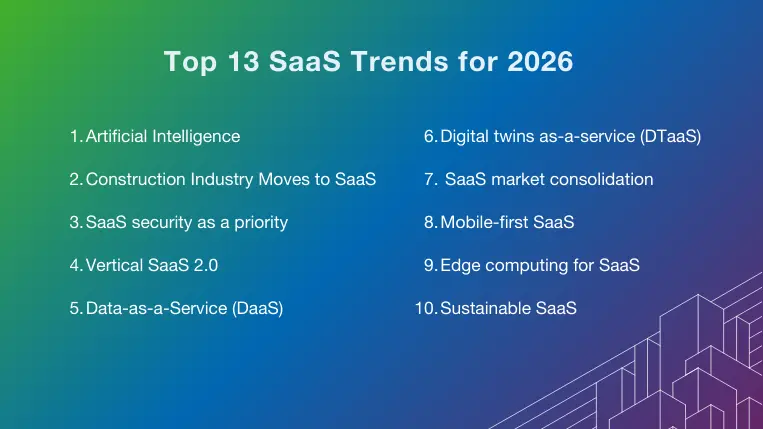
For more than two decades, the Software-as-a-Service (SaaS) business model served as the undisputed engine of modern technology wealth creation. Built on predictable recurring revenue (ARR), high gross margins, and linear per-seat pricing expansion, the ecosystem scaled into a multi-hundred-billion-dollar juggernaut. By early 2026, however, the foundational premise of this model—charging organizations based on the number of human beings interacting with an application interface—has run headfirst into an insurmountable structural wall: autonomous artificial intelligence agents.
The transformation is no longer a matter of speculative forecasting. Across boardrooms in New York, London, and San Francisco, Chief Information Officers (CIOs) and Chief Financial Officers (CFOs) are conducting aggressive capital allocation reviews. As advanced, multi-modal AI agents assume complex, multi-step workflows—spanning customer relationship management, code deployment, financial reconciliation, and legal document review—the traditional metric of user seats has detached entirely from business value. An enterprise that once required 500 customer support representatives utilizing legacy ticketing systems now deploys a handful of orchestrator agents, slashing required software licenses by 80% while scaling operational output.
This paradigm shift has triggered severe volatility in public markets and venture capital ecosystems. Software valuations, historically insulated by high retention rates and net revenue retention (NRR) metrics exceeding 110%, are undergoing a brutal reassessment. Wall Street analysts are aggressively downgrading firms that fail to adapt their monetization frameworks, pricing architecture, and cloud compute infrastructure to an agentic-first economy.
The Mechanics of Disruption: Why Per-Seat Pricing is Breaking
The economic engine of SaaS relied on a symbiotic relationship between corporate headcount growth and software expenditures. As a company hired more employees, its software bill expanded in lockstep. This friction-free monetization mechanism drove pristine financial profiles featuring 80%+ gross margins.
AI agents break this equation through radical efficiency. Consider enterprise resource planning (ERP) and customer operations platforms. In 2024 and 2025, early generative AI features were marketed as "copilots"—productivity enhancements designed to assist human workers, thereby commanding a $20 to $50 per-seat add-on. By 2026, those copilots evolved into autonomous agents capable of closing books, negotiating vendor contracts, and resolving tier-1 through tier-3 technical support tickets without human intervention.
When software executes the labor, pricing models based on human presence become economically unviable. Enterprises are increasingly rejecting vendor demands for per-seat expansion, demanding instead value-based, outcome-driven, or consumption-based pricing metrics. Yet, shifting to consumption-based billing introduces severe margin unpredictability for SaaS providers, who must now grapple with fluctuating cloud compute architecture costs driven by heavy Large Language Model (LLM) inference calls.
Catalytic Pressures Facing the SaaS Ecosystem
- Inference Cost Inflation: Running continuous reasoning loops for autonomous agents consumes significantly more GPU compute than traditional CRUD (Create, Read, Update, Delete) database applications, squeezing software vendor gross margins.
- Build vs. Buy Realignment: With foundation model application programming interfaces (APIs) becoming commoditized, enterprises with robust engineering teams are bypassing commercial SaaS entirely, constructing bespoke internal agents tailored to proprietary datasets.
- Procurement Friction: CFOs are deploying strict risk mitigation protocols, auditing vendor software stacks to eliminate redundant applications where AI agents perform overlapping functions.
Market Impact Analysis: Verified Data Breakdown
To quantify the velocity of this disruption, market intelligence from Intellectia AI and major financial institutions highlights the divergence between legacy SaaS operators and agent-native architecture providers.
| Metric / Indicator | Legacy SaaS Model (2024) | Agent-Driven Ecosystem (2026) | Market Direction |
|---|---|---|---|
| Primary Pricing Metric | Per-seat / Per-user license | Outcome-based / Compute consumption | Shifting rapidly to value-realization |
| Average Gross Margins | 75% – 85% | 55% – 70% (due to LLM inference costs) | Structural compression |
| Enterprise NRR (Net Retention) | 115% – 130% | 85% – 105% (headcount contraction impact) | Downward pressure |
| Valuation Multiples (EV/ARR) | 12x – 25x | 5x – 10x (for legacy); 15x+ (for agent-native) | Bifurcated market |
Industry & Market Implications: Winners and Losers
The capital markets are currently sorting the software landscape into two distinct categories: secular losers facing terminal commoditization, and structural winners capturing the next generation of enterprise spend.
The Disadvantaged: Undifferentiated Point Solutions
SaaS applications that function primarily as systems of record with minimal proprietary data moats are experiencing rapid margin erosion. If a software product is merely a graphical user interface (GUI) sitting atop a relational database, AI agents can easily bypass it by querying databases directly via API. Vendors relying on manual data entry, routine document generation, or basic workflow routing are seeing customer churn spike as enterprises consolidate software stacks into unified agentic platforms.
The Beneficiaries: Data Gatekeepers and Orchestrators
Conversely, companies controlling proprietary enterprise data assets, regulatory compliance frameworks, and multi-agent orchestration layers are experiencing unprecedented demand. Firms that successfully transitioned from selling human productivity tools to selling autonomous business outcomes are commanding premium valuation multiples. Furthermore, hyperscale cloud providers and specialized infrastructure layer players are capturing massive capital inflows as enterprises demand secure, scalable, and compliant compute environments to power their autonomous agent fleets.
Frequently Asked Questions (People Also Ask)
1. Is the traditional per-seat SaaS model completely dead?
While not entirely extinct overnight, the per-seat model is in structural decline. Enterprises are aggressively pushing back against user-based pricing as AI automation reduces human headcounts. Vendors are being forced to adopt hybrid models that incorporate consumption, API call volumes, or direct business outcome guarantees to retain enterprise accounts.
2. How are SaaS companies protecting their profit margins against high AI inference costs?
To combat the heavy compute overhead associated with running LLMs and autonomous agent loops, leading software providers are optimizing inference routing, utilizing smaller open-source domain-specific models, and passing underlying infrastructure costs directly to customers through consumption-based pricing tiers.
3. Which SaaS sectors are most vulnerable to AI agent disruption?
Categories characterized by repetitive digital tasks—such as standard customer support ticketing, basic bookkeeping, routine legal contract review, and standard marketing copywriting—face the highest risk of displacement. Conversely, sectors requiring complex physical integration, deep proprietary regulatory compliance, or highly localized institutional knowledge retain stronger defensive moats.
4. How should enterprise CFOs adjust their software budgeting strategies in 2026?
CFOs are increasingly moving away from long-term, fixed-seat enterprise agreements in favor of flexible, usage-aligned contracts. Rigorous audits are being conducted to measure true productivity ROI, replacing bloated application portfolios with consolidated agentic orchestration platforms that demonstrate direct labor-cost arbitrage.
Future Outlook: Milestones to Watch
As the market navigates through 2026 and looks toward the horizon, several critical milestones will dictate the ultimate trajectory of enterprise software:
- Regulatory Frameworks for Autonomous Agents: Emerging legal standards regarding liability for AI-driven corporate decisions—ranging from automated tax filings to algorithmic contract negotiations—will shape enterprise deployment velocity.
- Consolidation Waves: Expect a surge in M&A activity as legacy SaaS giants with declining top-line growth acquire nimble agent-native startups to overhaul their product architectures.
- Standardization of Agent Protocols: The maturation of universal communication protocols between disparate AI agents will eliminate proprietary software silos entirely, cementing the shift from application-centric computing to outcome-centric orchestration.
Ultimately, the evolution from software tools to autonomous agents represents the most profound capital reallocation event in technology history. Organizations that recognize this shift—re-architecting their business models from human enablement to algorithmic execution—will define the economic landscape of the next decade.