Middle East Conflict Shatters Market Records: Wall Street Plunges as Crude Oil Spikes Amid Fresh Geopolitical Shockwaves
NEW YORK — Wall Street’s historic march toward unchartered territory came to an abrupt and violent halt on Monday, as a sudden flare-up of military hostilities in the Middle East sent shockwaves through global financial corridors. Major U.S. stock indices tumbled from their recent record highs, while energy markets experienced an immediate, aggressive surge as investors confronted the renewed specter of a prolonged regional conflict.
The sudden escalation caught institutional investors and algorithmic traders flat-footed, triggering a classic flight-to-safety trade. As equities bled value across all eleven S&P sectors, crude oil prices leaped dramatically, reigniting immediate anxiety over energy-driven inflation and the potential disruption of vital international shipping lanes.
Market Shockwaves: At a Glance
- Equities Retreat: U.S. benchmark indices pulled back sharply from all-time highs following the weekend escalation in the Middle East.
- Energy Surge: Crude oil futures experienced sharp upward momentum, driven by immediate supply-chain risk premiums.
- Safe-Haven Demand: Treasuries and gold saw renewed inflows as portfolio managers recalibrated risk exposure.
- Inflationary Fears: Economists warn that sustained high energy costs could complicate upcoming monetary policy decisions by the Federal Reserve.
Key Market Metrics Following the Middle East Escalation
| Asset Class / Index | Recent Movement | Primary Driver |
|---|---|---|
| S&P 500 / Dow Jones | Dropped from record highs | Broad-based profit-taking and geopolitical risk repricing |
| Crude Oil (WTI / Brent) | Sharp upward spike | Fears of production disruptions and Persian Gulf transit threats |
| U.S. Treasury Yields | Volatile / Initial dip | Flight-to-safety buying in government debt |
| Gold Futures | Advanced higher | Traditional hedge against geopolitical instability |
The Catalyst: Geopolitical Tensions Boil Over

The catalyst for Monday’s dramatic reversal was a sudden and severe escalation of fighting in the Middle East over the weekend. While financial markets had spent much of the spring scaling new heights—buoyed by resilient corporate earnings and optimism surrounding artificial intelligence integration—underlying geopolitical vulnerabilities remained a persistent dark cloud.
Traders woke up to breaking reports of intensified military engagements in the region, threatening critical energy infrastructure and key maritime chokepoints. For global commodities desks, the primary fear centers on the Strait of Hormuz, a crucial artery for a massive share of the world's petroleum supply. Any sustained threat to tanker traffic historically serves as an immediate catalyst for aggressive oil buying.
"Markets have been priced for perfection, riding a wave of macroeconomic optimism and strong corporate balance sheets," said senior commodities strategist Marcus Vance. "When you get a sudden, violent geopolitical shock of this magnitude, the risk-reward equation changes instantaneously. Investors are forced to ask: What happens to inflation if energy prices stay elevated for the next quarter?"
Wall Street's Immediate Reaction
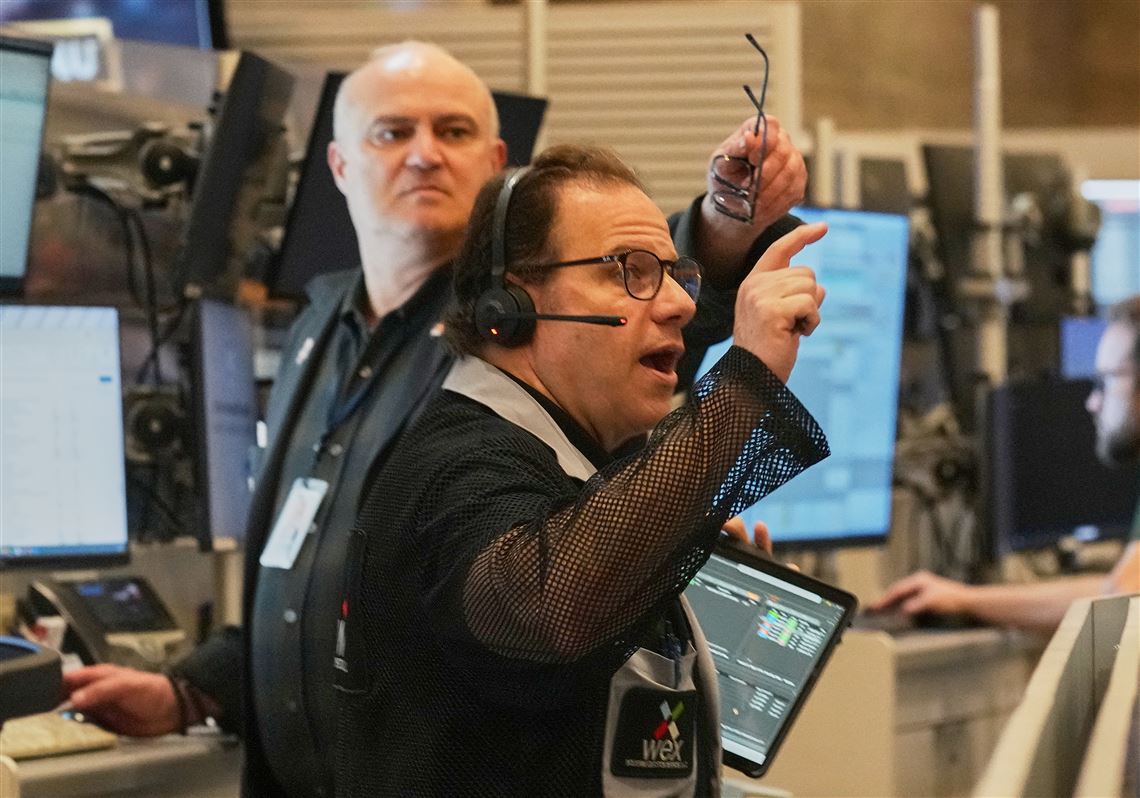
On the New York Stock Exchange and Nasdaq, the morning bell rang to a sea of red. Growth stocks, which had heavily led the prior weeks' record-setting rallies, bore the brunt of the institutional selling. Technology and consumer discretionary sectors faced notable contractions as portfolio managers trimmed exposure to risk-on assets.
Conversely, defense contractors and major energy producers saw notable upward momentum as traders rotated capital into sectors poised to benefit directly from heightened defense spending and higher commodity realizations. However, these isolated gains were not enough to offset the broader market malaise, dragging major averages firmly into negative territory by midday trading.
Fixed-income markets also experienced heavy volatility. Yields on benchmark 10-year U.S. Treasuries initially dipped as investors rushed into government-backed safe havens, though those moves remained fluid as bond traders weighed the inflationary implications of a prolonged oil shock.
Economic Fallout and Future Outlook
As the dust settles on the initial trading sessions following the Middle East flare-up, Wall Street executives and macroeconomic forecasters are turning their attention to the medium-term economic horizon. The central question facing the global economy is whether this latest conflict will remain contained or escalate into a protracted regional crisis that permanently alters energy supply baselines.
If crude prices maintain their aggressive trajectory, central bankers—particularly at the Federal Reserve—will find themselves in an increasingly difficult bind. Higher energy input costs inevitably filter down into consumer goods, transportation, and manufacturing, threatening to rekindle inflationary pressures just as policymakers were gaining confidence in price stability.
"The Federal Reserve has very little tolerance for supply-side inflation shocks," noted chief global economist Elena Rostova. "If oil sustains a severe breakout, expectations for future interest rate adjustments will have to be completely rewritten. Wall Street knows this, which explains why the reaction today was so swift and decisive."
For now, trading desks across lower Manhattan and global financial hubs remain on high alert, monitoring real-time diplomatic updates, military developments, and energy flow reports. As volatility makes a resounding return to the trading floor, investors are reminded that geopolitical risk remains the ultimate wild card for record-high equity markets.
Frequently Asked Questions
Why did Wall Street drop from its record highs today?
Wall Street experienced a sharp sell-off as a sudden flare-up of fighting in the Middle East introduced massive geopolitical uncertainty. Investors immediately moved to reprice risk, locking in profits from recent record highs and rotating out of growth-oriented equities.
Why did oil prices jump in response to the Middle East conflict?
Oil prices surged because the Middle East accounts for a significant portion of global petroleum production and transport. Renewed military hostilities raise immediate concerns over supply-chain disruptions, potential damage to extraction facilities, and threats to vital shipping lanes like the Strait of Hormuz.