Executive Takeaways
- Per-Seat Pricing Architecture Is Obsolete: The historic enterprise software economic engine—charging $40 to $250 per human employee per month—is collapsing as autonomous AI agentic workflows eliminate the underlying enterprise seat counts across customer support, engineering, and sales operations.
- Gross Margin Compression from 80% to 55%: Cloud compute architecture and GPU inference costs have permanently disrupted the software industry’s traditional 80%+ non-GAAP gross margins, forcing vendors to absorb volatile token consumption or risk losing contract renewals.
- Valuation Multiples Bifurcate: Enterprise Value-to-Next Twelve Months (EV/NTM) revenue multiples for undifferentiated SaaS "wrappers" have compressed from historical peaks of 18x–24x down to 4x–6x, while proprietary workflow orchestrators commanding outcome-based pricing retain premiums of 14x+.
- Private Equity Debt Traps: Over $180 billion in private equity rollups executed between 2020 and 2022 under legacy recurring-revenue debt covenants face acute refinancing distress as Net Dollar Retention (NDR) drops below 100% across commoditized point solutions.
For nearly a quarter of a century, the software-as-a-service (SaaS) business model reigned as the most lucrative commercial construct in modern capitalism. Pioneered by Salesforce at the turn of the millennium, refined through cloud hosting migration, and canonized on Wall Street by negative net churn and predictable, high-margin annual recurring revenue (ARR), the model operated on an ironclad premise: enterprise headcount growth directly dictated enterprise software revenue expansion.
As of early 2026, that core premise has ruptured. The rapid enterprise deployment of multi-agent orchestration frameworks—systems capable of autonomous context-switching, tool-use execution, and deterministic completion of knowledge-work workflows—has triggered an existential crisis for the global enterprise software sector. With artificial intelligence shifting from co-pilots that assist human workers to autonomous agents that replace human tasks, the fundamental unit of value in enterprise technology is undergoing its most aggressive restructuring since the arrival of the browser.
The Mechanics of Decoupling: Why the Per-Seat License Is Breaking
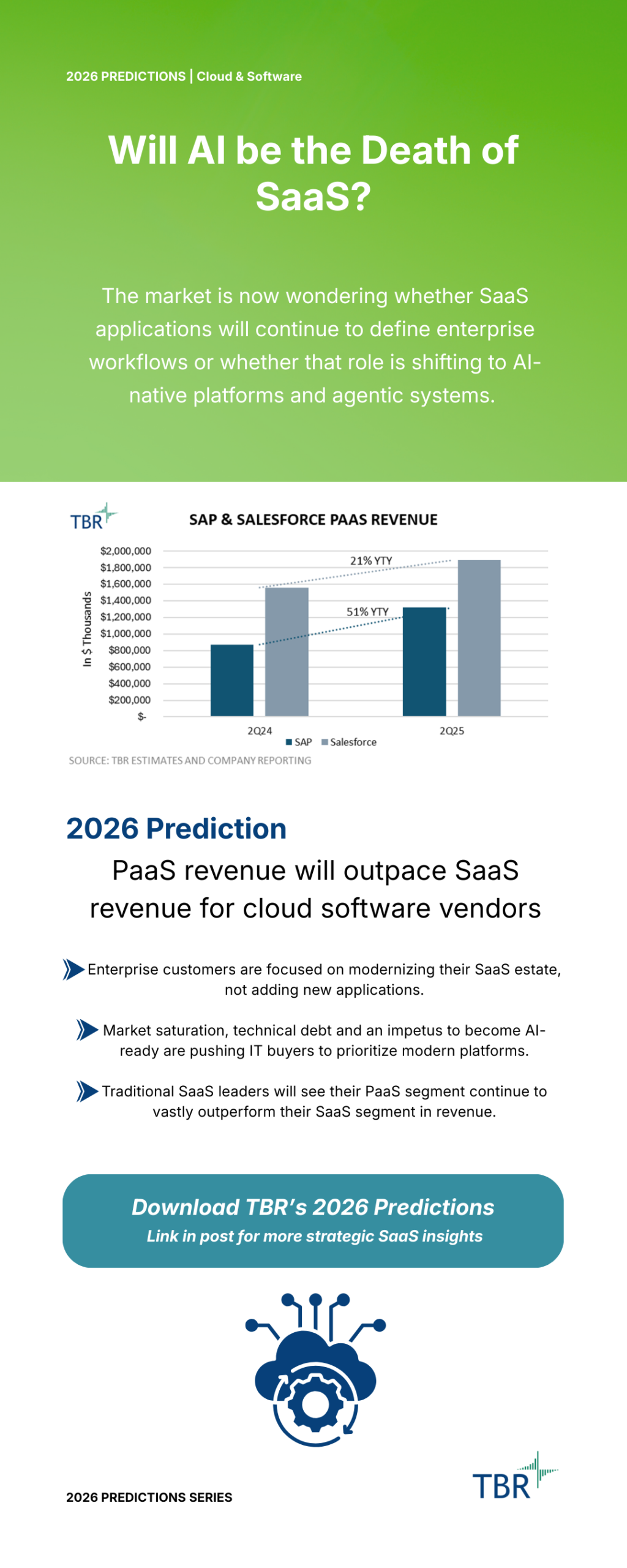
The traditional per-seat monetization mechanic was fundamentally an economic tax on enterprise payroll. Chief Information Officers (CIOs) budgeted software procurement according to headcount forecasts. If a global enterprise expanded its tier-one customer service organization by 2,000 representatives, enterprise software vendors captured an automatic expansion of 2,000 discrete subscription licenses.
Autonomous AI agents have decoupled software utility from employee headcounts. A single autonomous operational cluster can now ingest, process, and resolve customer claims, Tier-2 IT support tickets, or regulatory compliance audits without human intervention. In enterprise pilots conducted throughout late 2025 and early 2026, enterprises reported 40% to 65% contractions in outsourced and internal business process headcount within target functions. For traditional SaaS vendors billing on a per-user basis, this enterprise efficiency creates a catastrophic contraction in ARR, driving Net Dollar Retention—the holy grail of SaaS financial health—downward from median benchmarks of 115% to sub-90% territory.
Consequently, chief financial officers are aggressively renegotiating contracts. Enterprises are refusing multi-year renewals calculated on human seats when the work is executed by autonomous software routines. In response, enterprise software vendors are scrambling to pivot toward consumption-based, compute-indexed, or outcome-based pricing architectures. Yet, this transition fundamentally compromises predictable capital allocation, destabilizing the long-term revenue visibility that public equity analysts demand.
The Margin Squeeze: Inference Unit Economics vs. Traditional SaaS Margins
The second structural blow to legacy SaaS economics is the erosion of gross margins. The traditional software business model was celebrated for near-zero marginal cost of distribution. Once the codebase was shipped via cloud instances, serving an incremental customer cost virtually nothing, yielding pristine gross margins between 78% and 85%.
Agentic enterprise applications, however, are compute-intensive. Executing multi-step reasoning loops, high-context retrieval-augmented generation (RAG), and deterministic API calls across thousands of continuous threads burns astronomical volumes of GPU inference tokens. Whether providers route workloads through hyperscaler infrastructure via long-term compute commitments or tap frontier foundation models, every unit of analytical work delivers an associated marginal compute cost.
As enterprise clients demand that vendors absorb model inference costs within fixed subscription tiers, software vendors are seeing their gross margins compress to between 52% and 65%. Enterprise technology companies that once operated with software economics are now confronting unit economics resembling managed service providers or capital-intensive infrastructure utilities. Risk mitigation strategies, including local small-language-model (SLM) routing and speculative decoding, have reduced inference overhead, but they fail to restore the historical margins that once sustained historic software valuations.
Legacy SaaS vs. Agentic Enterprise Architecture: Structural Divergence (2026)
| Operational Metric | Legacy SaaS Era (2018–2023) | Agentic Enterprise Era (2026 Standard) | Strategic & Financial Impact |
|---|---|---|---|
| Primary Pricing Unit | Per-seat/month subscription ($/user/mo) | Outcome-based or token/work-unit consumption | Eradication of headcount-linked revenue growth trajectories. |
| Blended Gross Margins | 75% – 85%+ | 50% – 65% | Long-term reduction in free cash flow generation and margin profiles. |
| Value Driver | System of Record & Graphical User Interface (UI) | System of Intelligence & Proprietary Workflow Execution | Thin UI wrappers commoditized; deep deterministic data moats capture value. |
| Median EV/NTM Revenue | 10x – 16x (Peaked at 25x+) | 4x – 7x (Commoditized) / 12x – 15x (Moated) | Multiple compression and lower public market liquidity for horizontal apps. |
| Net Dollar Retention (NDR) | 110% – 130% | 85% – 105% (Without AI-shift) | Structural contraction of land-and-expand sales velocity. |
| Customer Acquisition Cost (CAC) Payback | 14 – 18 Months | 24 – 36 Months | Capital allocation shifts away from sales reps toward inference engineers. |
The Thin Wrapper Cull: Who Survives the Liquidation Wave?
The enterprise software ecosystem in 2026 is undergoing a harsh taxonomy divide: platforms acting as true "Systems of Intelligence" versus vulnerable "Systems of Record" with superficial software wrappers.
1. The Vulnerable Middle: Horizontal Point Solutions
Horizontal productivity tools, generic content generators, entry-level Customer Relationship Management (CRM) tools, and rudimentary customer support ticketing engines are suffering severe valuation drawdowns. If an enterprise can deploy a secure, internal multi-agent framework leveraging open-weight reasoning models that interface directly with its proprietary data warehouse via simple APIs, paying seven figures annually for a mid-market horizontal SaaS product becomes fiscally irresponsible. Platforms functioning merely as a graphical interface over a database are systematically bypassed as autonomous agents communicate directly with underlying data planes.
2. The Resilient Core: Deep Vertical Infrastructure and Regulated Data Moats
Conversely, survival is concentrated in vertical platforms managing deep, mission-critical regulatory compliance, proprietary transaction records, and physical-world orchestration. Software architectures integrated directly into regulated financial ledgers, clinical healthcare databases, electronic discovery repositories, and industrial supply chains retain durable moats. In these environments, enterprise ROI is subordinate to zero-tolerance risk management; probabilistic hallucinations carry legal and regulatory penalties that enterprises refuse to accept without specialized validation pipelines.
Winners are aggressively deploying their own autonomous agents, charging not for human logins, but per resolved litigation brief, completed insurance claim, or booked and dispatched logistics route. These vendors capture value by indexing directly to labor substitution rather than software enablement.
Macroeconomic Repercussions: Venture Capital and Private Equity Fallout
The tectonic shift in SaaS unit economics has sent shockwaves through institutional capital allocations. Silicon Valley venture firms that spent 2016 through 2022 funding software startups at 40x forward ARR multiples are facing substantial portfolio write-downs. The traditional playbook of injecting venture funding into direct-sales headcounts to drive per-seat growth is broken.
More precarious is the private equity landscape. Buyout sponsors heavily levered balance sheets to acquire recurring-revenue SaaS businesses under the assumption that sticky enterprise retention rates would service senior debt burdens indefinitely. With ARR growth stalling and margins shrinking to absorb AI infrastructure upgrades, high-yield debt coverage ratios are deteriorating across several mid-market enterprise software companies. A wave of debt restructuring and distressed asset sales is anticipated across late 2026 as legacy SaaS companies struggle to refinance high-interest paper with compressed free cash flows.
Frequently Asked Questions (People Also Ask)
Why is AI disrupting the traditional per-seat SaaS pricing model?
Autonomous AI agents execute white-collar and back-office knowledge work at scale, allowing companies to reduce the headcounts previously required to run operations. Because legacy SaaS contracts bill by the human user (seat), any corporate workforce reduction directly reduces software license counts, resulting in degraded Net Dollar Retention (NDR) and shrinking ARR for SaaS vendors.
What is outcome-based pricing, and how does it replace SaaS subscription fees?
Outcome-based pricing charges enterprise customers based on quantifiable, verified results rather than access to a tool over time. Instead of billing $100 per user per month, a vendor might bill $15 per resolved IT ticket, $50 per verified medical billing code, or a basis-point fee on recovered supply chain expenses. This model aligns enterprise expenditure directly with cost savings and labor replacement, although it introduces quarterly revenue volatility for the vendor.
Which SaaS categories face the highest risk of disruption in 2026?
Horizontal software applications that operate as thin workflow layers or basic databases—such as simple project management tools, customer support ticketing systems, basic CRM suites, and generic copy generation software—are at the highest risk. These tools are easily bypassed by agentic AI frameworks interacting directly with corporate data warehouses and custom enterprise APIs.
How does agentic AI impact the gross margins of enterprise software companies?
Historically, SaaS companies posted gross margins of 80% or higher because serving cloud software incurred minimal marginal compute costs. Agentic workflows require continuous, high-performance GPU inference, dynamic retrieval-augmented generation (RAG), and complex algorithmic execution. These computational demands create significant per-transaction cloud infrastructure costs, compressing SaaS gross margins down to 50% to 65% unless aggressively offset by localized small language models (SLMs).
Future Outlook: The Road Through Late 2026 and Beyond
The enterprise software landscape will not cease to exist, but it will be unrecognizable by the end of the decade. The coming 18 to 24 months will mark the definitive conclusion of the "Software as an Interface" era, inaugurating the epoch of "Software as an Autonomous Service."
To retain institutional market valuations and defensible market liquidity, incumbent software operators must execute three decisive actions before year-end:
- Transition to Unit-of-Work Contracts: Fully deprecate pure per-seat licensing tiers in favor of dynamic hybrid contracts linked to verifiable, deterministic business outcomes and token consumption bands.
- Sovereign Compute Optimization: Diversify inference infrastructure away from monolithic frontier models toward task-specific, on-premise, or private-cloud fine-tuned SLMs to reclaim gross margins back toward 70%.
- Secure the System of Record: Transition from passive databases to active data choreographers, transforming stored enterprise data into dynamic proprietary execution systems that third-party autonomous agents cannot bypass.
The software business model is not dying, but its golden era of easy scalability and inflated margins has ended. Capital markets are no longer paying enterprise valuations for passive digital real estate; in 2026, value accrues solely to software that works, decides, and executes autonomously.