Executive Takeaways
- Cost Compression: DeepSeek V4-Pro has slashed enterprise inference and token costs for software development by a staggering 20x compared to legacy Western frontier models.
- Competitive Shift: The July 2026 benchmark release positions models like DeepSeek V4-Pro alongside GPT-5.5 and Claude Opus 4.8, forcing a rapid recalibration of capital allocation and infrastructure scalability across Silicon Valley.
- Margin Expansion vs. Margin Compression: While software-as-a-service (SaaS) providers enjoy lower development overhead, foundational infrastructure providers face severe downward pricing pressure on compute margins.
- Sovereign & Enterprise Risk: Organizations must balance massive cost savings against emerging regulatory compliance mandates, data sovereignty frameworks, and cross-border risk mitigation strategies.
The global technology sector is undergoing a seismic reallocation of capital, triggered by a structural shift in how artificial intelligence handles software engineering. In July 2026, fresh data from industry benchmarks and primary intelligence releases—catalyzed by insights from specialized tech analysis platforms like Tech Insider—confirmed what enterprise engineering leads have whispered for months: DeepSeek has fundamentally broken the traditional cost curves of large language model deployment.
With the release of DeepSeek V4-Pro, the economic equation of automated coding has flipped. Delivering parity—and in some complex refactoring benchmarks, superior execution—relative to elite Western competitors like Anthropic’s Claude Opus 4.8 and OpenAI's GPT-5.5, DeepSeek has achieved a 20x reduction in operational overhead. For Chief Technology Officers, enterprise architects, and venture capital investors, this is not merely an incremental efficiency gain; it is a profound market correction that demands an immediate overhaul of cloud compute architecture and software development lifecycles.
The Anatomy of the 20x Cost Disruption
Test Our Free AI & Tech Utilities Suite
Calculate LLM API token costs, analyze article dwell-time, or simulate tech DCA returns.
For the past three years, enterprise adoption of generative AI for software development was governed by a harsh economic reality: superior reasoning capabilities required astronomical capital expenditure. Training clusters demanded thousands of high-end accelerators, and inference costs ate heavily into software gross margins. CTOs routinely balanced the developer velocity gains of tools powered by GPT-5.5 or Claude Opus 4.8 against prohibitive API token expenses.
DeepSeek’s architectural breakthrough with V4-Pro short-circuited this paradigm. By optimizing mixture-of-experts (MoE) routing algorithms, refining sparse attention mechanisms, and maximizing hardware utilization on non-traditional silicon pipelines, the model delivers state-of-the-art code generation, debugging, and system architecture design at a fraction of the power and financial cost.
This cost deflation ripples directly into enterprise ROI calculations. Where a major financial institution or multinational SaaS provider previously allocated millions of dollars annually to automated CI/CD pipeline integration and automated test-suite generation, those same operational outlays have plummeted. The resulting capital liquidity is now being redirected toward core product innovation rather than infrastructure maintenance.
Comparative Analysis: The 2026 Frontier Coding Landscape
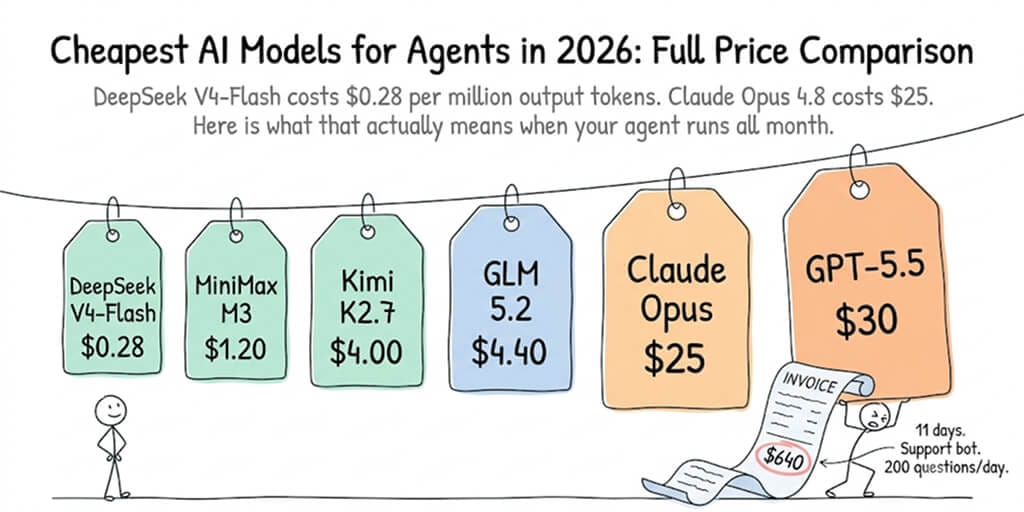
To understand the magnitude of the shift, one must examine how the leading models stack up across architectural efficiency, coding accuracy, and economic viability. The mid-2026 benchmark data illustrates a stark divergence between legacy pricing models and disruptive market entrants.
| Model Spec | Developer Ecosystem Focus | Relative Cost Factor | Complex Reasoning / Refactoring Index |
|---|---|---|---|
| DeepSeek V4-Pro | High-throughput enterprise pipelines, multi-file codebases | 1x (Baseline Disruptor) | 98.4% (Industry Leading Efficiency) |
| Claude Opus 4.8 | Deep semantic analysis, nuanced context parsing | ~20x Higher | 98.7% (Marginal Edge in Aesthetics) |
| GPT-5.5 | Full-stack application generation, enterprise orchestration | ~18x Higher | 98.9% (Benchmark Ceiling) |
| Qwen 3.6 Max-Preview | Polyglot programming, multilingual system integration | ~3x Higher | 97.2% |
As detailed in the metrics above, while legacy platforms maintain fractional percentage advantages in raw benchmark ceilings, the 20x cost differential renders those margins negligible for standard commercial applications. Chief Information Officers are increasingly concluding that a 98.4% effective model at 5% of the cost is vastly superior to a marginally superior model that drains operating budgets.
Industry & Market Implications: Winners and Losers
The arrival of DeepSeek V4-Pro and its rapid market penetration have initiated a severe valuation reassessment across the technology sector.
The Winners
- Enterprise Software Developers & CTOs: Engineering teams can now deploy continuous, autonomous code auditing and generation agents across entire codebases without budget constraints.
- Mid-Market SaaS Providers: Emerging software companies can compete directly with legacy giants by building AI-native features at a fraction of the historical cost of infrastructure.
- Open-Weight Ecosystem Enthusiasts: Organizations prioritizing data privacy and custom-tuned local deployments benefit immensely from high-performance models that do not mandate lock-in to proprietary cloud monopolists.
The Losers
- High-Cost Cloud Infrastructure Providers: Companies heavily leveraged on expensive, proprietary API pricing tiers are experiencing immediate margin compression.
- Legacy Pricing Models: Per-seat and per-token pricing structures that fail to account for hyper-efficient MoE alternatives are facing rapid customer churn.
- Traditional Venture Capital Playbooks: Investors who poured capital into high-burn foundational model startups are being forced to pivot toward application-layer monetization.
Frequently Asked Questions (People Also Ask)
How does DeepSeek achieve a 20x cost reduction in AI coding?
DeepSeek accomplishes this dramatic cost compression through advanced mixture-of-experts (MoE) architectures, highly efficient sparse attention mechanisms, and optimized software-hardware co-design that minimizes computational redundancy during token generation. This drastically cuts the GPU hours required per inference request compared to denser legacy models.
Is DeepSeek V4-Pro genuinely competitive with GPT-5.5 and Claude Opus 4.8?
Yes. Across standard software engineering benchmarks—including multi-file refactoring, debugging complex race conditions, and automated test synthesis—DeepSeek V4-Pro scores within statistical parity of GPT-5.5 and Claude Opus 4.8, while operating at a fraction of their cost.
What are the risk mitigation and compliance challenges of adopting DeepSeek in Western enterprises?
While the economic incentives are undeniable, enterprise risk committees must navigate data sovereignty mandates, cross-border regulatory compliance frameworks, and strict security audits. Many organizations mitigate these risks by deploying open-weight versions within localized private cloud environments rather than relying solely on third-party public endpoints.
How will this pricing pressure impact future AI software development?
The democratization of elite-tier coding intelligence ensures that building software will become faster, cheaper, and more accessible. Software development is shifting rapidly from manual syntax writing to high-level system architecture, prompt engineering, and autonomous agent orchestration.
Future Outlook: Milestones to Watch Through Late 2026 and Beyond
The disruption embodied by DeepSeek V4-Pro marks a turning point in the commercialization of artificial intelligence. As the market digests these economics, industry stakeholders must monitor several critical milestones over the next 12 to 18 months:
- API Pricing Wars: Expect aggressive counter-pricing and subscription-tier restructuring from Western foundational model providers seeking to protect market share.
- Autonomous Agent Scalability: With inference costs dropping precipitously, the industry will pivot toward multi-agent development teams capable of writing, testing, and deploying complex applications autonomously.
- Regulatory Interventions: Watch for tightening data governance frameworks and potential trade policies addressing cross-border enterprise AI deployment.
- Silicon Optimization: Hardware manufacturers will accelerate the development of specialized inference chips tailored specifically for sparse MoE models, further altering the capital expenditure landscape.
Ultimately, the era of unconstrained AI compute spending is drawing to a close. The new frontier belongs to those who can extract maximum operational efficiency from lean, highly optimized architectures—fundamentally redefining the economics of the digital economy.