Executive Takeaways
- Market Equilibrium: US equities are holding steady in a tight consolidation range as institutional investors and algorithmic funds await the Federal Open Market Committee’s (FOMC) definitive monetary policy announcement.
- Capital Allocation Paradigm: Corporate treasuries and private equity desks are pausing major capital expenditure cycles, prioritizing liquidity preservation, debt restructuring, and risk mitigation amid shifting valuation multiples.
- The Rate Cut Conundrum: Fixed-income desks are pricing in a nuanced probability matrix, balancing moderating inflationary pressures against stubbornly resilient labor market metrics.
- Enterprise & Tech Exposure: High-growth tech sectors, cloud compute architecture providers, and capital-intensive infrastructure plays remain uniquely sensitive to shifts in the federal funds rate and long-term yield curves.
NEW YORK — As the financial markets tick closer to the pivotal Federal Reserve policy announcement, Wall Street trading desks are exhibiting a tense, calculated equilibrium. Major indices—including the S&P 500, the Nasdaq Composite, and the Dow Jones Industrial Average—are hovering near recent inflection points. This behavior reflects a market caught between aggressive optimism over potential monetary easing and cautious awareness of lingering macroeconomic friction. For institutional asset managers, corporate CFOs, and retail investors alike, the impending decision represents a critical watershed moment that will dictate capital allocation, valuation multiples, and cross-asset risk appetite for the remainder of the fiscal year.
The current market posture is defined not by panic, but by paralysis. Trading volume across primary exchanges has compressed over the past forty-eight hours as algorithmic execution engines and human portfolio managers alike process every whisper of macroeconomic data. At the heart of this anticipation is the fundamental question of how the central bank will calibrate its monetary stance to navigate a slowing economic growth trajectory without reigniting inflationary pressures.
The Macroeconomic Crucible: Balancing Inflation, Labor, and Liquidity
Test Our Free AI & Tech Utilities Suite
Calculate LLM API token costs, analyze article dwell-time, or simulate tech DCA returns.
To understand the gravity of the Federal Reserve’s upcoming decision, one must examine the complex tapestry of economic indicators that have shaped the central bank’s recent deliberations. Over the past several quarters, the FOMC has maintained a restrictive monetary stance designed to cool an overheated post-pandemic economy. High interest rates have successfully choked off runaway price increases in several sectors, yet the cost of capital has risen dramatically across the board.
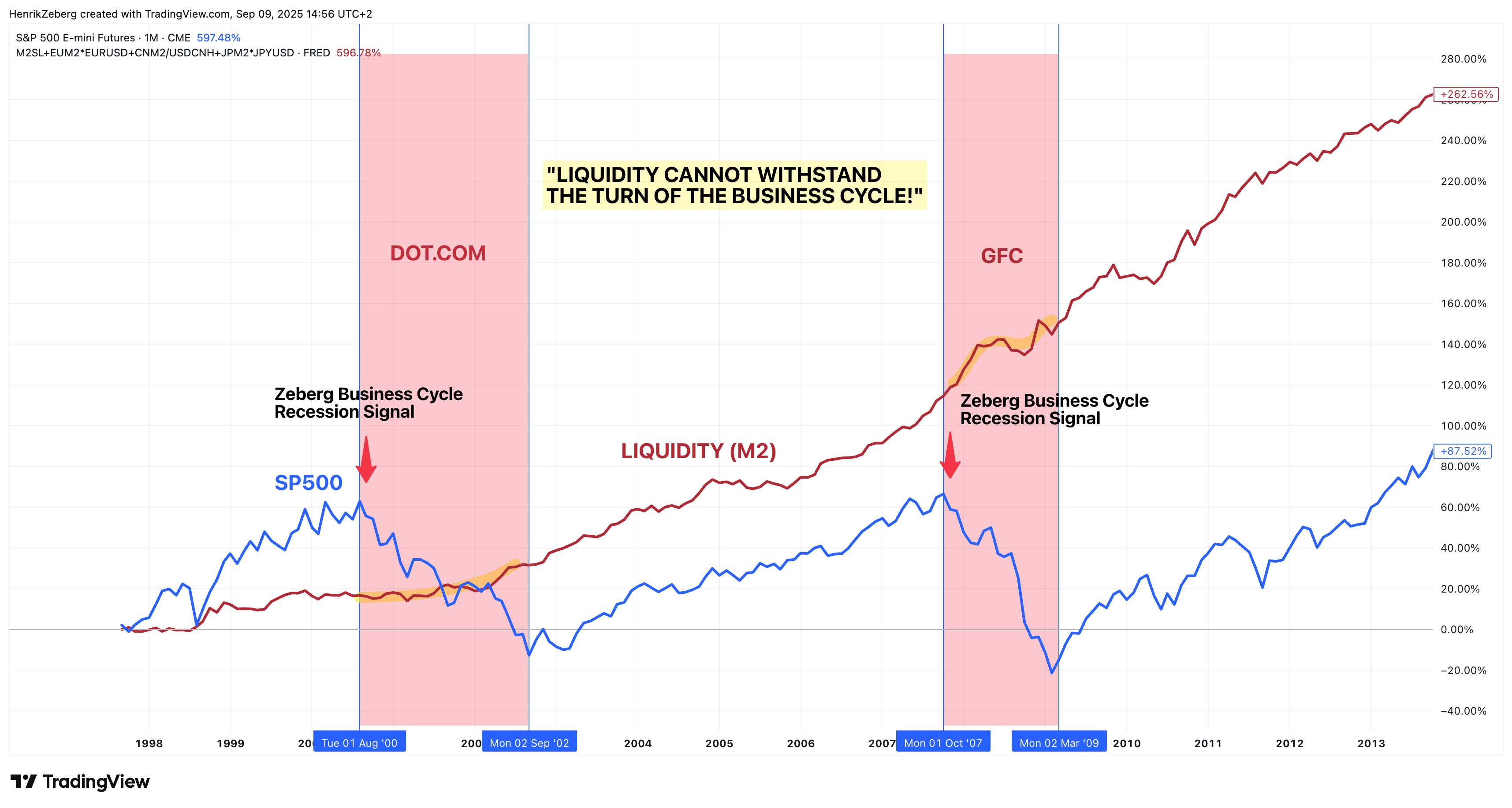
Corporate balance sheets, particularly those requiring continuous debt refinancing, have had to adapt to a radically different cost-of-capital environment. Enterprise ROI metrics that were easily justified when debt was nearly free now face rigorous scrutiny. Chief Financial Officers have been forced to prioritize operational efficiency, infrastructure scalability, and margin preservation over aggressive, debt-fueled expansion. Consequently, the upcoming Fed decision is not merely a central banking technicality; it is the master switch for global market liquidity.
Simultaneously, the labor market has proven remarkably resilient, defying historical models that suggested rapid rate hikes would trigger immediate, widespread unemployment. This labor market tenacity gives the Federal Reserve room to maneuver, yet it complicates the inflation outlook. Wage growth, while moderating, continues to apply upward pressure on core service sectors, leaving monetary policymakers with a razor-thin margin for error.
Sector-Specific Vulnerabilities and Market Impacts

As market participants brace for the Fed's verdict, the divergence in sector performance highlights the nuanced impact of interest rate expectations. Technology and growth equities, which rely heavily on discounted cash flow models spanning distant horizons, are acutely sensitive to shifts in benchmark yields. When discount rates rise, present-day valuation multiples compress; conversely, any signal of a dovish pivot unleashes immediate buying pressure across high-growth tech and cloud infrastructure plays.
| Asset Class / Sector | Current Market Sensitivity | Primary Catalyst | Strategic Implication |
|---|---|---|---|
| Technology & Growth | Extremely High | Discount Rate Fluctuations | Valuation multiples expand on rate cut expectations. |
| Banking & Financials | High | Net Interest Margins & Yield Curve | Short-term margin compression balanced by deal-flow recovery. |
| Real Estate (REITs) | Very High | Refinancing Costs & Cap Rates | Capital relief upon lower borrowing costs. |
| Utilities & Staples | Moderate | Bond Yield Competition | Dividend yields remain attractive relative to fixed income. |
Conversely, the financial sector is monitoring net interest margins and yield curve steepness. Regional and money-center banks alike are managing credit risk profiles carefully, balancing loan-loss provisions against potential surges in M&A activity and debt underwriting should borrowing costs decline. Meanwhile, real estate investment trusts (REITs) and capital-intensive utility providers are poised to benefit disproportionately from any easing of refinancing pressures, having spent quarters executing rigorous balance sheet restructuring.
Frequently Asked Questions (People Also Ask)
What happens to US stocks immediately following a Federal Reserve rate decision?
Market reactions are typically driven by the "dot plot" and the Federal Reserve Chair’s press conference commentary rather than the rate decision itself, which is often largely priced in by futures markets. If the central bank signals a more aggressive easing cycle than expected, equities—particularly growth and tech sectors—frequently rally. Conversely, a hawkish surprise or hints of a prolonged higher-for-longer trajectory can trigger immediate intraday sell-offs.
Why are enterprise CFOs and institutional investors closely monitoring long-term bond yields?
Long-term Treasury yields serve as the foundational benchmark for pricing corporate debt, mortgages, and commercial loans. Even if the Federal Reserve cuts its short-term benchmark rate, sticky long-term yields can maintain elevated borrowing costs for corporate capital allocation and infrastructure investments, directly impacting net income and valuation models.
How does regulatory compliance factor into current market positioning?
Institutional portfolios are navigating an increasingly complex regulatory landscape, including stricter capital adequacy requirements for banks (such as Basel III endgame proposals) and heightened scrutiny on alternative asset management leverage. These compliance mandates reinforce conservative liquidity management, preventing institutions from taking speculative directional bets ahead of major macroeconomic catalysts.
What sectors historically outperform during a monetary easing cycle?
Historically, rate-sensitive sectors such as technology, real estate, discretionary consumer goods, and small-cap equities tend to outperform when the central bank begins lowering borrowing costs. Lower discount rates reduce the cost of capital for expansion, while improved market liquidity favors companies with high growth potential.
Future Outlook: Navigating the Post-Decision Landscape
As the countdown reaches its final hours, the overarching narrative is clear: the era of reflexive monetary tightening is yielding to a more nuanced, data-dependent phase of central banking. For market participants, success in the coming quarters will depend on disciplined portfolio construction, rigorous risk mitigation, and selective capital deployment.
Looking ahead, Wall Street will shift its immediate focus from the binary outcome of the rate decision itself to the forward-looking economic projections released by the FOMC. Analysts will pore over GDP growth forecasts, unemployment projections, and the trajectory of core inflation indices to map out the frequency and depth of subsequent rate cuts.
Ultimately, while short-term volatility is all but guaranteed as algorithms parse the initial headlines, the underlying fundamentals of enterprise resilience and technological innovation will dictate long-term market trajectories. Companies that have successfully optimized their operational architecture, strengthened their balance sheets, and maintained strategic pricing power will emerge as the definitive market leaders, regardless of short-term monetary fluctuations.