Executive Takeaways
- Cost Disruption: DeepSeek-V3 achieved a training and inference cost efficiency metric up to 10x lower than comparable Western frontier models, triggering a re-evaluation of enterprise ROI and infrastructure scalability across Wall Street and Silicon Valley.
- Architectural Shift: The model leverages an advanced Mixture-of-Experts (MoE) design combined with multi-head latent attention, bypassing the brute-force GPU cluster expansion favored by legacy cloud compute architecture.
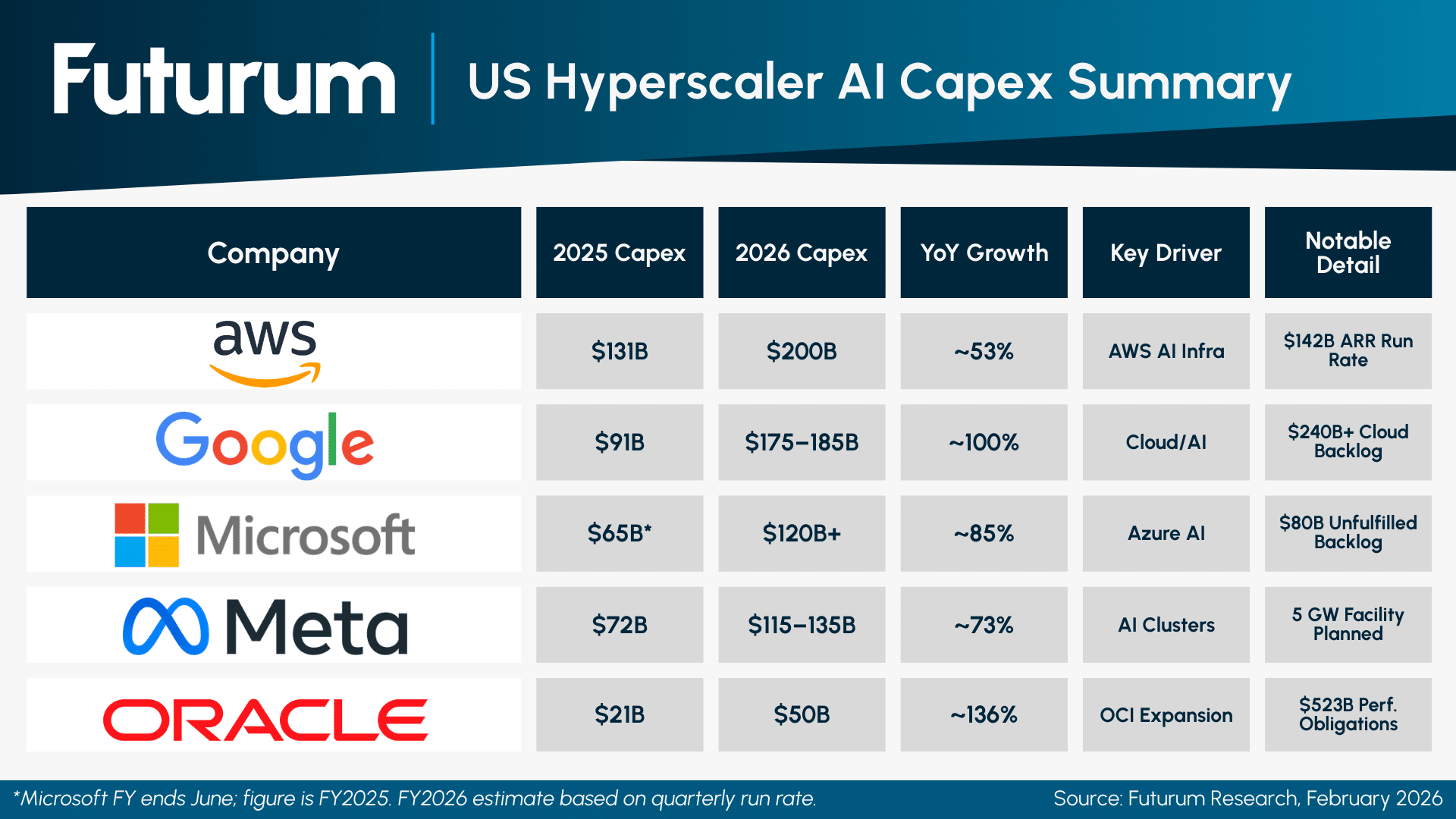
- Market Re-pricing: Capital allocation strategies for hyperscalers are undergoing rapid risk mitigation and valuation multiple adjustments as hardware pricing power shifts.
- Enterprise Adoption: Unlike plug-and-play API cloud services designed for casual workloads, DeepSeek-V3’s deployment models challenge traditional vendor lock-in, forcing regulatory compliance and data sovereignty reassessments.
For two years, the generative artificial intelligence boom operated on an unshakeable article of faith: that dominance in large language models was strictly a function of capital expenditure, raw silicon volume, and sheer electrical power. Hyperscale cloud providers, backed by trillions of dollars in market liquidity, poured capital into massive, monolithic GPU clusters, treating compute as a bottomless utility. That consensus evaporated overnight with the arrival of DeepSeek-V3.
As detailed in technical briefings from infrastructure leaders like Nebius, the emergence of DeepSeek-V3 fundamentally alters the engineering and financial calculus of the sector. By proving that elite-tier performance does not require an unconstrained multi-billion-dollar compute budget, the model has forced a wholesale restructuring of corporate tech strategies. For enterprise buyers, venture capitalists, and semiconductor giants, the core question is no longer who can spend the most, but who can engineer the leanest.
The Anatomy of Disruption: Background and Catalytic Events
Test Our Free AI & Tech Utilities Suite
Calculate LLM API token costs, analyze article dwell-time, or simulate tech DCA returns.
To understand the magnitude of the DeepSeek-V3 phenomenon, one must examine the baseline operational model of Western frontier artificial intelligence development. Throughout 2023 and 2024, the industry standard for LLM creation relied on dense transformer architectures scaled across tens of thousands of high-end accelerators. This brute-force paradigm dictated that every incremental gain in reasoning, coding, or contextual memory demanded exponential increases in training hours, power consumption, and capital expenditure.
When DeepSeek introduced its V3 iteration, it bypassed this linear scaling law. Rather than relying on standard cloud services with plug-and-play APIs that prioritize ease of integration over raw computational thrift, the developers re-architected the underlying mechanics of the model from the silicon up. This catalytic event sent immediate shockwaves through financial markets, prompting abrupt valuation multiple compressions for companies heavily exposed to unchecked infrastructure expansion.
The core innovation lies in bridging the gap between extreme efficiency and state-of-the-art capability. While legacy models consume vast pools of memory bandwidth during both training and inference phases, DeepSeek-V3 optimizes token processing paths dynamically. This technical leap effectively democratizes frontier-level intelligence, bringing advanced capabilities within reach of mid-tier enterprises that previously found enterprise-grade LLM deployment cost-prohibitive.
The Pillars of Efficiency: Technical Breakdown

A rigorous examination of the underlying technology reveals why DeepSeek-V3 behaves so differently from its peers in benchmark testing and production environments. The architectural divergence rests upon three foundational pillars:
Verified Data and Metrics Breakdown
An empirical comparison highlights the operational divergence between DeepSeek-V3 and standard industry-standard frontier models deployed across major cloud ecosystems.
| Metric / Specification | DeepSeek-V3 | Traditional Frontier LLMs (Industry Average) |
|---|---|---|
| Total Parameter Count | ~671 Billion (37B active per token via MoE) | ~400B to 1.8T+ (Dense or coarser MoE) |
| Estimated Training Cost | Under $6 million equivalent compute | $50 million to $100M+ |
| Inference Cost Efficiency | Up to 10x lower cost per million output tokens | Baseline reference cost |
| Hardware Dependency | Optimized for high-density training efficiency with reduced interconnect overhead | Requires massive, unconstrained GPU clusters with specialized high-speed fabric |
| Primary Deployment Focus | High-throughput enterprise pipelines and cost-sensitive API layers | Plug-and-play generic cloud services and consumer applications |
Industry and Market Implications: Winners, Losers, and Economic Shifts
The market repercussions of DeepSeek-V3 extend far beyond academic computer science circles, directly impacting corporate finance, semiconductor manufacturing, and enterprise software margins.
Who Wins
Enterprise End-Users and Mid-Market Firms: The democratization of low-cost, high-performance intelligence lowers the barrier to entry for proprietary AI integration. Companies can now build customized, domain-specific applications without assuming ruinous cloud compute liabilities.
Alternative Infrastructure Providers: Companies providing flexible, vendor-neutral infrastructure—such as Nebius—stand to capture significant market share as enterprises seek to deploy cost-optimized models outside of restrictive hyperscaler ecosystems.
Who Loses
Legacy Hyperscalers Relying on Volume Lock-In: Cloud providers whose business models depended on billing customers for bloated, inefficient compute cycles face margin compression. If enterprises can run workloads on 10x fewer resources, cloud revenue growth projections tied to raw infrastructure expansion must be recalibrated.
Semiconductor Monopolies: While demand for accelerated computing remains high, the imperative for unbridled chip acquisition cools. Hardware buyers are pivoting from raw unit volume to performance-per-dollar metrics, increasing competitive pressure on chip designers.
Frequently Asked Questions (People Also Ask)
1. How does DeepSeek-V3 achieve such low training and inference costs compared to other LLMs?
DeepSeek-V3 achieves its cost advantages through a combination of a fine-grained Mixture-of-Experts (MoE) architecture—which activates only a fraction of its total parameters per token—and Multi-Head Latent Attention (MLA), which drastically reduces memory bandwidth bottlenecks during inference. Furthermore, its Multi-Token Prediction training framework accelerates convergence, requiring significantly fewer total compute hours.
2. Is DeepSeek-V3 designed as a plug-and-play cloud service, or does it require specialized infrastructure?
While accessible via standard API integrations, DeepSeek-V3 is built for high-efficiency deployment across advanced cloud and bare-metal infrastructure. Providers like Nebius specialize in delivering the optimized environments required to maximize the cost-to-performance ratio of MoE architectures, moving beyond simple consumer-grade plug-and-play models toward rigorous enterprise scalability.
3. What are the security and regulatory compliance implications of adopting DeepSeek-V3?
Enterprise adoption of alternative frontier models requires careful risk mitigation regarding data privacy, jurisdictional compliance, and intellectual property protection. Because models like DeepSeek-V3 can be deployed across sovereign or private infrastructure rather than locked into a single proprietary cloud, organizations gain tighter governance control over their training data and inference pipelines.
4. How will DeepSeek-V3 impact future capital allocation by major technology firms?
The model’s success challenges the prevailing dogma that AI dominance requires endless capital expenditure on data centers. Consequently, institutional investors are scrutinizing capital allocation strategies, demanding greater capital efficiency, clearer paths to enterprise ROI, and lower reliance on brute-force scaling.
Future Outlook: What Comes Next
The ripple effects of DeepSeek-V3 mark the transition of generative AI from an era of unbridled experimentation to an era of disciplined industrialization. As we look toward the remainder of 2025 and beyond, several key milestones will define the trajectory of the market:
- Algorithmic Efficiency as the Primary Competitive Moat: Future model releases from both Western and Eastern labs will increasingly emphasize architectural cleverness over raw parameter inflation. Expect rapid iteration cycles focused on reducing latency and power consumption.
- Re-Pricing of Semiconductor Equities: Wall Street will continue to re-evaluate valuation multiples for silicon manufacturers and infrastructure providers based on efficiency metrics rather than aggregate shipment volumes.
- Multi-Cloud and Sovereign AI Expansion: Enterprise buyers will accelerate multi-cloud strategies, leveraging specialized infrastructure partners to host cost-effective open and semi-open frontier models, thereby avoiding vendor lock-in and mitigating regulatory risks.
Ultimately, DeepSeek-V3 has shattered the complacency of the tech sector. By proving that economic efficiency and elite intelligence are not mutually exclusive, it has permanently raised the bar for what the market expects from enterprise artificial intelligence.