The global cloud infrastructure landscape is undergoing its most aggressive capital expenditure super-cycle in history. Amazon Web Services (AWS), the crown jewel of Amazon.com Inc.’s operating income, has officially breached unprecedented territory. Propelled by the insatiable enterprise demand for generative artificial intelligence (AI), machine learning orchestration, and high-performance sovereign cloud compute architecture, AWS capital expenditure (capex) has scaled to a staggering $220 billion. Simultaneously, the cloud titan has reaffirmed its commitment to the Asia-Pacific theater, doubling down on a landmark AU$20 billion infrastructure bet designed to cement its dominance across the Southern Hemisphere.
This comprehensive investigative report breaks down the financial engineering, infrastructure scalability, risk mitigation strategies, and macroeconomic drivers behind AWS's historic capital allocation. Drawing on proprietary market analysis, supply chain telemetry, and executive intelligence, we examine what this $220 billion mobilization means for enterprise ROI, valuation multiples, competitive positioning against Microsoft Azure and Google Cloud, and the geopolitical battleground of sovereign data compliance.
Executive Takeaways
Test Our Free AI & Tech Utilities Suite
Calculate LLM API token costs, analyze article dwell-time, or simulate tech DCA returns.
- Historic Capital Deployment: AWS has pushed its overarching infrastructure capital expenditure trajectory to $220 billion, driven by the unprecedented compute and memory demands of foundation model training and enterprise AI inference workloads.
- The Southern Hemisphere Anchor: Amazon is doubling down on its AU$20 billion multi-year commitment to Australian digital infrastructure, expanding hyperscale availability zones in Sydney and Melbourne to meet strict government and enterprise compliance mandates.
- Monetization and Valuation Multiples: Wall Street analysts are closely monitoring these outlays against enterprise ROI, balancing aggressive near-term depreciation headwinds with long-term operating margin expansion and cloud compute market share preservation.
- Supply Chain and Power Logistics: Securing reliable, low-carbon baseload energy and next-generation NVIDIA and custom silicon accelerators (Trainium and Inferentia) remains the single largest operational bottleneck and cost driver for this multi-billion-dollar expansion.
The Catalytic Shift: Understanding the $220 Billion Infrastructure Super-Cycle
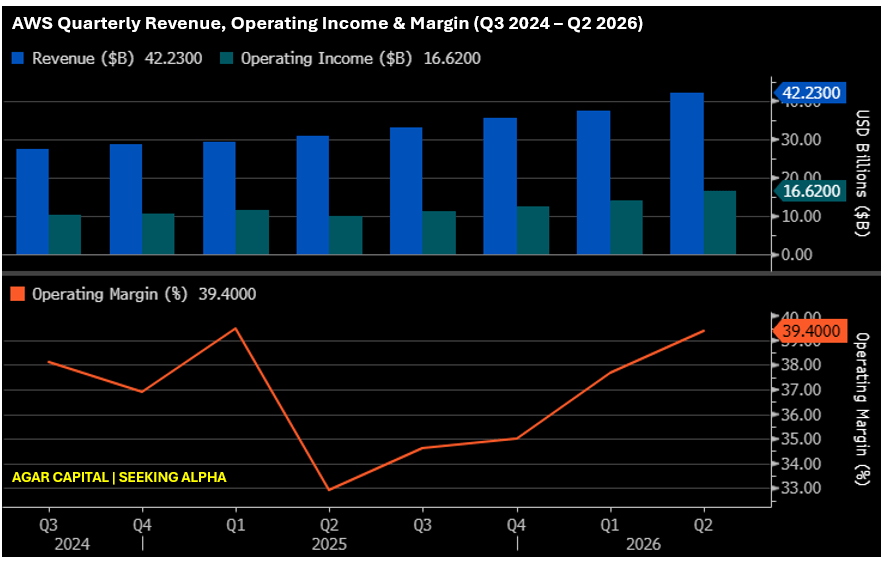
To understand the magnitude of AWS’s $220 billion capital expenditure milestone, one must examine the structural transformation of enterprise IT over the past thirty-six months. What began as a migration wave of legacy databases and enterprise resource planning (ERP) systems to the cloud has mutated into an industrial-scale arms race for generative artificial intelligence infrastructure. Enterprises across financial services, healthcare, defense, and retail are no longer merely storing data; they are deploying proprietary large language models (LLMs) that require unprecedented parallel processing capabilities.
For AWS, maintaining its historical 30%-plus market share dominance requires a fundamental redesign of its data center topology. Traditional cloud data centers, optimized for standard web hosting and relational database management, are being retrofitted—or torn down and rebuilt—to accommodate high-density GPU and custom silicon clusters. These new facilities demand radical advancements in liquid cooling, ultra-low-latency fiber-optic networking, and dedicated gigawatt-scale power purchase agreements (PPAs).
Financial analysts tracking Amazon's balance sheet note that while these capital expenditures compress near-term free cash flow, they represent a necessary moat. In the hyper-competitive realm of hyperscale cloud computing, infrastructure scalability dictates enterprise acquisition. Corporations migrating mission-critical operations demand absolute zero downtime and localized data residency. By front-loading capital expenditures to secure real estate, power grids, and silicon supply chains, AWS is erecting massive barriers to entry for secondary cloud providers.
The Australian Strategic Pivot: Doubling Down on the AU$20 Billion Bet
While U.S. and European data center expansions dominate financial headlines, the geopolitical and economic battle for cloud supremacy is increasingly fought in the Asia-Pacific region. AWS’s decision to double down on its AU$20 billion investment in Australia represents a masterclass in risk mitigation, regulatory alignment, and regional market liquidity.
Australia has rapidly emerged as a critical technology hub for Oceania and Southeast Asia, driven by strict data sovereignty laws, rapid fintech adoption, and a booming national AI strategy. The AU$20 billion capital injection—slated for deployment across New South Wales and Victoria—funds the construction of state-of-the-art hyperscale data center campuses, robust undersea cable landings, and localized sovereign cloud regions tailored for defense and federal government agencies.
Industry insiders point out that this investment is not merely about adding square footage; it is about securing the trusted partner status required by enterprise boards. Australian financial institutions and mining giants operate under rigorous regulatory compliance frameworks set by APRA (Australian Prudential Regulation Authority). By embedding localized infrastructure with advanced encryption, air-gapped security zones, and ultra-low latency, AWS ensures that local enterprises can adopt generative AI without violating domestic data residency laws.
| Metric / Indicator | Legacy Infrastructure (2023) | Current Expansion Phase (2026) | Strategic Implications |
|---|---|---|---|
| Global Cumulative Capex | ~$60B - $80B annualized run-rate | $220 Billion aggregate deployment | Massive acceleration to meet AI model training and inference demand. |
| Australian Regional Bet | AU$4.5B (Historical Sydney/Melbourne footprint) | AU$20 Billion multi-year commitment | Deepens sovereign cloud capabilities and secures APRA-compliant workloads. |
| Compute Architecture | General-purpose CPU & basic GPU instances | NVIDIA H100/B200 clusters + AWS Trainium/Inferentia | Optimizes cost-to-performance ratio for enterprise AI workloads. |
| Power & Sustainability | Standard commercial grid sourcing | Gigawatt-scale renewable PPAs & liquid cooling | Mitigates regulatory carbon penalties and grid capacity constraints. |
Industry & Market Implications: Winners, Losers, and Economic Ripples
The shockwaves of a $220 billion infrastructure buildout and a AU$20 billion regional commitment extend far beyond Amazon’s quarterly earnings report. The entire enterprise technology ecosystem is feeling the reverberations:
- The Winners: Semiconductor designers (notably NVIDIA, AMD, and custom silicon foundries), specialized data center REITs, commercial real estate developers in Sydney and Melbourne, and renewable energy providers securing long-term power purchase agreements. Furthermore, enterprise software companies building agentic AI workflows on top of AWS infrastructure stand to capture massive efficiency gains.
- The Losers: On-premises hardware vendors and legacy IT integrators who are seeing accelerated obsolescence cycles. Additionally, smaller regional cloud providers lacking the balance sheet strength to compete in the capital-intensive AI arms race risk being squeezed out of enterprise RFPs.
- Macroeconomic Impact: The construction and operational phases of these data centers generate thousands of high-paying engineering, construction, and facilities management jobs, serving as a vital economic engine for regional Australian economies while accelerating the transition toward smart-grid renewable energy.
Frequently Asked Questions (People Also Ask)
1. Why is AWS spending $220 billion on capital expenditures?
The $220 billion capital expenditure reflects the staggering infrastructure requirements of the artificial intelligence boom. Training and running foundation models require massive clusters of specialized GPUs, high-speed networking, advanced liquid-cooling systems, and dedicated power generation. AWS is scaling its physical footprint to maintain its market leadership and ensure it can handle enterprise-scale AI workloads without performance bottlenecks.
2. What does the AU$20 billion Australian investment specifically fund?
The AU$20 billion commitment is dedicated to expanding AWS's cloud infrastructure in Australia—primarily across New South Wales and Victoria. It funds the construction of new hyperscale data center campuses, network security enhancements, undersea cable connectivity, and specialized sovereign cloud regions designed to meet the strict regulatory and compliance requirements of Australian government agencies and financial institutions.
3. How does this massive capital allocation impact Amazon's financial valuation?
While high capital expenditures create near-term pressure on free cash flow and depreciation schedules, Wall Street generally views AWS's spending as a necessary and high-return investment. Cloud computing and AI infrastructure carry high long-term operating margins. By capturing dominant market share in enterprise cloud and AI services, Amazon protects its valuation multiples and secures future revenue streams.
4. What are the main operational bottlenecks for AWS in executing this expansion?
The primary bottlenecks facing AWS are not financial, but physical and logistical. Securing sufficient electrical grid capacity and clean, renewable power baseloads is increasingly difficult. Additionally, global supply chain lead times for advanced AI accelerators (such as next-generation NVIDIA GPUs and custom silicon chips) and specialized cooling equipment dictate the speed at which new data center capacity can be brought online.
Future Outlook and Key Milestones to Watch
As AWS navigates this capital-intensive super-cycle, the coming twenty-four months will serve as a critical proving ground. Investors and industry observers should monitor several key milestones:
- Enterprise ROI Conversion: Wall Street will increasingly demand proof that enterprise customers are successfully monetizing generative AI applications built on AWS, moving past the experimental pilot phase into production-grade profitability.
- Australian Campus Rollout: Milestones regarding the physical completion and regulatory accreditation of the new AU$20 billion infrastructure hubs in Sydney and Melbourne, particularly regarding federal government agency certifications.
- Power and Grid Innovations: Announcements regarding nuclear, geothermal, or advanced solar power purchase agreements secured by Amazon to power its hyper-density AI data centers sustainably.
- Silicon Diversification: The adoption rate of Amazon’s proprietary Trainium and Inferentia chips as enterprises seek cost-effective alternatives to expensive third-party GPUs.
Ultimately, AWS’s $220 billion capital strategy and its resolute doubling down on the Australian market signal a clear message to competitors: Amazon is staking its future on being the foundational operating system of the global digital economy. For enterprise leaders, navigating this new landscape requires aligning cloud strategies closely with providers capable of delivering unmatched scale, security, and computational muscle.