Executive Takeaways
- The Collapse of the Seat-Based Paradigm: The quarter-century-old per-seat licensing model is experiencing structural decay as autonomous AI agents reduce the human headcount required to execute enterprise workflows, directly undermining traditional "land-and-expand" software sales models.
- Gross Margin and Valuation Compression: Transitioning from static cloud hosting to compute-intensive AI inference is eroding traditional software gross margins from 80%+ down to 55%–65%, triggering a re-rating of SaaS Enterprise Value/NTM Revenue multiples from historical highs down to 6x–8x.
- Bifurcated Category Exposure: Point solutions and "Systems of Engagement" (e.g., legacy customer support platforms, basic workflow tools) face catastrophic churn, while foundational "Systems of Record" (e.g., enterprise resource planning, core transactional databases) are surviving by pivoting to outcome-based and work-indexed pricing architecture.
- Capital Allocation Shift: Enterprise CIOs are aggressively reallocating OpEx budgets from legacy software licenses to proprietary compute, private model orchestration, and value-aligned outcome contracts, sparking a wave of private equity take-privates and strategic M&A.
The Death of the Seat-Based Engine: Why 2026 Marks the Terminal Pivot
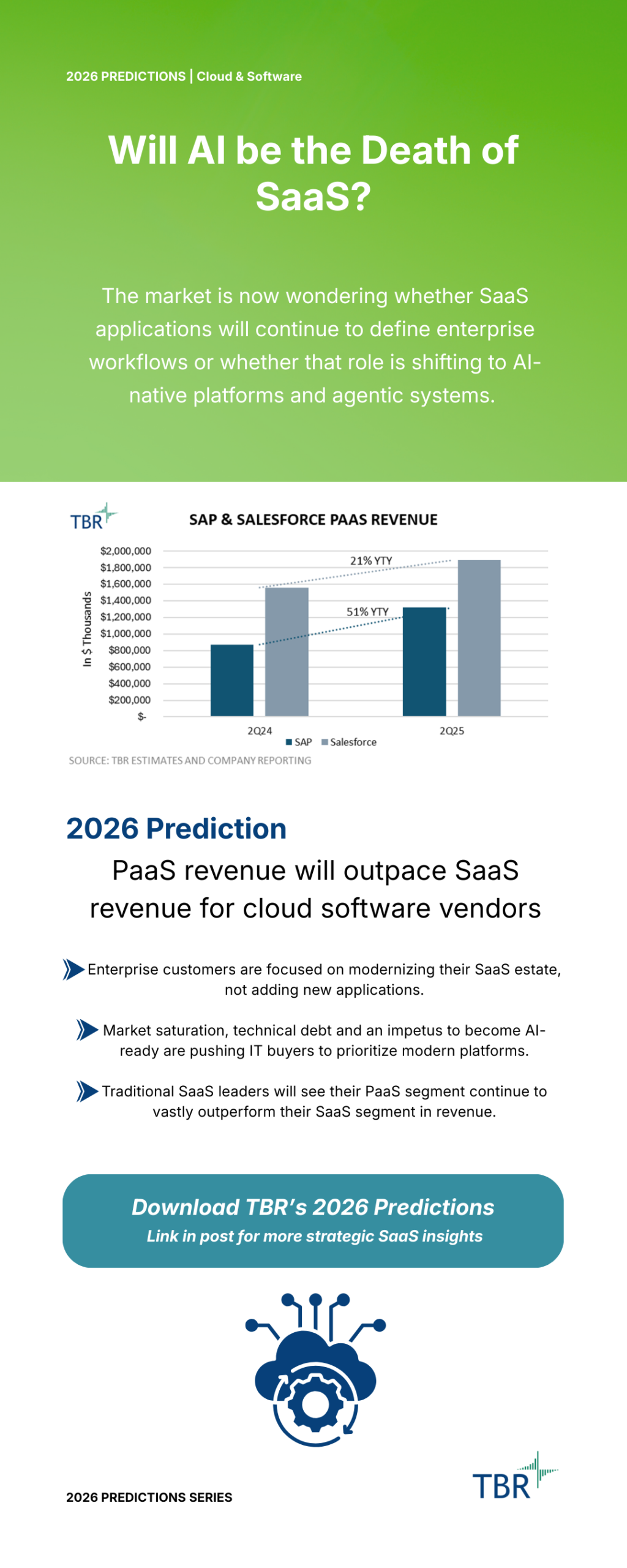
For twenty-five years, the Software-as-a-Service (SaaS) business model stood as the most profitable financial engine in modern corporate history. Powered by recurring subscription revenue, high gross margins, and predictable expansion metrics based on employee headcount growth, SaaS enabled venture capital and public markets to assign historic valuation premiums to enterprise software platforms. Today, that foundational architecture is breaking down.
According to research published by Intellectia AI on February 25, 2026, the widespread deployment of autonomous AI agents across fortune 500 enterprises has triggered an unprecedented structural shift. The core mechanism driving this crisis is simple: software monetization has historically been tied to human labor. When an enterprise added 500 customer service representatives, 100 software engineers, or 50 sales ops professionals, it purchased an equivalent number of seats across platforms like Zendesk, Jira, or Salesforce. But as autonomous AI agents evolve from copilots that assist workers into autonomous operators that perform entire workflows end-to-end, the need for human seats is rapidly shrinking.
Consider the structural breakdown in enterprise customer support. In 2023, an enterprise handling 1 million customer interactions per month required a team of roughly 1,000 support agents, generating $1 million in Annual Recurring Revenue (ARR) for its customer support SaaS provider at $100 per seat per month. By early 2026, autonomous agent frameworks routinely resolve over 80% of these tier-1 and tier-2 interactions without human intervention. The underlying headcount requirement drops from 1,000 workers to 150 supervisors. Under a traditional per-seat contract, the SaaS vendor's ARR automatically collapses by 85%, even as the enterprise's total output and business value increase.
This dynamic has exposed the fundamental misalignment of the per-seat revenue model in an agentic economy: traditional SaaS pricing punishes software vendors for making their products exponentially more efficient.
The Economics of Agentic Disruption: COGS, Inference Costs, and Margin Compression
The disruption of SaaS extends far beyond seat depletion; it poses a fundamental threat to the underlying unit economics of modern software. The structural brilliance of the SaaS model rested on zero marginal cost of distribution. Hosting a static database and serving web-based User Interfaces (UIs) cost pennies per user, yielding gross margins between 80% and 90%.
The agentic paradigm dismantles these unit economics by introducing variable, compute-heavy operational costs into software delivery. Delivering autonomous execution requires multi-step reasoning loops, dynamic tool selection, real-time database querying, and continuous context-window processing. Every automated workflow incurs real-time Cost of Goods Sold (COGS) via large language model (LLM) token inference, vector database lookups, and orchestration compute overhead.
Enterprise software vendors attempting to retrofit AI agents into flat monthly seat subscriptions are suffering severe gross margin degradation. Companies reporting 82% gross margins two years ago are now reporting compressed margins of 58% to 64% as API inference invoices scale faster than top-line contract expansion. To protect operating cash flows, legacy vendors are forced to overhaul their billing architectures, pivoting away from fixed subscriptions toward dynamic token-based, consumption-indexed, or value-aligned outcome pricing.
However, this transition presents a profound operational risk. Enterprise Chief Information Officers (CIOs) accustomed to fixed, predictable software OpEx budgets are resisting un-capped consumption models that introduce quarter-over-quarter billing volatility. Consequently, capital allocation strategies inside major corporations are shifting toward fixed-cost hybrid deployments, fine-tuned open-source models hosted on private cloud infrastructure, and strict outcome-based performance SLAs.
Disruption Matrix: Point Solutions vs. Systems of Record
The 2026 SaaS disruption is not uniformly distributed across the enterprise software landscape. Strategic resilience depends largely on a vendor's position in the enterprise tech stack—specifically whether the software functions as a peripheral "System of Engagement" or a foundational "System of Record."
1. High-Risk Vulnerability: Systems of Engagement & Point Solutions
Category point solutions that primarily serve as basic user interfaces, workflow routing layers, or specialized human task augmentation tools face immediate revenue decay. Examples include standalone copywriting assistants, basic L1/L2 customer service ticketing platforms, simple project management tools, and standard code-completion utilities.
Because these applications lack deep enterprise data gravity, they are easily bypassed by agentic orchestrators. Modern AI agents interact directly with underlying APIs and database schema, rendering middle-layer user interfaces obsolete. Enterprise buyers are systematically canceling individual point-solution seats and routing workflows through unified agent execution layers, accelerating churn for single-feature SaaS companies.
2. Resilient Defensibility: Systems of Record & Data Gravity Hubs
Conversely, core "Systems of Record"—such as Enterprise Resource Planning (ERP) systems, primary relational databases, core Human Capital Management (HCM) platforms, and complex financial ledgers—possess deep structural moats. Platforms like Workday, SAP, Snowflake, and foundational CRM repositories hold the single source of truth for regulated, mission-critical enterprise data.
While these legacy giants are not immune to seat contraction, their control over proprietary schema, security boundaries, and enterprise audit trails gives them decisive leverage. Instead of being replaced, they are absorbing the agentic layer natively. By exposing proprietary API frameworks and embedding native agent orchestrators directly into their core databases, legacy systems of record are capturing market share back from unbundled AI startups—though they must still navigate the transition from seat-based ARR to work-indexed pricing models.
Verified Market Metrics Breakdown
The financial realities separating traditional 2020–2024 SaaS operations from the emerging 2026 Agentic SaaS paradigm are illustrated in the comparative performance metrics below:
| Financial & Operational Metric | Traditional SaaS Paradigm (2020–2024) | Agentic SaaS Era (2026 Benchmark) | Strategic Enterprise Impact |
|---|---|---|---|
| Primary Pricing Vector | Per-User / Per-Seat Monthly Subscription | Outcome-Based, Value-Indexed, or Compute-TIed | Eliminates direct correlation between revenue expansion and customer headcount growth. |
| Average Software Gross Margins | 78% – 85% | 55% – 66% | Model inference COGS and compute orchestration compress bottom-line cash flow margins. |
| Median Net Retention Rate (NRR) | 115% – 130% | 92% – 104% | Seat decay depresses organic expansion metrics, forcing reliant vendors into growth deceleration. |
| Public Market Valuation Multiples | 12x – 25x EV / NTM Revenue | 5x – 9x EV / NTM Revenue | Severe multiple compression resets capital access, triggering private equity consolidation. |
| Customer Expansion Driver | Headcount growth, department rollouts | Work volume executed, task complexity solved | Software vendors capture revenue by scaling work output rather than human team sizes. |
| Enterprise Budget Allocation | Predictable Fixed OpEx (Per Seat) | Hybrid Base OpEx + Variable Usage/Outcome SLA | Procurement teams demand guaranteed enterprise ROI and capped compute exposure limits. |
Institutional Investor Realignment: Private Equity, M&A, and Capital Allocation
The structural decay of traditional SaaS unit economics has triggered a wave of strategic realignments across global financial markets. Venture capital firms that capitalized software startups during the peak 2020–2022 era at 30x–50x revenue multiples are facing systemic write-downs. With public markets refusing to value un-profitable, seat-dependent SaaS platforms above 6x forward revenue, traditional late-stage venture growth rounds have largely stalled.
In response, Private Equity (PE) firms have mounted aggressive buyout campaigns, acquiring mid-cap, seat-heavy legacy SaaS companies experiencing slowing top-line growth. PE sponsors are executing operational playbooks focused on three key areas:
- Force-Migrating Contract Structures: Aggressively restructuring legacy enterprise client contracts from annual per-seat licensing to hybrid base-plus-usage or outcome-based tiering to mitigate seat-churn risk.
- R&D Efficiency Optimization: Replacing extensive offshore engineering teams with localized, high-throughput AI-augmented architecture groups, drastically lowering operational CapEx to restore adjusted EBITDA margins back above 30%.
- Strategic Tech Stack bolt-ons: Purchasing distressed early-stage AI agent infrastructure startups to rapidly retrofit legacy SaaS codebases with native autonomous orchestration capabilities.
Concurrently, enterprise CIOs are re-architecting capital allocation. According to recent enterprise IT spending surveys, software budget growth is no longer flowing to incremental application seats. Instead, capital is being redirected toward custom model fine-tuning, vector database scale, data governance infrastructure, and high-density private cloud compute designed to host autonomous workflow agents internally.
Frequently Asked Questions
How are enterprise CIOs adjusting capital allocations between traditional SaaS licenses and AI agent infrastructure in 2026?
Enterprise CIOs are actively executing vendor consolidation strategies to reduce legacy software seat footprints. Budgets previously designated for incremental SaaS user licenses are being reallocated toward core data architecture, private model orchestration, vector data pipelines, and outcome-based AI vendor contracts. The operational focus has shifted from buying specialized user software interfaces to expanding internal data gravity and securing specialized inference compute capacity.
What specific SaaS product categories face the highest risk of revenue churn due to autonomous agents?
The most vulnerable categories are lightweight point solutions and "Systems of Engagement" that lack control over underlying mission-critical databases. This includes legacy L1/L2 customer service ticketing systems, basic content generation software, basic project management tools, and administrative scheduling tools. Because AI agents can easily replicate the capabilities of these tools via direct API calls, buyers are canceling middle-layer subscriptions in favor of native agent workflows.
Why is outcome-based pricing replacing seat-based licensing, and how does it affect SaaS profit margins?
Outcome-based pricing aligns software costs with the actual economic value created—such as charging per resolved customer ticket, per closed sales lead, or per finalized code deployment—rather than charging for human access seats. While this pricing structure aligns vendor incentives with customer value, it introduces variable AI model inference costs (COGS), lowering traditional software gross margins from historical 80%+ levels down to 55%–65%.
Will legacy enterprise software giants survive the transition to agentic SaaS?
Legacy giants that operate fundamental "Systems of Record" (such as ERP, transactional databases, core CRM platforms, and HCM systems) are well-positioned to survive, provided they successfully monetize autonomous agents within their existing ecosystems. Because these companies control the canonical enterprise data, enterprise security permissions, and audit logs required for safe agent execution, they can capture market share by embedding agentic automation directly into their systems of record.
Future Outlook: Strategic Milestones to Watch (2026–2030)
As the enterprise ecosystem navigates this transition, the software market will establish a new operational balance. Over the next 24 to 36 months, financial analysts, corporate strategy leads, and institutional investors should monitor three critical milestones:
- The Stabilization of Outcome Metric Standards: The industry will codify standard, audited metrics for outcome-based pricing (e.g., standard rates for autonomously resolved customer interactions or executed financial reconciliations), establishing consistent contract language across enterprise procurement departments.
- Inference Efficiency Breakthroughs & Margin Recovery: As localized fine-tuned small language models (SLMs) and hardware innovations reduce token inference costs, software gross margins are expected to bottom out and gradually recover from 55% back toward 70% for top-tier agentic platforms.
- The Enterprise "API-First" Architecture Mandate: Legacy applications that fail to expose comprehensive, high-throughput API endpoints for external AI agents will face total enterprise obsolescence. Software defensibility will no longer be determined by user interface design, but by system accessibility, computational execution speed, and database security architecture.
The transition away from per-seat SaaS is not an existential crisis for software itself, but rather an evolution in how software delivers enterprise value. While the era of easy, seat-driven expansion ARR has reached its terminal boundary, platforms that successfully anchor themselves as the underlying computational platforms for autonomous enterprise work will define the next generation of mega-cap technology leaders.