For the past four years, the global technology narrative was dominated by a single, intoxicating pursuit: the race to build the smartest artificial intelligence model. Silicon Valley venture capitalists and boardrooms from Seattle to Tokyo poured billions into token windows, parameter counts, and reinforcement learning techniques, hunting for the elusive spark of Artificial General Intelligence (AGI). But by the summer of 2026, the battlefront has decisively shifted.
The race is no longer about who can write the most elegant algorithm. It is about who can command the most physical territory, the most copper, the most fiber-optic cables, and, above all, the most megawatts of electricity. According to global capital expenditure trackers and industry benchmarks, cumulative global spending on AI infrastructure has officially crossed the historic $1 trillion milestone.
As HPCwire first signaled in its landmark May reports, the transition from software optimization to brutal physical scaling has triggered an unprecedented capital expenditure cycle. The world’s primary hyperscalers—Microsoft, Alphabet, Amazon Web Services, and Meta—along with sovereign wealth funds and specialized cloud providers, are engaged in a relentless, high-stakes land grab. Here is an investigative breakdown of where this capital is being deployed, the systemic bottlenecks threatening to stall progress, and the massive macroeconomic implications of this infrastructure supercycle.
Executive Takeaways
- The Capital Shift: AI infrastructure capital allocation has transitioned from speculative venture-backed model training to massive, multi-year physical infrastructure deployments, surpassing $1 trillion in cumulative spend.
- The Power Bottleneck: Electrical grid capacity and transformer availability have replaced GPU allocations as the primary limiting factor for next-generation 1-Gigawatt (GW) data center clusters.
- The ROI Reckoning: Wall Street is demanding a transition from "build-it-and-they-will-come" valuation multiples to concrete enterprise ROI, driving a shift toward highly optimized custom silicon (ASICs) to reduce total cost of ownership (TCO).
- Geopolitical Re-alignment: Sovereign AI initiatives in Europe, the Middle East, and Asia are driving a decentralized infrastructure layer, decoupling from traditional US-centric cloud hosting to ensure data sovereignty and regulatory compliance.
The Geography of $1 Trillion: Where the Capital is Settling

To understand the sheer scale of a trillion-dollar capital deployment, one must look past the balance sheets and into the physical world. The capital is not dissipating into digital ether; it is being cemented into massive industrial complexes across the globe. The modern AI data center is no longer a standard server warehouse—it is an industrial-scale power utility and chemical processing plant combined into one.
1. Next-Generation Accelerators and Advanced Packaging
While NVIDIA continues to capture the lion's share of hardware budgets with its Blackwell Ultra and upcoming Rubin architectures, the silicon landscape is undergoing a structural bifurcation. Hyperscalers are aggressively diversifying their risk mitigation strategies. This has led to a surge in custom silicon pipelines, such as Google’s TPU v6, Amazon's Trainium3, and Meta’s MTIA.
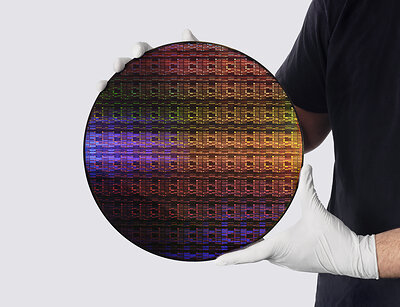
A significant portion of the capital is flowing directly to the semiconductor supply chain bottleneck: Taiwan Semiconductor Manufacturing Company (TSMC) and its advanced packaging facilities (CoWoS—Chip-on-Wafer-on-Substrate). High-Bandwidth Memory (HBM4) has become one of the most fiercely contested commodities in the global supply chain, with SK Hynix, Samsung, and Micron locking in multi-billion-dollar advance-payment agreements with hyperscalers through 2028.
2. The Thermal Management Revolution: Direct-to-Chip and Immersion Cooling
As compute density climbs past 100 kilowatts (kW) per rack, traditional air cooling has reached its thermodynamic limit. The industry is currently undergoing a mandatory, capital-intensive transition to liquid cooling. Hundreds of billions of dollars are being funneled into retrofitting existing facilities and designing new greenfield sites with direct-to-chip liquid cooling loops, cooling towers, and dielectric immersion tanks.
This shift has minted new market giants in the industrial cooling sector. Companies specializing in liquid-to-air heat exchangers, manifold distribution units, and specialized quick-disconnect couplings are seeing their valuation multiples skyrocket as hyperscalers attempt to lock up global manufacturing capacity for cooling components.
3. Power Grid Infrastructure and Sovereign Energy Acquisition
Perhaps the most startling transformation of the AI infrastructure boom is the tech sector's emergence as a major player in global energy markets. Tech giants are no longer merely signing virtual Power Purchase Agreements (PPAs); they are actively purchasing entire power generation assets and funding nuclear fusion, Small Modular Reactors (SMRs), and deep geothermal startups.
The capital is flowing directly into substations, high-voltage transformers, and dedicated grid-tie infrastructure. Because utility companies operate on multi-year regulatory planning cycles, hyperscalers are bypassed standard queues by building private microgrids and importing natural gas turbines directly to their data center campuses to ensure immediate energy liquidity.
Verified Capital Allocation & Technology Metrics
The following dataset outlines the distribution of the $1 trillion cumulative investment across the primary pillars of the AI infrastructure stack, tracking estimated spend, compound annual growth rate (CAGR), and the primary industrial beneficiaries.
| Infrastructure Category | Estimated Cumulative Spend (USD) | Projected 5-Year CAGR | Primary Tech/Components involved | Critical Bottlenecks |
|---|---|---|---|---|
| Compute & Silicon | $420 Billion | 28.5% | NVIDIA Blackwell/Rubin, custom ASICs (TPUs), HBM4, TSMC CoWoS packaging | Advanced lithography, packaging capacity, silicon substrate supply |
| Grid Integration & Energy Assets | $230 Billion | 34.2% | SMR nuclear, natural gas microgrids, high-voltage substations, battery storage | Utility regulatory approvals, step-up transformer manufacturing lead times (3+ years) |
| Thermal Management & Facilities | $180 Billion | 41.0% | Direct-to-chip liquid cooling, CDU manifolds, dry coolers, secondary piping loops | Precision manufacturing of leak-proof quick disconnects, chemical coolant regulations |
| High-Speed Optical Networking | $170 Billion | 22.1% | 800G/1.6T optical transceivers, InfiniBand, Ultra Ethernet switches, co-packaged optics | Indium phosphide supply, laser calibration yield rates, fiber-optic cable manufacturing capacity |
The Enterprise ROI Paradox and Valuation Multiples
As capital expenditures climb to unprecedented heights, Wall Street is asking a difficult question: *Where is the revenue?* The valuation multiples of hyperscalers are increasingly tied to their ability to demonstrate that this trillion-dollar toll road will actually be used by paying passengers.
Currently, a significant gap exists between the capital being spent on infrastructure and the direct software revenues generated by generative AI applications. This "revenue gap" has caused temporary tremors in equity markets, forcing cloud providers to change how they talk about capital allocation.
Instead of pitching raw model capabilities, operators are focusing heavily on infrastructure scalability and Total Cost of Ownership (TCO) reduction for their enterprise clients. By shifting workloads from general-purpose GPUs to optimized, custom cloud compute architectures, cloud providers can offer lower inference costs to enterprise clients, making enterprise ROI achievable.
Furthermore, risk mitigation has become a primary driver of infrastructure investment. For the major cloud providers, the risk of under-building and losing market share to a rival is far more dangerous than the risk of over-building and carrying underutilized capacity for a few quarters. This structural asymmetry ensures that the capital spend will continue to outpace immediate software revenue in the medium term, supported by strong balance sheets and deep market liquidity.
People Also Ask (FAQ)
Is the $1 trillion AI infrastructure spend a speculative bubble, or is it fundamentally structural?
Unlike the dot-com bubble, which was built on speculative fiber-optic rollouts by highly leveraged startups, the current AI infrastructure buildout is funded by the cash-richest corporations in human history. The capital allocation is a structural bet on the virtualization of global cognitive labor. While there may be short-term digestion periods where hardware acquisition slows, the foundational investments in power generation, optical networking, and advanced thermal management are permanent upgrades to the global computing fabric.
What are the primary physical bottlenecks threatening to halt AI data center expansion?
The primary bottlenecks have shifted from digital to physical. First is electrical grid capacity—data centers are competing with the electrification of transportation and industrial manufacturing for limited grid capacity. Second is the supply chain for grid hardware; step-up transformers currently have lead times exceeding three years. Third is water scarcity; even liquid-cooled data centers require substantial heat rejection systems that can strain local water tables, leading to increased regulatory compliance hurdles.
How does "Sovereign AI" change the geographic distribution of this $1 trillion spend?
Sovereign AI refers to nation-states—such as Saudi Arabia, the UAE, Japan, and members of the European Union—building their own domestic AI infrastructure rather than relying on US-hosted cloud environments. Driven by data privacy laws, national security, and regulatory compliance, these nations are investing hundreds of billions of dollars in domestic data centers. This has created a highly lucrative secondary market for hardware providers who can deliver turnkey, sovereign-compliant infrastructure clusters.
Are traditional enterprise organizations seeing actual ROI on these high-cost deployments?
Enterprise ROI is real but highly concentrated. Organizations are finding success by moving away from broad, open-ended horizontal chatbots and focusing instead on deep, vertical-specific automation. Industries with high informational complexity—such as legal services, drug discovery, financial compliance, and software engineering—are reporting double-digit productivity gains. However, realizing this value requires significant internal restructuring and data pipeline preparation, which can slow the initial adoption curve.
Future Outlook: The Road to the Multi-Gigawatt Campus
As we look toward the end of the decade, the shape of AI infrastructure is poised for another radical transformation. The era of the scattered, 50-megawatt data center is coming to an end. In its place, the industry is designing multi-gigawatt computing campuses. These mega-sites will be positioned directly adjacent to dedicated clean energy sources, such as nuclear power plants or massive, dedicated solar-storage arrays.
We are also on the cusp of an optical revolution. Inside the data center, traditional copper wiring is hitting its physical limits for speed and distance. Over the next three years, co-packaged optics (CPO) and silicon photonics will begin replacing copper interconnects at the rack level. This transition will allow data centers to operate as a single, massive distributed computer, virtually eliminating latency bottlenecks between separate compute clusters.
The $1 trillion spent so far is merely the foundation of the next industrial era. The entities that control this physical layer will hold the keys to the future of global commerce, national security, and scientific discovery. While the software models of tomorrow will continue to evolve, they will all run on the massive, power-hungry, and incredibly expensive toll road being built today.