Executive Takeaways
- Margin Expansion vs. Capital Expenditure: While generative and predictive models are dramatically reducing operational expenditure through task automation, infrastructure scalability demands unprecedented cloud compute investments.
- Strategic Risk Mitigation: Adopting AI without a rigorous compliance framework exposes enterprises to severe regulatory penalties, intellectual property leakage, and market valuation contraction.
- Human Capital Shift: Enterprise resources are rapidly transitioning away from repetitive administrative workflows toward high-margin creative problem-solving and complex decision engineering.
NEW YORK — In the corporate boardrooms of Fortune 500 enterprises, the dialogue surrounding artificial intelligence has shifted decisively from speculative experimentation to existential capital allocation. According to comprehensive data released by primary wire sources, including IBM, organizations that successfully integrate machine learning architectures into their core workflows are realizing profound competitive advantages. Yet, this technological leap is accompanied by unprecedented operational hazards. As Chief Executive Officers and Chief Financial Officers re-evaluate their balance sheets ahead of the upcoming fiscal cycles, the central mandate has become clear: extract measurable enterprise ROI while insulating the firm against systemic integration risks.
The macroeconomic backdrop of this transformation is defined by margin pressure and a relentless quest for operational efficiency. For decades, productivity growth in developed economies plateaued, leaving executives searching for structural catalysts to drive valuation multiples. Artificial intelligence has emerged as the definitive answer, though its implementation requires a nuanced understanding of software architecture, data hygiene, and regulatory compliance. The organizations outpacing their legacy peers are those treating AI not as a localized IT upgrade, but as a foundational re-engineering of the enterprise value chain.
The Mechanics of Productivity: Automating the Mundane to Drive Valuation
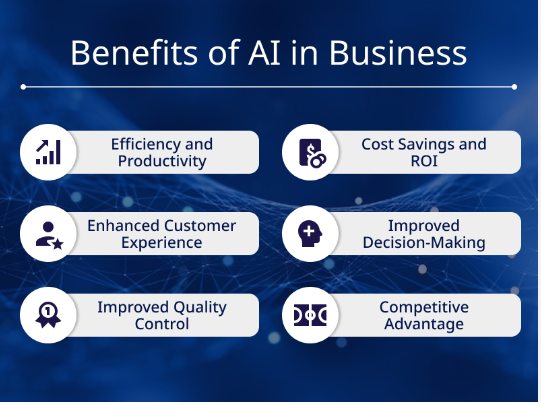
At the granular level of daily operations, the most immediate manifestation of the benefits of AI for business lies in the eradication of repetitive friction. Administrative burdens, manual data entry, routine code generation, and first-tier customer triage are increasingly managed by autonomous agents and large language models. By offloading these high-frequency, low-complexity tasks, companies are witnessing a dramatic surge in employee productivity.
This labor reallocation does more than merely trim payroll inefficiencies; it alters the qualitative output of human capital. Knowledge workers, freed from the inertia of bureaucratic repetition, are redeployed toward high-value initiatives such as advanced product design, strategic market expansion, and complex risk mitigation. In sectors ranging from financial services to industrial manufacturing, this shift has compressed product development lifecycles by weeks, if not months.
Furthermore, early evaluative studies—such as those published through academic-industrial partnerships like the C3.ai Digital Transformation Institute (DTI)—demonstrate a widening performance gap. Enterprises that have embedded AI across their core business processes consistently outperform legacy competitors in inventory turnover, customer acquisition cost reduction, and asset utilization. Market liquidity and investor confidence increasingly favor these agile operators, punishing firms that remain tethered to manual paradigms.
Infrastructure Scalability and the Cost of Compute

Despite the undeniable upside, realizing the full benefits of AI for business requires navigating a complex financial and technical maze. Building or renting state-of-the-art cloud compute architecture demands significant capital expenditure. Graphics Processing Units (GPUs) and specialized tensor processing units represent major line items on modern corporate balance sheets.
Consequently, the race for artificial intelligence supremacy has catalyzed a massive restructuring of corporate IT budgets. Companies must weigh the short-term drag on earnings against the long-term imperative of market dominance. Those relying on piecemeal, siloed software implementations often find themselves trapped in pilot purgatory—incurring software licensing costs without realizing systemic enterprise-wide returns.
| Metric / Dimension | Legacy Operational Model | AI-Integrated Enterprise Model |
|---|---|---|
| Primary Cost Driver | Manual labor, high headcount growth | Cloud compute, specialized GPU infrastructure |
| Product Design Cycle | Linear, sequential prototyping (6–18 months) | Parallel generative simulation (Weeks to days) |
| Risk Exposure | Human error, data silos, slower response times | Regulatory compliance, IP leakage, model drift |
| Employee Focus | Routine administrative tasks & data routing | Creative problem-solving & strategic engineering |
Industry & Market Implications: Winners and Laggards
The bifurcation of global industries along technological lines is accelerating. Financial institutions leveraging predictive models for automated underwriting and fraud detection are experiencing structurally lower credit loss ratios. Meanwhile, retail and supply chain conglomerates utilizing machine learning for demand sensing are drastically reducing warehousing overhead and mitigating supply chain shocks.
Conversely, organizations that treat artificial intelligence as a superficial marketing buzzword or deploy algorithms without robust governance are facing severe market penalties. Data breaches, biased algorithmic outputs, and intellectual property compromises have turned poorly managed AI deployments into liabilities that can trigger immediate valuation contractions. The modern risk committee must now account for algorithmic integrity with the same rigor traditionally reserved for liquidity and credit risk.
Frequently Asked Questions (People Also Ask)
How do companies measure the true ROI of artificial intelligence implementations?
Measuring enterprise ROI on AI requires tracking both direct cost reductions—such as lowered headcount expenditure for routine processing and reduced error rates—and indirect value drivers, including accelerated product time-to-market, enhanced customer lifetime value, and improved asset utilization ratios over multi-year periods.
What are the primary security risks associated with enterprise AI adoption?
Key risks include the inadvertent leakage of proprietary corporate data into public model training sets, vulnerabilities to adversarial prompt injections, regulatory non-compliance regarding data privacy laws (such as GDPR and emerging EU AI Acts), and potential liabilities arising from biased or hallucinations-prone algorithmic outputs.
How does AI impact existing corporate infrastructure and cloud spending?
AI adoption typically drives an initial surge in capital expenditure directed at cloud compute architecture, specialized hardware (GPUs), and data pipeline modernization. However, these upfront costs are designed to be offset by long-term operational expense reductions achieved through automation and enhanced workflow efficiencies.
Can small and medium-sized enterprises (SMEs) compete with tech giants in leveraging AI?
Yes. While tech giants possess superior capital reserves for custom model training, SMEs increasingly leverage scalable, enterprise-grade APIs and pre-trained foundation models. This allows smaller firms to achieve significant productivity gains without bearing the prohibitive costs of foundational model development.
Future Outlook: Milestones to Watch in Enterprise Intelligence
As the market matures, the next twelve to twenty-four months will serve as a critical crucible for corporate artificial intelligence strategy. Executive leadership must monitor several key milestones:
- Regulatory Codification: The finalization of international AI governance frameworks will dictate compliance standards, forcing enterprises to adopt rigorous model auditing practices.
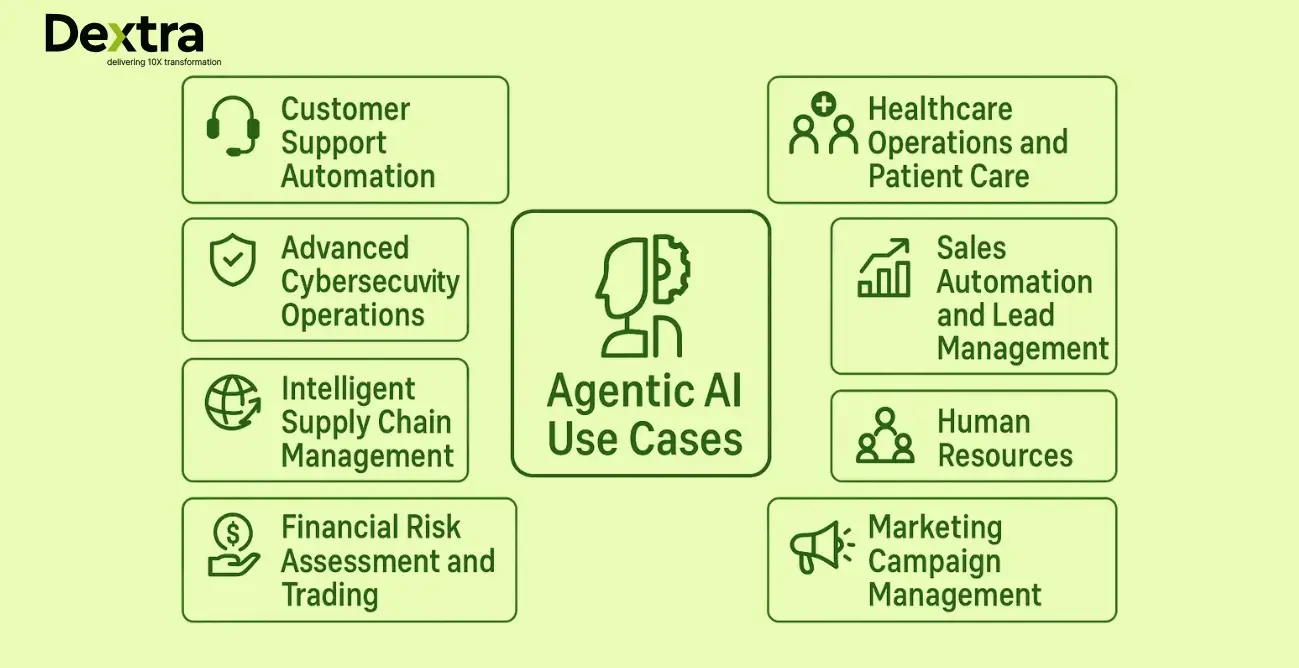
- Autonomous Agent Deployment: The evolution from static chatbots to autonomous, multi-step enterprise agents capable of executing complex cross-departmental workflows will redefine operational efficiency.
- Compute Efficiency Breakthroughs: Innovations in quantized models and edge-computing hardware are expected to lower inference costs, democratizing advanced AI access across mid-market corporations.
Ultimately, the corporate winners of the next decade will not be defined merely by the sophistication of their algorithms, but by the strategic discipline with which they balance innovation, capital allocation, and risk mitigation.