
NEW YORK — For decades, corporate productivity metrics resembled a flatline. Despite trillions of dollars poured into enterprise software, cloud migrations, and digital transformations, global output per worker grew at historic lows. That era is definitively over. According to comprehensive enterprise telemetry released by IBM and corroborated by global market research, artificial intelligence has crossed the threshold from an experimental novelty into the core engine of modern balance sheets. Yet, as executive boards rush to capture valuation multiples driven by automation, a sobering operational reality is taking shape: deploying machine intelligence without a rigorous strategic framework exposes institutions to unprecedented vectors of corporate risk.
As senior financial editors and investigative desks track the macroeconomic ripples of this technological paradigm shift, the mandate for executive leadership is clear. The conversation has moved past theoretical capabilities. Today, Chief Executive Officers, Chief Financial Officers, and Chief Risk Officers are grappling with hard numbers regarding capital expenditure, cloud compute architecture, regulatory compliance, and workforce restructuring. This report delivers an exhaustive, ground-level analysis of how artificial intelligence is transforming enterprise operations, driving cost efficiencies, and rewriting the rules of global competition.
Executive Takeaways
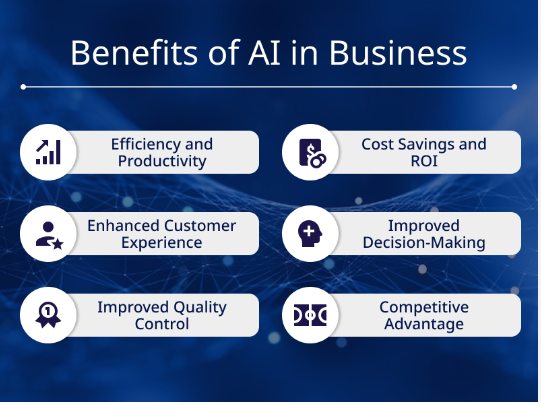
- Capital Efficiency & Cost Compression: AI deployment is fundamentally altering enterprise cost structures by automating repetitive workflows, reducing operational overhead, and accelerating time-to-market for complex product design.
- The Strategic Risk Divide: Organizations that implement artificial intelligence without strict data governance, regulatory compliance protocols, and risk mitigation strategies face catastrophic vulnerabilities, including intellectual property leakage and compliance penalties.
- Human Capital Evolution: Far from simply displacing labor, enterprise AI is shifting employee bandwidth away from mechanical repetition toward high-value creative problem-solving and complex decision-making.
- Macroeconomic Divergence: Industry leaders utilizing advanced process automation are rapidly widening a performance gap against legacy laggards, creating a two-tier global marketplace.
The Catalytic Shift: Beyond the Hype Cycle
To understand the current economic impact of artificial intelligence, one must examine the convergence of massive cloud compute scalability, algorithmic maturity, and surging enterprise demand for operational elasticity. For years, digital transformation meant digitizing paper and storing records in decentralized databases. Today, machine learning models, large language models, and neural networks actively analyze unstructured data in real time, transforming passive data lakes into active cognitive engines.
According to enterprise data frameworks highlighted in recent industry benchmarks, including studies from academic-industrial consortia like the C3.ai Digital Transformation Institute (DTI), the primary advantage of modern AI lies in its ability to streamline enterprise workflows. Companies that successfully integrate AI into their operational core are observing dramatic compression in transaction cycles, optimized supply chains, and enhanced precision in product development.
Consider the mechanics of routine enterprise operations. In legacy corporate structures, thousands of man-hours are consumed annually by repetitive tasks: invoice processing, compliance checks, basic customer tiering, and routine code debugging. By deploying intelligent automation frameworks, organizations redirect human capital toward strategic asset allocation, high-level negotiation, and creative product design. This reallocation is not merely a matter of employee satisfaction; it directly impacts enterprise ROI and drives margin expansion.
Quantifying the Transformation: Metrics and Benchmarks

In the financial markets, valuation models increasingly reward enterprises that demonstrate scalable artificial intelligence integration. To evaluate the tangible operational differences between organizations utilizing advanced AI processes and those relying on legacy workflows, analysts look at several core performance indicators.
| Performance Metric | Legacy Enterprise Operations | AI-Optimized Enterprise Operations | Net Economic Impact |
|---|---|---|---|
| Routine Task Processing Time | Hours to days per manual workflow | Seconds to minutes via automated pipelines | Up to 85% reduction in administrative overhead |
| Product Design & Prototyping | Months of iterative physical testing | Days utilizing generative simulation models | Accelerated time-to-market and lower R&D burn |
| Error Rates in Data Compliance | Variable, subject to human fatigue | Near-zero under continuous algorithmic monitoring | Substantial mitigation of regulatory penalty risks |
| Employee Allocation | 60% transactional, 40% strategic | 15% transactional, 85% strategic & creative | Maximized intellectual capital utilization |
As detailed in the comparative data above, the operational delta between automated and legacy businesses is widening. Enterprises that fail to modernize their process architectures find themselves unable to compete on speed, pricing, or product customization.
Industry & Market Implications: Winners and Losers
The macroeconomic ramifications of widespread AI adoption extend far beyond Silicon Valley boardrooms, reshaping entire sectors from financial services and healthcare to heavy manufacturing and logistics.
Who Wins
The definitive winners in this economic realignment are enterprises with proprietary data moats, robust cloud compute architecture, and forward-thinking leadership. Financial institutions leveraging real-time machine learning for fraud detection and algorithmic credit scoring are compressing loan processing times while lowering default rates. In the retail and supply chain sectors, predictive demand forecasting allows market leaders to optimize inventory levels, slashing holding costs and insulating themselves against global supply chain shocks. Furthermore, technology infrastructure providers—spanning semiconductor manufacturers, cloud hyperscalers, and enterprise cybersecurity firms—continue to capture massive market liquidity.
Who Loses
Conversely, organizations trapped in legacy technological debt face severe headwinds. Companies that view artificial intelligence merely as a cost-cutting gimmick rather than a fundamental restructuring of business models are experiencing margin erosion. Furthermore, firms with lax regulatory compliance frameworks and poor data governance are discovering that rapid AI deployment without guardrails leads to high-profile data breaches, proprietary data leaks, and aggressive regulatory enforcement actions from global watchdogs.
Frequently Asked Questions (People Also Ask)
What are the primary operational benefits of artificial intelligence for modern businesses?
The core operational benefits include dramatic productivity increases through the automation of repetitive, rules-based tasks; accelerated product design and rapid prototyping via generative algorithms; reduced operational costs; and improved decision-making through real-time data analytics. By handling high-volume administrative burdens, AI frees up human employees to focus on creative problem-solving, strategic planning, and complex customer interactions.
Does adopting enterprise AI pose significant financial and operational risks?
Yes. Adopting AI without a clear strategic governance framework exposes organizations to severe vulnerabilities. Key risks include intellectual property leakage, algorithmic bias, compliance violations under evolving international data protection laws (such as the European Union AI Act), and heavy capital expenditures on unproven infrastructure. Effective risk mitigation requires robust data privacy protocols, continuous model auditing, and cross-functional oversight from legal, technical, and financial leadership.
How does artificial intelligence impact human capital and employee productivity?
AI transforms workforce dynamics by shifting employee responsibilities away from mechanical, repetitive tasks toward higher-value cognitive functions. Rather than triggering mass layoffs across all sectors, mature AI integration typically augments human capabilities, enabling workers to produce higher-quality output, analyze complex market trends faster, and engage in more innovative product development.
What infrastructure is required to successfully scale AI across a global enterprise?
Scaling enterprise AI requires a secure, scalable cloud compute architecture, clean and centralized data lakes, robust cybersecurity protocols, and specialized talent pools. Organizations must also implement rigorous API management and governance tools to ensure that machine learning models integrate seamlessly with existing enterprise resource planning (ERP) and customer relationship management (CRM) systems.
Future Outlook: Strategic Imperatives for the Years Ahead
Looking toward the horizon, the trajectory of artificial intelligence in commerce points toward autonomous enterprise operations. We are moving rapidly from descriptive analytics (what happened) and predictive analytics (what might happen) to prescriptive and autonomous systems (systems that execute complex decisions within defined corporate guardrails).
For executive leadership teams, complacency is no longer an option. The coming years will separate market dominators from distressed legacy players based on how efficiently they allocate capital toward technological infrastructure, talent acquisition, and rigorous risk governance. Those who master the delicate balance between aggressive innovation and disciplined risk management will capture disproportionate market share, while those who hesitate will be left behind in an unforgiving global marketplace.


