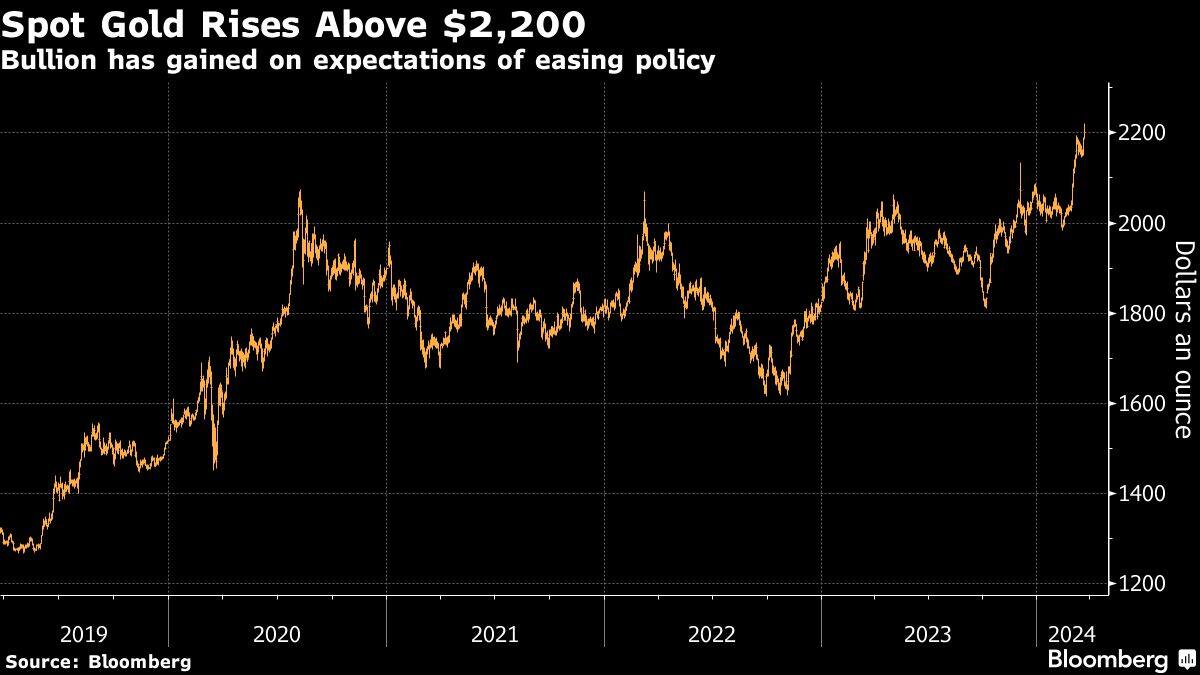
NEW YORK & LONDON — In one of the most remarkable decouplings in modern macroeconomic history, spot gold (XAU/USD) continues to demonstrate resilient upward momentum, even as financial markets price in a prolonged regime of tighter U.S. monetary policy. Traditionally, rising real interest rates and a firm U.S. Dollar Index (DXY) act as severe monetary gravitas on precious metals, elevating the opportunity cost of holding non-yielding assets. Yet, bullion continues to trade near historic elevated bands, caught between aggressive safe-haven demand, unprecedented central bank accumulation, and the persistent overhang of hawkish Federal Reserve commentary.
This structural shift is challenging decades of institutional macro models. As Federal Reserve officials signal a "higher-for-longer" rate trajectory to tame sticky core inflation, institutional asset managers and sovereign reserve desks are recalibrating their risk mitigation frameworks. The resulting dynamic is a complex tug-of-war: short-term monetary policy drag versus long-term sovereign structural hedging against systemic debt overhangs, currency debasement, and geopolitical fragmentation.
Executive Takeaways
Test Our Free AI & Tech Utilities Suite
Calculate LLM API token costs, analyze article dwell-time, or simulate tech DCA returns.
- Monetary Policy Headwinds: Resilient U.S. labor data and persistent services inflation have pushed market expectations for Federal Reserve rate cuts further into the horizon, keeping 10-year Treasury real yields elevated above historical averages.
- Structural Central Bank Demand: Official sector buying—led by the People’s Bank of China (PBoC), the Reserve Bank of India (RBI), and Middle Eastern sovereign wealth funds—has created a structural price floor, effectively breaking gold’s historical inverse correlation with U.S. real yields.
- Cross-Asset Hedging Strategies: Enterprise treasury desks and family offices are increasingly utilizing gold not merely as an inflation hedge, but as a zero-counterparty-risk collateral asset to mitigate macroeconomic turbulence and sovereign debt risks.
- Technical & Liquidity Trajectory: While futures positioning indicates short-term risk of algorithmic profit-taking if the Fed hints at further tightening, physical market tightness and ETF inflows outside North America continue to absorb derivative selling pressure.
The Macro Paradox: Safe-Haven Bids vs. Hawkish Monetary Mechanics

For over forty years, the primary transmission mechanism for gold pricing was straightforward: calculated through the lens of real rates (the nominal Treasury yield minus inflation expectations) and the relative strength of the U.S. dollar. When the Federal Reserve tightens monetary policy—draining liquidity via quantitative tightening (QT) and elevating the federal funds rate—real yields expand. In such environments, capital traditionally flees non-interest-bearing bullion in favor of high-yielding, short-duration U.S. paper, such as 6-month Treasury bills yielding over 5%.
However, the current economic cycle has disrupted this classic macro framework. Despite Federal Reserve Chair Jerome Powell and regional Fed presidents reiterating that monetary policy will remain restrictive until inflation convincingly converges toward the 2% target, gold prices have stubbornly resisted major drawdowns. Analysts point to three primary catalysts driving this structural divergence:
1. Geopolitical Fragmentation & Sovereign Reserve Diversification
Following the weaponization of Western financial clearing mechanisms and the freezing of foreign exchange reserves during recent international conflicts, non-aligned central banks have fundamentally reassessed their reserve architecture. Sovereign institutions are executing systematic capital allocation strategies away from fiat reserve assets toward unencumbered physical bullion. According to data from the World Gold Council, official sector net purchases have surpassed 1,000 metric tons annually for two consecutive years—a pace unseen since the collapse of the Bretton Woods system.
2. The Fiscal Dominance & Debt Sustainability Narrative
Institutional investors are increasingly calculating the long-term solvency metrics of developed nations, particularly the United States, where national debt has expanded past $34 trillion with annual fiscal deficits hovering around 6% of GDP. Under a prolonged regime of higher interest rates, debt servicing costs threaten to crowd out private investment and force eventual monetary accommodation by central banks. This phenomenon—often termed "fiscal dominance"—causes investors to demand a risk premium on fiat obligations while treating gold as the ultimate sovereign risk hedge.
3. Physical Market Tightness and Western Paper Decoupling
A distinct divergence has opened between COMEX futures paper trading in New York and physical bullion settlement premiums in Asian markets. While Western institutional funds have historically driven gold price trends through ETF creations and redemptions, physical flows to Asian retail buyers, central banks, and private wealth networks in London and Switzerland have dominated price discovery, effectively neutralizing paper short positions.
Verified Data & Macroeconomic Metrics Breakdown
To understand the friction between monetary policy expectations and spot gold valuations, the following breakdown illustrates key asset metrics, historical correlation shifts, and underlying institutional flows over recent quarters.
| Macroeconomic Benchmark / Metric | Current Trajectory | Historical Standard Baseline | Implied Market Impact |
|---|---|---|---|
| U.S. 10-Year Real Yield (TIPS) | Elevated (~1.90% – 2.15%) | Sub-1.00% across post-GFC era | Strong bearish headwind for non-yielding assets; currently being ignored by physical spot buyers. |
| U.S. Dollar Index (DXY) | Consolidating (104.00 – 106.50) | Mean range of 95.00 – 98.00 | Strong dollar limits gains in emerging market currencies, but elevates domestic gold demand globally. |
| Central Bank Gold Net Purchases | Historic Highs (>1,000 t/year) | Long-term average ~400–500 t/year | Establishes a resilient price floor; mitigates sell-offs induced by Fed hawkishness. |
| Global Gold ETF AUM Flows | Western Outflows / Asian Inflows | Synchronized global expansion/contraction | Structural reallocation; institutional money shifting from paper derivative vehicles to physical custody. |
| Implied Terminal Fed Funds Rate | 5.25% – 5.50% (Delayed Cuts) | Post-2008 average of 0.25% – 2.50% | Maintains elevated short-term risk-free yield alternatives, keeping retail speculative flows muted. |
Industry & Market Implications: Corporate Allocations & Sector Impact
The tension between high interest rate regimes and elevated gold prices creates distinct winners, losers, and structural pivots across corporate finance, institutional asset management, and mining operations.
Corporate Treasury & Wealth Management Strategies
Enterprise treasurers managing corporate balance sheets are reassessing capital allocation models. Historically focused purely on short-term commercial paper and bank deposits, treasury operations facing geopolitical counterparty risks are dedicating fractional allocations to physical gold as part of a diversified liquidity layer. This strategic shift is driven by the desire to maintain liquidity without exposure to sovereign default or regulatory bail-in risks.
Precious Metals Mining Sector Dynamics
While spot gold trading near all-time highs typically generates expanding profit margins for senior gold producers, persistent global inflation has introduced operational complexity:
- All-In Sustaining Costs (AISC): Miners face significant cost inflation across labor, diesel fuel, mining equipment, and energy inputs, which has compressed theoretical profit margins despite higher revenues.
- Valuation Multiples: Senior and junior mining equities have lagged spot gold prices significantly. Institutional investors are holding mining management teams accountable for capital discipline, demanding higher dividend distributions and strategic share buybacks rather than expensive exploration M&A.
- Infrastructure Scalability & Risk Mitigation: Mining operations in emerging markets face elevated jurisdiction risks, leading institutional capital to favor operators with tier-one assets in politically stable environments.
Commodity Exchanges & Liquidity Frameworks
The persistence of high real yields alongside rising bullion prices has created fragmented market liquidity. High-frequency algorithmic trading desks operating on classic quantitative models continue to execute automated short positions whenever U.S. inflation data prints hotter than expected. However, these programmatic shorts are increasingly being met by deep institutional bids in the OTC physical market, creating sharp intra-day volatility spikes and market squeezes.
Frequently Asked Questions (People Also Ask)
Why is gold rising when interest rates and real yields are high?
While high interest rates make non-yielding assets like gold less attractive relative to cash or bonds, gold is currently being propelled by counter-balancing forces. These include record central bank purchasing (especially from non-Western nations diversifying out of the U.S. dollar), systemic concerns over national debt levels, persistent geopolitical risk premiums, and robust physical demand across Asia. These structural factors are overriding the traditional inverse correlation between gold and interest rates.
How does tighter U.S. monetary policy directly affect spot gold prices?
Tighter monetary policy—executed via elevated federal funds rates and quantitative tightening—strengthens the U.S. dollar and pushes Treasury yields higher. Because gold is priced in U.S. dollars globally, a stronger dollar makes gold more expensive for foreign currency holders. Additionally, higher yields increase the opportunity cost of holding physical bullion compared to yield-bearing assets, typically exerting downward pressure on gold futures.
What happens to gold prices if the Federal Reserve delays rate cuts?
If the Fed delays rate cuts due to persistent inflation or strong economic growth, gold may experience short-term consolidation or volatility as programmatic paper trading specs adjust to prolonged high cash yields. However, if delayed cuts trigger market concerns regarding systemic bank stresses, corporate debt refinancing bottlenecks, or potential economic recession, long-term safe-haven buying could intensify, supporting higher structural price levels.
Is physical gold preferred over gold ETFs in the current economic environment?
Recently, institutional and sovereign investors have exhibited a marked preference for physical gold held in audited, direct-ownership vaults outside the traditional banking architecture. This shift is driven by systemic risk mitigation, geopolitical uncertainties, and sanctions evasion concerns. While gold ETFs offer superior liquidity for short-term trading, direct physical allocation eliminates third-party credit and counterparty risks.
Future Outlook: Strategic Milestones to Watch
As the macro landscape evolves, market participants must monitor critical structural catalysts over the coming two to four quarters to determine whether bullion can maintain its structural bull market or capitulate under prolonged monetary tightening:
- Federal Reserve Policy Shifts & PCE Data: Any clear signaling from the Federal Open Market Committee (FOMC) regarding a pause in rate cuts—or a potential return to rate hikes—will test the resilience of physical gold buyers against aggressive institutional paper shorting.
- U.S. Fiscal Auction Demand: Foreign central bank participation in U.S. Treasury auctions will be critical. Weak demand for sovereign U.S. debt could trigger sharp upward moves in real yields while simultaneously stoking long-term inflation and fiscal debt concerns, accelerating gold allocations.
- PBoC & Central Bank Monthly Reserve Filings: Market watchers must scrutinize monthly reserve updates from the People's Bank of China and other major central banks. A deceleration in official sector purchases could remove the primary structural support that has insulated gold from high interest rates.
- De-Dollarization Settlement Initiatives: Announcements regarding non-dollar trade settlement mechanisms among BRICS+ economies will provide critical signals regarding the long-term structural demand for gold as a neutral international reserve clearing medium.
In conclusion, while expectations of tighter U.S. monetary policy continue to generate high-frequency volatility and pose short-term structural headwinds for precious metals, the underlying architecture of global finance is shifting. Gold is increasingly serving as an indispensable macroeconomic hedge against global debt burdens, currency volatility, and geopolitical realignment. Institutional asset managers must navigate this dual dynamic carefully, balancing short-term yield opportunities against long-term portfolio preservation strategies.