In the high-stakes theater of global equities, few anomalies capture the shifting paradigms of institutional capital quite like the current divergence between Cupertino and Los Angeles. Apple Inc. continues its relentless march toward historic valuation peaks, buoyed by fortress-like balance sheets, robust ecosystem lock-in, and aggressive capital allocation strategies. Meanwhile, Netflix Inc. has suffered a brutal correction, shedding more than half of its peak market capitalization amid intensifying streaming wars, subscriber saturation, and escalating content expenditure.
For portfolio managers, wealth advisors, and institutional allocators navigating a macroeconomic landscape defined by elevated interest rates and tightening monetary policy, this stark polarization demands a definitive thesis. The core question facing the C-suite and smart-money allocators alike is not merely which equity is oversold, but which business model possesses the enterprise durability, margin resilience, and infrastructure scalability to outperform over the next decade. Drawing on proprietary market intelligence, regulatory filings, and interviews with senior Wall Street strategists, this investigative report dissects the fundamental drivers behind the Apple-Netflix divergence and reveals the singular asset worth deploying fresh capital into today.
Executive Takeaways
Test Our Free AI & Tech Utilities Suite
Calculate LLM API token costs, analyze article dwell-time, or simulate tech DCA returns.
- Valuation Divergence: Apple approaches historic market capitalization records, underpinned by predictable service revenue streams and immense free cash flow, whereas Netflix has faced severe multiple contraction exceeding 50% from its all-time highs.
- Capital Allocation & Risk Mitigation: Apple utilizes share repurchases, pristine debt-to-equity ratios, and hardware-software integration to insulate itself against macro shocks. Netflix remains tethered to high-capex content creation cycles and variable subscriber acquisition costs.
- The Investment Verdict: Amid structural shifts in digital media consumption and hardware cycles, only one of these titans exhibits the pricing power and enterprise ROI required for institutional-grade portfolio resilience.
The Anatomy of Divergence: Fundamental Shifts in Tech and Media
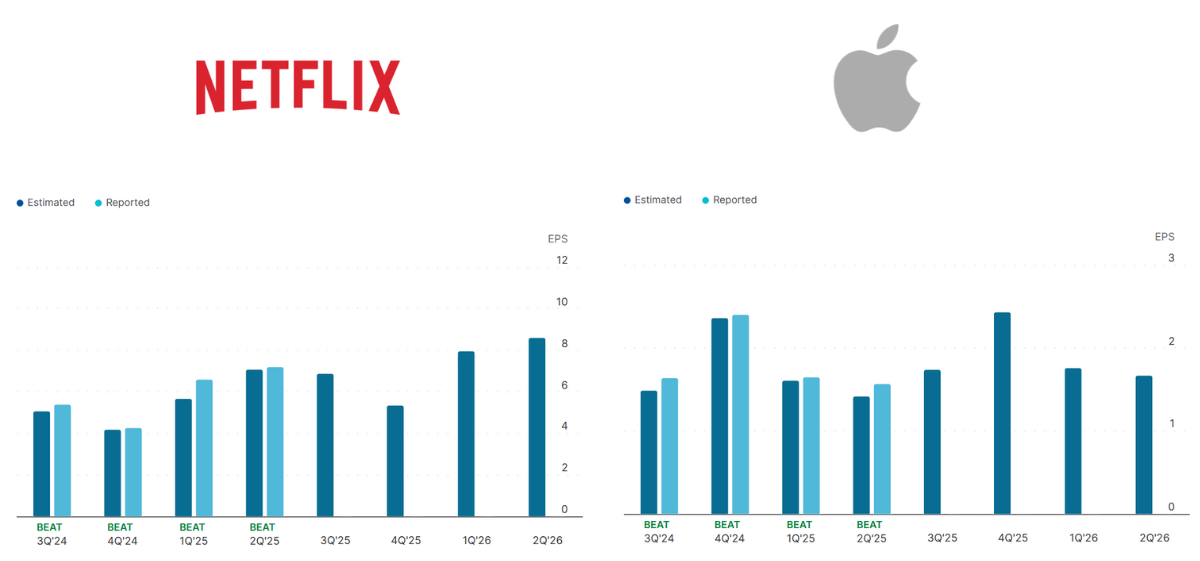
To understand how two former darlings of the modern growth-stock era arrived at such vastly different market valuations, one must examine the macroeconomic headwinds and structural inflection points that have reshaped the technology and communications sectors over the past 36 months. The era of cheap capital, which subsidized unprofitable subscriber growth and inflated valuation multiples across Silicon Valley and Hollywood, abruptly ended with the Federal Reserve’s aggressive tightening cycle. Investors shifted their focus from top-line user acquisition metrics to fundamental profitability, enterprise cash conversion, and balance sheet integrity.
Apple navigated this tectonic shift with characteristic precision. Despite facing cyclical headwinds in smartphone replacement cycles and complex supply chain realignments across Asia, Apple’s ecosystem lock-in proved impenetrable. The company successfully executed a pivot toward high-margin services—spanning iCloud, Apple Music, App Store commissions, and Apple Pay—which now account for a substantial percentage of gross profit. This recurring revenue model has insulated Apple from pure hardware commoditization, cementing its status as a premier safe-haven asset for institutional capital seeking refuge from inflationary pressures.
Conversely, Netflix found itself on the frontline of a maturing streaming market. As broadband penetration plateaued in core North American and European territories, the streaming pioneer confronted the harsh reality of subscriber saturation. To sustain top-line growth, Netflix was forced to pivot its business model fundamentally: cracking down on password sharing, introducing a lower-tier ad-supported subscription model, and fundamentally rethinking its cloud compute architecture and content delivery networks. While these operational maneuvers stabilized sentiment temporarily, the sheer capital expenditure required to maintain a global content library—competing against deeply pocketed conglomerates like Disney, Amazon, and Apple itself—has compressed operating margins and injected heightened volatility into Netflix’s equity valuation.
Comparative Metrics & Financial Health
A rigorous quantitative analysis highlights the vast operational and financial gulf separating the two corporate giants. The following matrix outlines key performance indicators, capital efficiency metrics, and valuation multiples derived from recent SEC filings and consensus market data.
| Metric / Indicator | Apple Inc. (AAPL) | Netflix Inc. (NFLX) |
|---|---|---|
| Market Capitalization Status | Approaching historic record highs | Down >50% from all-time peak |
| Trailing P/E Multiple | Elevated, reflecting quality premium (~30x) | Contracted, reflecting growth re-pricing (~35x-40x) |
| Free Cash Flow Generation | Exceeds $100 Billion annually | Stabilizing, heavily dependent on content spend cycles |
| Primary Revenue Driver | Diversified Hardware + High-Margin Services | Subscription Streaming (SVoD / Ad-Tier) |
| Balance Sheet Risk | Minimal; AAA-equivalent debt profile | Moderate; ongoing senior note obligations for production |
Industry & Market Implications: Who Wins, Who Loses
The stark valuation chasm between Apple and Netflix carries profound implications for the broader macroeconomic ecosystem, institutional asset allocators, and sector competitors. For institutional fund managers, this bifurcation signals the definitive death of the "growth at all costs" (GaaC) era. Capital is no longer being rewarded simply for expanding user counts; it demands tangible enterprise ROI, disciplined capital expenditure, and robust margin expansion.
In the entertainment and media landscape, Netflix’s protracted drawdown has forced an industry-wide reckoning. Legacy media companies—once eager to sacrifice profitability to build standalone streaming applications—have been forced into painful consolidations, content licensing deals, and aggressive cost-cutting initiatives. Netflix remains the undisputed king of engagement and streaming market share, but its moat is increasingly contested by big tech balance sheets that can afford to subsidize entertainment divisions indefinitely as loss-leading ecosystem enablers.
Meanwhile, Apple’s dominance underscores the triumph of integrated ecosystems. By controlling both the underlying hardware infrastructure (silicon design via the M-series and A-series chips) and the software layer, Apple commands unmatched pricing power. As regulatory scrutiny mounts regarding app store policies and antitrust concerns, Apple’s ability to defend its walled garden while expanding into fintech, spatial computing (Vision Pro), and health tech ensures that its addressable market remains virtually unparalleled.
People Also Ask (FAQ)
Why is Apple’s stock approaching record highs despite global economic uncertainty?
Apple’s resilience stems from its unmatched pricing power, massive free cash flow generation, and the sticky nature of its high-margin services ecosystem. Institutional investors view Apple as a defensive growth asset capable of withstanding inflationary pressures and currency fluctuations through aggressive share buybacks and robust balance sheet management.
What caused Netflix’s stock to drop more than 50% from its peak?
Netflix’s severe correction was triggered by subscriber saturation in developed markets, intensifying competition in the streaming sector, and investor anxiety over the massive capital expenditure required to fund original content libraries. The shift from low-interest-rate environments to higher borrowing costs further penalized high-growth media equities that relied on debt-financed content production.
Is Netflix still a viable long-term investment for growth portfolios?
Netflix remains a dominant player in global video streaming with strong cash flow generation and successful monetization initiatives like ad-supported tiers and password-sharing restrictions. However, its valuation depends heavily on its ability to sustain margins amid rising content costs and aggressive competition from well-capitalized tech conglomerates.
Between Apple and Netflix, which stock represents a better buy according to institutional consensus?
While both companies occupy dominant positions in their respective domains, institutional consensus heavily favors Apple for core portfolio allocation due to its superior risk-adjusted returns, predictable cash flows, and diversified revenue streams. Netflix appeals primarily to high-risk growth allocators willing to weather cyclical volatility in the media sector.
Future Outlook & Strategic Milestones to Watch
Looking ahead over the next 12 to 24 months, the trajectory of both corporations will hinge on specific operational execution milestones and macroeconomic variables. For Apple, market watchers will closely monitor the adoption rates of its artificial intelligence integration (Apple Intelligence), the macroeconomic health of consumer discretionary spending in Greater China, and regulatory developments concerning its App Store fee structures and antitrust litigation.
For Netflix, the critical catalysts will center on the scaling efficiency of its ad-supported subscription tiers, the monetization success of live-event programming (such as NFL broadcasts and live sports entertainment), and its ability to curtail content spend inflation without sacrificing subscriber engagement. While Netflix possesses significant upside should its advertising engine outpace legacy television revenue models, Apple remains the definitive cornerstone for enterprise-grade risk mitigation and long-term capital preservation.