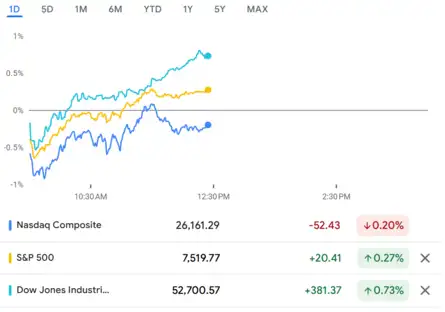
NEW YORK — Wall Street is undergoing a calculated, high-stakes portfolio rebalancing. As the trading session closed, the S&P 500 and the tech-heavy Nasdaq Composite retreated further into correction territory, driven by an aggressive, institutional-scale selloff in mega-cap technology equities. Yet, beneath the headline-grabbing contraction of high-flying growth multiples, the broader market painted a remarkably divergent picture. The blue-chip Dow Jones Industrial Average pushed higher, buoyed by defensive sector rotation, while plunging crude oil prices offered a vital reprieve to industrial consumers and inflation-weary central bankers.
For weeks, institutional asset managers, chief investment officers, and quantitative hedge funds have grappled with stretched valuation multiples, tightening market liquidity, and evolving macroeconomic forecasts. Today’s session was not merely a random fluctuation; it was a textbook manifestation of capital reallocation. As enterprise ROI expectations face sharper scrutiny and infrastructure scalability costs mount, institutional capital is rapidly fleeing overextended tech portfolios in favor of defensive cash-flow generators, cyclical stalwarts, and dividend aristocrats.
Executive Takeaways
Test Our Free AI & Tech Utilities Suite
Calculate LLM API token costs, analyze article dwell-time, or simulate tech DCA returns.
- Mega-Cap Tech Retrenchment: The Nasdaq Composite and S&P 500 closed lower as profit-taking accelerated across artificial intelligence darlings, semiconductor manufacturers, and cloud infrastructure providers.
- The Dow Divergence: The Dow Jones Industrial Average bucked the broader tech trend, closing higher as investors rotated capital into industrial, financial, and consumer defensive equities.
- Commodity Relief: Crude oil prices dropped significantly, alleviating cost-pressure concerns for global logistics and manufacturing sectors while shifting inflationary dynamics for the Federal Reserve.
- Strategic Portfolio Rebalancing: Institutional risk mitigation strategies are currently prioritizing balance sheet strength, steady dividend yields, and proven cash-flow visibility over speculative forward earnings.
The Anatomy of the Tech Selloff: Valuation Compression Meets Risk Mitigation
To understand the mechanics of today’s market correction, one must look beneath the ticker tape to examine the underlying pressures facing the technology sector. For the past eighteen years— punctuated by aggressive post-pandemic monetary easing and the subsequent generative AI boom—market participants rewarded forward-looking revenue growth above all else. Tech companies commanded premium valuations, justified by projections of infinite scalability and rapid enterprise adoption.
However, as macroeconomic headwinds persist and the cost of capital remains structurally higher than the near-zero interest rate era, institutional investors are demanding immediate, tangible returns on capital allocation. Enterprise software buyers are extending their sales cycles, demanding rigorous proof of enterprise ROI before committing to multi-year SaaS contracts. Meanwhile, capital expenditures dedicated to cloud compute architecture and AI infrastructure buildout have reached astronomical figures, compressing near-term free cash flow margins for several bellwether technology firms.
Quantitative models utilized by major wire-house trading desks triggered automated sell-stops as key technical support levels on the Nasdaq were breached. This algorithmic cascading effect amplified intraday volatility, forcing leveraged market participants to liquidate positions to meet margin requirements. The unwinding was indiscriminate in its early hours, hitting semiconductor foundries, hyper-scalers, and consumer internet platforms alike, before selective bargain-hunting emerged late in the afternoon session.
The Rotation Playbook: Why the Dow Jones Industrial Average Defied Gravity
While the tech sector bore the brunt of the institutional exodus, the Dow Jones Industrial Average demonstrated remarkable resilience, finishing the day in positive territory. This divergence highlights a classic textbook rotation: capital leaving growth-oriented equities is not necessarily leaving the equity market entirely; rather, it is migrating toward sectors with lower beta, stronger balance sheets, and more predictable earnings profiles.
Industrial conglomerates, major commercial banks, and healthcare providers attracted steady inflows from institutional portfolio managers tasked with hitting benchmark performance targets without exposing their funds to excessive valuation downside. These defensive sectors offer robust regulatory compliance, lower sensitivity to fluctuations in high-multiple valuations, and attractive shareholder return programs through systematic buybacks and consistent dividend payouts.
Furthermore, the sharp drop in global crude oil prices acted as a powerful tailwind for non-tech components of the Dow and the broader economy. Lower energy input costs directly translate to improved profit margins for airlines, transportation networks, chemical manufacturers, and traditional brick-and-mortar retailers. By lowering operational expenditures across heavy industry, the retreat in oil prices effectively offsets some of the margin compression previously feared by industrial analysts.
Verified Data & Metrics Breakdown
| Market Index / Asset | Session Direction | Primary Driver | Sector Impact |
|---|---|---|---|
| Nasdaq Composite | Lower (Selloff) | Valuation compression and profit-taking in mega-cap tech. | Negative for Software, Semiconductors, and Cloud Infrastructure. |
| S&P 500 | Lower | Heavy weighting of technology equities pulling the broader index down. | Mixed; drag from growth offset by defensive strength. |
| Dow Jones Industrial Average | Higher (Gain) | Sector rotation into cyclicals, industrials, and financials. | Positive for manufacturing, banking, and consumer goods. |
| Crude Oil (WTI / Brent) | Lower (Drop) | Demand forecasting adjustments and geopolitical inventory data. | Beneficial for logistics, airlines, and industrial manufacturing margins. |
Industry & Market Implications: Winners, Losers, and Macroeconomic Realities
The bifurcation observed in today’s trading session carries profound implications for market strategists, corporate treasurers, and individual investors navigating the current financial landscape.
The Losers: High-Multiple Growth and Speculative Tech
Companies reliant on external funding, speculative growth metrics, and extended monetization timelines are facing an unforgiving market environment. Venture capital funding rounds and secondary market valuations continue to feel the downstream effects of public market valuation compression. Management teams that previously prioritized hyper-growth at the expense of fiscal discipline are now being forced to execute painful cost-rationalization programs, freeze hiring, and restructure operations to preserve cash.
The Winners: Value, Dividends, and Operational Efficiency
Conversely, enterprises boasting pristine balance sheets, significant cash reserves, and pricing power are emerging as the primary beneficiaries of this market pivot. Institutional funds are rewarding companies capable of returning capital to shareholders while maintaining resilient operating margins despite inflationary pressures. Additionally, sectors benefiting from declining energy costs—such as logistics and heavy manufacturing—enjoy immediate bottom-line relief.
Broader Economic Impact
From a macroeconomic perspective, the cooling of hyper-growth technology valuations combined with falling energy prices provides Federal Reserve policymakers with additional maneuvering room. As commodity-driven inflationary impulses subside, the central bank faces less pressure to maintain overly restrictive monetary policy indefinitely, potentially stabilizing bond yields and supporting a more balanced equity market environment going forward.
Frequently Asked Questions (People Also Ask)
Why did the S&P 500 and Nasdaq close lower while the Dow rose?
The divergence was primarily driven by sector rotation. The S&P 500 and Nasdaq are heavily weighted toward mega-cap technology and growth companies, which experienced significant profit-taking and valuation compression. Meanwhile, capital leaving these tech equities rotated into the Dow Jones Industrial Average's components—such as industrials, financials, and healthcare companies—which benefit from stable cash flows, lower valuation multiples, and reduced energy input costs.
What caused the sharp drop in oil prices during today's session?
Crude oil prices fell due to a combination of shifting global demand forecasts, updated inventory data, and macroeconomic adjustments regarding industrial consumption. Lower oil prices act as a double-edged sword: they pressure energy sector equities but provide substantial cost relief to manufacturing, transportation, and consumer logistics firms, helping to ease broader operational inflation.
Is the current tech selloff a sign of a broader bear market?
Market analysts generally classify the movement as a healthy valuation correction and sector rotation rather than the onset of a systemic bear market. After unprecedented rallies driven by artificial intelligence and digital infrastructure investments, institutional investors are simply re-pricing risk, demanding stronger enterprise ROI, and rebalancing portfolios away from overextended growth multiples toward defensive value assets.
How should long-term investors respond to ongoing tech volatility?
Financial advisors and portfolio managers typically recommend maintaining a diversified asset allocation strategy that balances growth exposure with defensive value holdings. Long-term investors should focus on companies with strong balance sheets, sustainable competitive moats, and proven cash-flow generation rather than attempting to time short-term market fluctuations driven by algorithmic trading and macroeconomic headlines.
Future Outlook: Key Milestones and What Comes Next
As the market digests the implications of today’s tech selloff and energy price correction, attention now turns to upcoming economic data releases, corporate earnings guidance, and central bank commentary. Market liquidity will remain sensitive to incoming inflation reports, employment metrics, and Treasury auction results.
For technology sector leaders, the mandate is clear: sustainable enterprise scalability, disciplined capital allocation, and undeniable proof of return on investment are now mandatory prerequisites for retaining premium valuation multiples. Investors are no longer willing to write blank checks for distant future promises; they require demonstrable financial performance in the present.
In the weeks ahead, expect heightened volatility as portfolio managers window-dress positions ahead of quarter-end benchmarks. While the era of indiscriminate tech buying has definitively given way to rigorous fundamental analysis, the overarching resilience of the broader market demonstrates that capital remains abundant—provided it is deployed into assets with verifiable strength, robust balance sheets, and disciplined risk mitigation frameworks.