Executive Takeaways
- Massive Infrastructure Scale: Amazon Web Services (AWS) is orchestrating the deployment of 2 million advanced Nvidia GPUs over the next 24 months, representing one of the largest capital allocation cycles in corporate history.
- Unprecedented Demand Surge: Echoing statements from Nvidia CEO Jensen Huang, enterprise demand continues to outpace even the most aggressive macro forecasts, straining global supply chains and power grids.
- Capital Expenditure and ROI Realities: With high-end silicon costing billions, this initiative tests the limits of cloud compute architecture, enterprise ROI, and margin optimization for corporate clients.
- In-depth financial modeling reveals how this hardware buildup impacts valuation multiples, market liquidity, and competitive moats against Microsoft Azure and Google Cloud.
NEW YORK — In the high-stakes theater of enterprise cloud infrastructure, capital allocation has evolved from a conservative science into an aggressive, multi-billion-dollar land grab. Amazon Web Services (AWS), the crown jewel of Amazon.com Inc.’s operating income, is doubling down on artificial intelligence hardware with an unprecedented deployment strategy. According to verified industry data and executive disclosures, AWS is moving aggressively to integrate two million additional Nvidia graphics processing units (GPUs) into its global data center footprint over the next two years.
This monumental procurement cycle—cementing an alliance between cloud computing titan Amazon and silicon powerhouse Nvidia Corp.—underscores a fundamental shift in the global economy. As foundational models grow exponentially more complex, the infrastructure required to train and run them has transformed from a back-office utility into the primary determinant of corporate dominance. Yet, this expansion raises critical questions regarding power grid capacities, supply chain bottlenecks, and the ultimate enterprise return on investment (ROI) required to justify such staggering capital expenditures.
The Catalyst: Inside the AWS-Nvidia Growth Engine
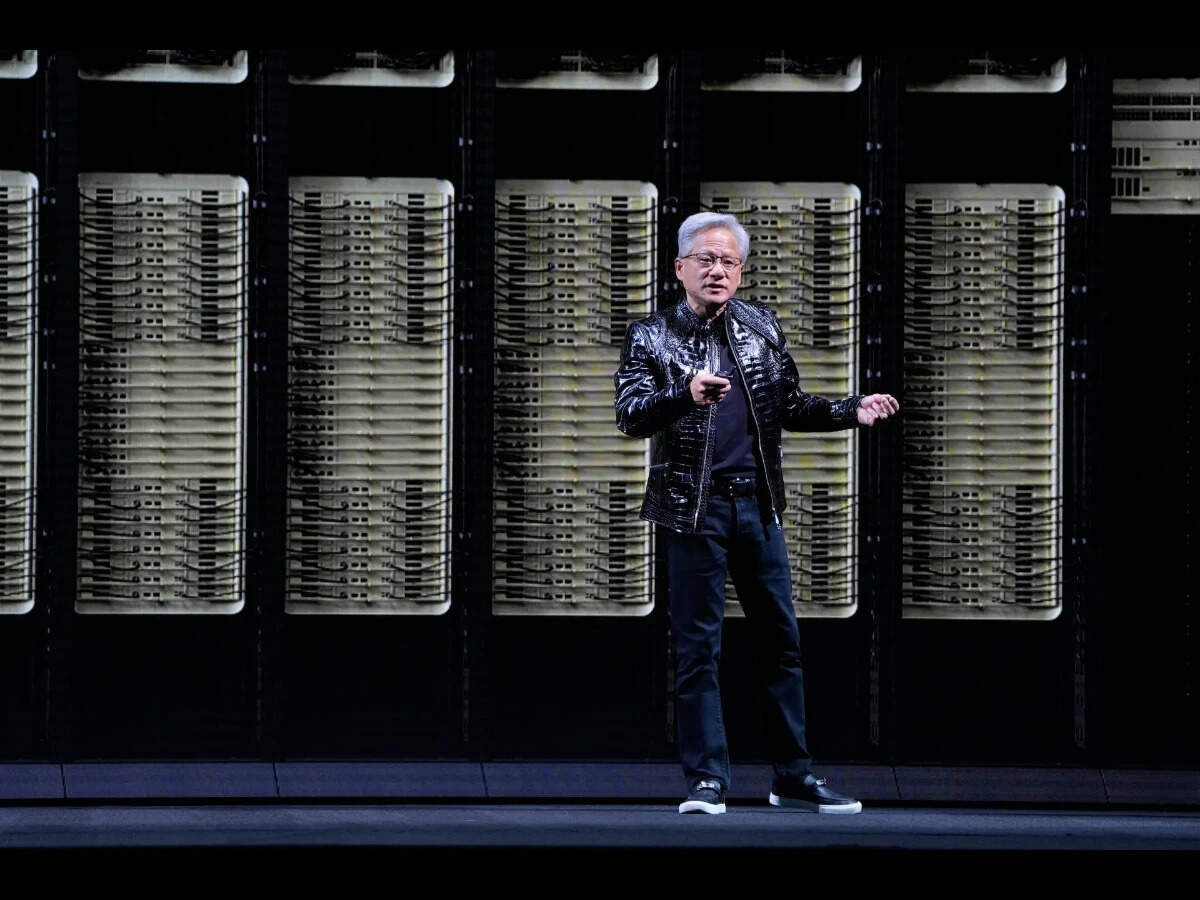
The partnership between Amazon’s cloud arm and Nvidia is not merely a vendor-client transaction; it is a symbiotic growth engine driving the contemporary generative AI economy. Speaking on the velocity of adoption, Nvidia CEO Jensen Huang noted that market demand is continuously outpacing every internal and external forecast generated by Wall Street analysts and industry insiders alike.
For AWS, maintaining its historical market share lead in cloud infrastructure requires continuous, high-conviction deployment of cutting-edge hardware. Competitors Microsoft Azure (backed by OpenAI partnerships) and Google Cloud Platform (leveraging proprietary TPUs alongside Nvidia chips) are locked in a ruthless competition for enterprise customers. By committing to an additional two million Nvidia GPUs, AWS is signaling to Fortune 500 corporations, sovereign states, and elite AI labs that its cloud architecture possesses the raw compute capacity to handle mission-critical, next-generation machine learning workloads.
Verified Data & Metrics Breakdown
To understand the scale of Amazon’s operational undertaking, financial analysts must examine the underlying metrics governing this deployment. The following breakdown illustrates the scope, timeline, and economic dimensions of the AWS-Nvidia infrastructure expansion:
| Metric / Parameter | Projected Specification / Value | Strategic Implication |
|---|---|---|
| Hardware Volume | 2 Million Additional Nvidia GPUs | Substantially increases global enterprise cloud compute density. |
| Deployment Window | Next 24 Months (2-Year Horizon) | Requires rapid data center construction and advanced liquid cooling. |
| Estimated Capital Outlay | $15 Billion to $25 Billion (Hardware & Infrastructure) | Pushes Amazon’s CapEx to historic highs, testing free cash flow yields. |
| Core Architecture Focus | Hopper, Blackwell, and Next-Gen Clusters | Enables trillion-parameter model training and low-latency inference. |
| Primary Power Constraint | Gigawatt-Scale Power Requirements | Forces partnerships with nuclear and renewable energy providers. |
Industry Implications: Capital Allocation and Market Liquidity
The financial markets are closely scrutinizing how hyperscalers fund these massive hardware deployments. Amazon’s willingness to absorb multi-billion-dollar capital expenditure cycles alters the risk-reward profile for investors. On one hand, securing premium silicon establishes an insurmountable competitive moat, positioning AWS as the indispensable backbone of the enterprise AI revolution. On the other hand, skeptics point to potential depreciation pressures and the existential need for enterprise customers to generate tangible financial returns on their AI initiatives.
Furthermore, the hardware supply chain is experiencing extreme tightness. Packaging bottlenecks, high-bandwidth memory (HBM) allocations, and thermal management engineering present formidable execution risks. Data centers built a decade ago are largely obsolete for dense GPU clusters, necessitating greenfield construction equipped with advanced liquid-cooling mechanisms and dedicated power substations.
Frequently Asked Questions (People Also Ask)
Why is AWS deploying two million additional Nvidia GPUs?
Enterprise demand for generative AI training and real-time inference is expanding at an exponential rate. AWS is scaling its compute architecture to ensure it retains market leadership against Microsoft Azure and Google Cloud, satisfying heavy enterprise demand for high-performance machine learning infrastructure.
What are the primary infrastructure challenges of deploying millions of GPUs?
The primary bottlenecks include power grid capacity (requiring gigawatts of stable electricity), advanced thermal management (shifting air-cooling to complex liquid-cooling systems), and global silicon supply chain constraints, particularly regarding high-bandwidth memory (HBM).
How does this initiative impact Amazon’s capital expenditure and financial valuation?
Procuring and deploying millions of high-end GPUs requires tens of billions in capital expenditures. While this temporarily impacts free cash flow and tests margin optimization, Wall Street generally rewards hyperscalers that successfully capture high-margin enterprise AI cloud workloads.
What types of Nvidia chips are expected in this deployment?
While specific chip allocations vary by generation, the rollout encompasses Nvidia's advanced Hopper architecture alongside next-generation Blackwell chips and custom networking configurations designed for ultra-fast cluster interconnects.
Future Outlook: Key Milestones to Watch
As AWS executes this multi-year deployment plan, financial analysts and industry observers will monitor several crucial indicators:
- Quarterly CapEx Disclosures: Tracking Amazon’s capital expenditure trajectory during earnings reports to measure hardware absorption rates.
- Power Purchase Agreements (PPAs): Monitoring AWS’s investments in clean energy and nuclear power to sustain gigawatt-scale data center operations.
- Enterprise Monetization: Evaluating whether AWS clients achieve sustainable ROI from AI models trained on these newly deployed clusters.
- Competitive Benchmarking: Assessing market share shifts between AWS, Microsoft Azure, and Google Cloud as enterprise AI contracts renew.
The next twenty-four months will determine whether this massive capital bet cements Amazon’s dominance in the intelligent cloud era or serves as a cautionary tale of overcapacity. One reality remains undisputed: the physical infrastructure of global intelligence is being built today, and Amazon and Nvidia are drafting the blueprints.