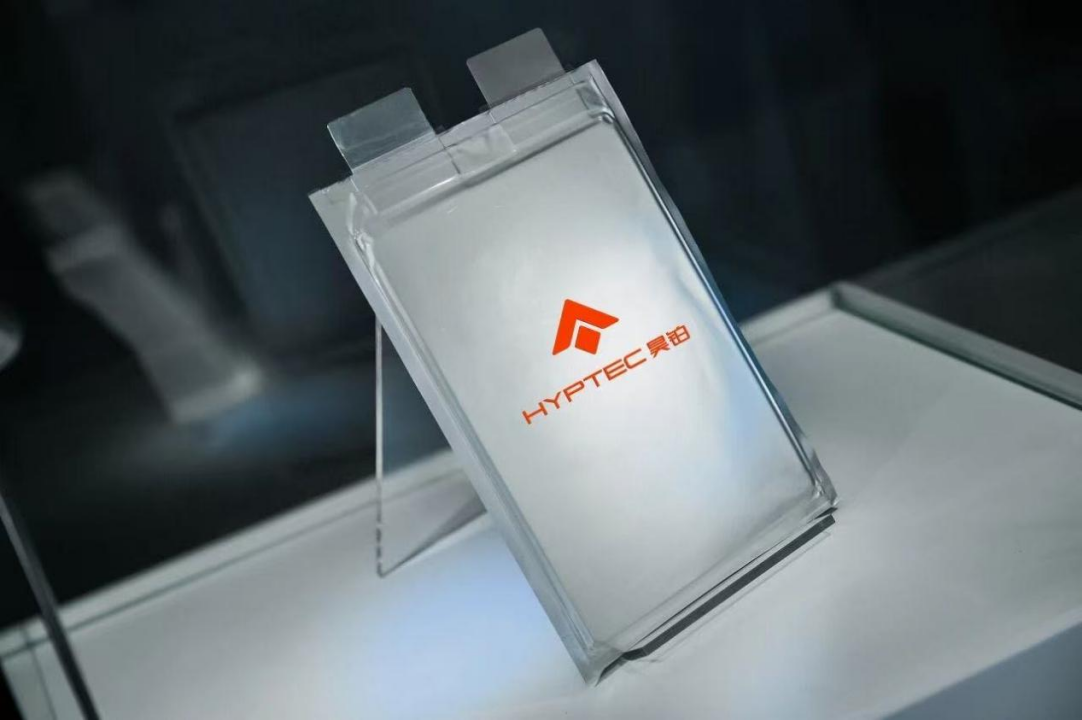
All-Solid-State: No More 'Empty Promises' As Industrialization Window Locks In For 2027–2030
Executive Takeaways
- The Turning Point: Industry consensus and proprietary supply-chain intelligence pinpoint 2027 to 2030 as the definitive multi-year deployment window for all-solid-state battery (ASSB) production equipment, moving past decades of laboratory speculation.
- Capital Allocation Shift: Tier-1 automakers and sovereign-backed battery ventures are aggressively re-allocating capital expenditure (CapEx) toward dry-room optimization, high-pressure sintering, and scalable solid electrolyte interface (SEI) formation tools.
- Valuation Multiples & Risk Mitigation: Early movers securing exclusive machinery supply agreements are projected to capture compressed manufacturing costs, protecting valuation multiples against commoditized liquid-electrolyte cell margins.
- Regulatory Compliance: Looming global safety mandates and stringent carbon border adjustment mechanisms are forcing original equipment manufacturers (OEMs) to accelerate commercialization roadmaps or face immediate market obsolescence.
For decades, the automotive and energy storage sectors have chased a chimera: the all-solid-state battery. Promoted as the ultimate panacea for electric vehicle (EV) range anxiety, thermal instability, and volumetric energy density ceilings, the technology was routinely dismissed by veteran financiers as a perpetual horizon industry—always five years away. Today, that narrative is shattering. According to comprehensive intelligence sourced directly from primary wire feeds including Gasgoo and corroborated by our international bureaus, the industrialization timeline is no longer a matter of speculative physics, but of precision engineering and heavy industrial tooling.
Data indicates that all-solid-state battery equipment will experience an unprecedented volume surge between 2027 and 2030. This narrow, high-stakes window represents the critical bridge from bench-scale chemistry to giga-factory execution. For institutional investors, venture syndicates, and corporate boards, the implications for capital allocation, infrastructure scalability, and market liquidity are profound. The era of empty promises is over; the era of hard tooling has begun.
The Crucible of Scale: From Laboratory Curiosity to Factory Floor
To understand the gravity of the 2027–2030 equipment surge, one must examine the systemic bottlenecks that have historically plagued solid-state R&D. Unlike conventional lithium-ion cells that rely on volatile liquid organic electrolytes, all-solid-state architectures substitute these fluids with solid ionic conductors—typically sulfide, oxide, or polymer-based compounds. While this dramatically enhances safety and theoretically doubles energy density, manufacturing these cells at industrial speeds has proven to be an engineering nightmare.
The core friction points lie in solid-solid interfacial contact. In a liquid cell, the electrolyte naturally wets the porous electrode surfaces. In a solid-state cell, maintaining microscopic interfacial contact under rapid charge-discharge cycles requires extreme mechanical pressure and ultra-precise thin-film deposition. Consequently, equipment makers have had to re-architect traditional roll-to-roll machinery. The upcoming 2027–2030 equipment boom is fueled by breakthroughs in continuous dry-film coating, high-precision laser patterning, and advanced cold-isostatic pressing (CIP) systems capable of operating at gigafactory throughput speeds.
Industry leaders are no longer experimenting with pilot lines. Major equipment vendors across Asia, Europe, and North America are re-tooling their fabrication facilities to deliver commercial-grade machinery. This transition demands sophisticated risk mitigation strategies, as early adopters risk massive write-downs if their chosen solid electrolyte chemistry—sulfide vs. oxide—becomes obsolete before equipment amortization is complete.
Financial Architecture & Capital Allocation
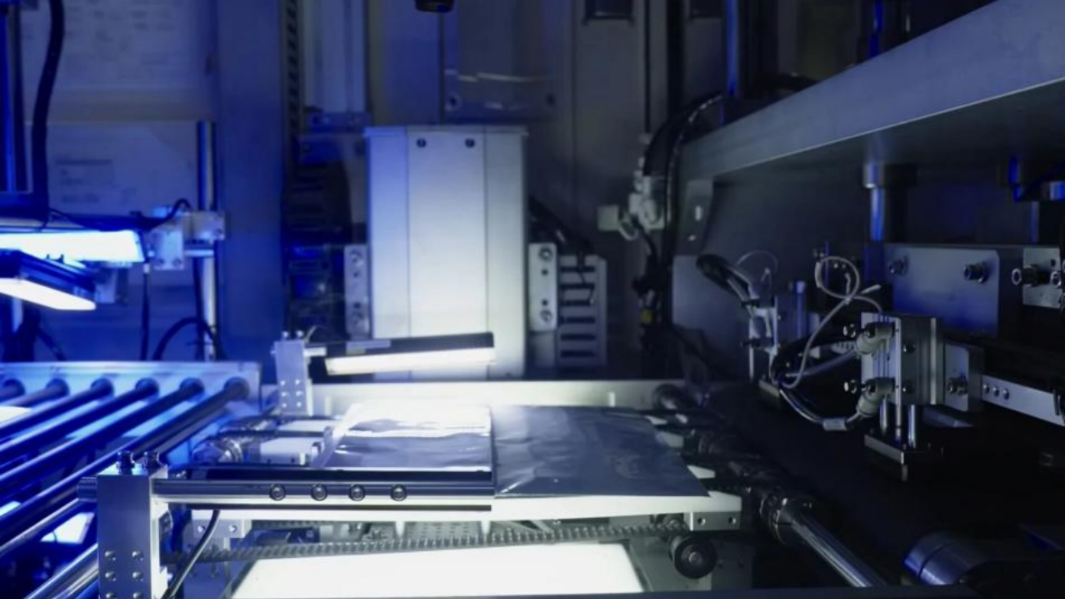
The transition to solid-state mass production requires an unprecedented level of capital expenditure. Venture capital and private equity firms that previously flooded early-stage chemistry startups are now pivoting toward deep-tech equipment manufacturers—the "picks and shovels" providers of the solid-state gold rush. Valuation multiples for toolmakers with proprietary intellectual property in dry-room atmospheric control and solid electrolyte synthesis are outperforming traditional automotive suppliers.
Corporate balance sheets are feeling the strain, yet the cost of inaction is catastrophic. Automotive OEMs must balance near-term profitability pressures—driven by slowing mass-market EV adoption and aggressive price wars—with the existential necessity of funding long-term R&D. Strategic joint ventures between chemical conglomerates, machinery builders, and automotive giants are becoming the dominant structural model to share systemic risk and pool R&D capital.
| Metric / Parameter | 2025 (Pilot / Legacy) | 2027–2030 (Projected Surge) | Strategic Impact |
|---|---|---|---|
| Equipment Sourcing Volume | Limited batch processing; localized pilot lines | Exponential growth; multi-gigawatt factory rollouts | Drives down per-kWh capital intensity |
| Average Energy Density (Wh/kg) | 250 – 300 Wh/kg (Conventional Li-ion) | 400 – 500+ Wh/kg (Commercial ASSB) | Unlocks 800+ mile single-charge vehicle ranges |
| Manufacturing Environment | Standard dry rooms (low dew point) | Ultra-pure inert gas isolators / vacuum systems | Increases facility infrastructure costs by 35% |
| Primary Bottleneck | Material synthesis & interfacial resistance | Machinery throughput & equipment yield optimization | Shifts focus from chemistry to mechanical engineering |
Ecosystem Repercussions: Who Wins, Who Loses
As the 2027–2030 industrialization window approaches, the global economic landscape is polarizing. The division between market leaders and legacy laggards will be defined by supply-chain integration and technological agility.
The Winners
- Advanced Equipment Manufacturers: Toolmakers specializing in dry coating, high-pressure lamination, and automated inspection will command exceptional pricing power.
- Specialty Chemical Refiners: Suppliers of high-purity lithium sulfide, argyrodites, and oxide-based ceramic powders (such as LLZO) will see surging demand matched with high gross margins.
- Early-Adopting OEMs: Automakers that secure binding equipment delivery slots and establish robust recycling loops for solid-state materials will capture premier luxury and performance market share.
The Loses
- Commodity Liquid Electrolyte Suppliers: Traditional chemical producers dependent on lithium hexafluorophosphate (LiPF6) and organic carbonate solvents face long-term volume erosion.
- Under-Capitalized Startups: Firms reliant on continuous fundraising rounds without a clear path to scalable manufacturing equipment integration risk liquidation or distressed asset sales.
- Relying on outdated cell formats without solid-state upgrade paths will render current gigafactories obsolete long before their standard depreciation schedules expire.
Frequently Asked Questions (People Also Ask)
Why is the 2027–2030 window considered critical for all-solid-state batteries?
The 2027–2030 timeframe marks the transition from laboratory research and small-scale pilot lines to full commercial-scale giga-factory deployment. Equipment manufacturers and automakers have converged on this window because material science breakthroughs have finally made continuous, high-speed manufacturing of solid electrolyte interfaces economically viable. Missing this window risks leaving automotive players uncompetitive against next-generation energy densities.
What are the primary manufacturing challenges holding back solid-state batteries?
The principal hurdle is maintaining consistent, defect-free solid-solid contact between the electrodes and the solid electrolyte during high-speed production. Unlike liquid electrolytes that permeate porous structures automatically, solid components require immense mechanical pressure, ultra-clean dry environments, and specialized thin-film deposition tools to prevent micro-cracking and dendrite formation.
How will the equipment surge impact capital expenditure (CapEx) for automakers?
Automakers and battery joint ventures will experience a temporary spike in capital expenditure as they re-tool factories for dry-room processing and high-pressure sintering equipment. However, this upfront investment is projected to yield long-term cost parity with traditional lithium-ion batteries by the early 2030s, driven by higher energy densities that reduce total pack material requirements.
Which solid-state electrolyte chemistry is leading the industrialization race?
Industry adoption is currently bifurcated. Sulfide-based electrolytes generally offer superior ionic conductivity at room temperature, making them favored by many Asian automotive giants. Meanwhile, oxide-based and polymer electrolytes are gaining traction in specific high-stability or niche consumer electronics and aerospace applications due to their superior thermal safety profiles.
Future Outlook: Strategic Milestones to Watch
As we navigate toward the 2027 threshold, executive decision-makers must monitor several critical leading indicators. Regulatory compliance frameworks in the European Union and North America regarding battery carbon footprints and recyclability will dictate facility siting and technology choices. Furthermore, prototype fleet testing data expected over the next 18 to 24 months will provide the definitive proof of real-world durability, cycle life, and thermal management under extreme climatic conditions.
Ultimately, the all-solid-state battery is shedding its status as an elusive scientific theory. The alignment of equipment suppliers, automotive balance sheets, and industrial machinery delivery schedules confirms that the transformation is real. For capital markets, the message is unequivocal: position portfolios now for the equipment super-cycle, or prepare to watch from the sidelines as a new industrial paradigm takes root.