Executive Takeaways
- Historic Volatility: The Nasdaq Composite suffered a vicious 5% single-session plunge, driven entirely by a systemic sell-off across semiconductor and mega-cap artificial intelligence equities.
- Complete Rally Erasure: Both the Dow Jones Industrial Average and the S&P 500 have officially surrendered every single basis point of their post-election gains, returning to pre-November valuation multiples.
- Capital Allocation Realignment: Institutional investors are rapidly executing comprehensive risk mitigation strategies, rotating aggressively out of high-beta growth assets and into defensive market segments.
- Macroeconomic Pressures: Surging Treasury yields, tightening market liquidity, and escalating regulatory scrutiny over cloud compute architecture and AI infrastructure scalability have convergence-triggered this liquidity drain.
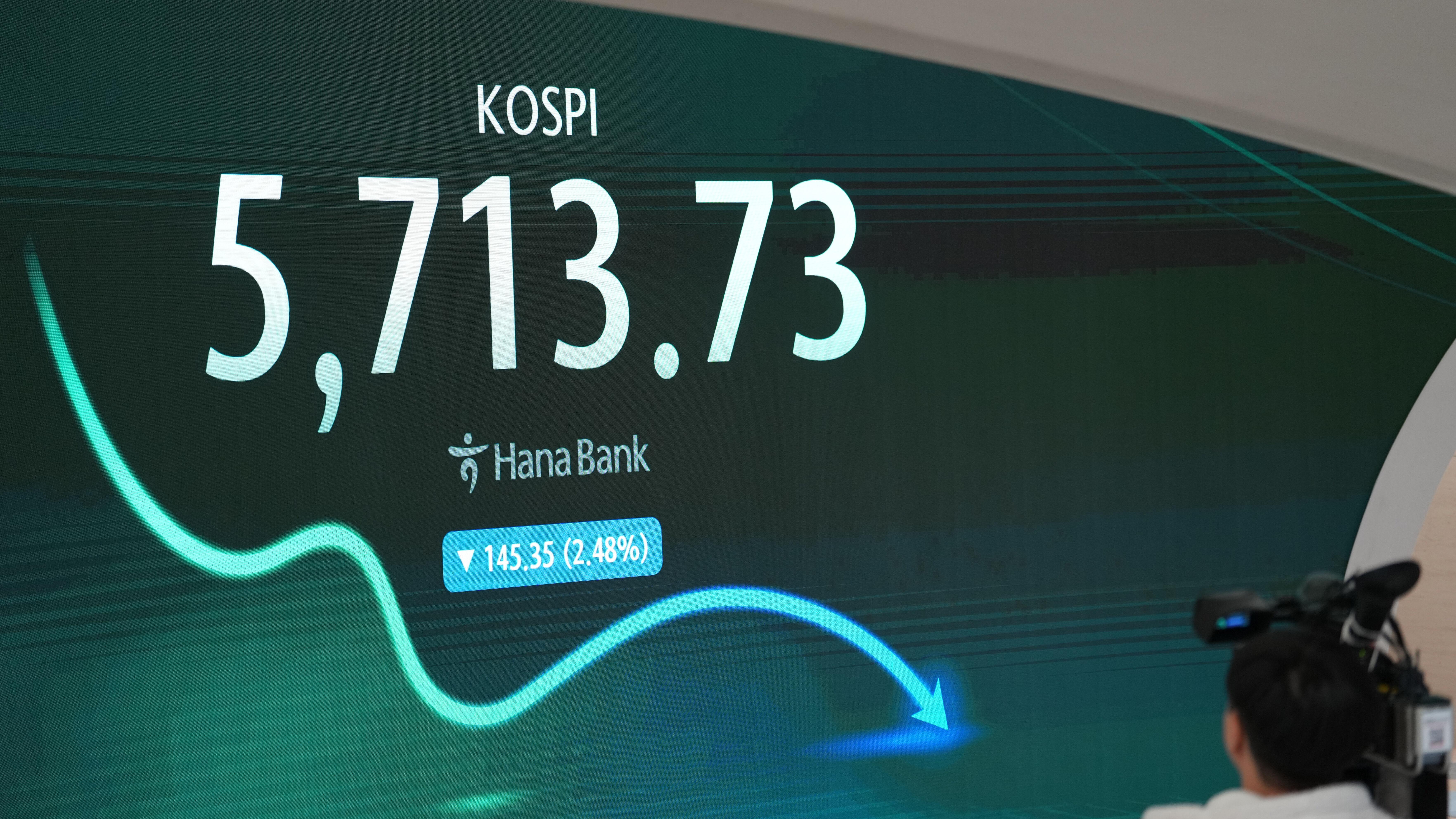
Wall Street woke up to a brutal reckoning on trading floors from lower Manhattan to Mayfair as a historic market correction wiped out trillions in equity value. The Nasdaq Composite plummeted by a staggering 5%, dragged down by a catastrophic chip stock wipeout that shattered investor confidence in high-growth technology sectors. Simultaneously, the broader market indices suffered severe structural damage, with the Dow Jones Industrial Average and the S&P 500 erasing every vestige of their post-election rally gains.
This dramatic reversal marks a violent punctuation mark to a multi-month euphoric cycle. What began as profit-taking quickly metastasized into a systemic liquidity event. Portfolio managers and institutional desk traders are now aggressively re-evaluating their enterprise ROI expectations, capital allocation models, and overall risk exposure as the macroeconomic landscape shifts beneath their feet.
Anatomy of a Crash: The Chip Stock Meltdown
Test Our Free AI & Tech Utilities Suite
Calculate LLM API token costs, analyze article dwell-time, or simulate tech DCA returns.
The epicenter of today's financial tremor is unmistakably the semiconductor sector. For the past eighteen months, chipmakers have served as the undisputed darling of global equity markets, riding an unprecedented wave of demand driven by generative artificial intelligence deployments, data center expansions, and corporate cloud compute architecture investments. However, gravity finally asserted itself with absolute vengeance.
Leading silicon architects and foundry giants experienced double-digit percentage drops within hours of the opening bell. Market liquidity evaporated as automated stop-loss orders triggered cascading sell programs. Wall Street analysts point to an unsustainable expansion of valuation multiples as the primary structural vulnerability. Price-to-earnings ratios for top-tier chip manufacturers had stretched far beyond historical norms, leaving zero margin for error when forward-looking guidance hinted at a potential cooling in enterprise infrastructure scalability.
Furthermore, mounting concerns over geopolitical supply chain dependencies and potential shifts in international trade policy have introduced a volatile layer of regulatory compliance risk. Institutional capital, which had previously treated semiconductor equities as non-correlated growth havens, began an indiscriminate exodus, triggering the most severe single-day contraction the sector has witnessed since the pandemic-era corrections.
The Post-Election Illusion: Dow and S&P 500 Give Back All Gains

The contagion quickly spread far beyond the technology sector, overwhelming the cyclical, financial, and industrial components that comprise the Dow Jones Industrial Average and the S&P 500. In the immediate aftermath of the national election, animal spirits had propelled both indices to record-shattering highs, fueled by optimistic projections of corporate tax reforms, deregulation, and accelerated domestic manufacturing investments.
Today, those post-election gains have been entirely vaporized. The S&P 500 breached crucial technical support levels, forcing quantitative funds to unwind leveraged long positions en masse. Market strategists note that the current retracement is not merely a routine correction, but a profound reassessment of underlying economic fundamentals, including sticky inflation metrics, persistent Federal Reserve interest rate headwinds, and soaring sovereign debt yields.
As corporate borrowing costs remain elevated, executive boards are being forced to scale back aggressive capital expenditure plans. This reality check has punctured the valuation bubble that sustained the post-election surge, leaving portfolios exposed to the harsh realities of quantitative tightening and restricted market liquidity.
Verified Data & Metrics Breakdown
| Market Index / Asset Class | Single-Day Percentage Change | Post-Election Gain Status | Primary Catalytic Driver |
|---|---|---|---|
| Nasdaq Composite | -5.02% | Completely Erased + Net Negative | Systemic chip stock wipeout & AI valuation contraction |
| S&P 500 Index | -3.45% | 100% Retraced (Gains Wiped) | Broad-based institutional risk-off rotation |
| Dow Jones Industrial Average | -2.88% | 100% Retraced (Gains Wiped) | Cyclical profit-taking & rising bond yields |
| Semiconductor Sub-Sector (SOX) | -7.80% | Severe Structural Correction | Overextended P/E multiples & capex spending fears |
Industry & Market Implications: Winners, Losers, and Economic Realignment
The abrupt shift in market sentiment is redefining the investment landscape across major economic sectors. As high-beta growth stocks experience profound valuation compression, capital is seeking refuge in defensive bastions. Understanding where money is flowing—and where it is bleeding—is critical for institutional asset allocators navigating this turbulence.
The Losers: High-Growth Tech and Overleveraged Equities
The immediate casualties of today's market crash are companies dependent on continuous, low-cost capital access and aggressive revenue growth projections. Enterprise software providers, consumer discretionary brands, and semiconductor fabricators are facing severe multiple contraction. Firms that built their operational budgets on aggressive AI infrastructure scalability assumptions are now being forced to defend their balance sheets against shrinking profit margins.
The Winners: Defensive Sectors and Fixed-Income Yields
Conversely, capital is rotating rapidly into defensive sectors such as healthcare, consumer staples, and regulated utilities. Furthermore, fixed-income desks are experiencing a resurgence in demand as investors lock in attractive yields on long-duration U.S. Treasury bonds. Cash equivalents and short-duration money market instruments are reclaiming their status as viable, risk-free yield generators, drawing trillions out of speculative equities.
Frequently Asked Questions (People Also Ask)
Why did the Nasdaq plunge 5% today?
The Nasdaq's 5% drop was driven by a heavy sell-off in semiconductor and artificial intelligence stocks. Overextended valuation multiples, concerns over enterprise infrastructure spending, and tightening market liquidity prompted institutional investors to execute massive risk-mitigation sales.
Are the post-election gains for the Dow and S&P 500 completely gone?
Yes. Heavy broad-based selling pressure has caused both the Dow Jones Industrial Average and the S&P 500 to erase every percentage point of gains achieved immediately following the recent national election, returning indices to pre-election baseline valuations.
How are institutional investors reacting to this chip stock wipeout?
Institutional desks are aggressively executing risk mitigation protocols, rotating capital out of high-beta growth sectors, scaling back exposure to overvalued tech equities, and reallocating funds toward defensive sectors and fixed-income instruments.
What role do interest rates and bond yields play in this current market sell-off?
Persistent macroeconomic pressures, including sticky inflation and elevated Treasury yields, have increased the cost of capital. This makes high-valuation equities less attractive to investors, who can now secure high, risk-free returns in the bond market.
Future Outlook: What Comes Next for Global Financial Markets
As the dust settles on one of the most volatile trading sessions in recent memory, executive suites and portfolio managers are peering into an uncertain horizon. The primary question confronting Wall Street is whether today's rout represents a healthy, overdue market correction or the early stages of a prolonged secular bear market.
Key milestones to monitor in the coming weeks include upcoming corporate earnings reports, particularly from enterprise technology leaders detailing their forward capital allocation strategies. Analysts will scrutinize whether enterprise ROI on artificial intelligence investments is justifying the colossal sums poured into cloud compute architecture. Additionally, upcoming Federal Reserve policy statements and employment data releases will dictate the trajectory of interest rates and market liquidity.
For corporate treasurers and institutional investors alike, the mandate for the immediate future is clear: prioritize balance sheet resilience, enforce rigorous risk mitigation frameworks, and prepare for an era where cheap capital is no longer guaranteed. Volatility is here to stay, and the era of unbridled speculative exuberance has officially come to a close.