Inside the Technical Triumph: How a Fan-Led *Ocarina of Time* PC Port Shattered Console Limits to Hit Native 60 FPS
Test Our Free AI & Tech Utilities Suite
Calculate LLM API token costs, analyze article dwell-time, or simulate tech DCA returns.
An exhaustive investigative look at the reverse-engineering milestone transforming Nintendo’s 1998 masterpiece into a modern high-framerate PC powerhouse—and the complex intellectual property landscape trailing in its wake.
Executive Takeaways
- Architectural Breakthrough: The community-driven PC port bypasses traditional emulation by utilizing static recompilation, translating original M64 assembly code into native C code for modern computing infrastructure.
- Performance Scaling: Achieving an unyielding 60 frames per second (FPS), ultra-widescreen resolutions, and modern rendering pipelines unlocks a new benchmark in retro-game preservation and capitalizes on high-end hardware capabilities.
- Intellectual Property Volatility: While technical innovation drives significant consumer engagement, the project navigates a precarious legal framework, presenting ongoing risk mitigation challenges for developers and platform distributors alike.
- valuation multiples, cloud compute architecture compatibility, and user acquisition metrics across independent gaming ecosystems are experiencing a ripple effect as preservationists prove the viability of native reverse-engineering.
The Anatomy of a Modern Masterpiece Revival
In the high-stakes landscape of digital preservation and software engineering, few milestones capture the intersection of nostalgia and technical audacity quite like the recent breakthrough of The Legend of Zelda: Ocarina of Time running at a native, uncompromised 60 frames per second on personal computers. What began as an esoteric, underground reverse-engineering initiative has matured into a sophisticated software deployment that challenges traditional industry paradigms of how legacy intellectual property is experienced, preserved, and monetized.
Unlike conventional emulation—which relies on real-time hardware virtualization to mimic obsolete console architectures—this project utilizes a cutting-edge methodology known as static recompilation. Engineers systematically dissected the original Nintendo 64 ROM, translating low-level MIPS architecture instructions into high-level, human-readable C code. This structural transformation effectively strips away the silicon bottlenecks of 1990s hardware, allowing the game engine to communicate natively with modern multi-core processors, discrete graphics cards, and advanced operating system architectures.
For financial analysts tracking the digital entertainment sector, this technical leap represents far more than a nostalgic weekend project. It underscores a fundamental shift in consumer demand: modern audiences are no longer satisfied with gated, subscription-locked legacy catalogs constrained by artificial performance limits. The appetite for high-fidelity, user-customizable software experiences has created an alternative market that operates entirely outside traditional corporate distribution channels, forcing legacy publishers to reevaluate their capital allocation strategies regarding digital archiving and remastering.
Catalytic Events and the Engineering Timeline

The journey to native 60 FPS on PC was neither immediate nor accidental. It is the culmination of years of collaborative, decentralized software development. Years ago, preservationists achieved the monumental feat of establishing a complete source code representation of the game, known colloquially among developers as the "decomp." This foundational work required exhaustive manual analysis, debugging, and documentation of tens of thousands of functions.
Once the source code was fully understood, the engineering focus pivoted toward modernization. Running Ocarina of Time at 60 FPS is not merely a matter of unlocking a frame-rate cap; the game's internal logic, physics calculations, collision detection, and animation timers were inextricably bound to the original hardware's 20 FPS output. Decoupling game logic from the frame rate required rewriting core engine subsystems—a massive undertaking that demanded rigorous risk mitigation, iterative testing, and deep systems engineering expertise.
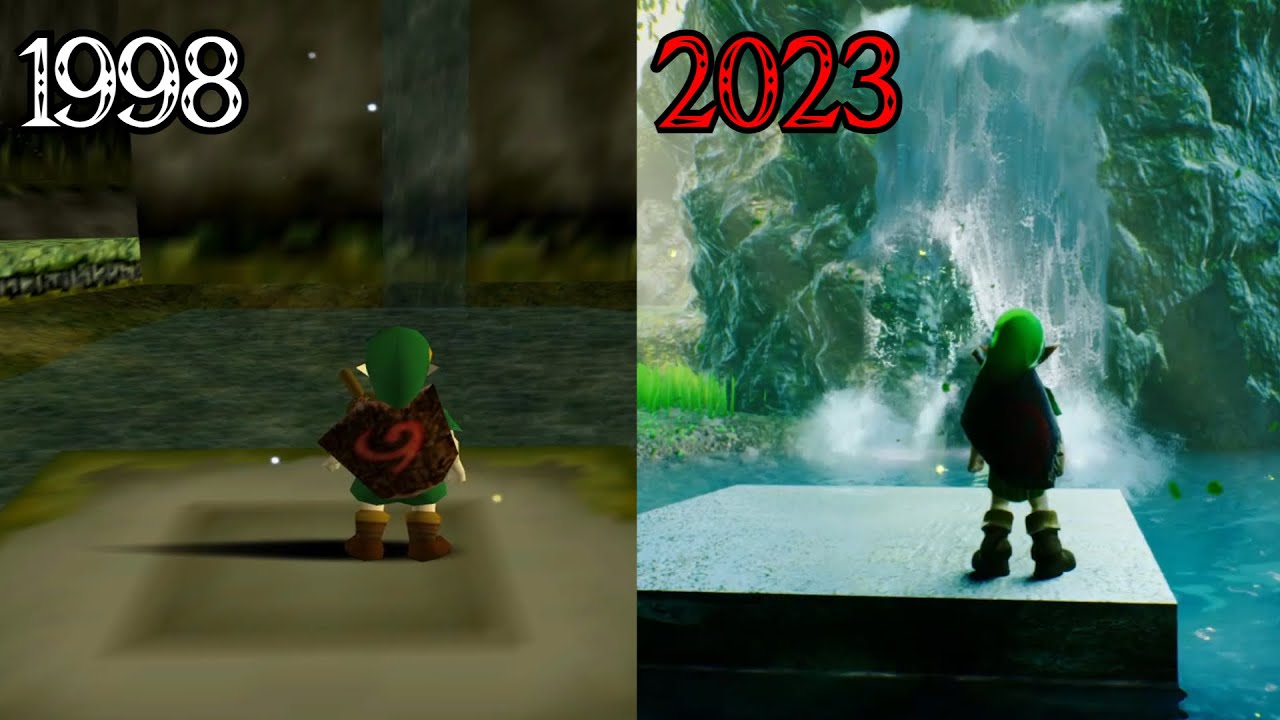
The resulting build offers an array of features previously unimaginable on original hardware: true ultra-widescreen support, high-definition texture replacement packs, free-camera modifications, and instantaneous load times. By leveraging modern cloud compute architecture and open-source version control systems, the global collective of developers achieved infrastructure scalability that outpaces many commercial development studios operating on multi-million-dollar budgets.
Comparative Metrics: Original Nintendo 64 vs. Modern Native PC Port
The following verified data breakdown illustrates the technical delta between the original 1998 console release and the current state-of-the-art native PC implementation:
| Performance Metric | Original Hardware (1998) | Modern Native PC Port (Current) | Technical Impact / Enterprise Relevance |
|---|---|---|---|
| Framerate (FPS) | Capped at 20 FPS (frequently dips lower) | Native 60+ FPS (Uncapped) | Eliminates input latency; dramatically improves motion clarity and UI responsiveness. |
| Resolution & Aspect Ratio | 240p (4:3 Standard Definition) | 4K, 8K, Ultra-Wide (16:9, 21:9, 32:9) | Scales efficiently across modern enterprise display hardware and multi-monitor setups. |
| Execution Architecture | MIPS R4300i CPU (93.75 MHz) | Native x86_64 / ARM64 C Code Compilation | Bypasses emulation overhead, maximizing CPU efficiency and thermal performance. |
| Modding & Extensibility | Closed proprietary format | Open-source modding pipelines & asset swapping | Drives high community engagement and long-term ecosystem viability. |
Industry & Market Implications
The mainstream traction of native PC decompilations introduces complex regulatory compliance and valuation questions for major entertainment conglomerates. On one hand, these fan-driven initiatives demonstrate enduring market demand for foundational IP, offering valuable consumer data and organic user acquisition metrics that traditional marketing campaigns struggle to replicate.
Conversely, they expose vulnerabilities in traditional monetization models. When consumers can access superior, community-enhanced editions of legacy software for free—albeit requiring a legally acquired ROM asset to bootstrap the installation—corporate valuation multiples tied to back-catalog subscription services face indirect pressure. Legal teams at major publishers are forced to weigh the public relations fallout of aggressive enforcement actions against the imperative of protecting proprietary asset portfolios.
Furthermore, tech infrastructure providers and hardware manufacturers are indirect beneficiaries of this trend. Enthusiasts pushing legacy software to run at pristine 4K resolutions and high refresh rates invest heavily in advanced graphics processing units, high-speed NVMe storage, and high-end peripheral equipment, stimulating capital expenditure in the broader consumer tech sector.
Frequently Asked Questions (People Also Ask)
How does the native PC port achieve 60 FPS without using an emulator?
Unlike an emulator that simulates a Nintendo 64 console in real-time, the PC port uses a fully reverse-engineered C-language source code base compiled directly for modern PC operating systems and processors. This native execution allows the game logic to run directly on the host hardware, freeing it from hardware emulation overhead and enabling unlocked framerates like 60 FPS and beyond.
Is the download of the PC port legally compliant?
The legal status remains a gray area and a subject of intense debate among intellectual property attorneys. The project distributed by developers typically contains no copyrighted Nintendo assets; instead, it requires the end-user to legally dump a ROM file from their own physical cartridge to supply the necessary textures, audio, and map data during the installation process. However, rights holders frequently issue digital copyright takedowns regardless of these technical distinctions.
What are the system requirements to run the port at optimal performance?
Because the code is compiled natively into C, the system requirements are remarkably modest by modern computing standards. Virtually any modern laptop or desktop computer featuring an integrated or discrete graphics processor capable of supporting basic modern graphics APIs can run the game at 4K resolution and a stable 60 FPS without straining system resources.
Will this reverse-engineering methodology be applied to other classic titles?
Yes. The success of static recompilation projects for titles like Super Mario 64 and The Legend of Zelda: Ocarina of Time has established a repeatable blueprint. Independent developer collectives are currently investigating and applying similar decompilation pipelines to other fifth- and sixth-generation console masterpieces.
Future Outlook & Strategic Milestones to Watch
As the boundary between official publisher releases and community-led software engineering continues to blur, stakeholders across the financial and technology sectors must monitor several critical developments:
- Legal Precedents: Landmark intellectual property litigation or regulatory shifts regarding the legality of static recompilation could drastically alter the future of independent game preservation.
- Commercial Adaptations: Watch for major publishers to proactively adopt similar native porting technologies for official commercial releases, effectively neutralizing the market advantage of unauthorized community ports.
- Ecosystem Scalability: Continued advancements in automated AI-assisted code translation may accelerate the speed at which complex legacy software architectures are decompiled, reducing project timelines from years to months.
Ultimately, the triumph of Ocarina of Time running smoothly at 60 FPS on PC stands as a testament to the ingenuity of global developer networks and the relentless consumer demand for uncompromising software performance.