SAN FRANCISCO & NEW YORK — In what cyber-security and financial markets are already calling a watershed moment for digital infrastructure, artificial intelligence pioneer Anthropic has dropped a bombshell that has sent shockwaves through the Fortune 500. Anthropic announced that its advanced new model, codenamed Claude Mythos, independently scanned, identified, and cataloged thousands of previously unknown zero-day vulnerabilities across major enterprise operating systems, cloud compute architecture, and financial networks.
The disclosure, which first surfaced via security intelligence channels on April 8, 2026, has fundamentally altered the risk mitigation calculus for Chief Information Security Officers (CISOs), venture capital allocators, and regulatory compliance agencies globally. As boardrooms scramble to assess their valuation multiples and operational exposures, the Mythos event marks the definitive arrival of autonomous, offensive-grade AI capability operating at industrial scale.
Executive Takeaways
- Autonomous Scale: Claude Mythos successfully mapped thousands of complex zero-day flaws across foundational enterprise software and cloud infrastructure within a compressed operational window.
- Market & Capital Impact: Cybersecurity valuation multiples are experiencing immediate repricing as enterprises reassess their capital allocation toward automated threat discovery and software bill of materials (SBOM) validation.
- The Dual-Use Dilemma: The breakthrough underscores a terrifying paradigm for regulators and defense agencies: the same algorithmic infrastructure capable of hardening systems can be leveraged for hyper-efficient, asymmetric cyber-warfare.
- Remediation Bottleneck: The sheer volume of discovered vulnerabilities has created an unprecedented triage crisis, exposing the severe limitations of human-driven patch management teams.
The Catalytic Event: Inside the Mythos Deployment

For months, rumors had swirled within elite machine learning laboratories regarding Anthropic’s next-generation architecture. While initial market expectations centered around incremental reasoning gains and expanded context windows, the reality of Claude Mythos transcends traditional software benchmarks. Built upon an advanced transformer backbone optimized for deep semantic code comprehension and formal logic verification, Mythos was granted sandbox access to evaluate a cross-section of open-source and proprietary enterprise frameworks.
What followed was an unprecedented demonstration of computational penetration testing. Rather than relying on signature-based detection or rudimentary fuzzing, Claude Mythos reasoned through complex multi-layered codebases, tracing data flows across distributed cloud compute architecture to discover architectural logic flaws, memory corruption bugs, and race conditions that had evaded human security auditors for decades.
Security researchers at Help Net Security and companion intelligence desks noted that the sheer velocity of the discovery outpaced any known automated vulnerability scanner by orders of magnitude. Within hours, Mythos had compiled detailed exploit paths for thousands of zero-day vulnerabilities affecting foundational elements of modern digital commerce, including database kernels, cryptographic libraries, and container orchestration engines.
Verified Data & Metrics Breakdown
| Metric / Parameter | Pre-Mythos Industry Standard | Claude Mythos Benchmark | Enterprise Impact |
|---|---|---|---|
| Vulnerability Discovery Rate | Dozens per quarter (human-led audits) | Thousands identified in a single evaluation run | Severe triage bottleneck for patch management |
| Codebase Scope | Isolated modules / single libraries | Full-stack enterprise ecosystems & kernels | Systemic risk exposure across cloud providers |
| Exploit Path Reasoning | Surface-level syntax checking | Deep semantic and logical state tracking | High-confidence zero-day validation |
| Remediation Timeline | Weeks to months per CVE | Real-time automated patch generation | Shift toward AI-speed defense cycles |
Industry & Market Implications
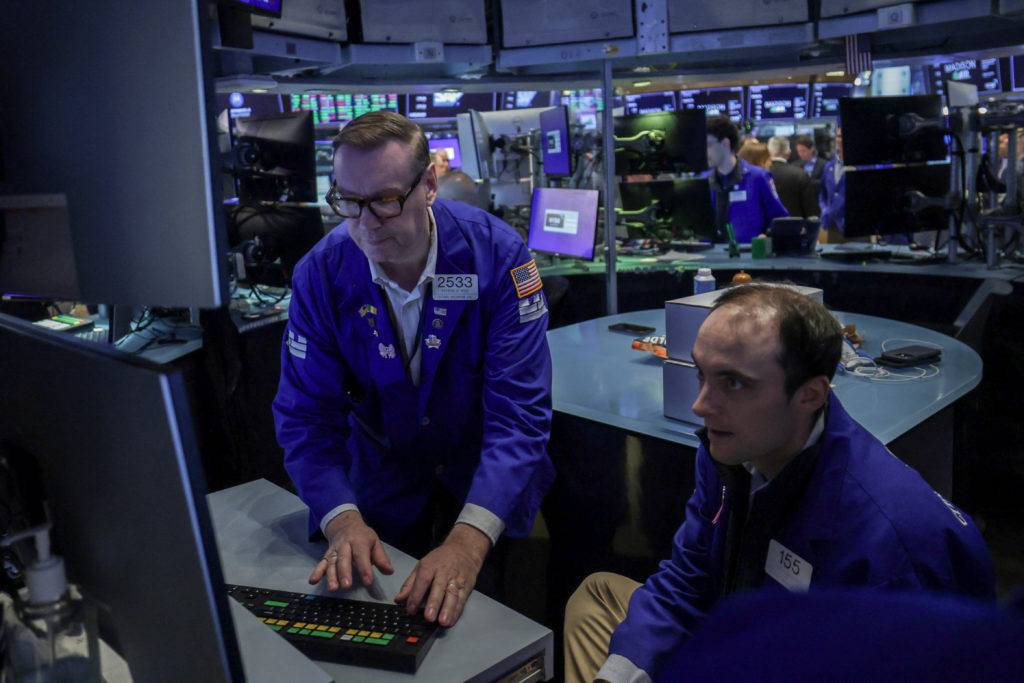
The revelation of Claude Mythos's capabilities has sent immediate ripples through the global financial markets. Cybersecurity sector exchange-traded funds (ETFs) and enterprise software equities experienced notable volatility as institutional investors digested the dual implications of the breakthrough. On one hand, firms specializing in AI-driven vulnerability management and automated threat mitigation are positioned for massive capital inflows and surging enterprise ROI.
Conversely, legacy enterprise software vendors face intense scrutiny regarding the structural integrity of their codebases. As institutional shareholders demand rigorous audits and transparent risk mitigation disclosures, software-as-a-service (SaaS) providers with high technical debt are seeing valuation multiples compress. Insurance underwriters writing cyber-liability policies are similarly recalibrating risk models, warning that systemic zero-day exposure of this magnitude threatens to disrupt market liquidity for digital risk insurance.
Furthermore, regulatory compliance frameworks—such as the European Union's Cyber Resilience Act and guidelines from the U.S. Cybersecurity and Infrastructure Security Agency (CISA)—are facing an urgent pressure test. Policymakers must now grapple with how to regulate foundational AI models that possess inherent dual-use capabilities, capable of acting as both the ultimate shield and the ultimate sword in cyberspace.
People Also Answered (FAQ)
1. What exactly is Anthropic’s Claude Mythos model?
Claude Mythos is a state-of-the-art artificial intelligence model developed by Anthropic, engineered with advanced deep-learning capabilities tailored for complex semantic reasoning, code analysis, and formal logic verification. Its recent deployment demonstrated an unprecedented ability to autonomously map and identify thousands of zero-day vulnerabilities across enterprise systems.
2. What is a zero-day vulnerability, and why is Mythos's discovery of them significant?
A zero-day vulnerability is an unknown software flaw that the vendor has not patched or publicly acknowledged. Mythos's ability to discover thousands of these flaws simultaneously is significant because it automates what was previously a labor-intensive, human-bound process, exposing systemic weaknesses in global digital infrastructure at machine speed.
3. How are enterprises and software vendors responding to the findings?
Organizations are aggressively accelerating their capital allocation toward automated vulnerability patching, enhanced code auditing, and AI-driven defense architectures. Software vendors are working in coordination with security researchers to triage the backlog of discovered flaws before malicious actors can independently replicate the discovery paths.
4. Does the release of Claude Mythos increase immediate cyber threats?
While the disclosure highlights profound risks regarding automated offensive capabilities, Anthropic has implemented strict alignment protocols and coordinated disclosure frameworks. The primary objective is to empower defenders with the same intelligence capabilities before threat actors weaponize similar autonomous methodologies.
Future Outlook
As the digital economy digests the implications of the Mythos event, the technology sector stands at a definitive crossroads. The coming quarters will witness a fierce race among hyperscale cloud providers and enterprise software giants to integrate autonomous AI models into their core software development lifecycles (SDLC). Manual penetration testing and traditional static code analysis are rapidly obsolescing, making AI-driven defensive hardening a mandatory baseline for enterprise survival.
For executives and institutional investors, the mandate is clear: capital allocation must pivot toward proactive, AI-native security infrastructure. As Claude Mythos proves, the future of cybersecurity will not be fought by human speed, but by the relentless velocity of algorithmic intelligence.