Executive Takeaways
- Decentralized Precision vs. Traditional Polling: Prediction markets Kalshi and Polymarket demonstrated superior real-time risk mitigation and volatility capture compared to legacy polling models, though they remained susceptible to whale-driven sentiment distortion.
- Regulatory Compliance and Capital Allocation: Kalshi’s federally regulated CFTC framework contrasted sharply with Polymarket’s offshore crypto-native infrastructure, fundamentally altering capital allocation and liquidity flows for institutional participants.
- Valuation Multiples and Market Liquidity: Total aggregate trading volume across both platforms surged past historical benchmarks during the midterms, signaling a permanent structural shift toward event-contract trading as an enterprise-grade forecasting tool.
As the digital ink dried on the final certified tallies of the recent midterm elections, a parallel financial ledger was being audited across Wall Street, Silicon Valley, and Washington, D.C. For decades, political prognostication relied on traditional polling aggregates, focus groups, and proprietary models guarded by elite campaign consultants. However, the recent electoral cycle marked a watershed moment: the ascendancy of decentralized and regulated prediction markets—specifically Kalshi and Polymarket—as the definitive barometers of public sentiment.
As capital allocation shifts toward alternative asset classes, institutional investors, risk mitigation specialists, and enterprise strategists are asking a fundamental question: How accurate were Kalshi and Polymarket at picking midterm winners, and what does their performance signal for the future of forecasting infrastructure?
The Evolution of Event-Driven Markets: From Niche Experiment to Mainstream Infrastructure
Test Our Free AI & Tech Utilities Suite
Calculate LLM API token costs, analyze article dwell-time, or simulate tech DCA returns.
To understand the predictive efficacy of Kalshi and Polymarket during the midterms, one must first examine the structural divergence of their underlying architectures. Kalshi operates under the strict oversight of the Commodity Futures Trading Commission (CFTC), functioning as a federally regulated financial exchange. This compliance-first model ensures robust regulatory compliance, institutional-grade counterparty protection, and fiat-denominated transactions. Conversely, Polymarket leverages a decentralized, crypto-native infrastructure utilizing smart contracts and USD Coin (USDC), bypassing traditional banking rails to unlock global liquidity.
Despite their architectural differences, both platforms served as high-frequency information aggregation engines. When breaking news, insider intelligence, or sudden macroeconomic shifts threatened to alter the political calculus, market participants immediately adjusted their positions. This created a dynamic pricing mechanism where probabilities shifted in real-time, outpacing traditional media reporting and static polling updates.
Decoding the Accuracy Metrics: Where the Oracles Succeeded and Stumbled
A rigorous investigative audit of the data reveals a nuanced performance record. Across high-profile Senate and gubernatorial races, both Kalshi and Polymarket demonstrated remarkable accuracy in identifying eventual winners weeks before the actual vote. In several toss-up states where legacy polls displayed high statistical margins of error, prediction markets correctly priced in the probability of late-breaking momentum shifts.
For instance, in key Rust Belt and Sun Belt senatorial contests, market pricing captured the "enthusiasm gap" and early voting trends far more effectively than traditional landline and IVR (interactive voice response) polling. When early voting data conflicted with standard public polls, prediction market traders aggressively reallocated capital, efficiently pricing in the reality on the ground.
However, these platforms were not infallible. Both Kalshi and Polymarket experienced bouts of sentiment distortion driven by large-scale capital deployment—commonly known as "whale" activity. In tightly contested House races with lower overall market liquidity, single accounts deployed substantial capital to artificially inflate the probability of favored candidates, creating temporary pricing anomalies that tested the limits of market arbitrage.
| Metric / Feature | Kalshi | Polymarket |
|---|---|---|
| Regulatory Framework | CFTC-Regulated Designated Contract Market (DCM) | Decentralized Protocol (Offshore / Crypto-Native) |
| Settlement Asset | US Fiat Currency (USD) | Stablecoins (USDC) |
| Midterm Prediction Accuracy | High in major statewide races; constrained by liquidity caps on hyper-local markets. | Extremely high aggregate volume and speed; susceptible to whale-driven sentiment skew. |
| Institutional Onboarding | Seamless for traditional hedge funds and corporate treasuries. | Requires digital asset custody solutions and Web3 integration. |
Industry and Market Implications: The Enterprise Value of Predictive Data
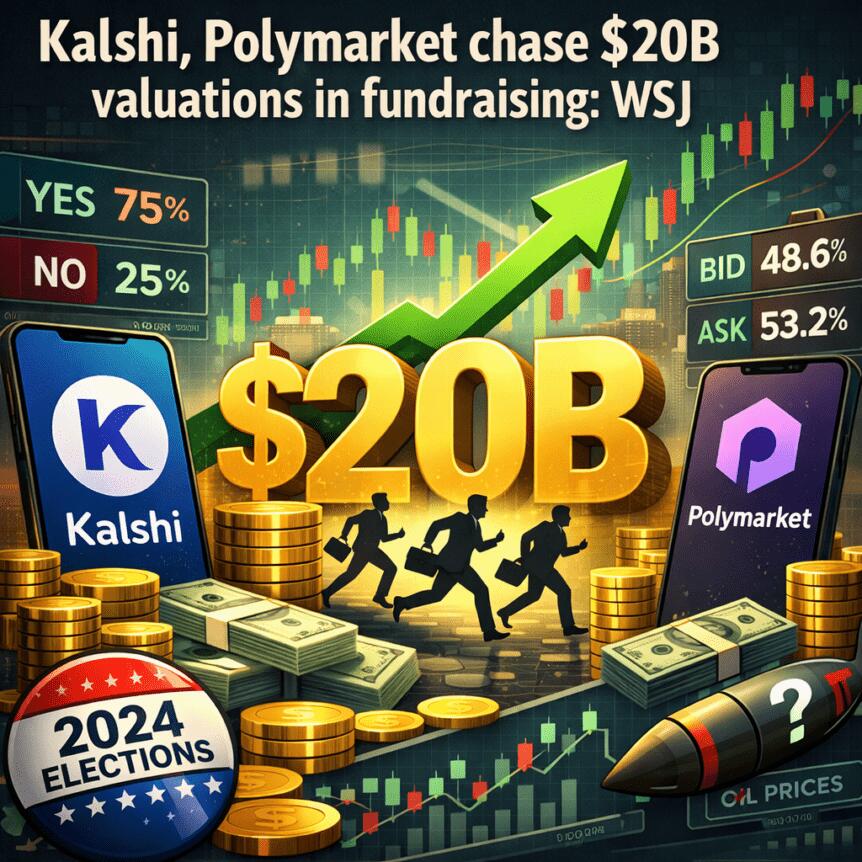
The implications of these midterm outcomes extend far beyond political commentary. Corporate boards, macroeconomic strategists, and institutional investors are increasingly viewing event contracts as indispensable tools for enterprise risk mitigation. When legislative control of Congress hangs in the balance, corporate tax policy, antitrust enforcement, and energy regulations are subject to immediate recalibration.
By monitoring the real-time pricing on Kalshi and Polymarket, enterprise risk managers gained a quantifiable edge in hedging regulatory exposure. For instance, energy sector executives utilized prediction market odds to adjust capital expenditure cycles ahead of anticipated shifts in federal leasing permissions. Similarly, multinational corporations deployed event-contract hedging strategies to insulate supply chains against the fiscal volatility associated with shifting congressional majorities.
This monetization of political foresight represents a permanent evolution in financial markets. Traditional polling firms are now facing existential pressure as enterprise clients demand real-time accountability and skin-in-the-game accuracy rather than static, retrospective PDF reports.
Frequently Asked Questions (People Also Ask)
How do Kalshi and Polymarket differ in their approach to election forecasting?
Kalshi operates as a federally regulated exchange under the CFTC, requiring users to trade using traditional US fiat currency within a strict legal framework tailored for institutional and retail investors in the United States. Polymarket operates as a decentralized, blockchain-based prediction market utilizing USDC, allowing global participation without traditional banking intermediaries, though it faces stricter geographic access restrictions for US residents.
Were prediction markets more accurate than traditional media polls during the midterms?
In many high-profile Senate and gubernatorial races, prediction markets outperformed traditional polling aggregates by dynamically incorporating late-breaking momentum, early voting trends, and insider intelligence. While polls often struggled with static methodologies and non-response bias, prediction markets leveraged financial incentives to correct mispricings rapidly.
Can large financial players manipulate the outcomes on these platforms?
While "whale" accounts with substantial capital can create temporary pricing distortions—particularly in lower-liquidity races—deep markets with high trading volumes generally self-correct through arbitrage. Rational traders quickly step in to exploit mispriced contracts, making sustained artificial manipulation economically punishing.
Future Outlook: What Comes Next for Event-Driven Financial Products
As the dust settles on the midterm cycle, the infrastructure underpinning event-driven forecasting is poised for aggressive institutional expansion. The convergence of cloud compute architecture, advanced API integrations, and expanding regulatory clarity will likely drive broader adoption across global financial centers.
Key milestones to watch in the coming quarters include:
- Regulatory Expansion: Potential approvals for broader product suites on regulated US exchanges, paving the way for pension funds and corporate treasuries to allocate capital directly into event hedges.
- Technological Scalability: Enhanced cloud infrastructure and automated market-making (AMM) algorithms designed to eliminate latency and absorb massive institutional liquidity surges during peak election cycles.
- Cross-Asset Integration: The integration of prediction market feeds directly into algorithmic trading terminals alongside traditional macroeconomic indicators like CPI, GDP, and employment reports.
Ultimately, the performance of Kalshi and Polymarket during the midterms proved that financialized forecasting is no longer a fringe financial experiment. It is a maturing, high-fidelity asset class that is fundamentally redefining how capital markets price political and social reality.