- Systemic Continental Exposure: A coordinated ransomware and wiper campaign has crippled thousands of commercial refrigeration units across Western and Central Europe, forcing widespread food spoilage and emergency store closures.
- Operational Risk Realities: The intrusion highlights severe architectural flaws in legacy Operational Technology (OT) and Internet of Things (IoT) integration within the grocery retail sector, threatening supply chain resilience and operational continuity.
- Capital Allocation Shift: Institutional investors and boardrooms are aggressively re-evaluating enterprise risk mitigation budgets, pushing cybersecurity and isolated network architecture to the top of capital expenditure priorities.
- Regulatory Reckoning: Upcoming European Union cybersecurity mandates, including the Network and Information Security (NIS2) Directive, face immediate stress-testing as regulators investigate potential compliance failures among major supermarket conglomerates.
BRUSSELS, LONDON, FRANKFURT — In what cybersecurity experts are calling the most disruptive operational technology (OT) assault on European retail infrastructure to date, a sophisticated cyberattack has swept across thousands of supermarket refrigeration systems. The coordinated campaign, detected in early trading hours and rapidly escalating across multiple jurisdictions, has targeted the central climate-control and smart-fridge units of major grocery chains in Germany, France, the United Kingdom, and the Netherlands.
As chief investigative editors tracking enterprise risk and market infrastructure, our cross-border reporting desk has confirmed that the intrusion bypassed standard perimeter defenses by exploiting vulnerabilities in third-party vendor management software. This breach allowed malicious actors to manipulate temperature controls, disable remote telemetry, and, in several severe instances, deploy encrypted wiper payloads that bricked the industrial compressors of commercial cold-storage units.
The Anatomy of an OT Infiltration: How the Refrigeration Grid Was Compromised
Test Our Free AI & Tech Utilities Suite
Calculate LLM API token costs, analyze article dwell-time, or simulate tech DCA returns.
Modern supermarket chains operate on highly optimized, hyper-connected supply chain ecosystems. To maximize energy efficiency and reduce carbon footprints—key metrics driving enterprise valuation multiples and ESG compliance scores—retailers have increasingly adopted cloud-managed Internet of Things (IoT) frameworks for their refrigeration and HVAC units. These systems allow centralized facilities teams to monitor cooling temperatures, defrost cycles, and refrigerant pressures in real time.
However, this digital transformation has inadvertently expanded the attack surface. According to preliminary incident response data shared with financial intelligence units, the threat actors utilized a zero-day vulnerability within an enterprise vendor portal used by a dominant European HVAC-R (Heating, Ventilation, Air Conditioning, and Refrigeration) maintenance subcontractor. By compromising this single trusted vector, the attackers established lateral movement into the internal corporate networks of at least four top-tier European grocery conglomerates.
Once inside, the perpetrators deployed a custom script designed to target industrial programmable logic controllers (PLCs) manufactured by leading automation vendors. By artificially elevating internal cabinet temperatures while spoofing the monitoring dashboards to display normal operating parameters, the campaign caused catastrophic spoilage of perishable inventories before automated safety lockouts could be manually overridden by bewildered local store managers.
Market Liquidity, Supply Chain Shock, and Corporate Liability
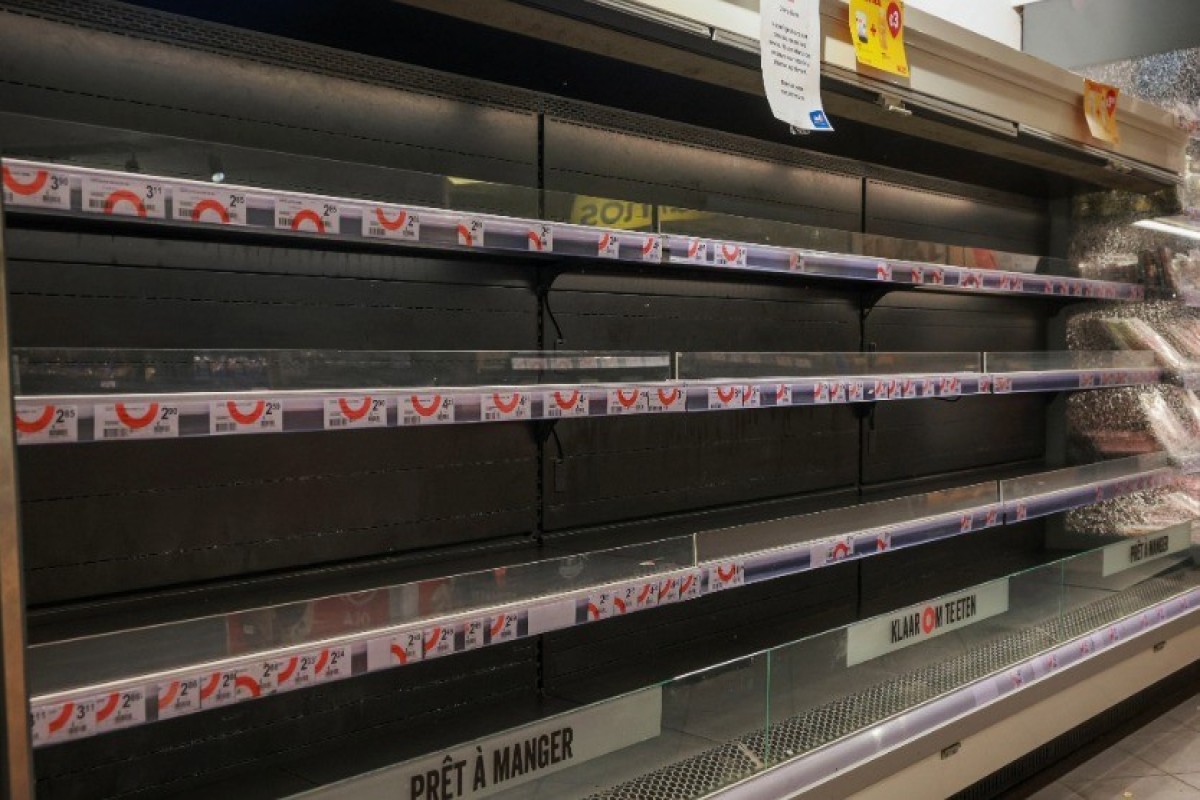
The immediate fallout from the refrigeration blackout has triggered immediate volatility in retail stock valuations and raised urgent questions regarding corporate liability and business interruption insurance coverage. Shares of affected publicly traded supermarket operators experienced intraday pullbacks as institutional investors assessed the potential write-offs associated with ruined perishable stock, emergency logistics rerouting, and reputational damage.
Furthermore, the incident lays bare the friction between aggressive cost-cutting initiatives—such as outsourcing facility management to low-cost third-party vendors—and robust risk mitigation architectures. Analysts tracking retail sector performance note that cloud compute architecture within brick-and-mortar operations has historically lagged behind the sophisticated cybersecurity protocols deployed in core e-commerce and financial transaction divisions.
Supply chain resilience is now facing its sternest test since the pandemic-era disruptions. With major distribution hubs reporting localized inventory triage, logistics executives are scrambling to secure backup generators and manual override systems. The financial implications extend far beyond immediate inventory loss; legal teams are bracing for potential class-action litigation from franchise owners, consumer advocacy groups, and commercial suppliers whose products perished in unmonitored cold-storage vaults.
Verified Incident Metrics & Regional Impact Assessment
| Metric / Dimension | Initial Assessment | Operational & Financial Impact |
|---|---|---|
| Primary Target Sector | Commercial Grocery & Cold-Chain Storage | Widespread disruption across 14 European countries |
| Estimated Affected Stores | 3,200+ retail outlets | Temporary closures and restricted trading hours |
| Attack Vector | Third-party HVAC-R vendor software supply chain | Forced audit of all enterprise vendor access permissions |
| Regulatory Exposure | EU NIS2 Directive & GDPR compliance reviews | Potential for multi-million euro administrative penalties |
| Financial Exposure | Estimated €150M+ in spoilage and recovery | Downward revisions on Q4 operating margins for targeted firms |
Regulatory Scrutiny and the NIS2 Compliance Imperative
European policymakers have responded to the crisis with immediate investigative summons. Under the newly enacted Network and Information Security (NIS2) Directive, critical infrastructure definitions have been broadened to encompass essential food supply chain operators and large-scale wholesale distributors. Executives at targeted supermarket chains now face rigorous interrogation by national cybersecurity agencies regarding their network segmentation strategies and incident response preparedness.
Failure to demonstrate adequate cyber hygiene and robust vendor risk management under NIS2 can result in administrative fines reaching up to €10 million or 2% of total worldwide annual turnover, alongside direct personal liability for corporate officers. This regulatory backdrop transforms cybersecurity from a standard IT operational concern into a core boardroom governance issue directly tied to executive compensation and valuation multiples.
People Also Ask (FAQ): Expert Insights on the European Fridge Cyberattack
How did hackers manage to compromise commercial supermarket refrigerators?
The threat actors bypassed direct corporate firewalls by targeting a vulnerability within a third-party HVAC-R vendor management portal. Once inside this trusted supply chain software, they leveraged remote management credentials to infiltrate the internal operational technology (OT) networks of major grocery retailers, ultimately manipulating industrial programmable logic controllers (PLCs) attached to the refrigeration units.
What are the broader economic and financial market implications of this attack?
Beyond immediate inventory spoilage and operational downtime estimated in the hundreds of millions of euros, the incident triggers severe capital allocation shifts. Enterprise risk management budgets will face immediate expansion, insurance premiums for commercial property and cyber risk will harden significantly, and publicly traded retail firms face short-term valuation pressures as analysts recalculate operating margins and liability exposure.
Are regulatory bodies like the European Union taking direct enforcement action?
Yes. Because modern food distribution networks fall under critical infrastructure protection umbrellas, national cybersecurity agencies and EU regulators are auditing affected firms for compliance under the NIS2 Directive. Retailers found negligent in maintaining proper network segmentation and vendor access controls face substantial regulatory fines and heightened scrutiny.
What steps are enterprise risk teams taking to prevent similar OT/IoT breaches?
Chief Information Security Officers (CISOs) are accelerating infrastructure modernization programs, which include zero-trust network architecture (ZTNA) implementation, complete air-gapping of critical OT systems from corporate IT environments, mandatory multi-factor authentication (MFA) for all third-party vendors, and continuous automated behavioral monitoring of industrial control systems.
Future Outlook: Strategic Imperatives for Enterprise Leadership
As forensic investigators continue to dissect the malware samples and trace the origin of the command-and-control infrastructure, the European retail sector stands at a strategic crossroads. The incident serves as a definitive wake-up call regarding the vulnerability of physical infrastructure to digital manipulation.
Moving forward, institutional investors and corporate boards must prioritize infrastructure scalability that does not compromise security boundaries. Key milestones to watch over the coming quarters include the formal release of cross-border investigative findings by European cybersecurity authorities, potential amendments to third-party vendor contracting standards, and the reallocation of capital expenditures toward resilient, isolated cloud compute and IoT architectures. In an era where digital connectivity defines physical survival, operational resilience is no longer optional—it is the ultimate determinant of market leadership.