WASHINGTON — United States job growth slowed down dramatically more than anticipated in September, pushing fresh questions onto Wall Street and the Federal Reserve regarding the true velocity of the world’s largest economy. However, despite the stark headline miss, underlying labor market indicators suggest a resilient economic foundation rather than an impending recession.
According to data released by the primary wire service and labor reporting aggregates, nonfarm payrolls increased by a modest 29,000 in September. The print significantly undershot the consensus forecasts of economists polled by major financial institutions, who had projected a much healthier expansion. Yet, even with the cooling hiring pace, the broader labor ecosystem continues to demonstrate structural stability, keeping panic at bay among institutional investors.
Executive Summary: The September Labor Snapshot
- The Headline Miss: Nonfarm payrolls increased by just 29,000 in September, falling well short of Wall Street projections.
- Underlying Stability: Despite the slowdown in hiring velocity, massive layoffs remain absent, and structural employment figures hold firm.
- Federal Reserve Implications: The weaker-than-expected data heightens debate over the central bank's upcoming interest rate trajectory.
- Market Reaction: Investors are recalibrating portfolios as economic data sends mixed signals regarding a soft landing.
Unpacking the Numbers: A Closer Look at September Hiring
The stark discrepancy between expectations and the actual 29,000 job additions has ignited fierce debate across economic trading desks in New York and London. For months, analysts have debated whether the U.S. labor market is experiencing a healthy normalization or a sharper deceleration under the weight of higher borrowing costs.
While the September increase represents a notable step down from previous months, labor economists emphasize that month-to-month volatility can heavily skew initial readings. "A single month's data point does not make a definitive trend, but a print of 29,000 certainly forces policymakers to take notice," noted one senior macroeconomic strategist in a morning briefing to clients.
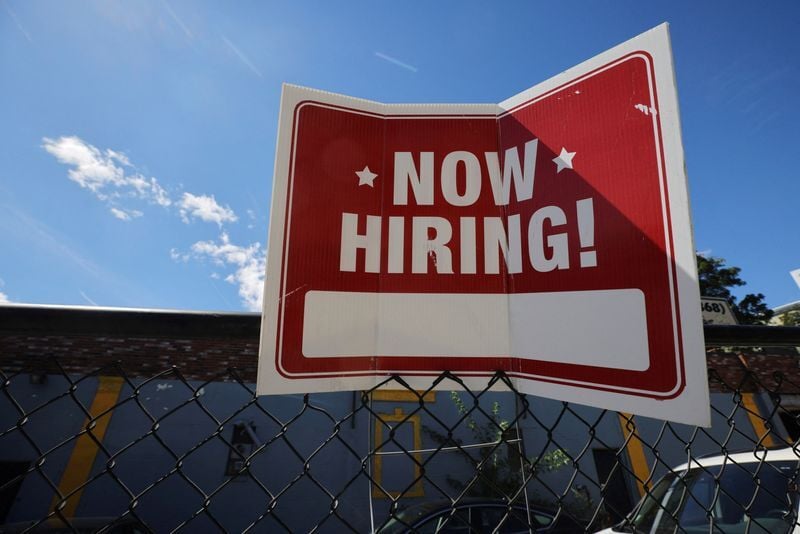
Retail, hospitality, and corporate sectors displayed mixed hiring signals. While "now hiring" signs remain visible outside storefronts and small businesses nationwide, corporate cautiousness regarding capital expenditure and macroeconomic uncertainty appears to be weighing on full-time corporate hiring decisions.
| Economic Indicator | September Reading | Wall Street Consensus | Previous Month Trend |
|---|---|---|---|
| Nonfarm Payrolls | +29,000 | Significantly Higher | Cooling Momentum |
| Labor Market Status | Stable / Resilient | Soft Landing Expected | Normalizing |
| Hiring Sentiment | Cautious | Optimistic | Mixed |
What This Means for the Federal Reserve and Interest Rates
The central question now facing Federal Reserve Chairman Jerome Powell and the Federal Open Market Committee (FOMC) is how to interpret this sharp cooling. For months, the central bank has walked a tightrope: attempting to cool stubborn inflation without tipping the labor market into a severe downturn.
A soft job report traditionally fuels arguments for a more dovish monetary policy approach—potentially opening the door for accelerated or deeper interest rate cuts to support economic momentum. Conversely, if inflation remains sticky while hiring slows, the Fed faces the dreaded specter of stagflation, though few mainstream economists currently view that as the primary scenario.
"The Fed is heavily data-dependent right now," said a leading fixed-income analyst. "When job growth undershoots this drastically, it removes some of the urgency for prolonged tight monetary policy, shifting the focus squarely toward preserving the health of the American worker."
Market Reactions and Economic Outlook
Equity futures and Treasury yields experienced immediate fluctuations following the data release as algorithmic traders and human portfolio managers digested the implications. Treasury yields dipped as bond prices rallied on expectations that weaker employment data could prompt the Fed to ease monetary policy sooner rather than later.
At the same time, corporate leaders are advising patience. The underlying labor market stability means consumer spending—the primary engine of U.S. GDP growth—remains intact, even if the pace of new job creation has temporarily downshifted. Businesses are choosing to hoard talent rather than execute sweeping layoffs, reflecting confidence in long-term demand.
As the fourth quarter approaches, all eyes will turn to upcoming inflation prints, consumer spending reports, and subsequent employment revisions to determine whether September's low print was an anomaly or the beginning of a broader economic shift.
Frequently Asked Questions
Why did U.S. job growth miss expectations so significantly in September?
Nonfarm payrolls increased by only 29,000 due to a combination of corporate caution, sector-specific adjustments, and potential monthly volatility. Many employers are adopting a wait-and-see approach amid broader macroeconomic uncertainties and elevated interest rates.
Does a weak jobs report mean a recession is imminent?
Not necessarily. While hiring velocity has slowed, the labor market retains key pillars of stability—such as low initial jobless claims and strong consumer balance sheets—leading most economists to maintain their outlook for a potential economic soft landing rather than a sharp recession.