
Executive Takeaways
Test Our Free AI & Tech Utilities Suite
Calculate LLM API token costs, analyze article dwell-time, or simulate tech DCA returns.
- Strategic Narrative Reframing: Major technology trade groups and hyperscale cloud providers are aggressively reframing grassroots voter pushback against artificial intelligence as partisan "anti-Trump" hostility rather than structural skepticism toward generative tech.
- Capital Expenditures at Risk: Over $210 billion in committed 2024–2025 AI compute infrastructure infrastructure projects face mounting local municipal blockades, utility grid disputes, and state-level legislative bans.
- Bipartisan Reality vs. Political Framing: Internal polling and voter sentiment analyses across key battleground districts indicate that public anxiety over rising electricity bills, job displacement, and synthetic media spans across traditional ideological lines.
- Valuation & Regulatory Implications: Hyperscale operators risk regulatory fragmentation and multiple contraction if state-level voter mandates successfully bypass federal preemption efforts.
The Silicon Valley Narrative Pivot: Deflecting Structural Skepticism
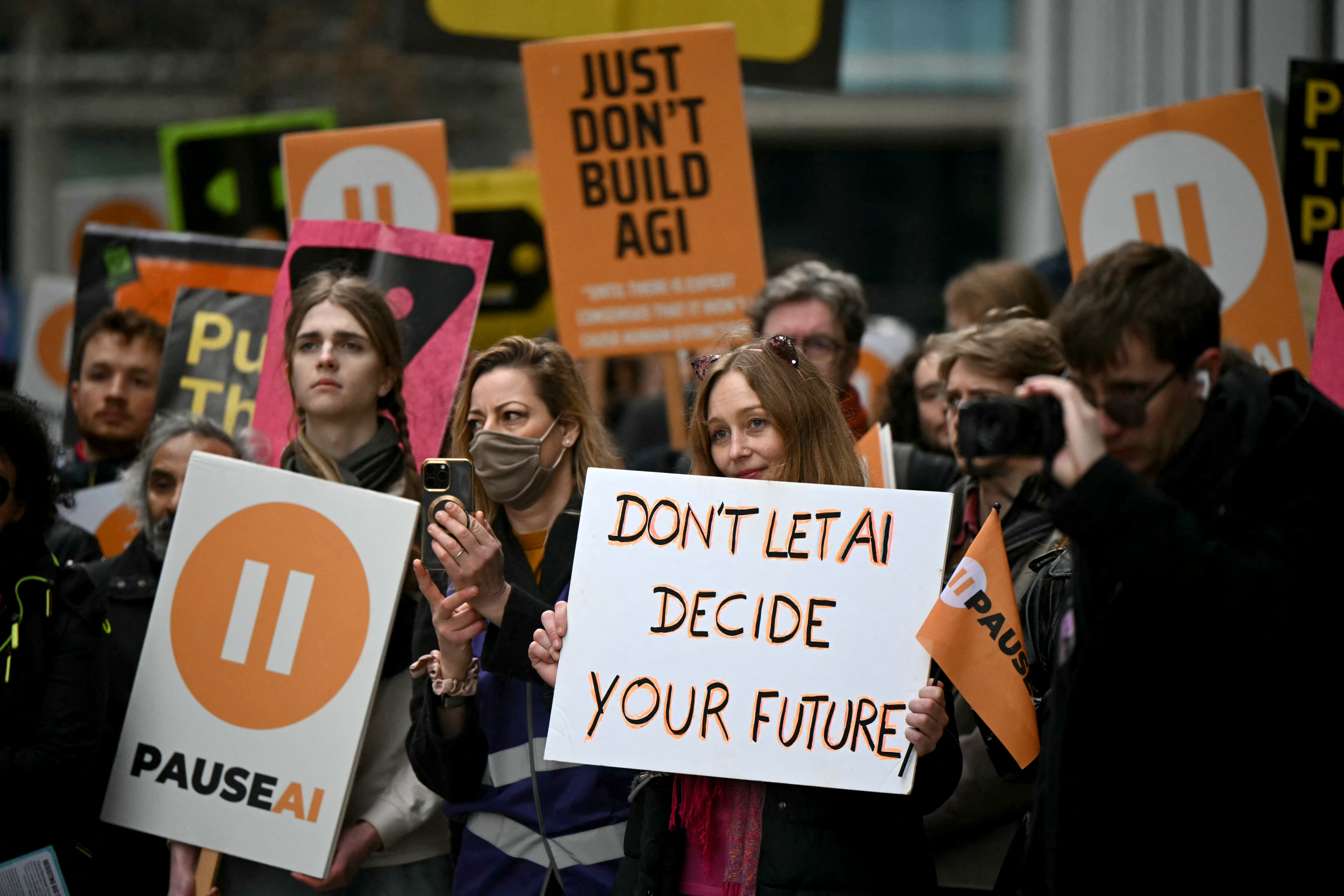
In the executive suites of Sand Hill Road and the corporate government-affairs offices of Beltway trade groups, a new defensive posture has taken shape. As public resistance to artificial intelligence footprint expansion intensifies—manifested in stalled data center permits, state-level privacy bills, and mounting voter anxiety—Big Tech strategists are advancing a calculated public relations defense: arguing that the surging voter backlash against AI is driven by political animus aimed at conservative deregulation agendas rather than genuine public distrust of artificial intelligence itself.
This strategic reframing comes at a critical juncture for hyperscale compute operators. As tech giants deploy unprecedented capital expenditures toward generative AI models and data center architecture, the industry confronts a widening rift between Wall Street's capital allocation priorities and main-street voter priorities. By categorizing regulatory skepticism and local opposition as a partisan reflex against incoming federal deregulatory initiatives, tech lobbyists aim to rally conservative allies, neutralize bipartisan legislative coalitions, and secure federal preemption against aggressive state regulations.
However, an investigation into state legislative dockets, municipal utility proceedings, and cross-party voter surveys reveals a far more complex reality. The friction destabilizing Big Tech’s expansion plans is fundamentally rooted in tangible economic externalities: surging residential power bills, localized water depletion, automated labor displacement concerns, and the unchecked proliferation of election-year synthetic media. Framing this multi-faceted voter friction as mere partisan politics may offer short-term tactical advantages in Washington, but it risks blinding enterprise leaders to systemic market and political liabilities.
Ground Truth: Energy Grids, Utility Rates, and Local Resistance
While Washington trade associations frame AI policy through a partisan lens, local ballot measures and town hall meetings paint a starkly different picture. The aggressive rollout of enterprise AI infrastructure requires unprecedented access to base-load power and cooling water, sparking sharp pushback from local voters regardless of their presidential preferences.
In Northern Virginia's "Data Center Alley"—and expanding into rural pockets of Georgia, Ohio, and Arizona—hyperscale infrastructure expansion has directly collided with residential utility concerns. Grid operators such as PJM Interconnection and regional utilities like Dominion Energy have filed requests for billions of dollars in transmission line upgrades to accommodate incoming compute capacity. Municipal utility boards face growing outrage from residents who are seeing their monthly electricity tariffs climb to subsidize high-voltage power builds dedicated to data center operations.
Case in Point: The Municipal Utility Collision
In key legislative districts across Georgia and Pennsylvania, bipartisan coalitions of voters have mobilized to delay zoning approvals for hyperscale facilities. Republican state lawmakers representing rural constituencies have found themselves allied with urban progressive Democrats in proposing mandatory clean-energy offsets, heavy water-use fees, and commercial power surcharges on data center operators. Rather than reflecting national partisan polarization, this local friction highlights a direct economic conflict between regional taxpayers and multinational cloud compute providers.
Beyond energy infrastructure, public anxiety regarding generative AI's impact on employment security and information integrity continues to transcend party lines. Polling conducted across competitive congressional districts shows that over 68% of registered voters favor strict federal oversight of AI training datasets, mandatory watermarking for synthetic media, and explicit worker protections against automated displacement. The industry’s attempt to characterize this wide-ranging caution as a localized political reflex underestimates the depth of broader consumer skepticism.
The Economics of Lobbying and Regulatory Arbitrage
Big Tech's narrative strategy is intricately tied to corporate capital allocation and regulatory risk mitigation. Cloud hyperscalers face immense market pressure to deliver enterprise return on investment (ROI) on hundreds of billions of dollars invested in Nvidia GPU clusters, custom silicon, and server infrastructure. Any regulatory delay in datacenter deployment directly depresses capital efficiency metrics and extends payback periods for critical enterprise AI products.
To shield these massive capital investments, industry advocacy groups are executing a classic regulatory arbitrage strategy. By convincing federal lawmakers that state-level regulatory efforts—such as California's proposed safety guardrails for frontier models or state-level AI privacy acts—are driven by partisan opposition, lobbyists hope to push through sweeping federal preemption clauses. Federal preemption would effectively strike down stringent state laws, establishing a single, lightweight national standard that accelerates infrastructure deployment.
Enterprise Financial Exposure across Key Battleground Regions
The operational and political conflict surrounding AI infrastructure expansion directly impacts corporate balance sheets and municipal energy markets. Below is an overview of key battleground regions where local voter resistance, utility grid strain, and enterprise capital allocation collide.
| Region / Battleground | Primary Local Voter & Regulatory Driver | Enterprise CapEx at Risk (2024-2026) | Utility Grid / Resource Constraint Impact | Dominant Political Strategy Applied |
|---|---|---|---|---|
| PJM Interconnection (Virginia / Ohio) | Residential utility rate hikes, land conversion pushback | $65 Billion | Transmission queue congestion; high base-load demand spikes | Framing rate protests as partisan opposition to economic development |
| Southeast (Georgia / Carolinas) | Water depletion, localized noise pollution from cooling plant designs | $42 Billion | Accelerated fossil-fuel plant retention; water table stress | Lobbying state assemblies for tax incentives and swift zoning preemption |
| Southwest (Arizona / Nevada) | Extreme water scarcity, municipal cooling permit challenges | $38 Billion | Substantial evaporative cooling demands in high-drought zones | Promising closed-loop tech while contesting municipal water limits |
| West Coast (California / Washington) | Algorithmic safety mandates, deepfake bans, labor displacement protection | $70 Billion | Grid stability compliance; stringent environmental impact reviews | Labeling state legislative guardrails as anti-innovation and partisan animus |
Industry & Market Implications: Valuations, Policy, and Enterprise Strategy
The outcome of this strategic framing campaign carries significant implications for technology hardware providers, software hyperscalers, utility companies, and corporate capital allocators.
1. Cloud Hyperscalers and Enterprise Software Providers
For Microsoft, Alphabet, Amazon Web Services (AWS), and Meta, any friction that slows down data center development poses a direct threat to valuation multiples. Financial markets have largely priced in aggressive top-line revenue growth derived from enterprise AI services. If local voter pushback successfully halts infrastructure permits, cloud providers face capacity constraints, reduced operational margins, and potential write-downs on delayed facilities. Obscuring true public concern as mere political friction risks leaving investors unprepared for long-term regulatory compliance costs.
2. The Energy Sector and Independent Power Producers (IPPs)
Electric utilities and independent power producers sit at the center of this battle. Entities with nuclear, natural gas, and heavy renewable capacity stand to capture record commercial revenues by contracting directly with tech firms via Power Purchase Agreements (PPAs). However, if state public utility commissions (PUCs) bow to voter pressure and force tech operators to build their own dedicated generation infrastructure rather than drawing from public grids, the valuation trajectory for regional utilities could shift dramatically.
3. Startup Ecosystems and Venture Capital
Early-stage generative AI startups operating on razor-thin margins depend heavily on subsidized cloud compute credits. If enterprise cloud providers are forced to internalize higher grid compliance fees, land acquisition surcharges, and regulatory reporting costs, those expenses will ultimately pass down to model developers. Higher compute tariffs could squeeze margins across the broader software-as-a-service (SaaS) sector, prioritizing capital-efficient enterprise application layers over capital-intensive foundation model builders.
Frequently Asked Questions (People Also Ask)
Why is Big Tech framing AI backlash as partisan political hostility?
By labeling public pushback against data centers and AI regulation as partisan animus, tech trade organizations aim to secure support from federal deregulatory policymakers. This strategy helps dismiss local concerns—such as electricity bill increases and environmental impacts—as political friction, building support for federal preemption laws that streamline infrastructure approvals and override restrictive state regulations.
How are AI data centers impacting local voter electricity rates?
AI compute clusters consume vast amounts of electricity compared to traditional data centers, requiring substantial upgrades to high-voltage transmission lines and regional generation capacity. Utility companies frequently request rate adjustments from public utility commissions to fund these system upgrades, resulting in higher monthly power tariffs for residential utility customers and sparking cross-party voter frustration.
Is public concern over artificial intelligence truly limited to one political party?
No. Public sentiment data indicates that concern over generative AI spans the political spectrum. Conservative voters frequently voice anxiety over algorithmic censorship, rural land conversion for server farms, and energy grid stability. Meanwhile, progressive and moderate voters tend to focus on synthetic media, labor displacement, and environmental sustainability. Both groups share common ground in opposing utility rate hikes driven by corporate data center builds.
What are the primary regulatory risks facing AI enterprise investments in 2025?
The primary regulatory risk is state-level legislative fragmentation. If federal preemption efforts fail in Congress, tech companies will face a patchwork of state laws governing data center water usage, mandatory safety audits for large AI models, energy grid surcharges, and synthetic media liability. This regulatory fragmentation can delay project deployment, increase compliance costs, and compress return on invested capital (ROIC).
Future Outlook: Critical Milestones and Policy Horizons
As the political calendar unfolds, the interaction between Big Tech lobbying, federal regulatory policy, and grassroots voter dynamics will reach a critical juncture. Corporate boards and enterprise investors should monitor several key metrics and policy milestones:
- State Public Utility Commission (PUC) Mandates: Watch for upcoming rulings in Virginia, Georgia, and Ohio regarding whether cloud providers or residential taxpayers will bear the primary financial burden of grid capacity expansion.
- Congressional Federal Preemption Battles: The debate over federal AI oversight will center on whether federal standards will preempt strict state regulations or allow individual states to establish independent compliance frameworks.
- Hyperscaler CapEx Adjustments: Quarterly earnings reports from major cloud providers will signal whether supply-chain bottlenecks and local zoning delays are forcing reductions or re-allocations in planned infrastructure expenditures.
- Municipal Zoning Ballot Initiatives: Ballot initiatives in high-density data center regions will serve as a direct gauge of grassroots voter sentiment, testing whether public resistance stems from broad economic concerns or localized political dynamics.
Ultimately, Big Tech's strategy of attributing voter skepticism to political animus faces a fundamental test against market realities. While framing regulatory opposition as partisan friction may yield short-term political leverage, long-term capital preservation requires addressing the genuine economic, environmental, and labor concerns of local communities. Enterprise leaders who align their capital allocation strategies with grid capacity, community transparency, and clear ROI metrics will be best positioned to navigate the evolving political and economic landscape of artificial intelligence.