Executive Takeaways
- The Perimeter Fallacy: Legacy castle-and-moat security models have proven structurally obsolete against modern, credential-stuffing cyber syndicates targeting core financial services infrastructure.
- Regulatory Convergence: Federal regulators—including the SEC, OCC, and Federal Reserve—are aggressively elevating cybersecurity posture from an IT operational concern to a board-level fiduciary mandate.
- Capital Allocation Shift: Financial institutions are aggressively reallocating IT budgets toward continuous identity verification, micro-segmentation, and cloud compute architecture.
- Quantifiable Risk Mitigation: Early enterprise adopters of Adaptive Zero Trust report dramatic reductions in lateral threat movement and significantly lower average data breach remediation costs.
For decades, the financial services sector operated on a foundational, albeit increasingly dangerous, assumption: that trust could be permanently established at the enterprise perimeter. Once an employee, contractor, or partner device authenticated via a Virtual Private Network (VPN) or enterprise gateway, internal systems largely assumed good intent. That paradigm—the digital equivalent of securing the perimeter of a medieval castle while leaving every internal chamber unlocked—has officially collapsed.
As detailed in landmark advisory publications from the Bank Policy Institute (BPI), legacy perimeter-based defense models are no longer sufficient to prevent sophisticated malicious actors from compromising core financial infrastructure. In response, global systemically important banks (G-SIBs), asset managers, and financial market utilities are orchestrating a massive structural pivot toward Adaptive Trust: Zero Trust Architecture (ZTA). This investigative report examines the technological imperative, capital allocation shifts, and regulatory drivers transforming institutional security.
The Anatomy of Vulnerability: Why Legacy Defenses Failed Wall Street
Test Our Free AI & Tech Utilities Suite
Calculate LLM API token costs, analyze article dwell-time, or simulate tech DCA returns.
The acceleration of cloud migration, hybrid work models, and Application Programming Interface (API) banking fractured the traditional enterprise perimeter beyond repair. When financial institutions rapidly migrated core banking applications, customer databases, and algorithmic trading platforms to multi-cloud environments (AWS, Microsoft Azure, Google Cloud), the corporate network edge dissolved.
Cyber adversaries—ranging from state-sponsored APTs (Advanced Persistent Threats) to organized ransomware syndicates—capitalized on this structural vulnerability. By executing credential-stuffing attacks, spear-phishing campaigns, and supply chain compromises, attackers routinely harvested valid user credentials. Once inside the perimeter under a legitimate digital identity, malicious actors enjoyed unchecked lateral movement, quietly exfiltrating sensitive proprietary trading data, customer personally identifiable information (PII), and SWIFT messaging credentials over weeks or months before detection.
The financial cost of these structural failures has altered corporate risk mitigation strategies. According to industry-wide risk assessments, the average cost of a data breach in the financial sector consistently outpaces nearly every other vertical, driven by regulatory fines, litigation, mandatory credit monitoring, and severe reputational damage that impacts valuation multiples.
Decoding Adaptive Trust: The Core Pillars of Zero Trust
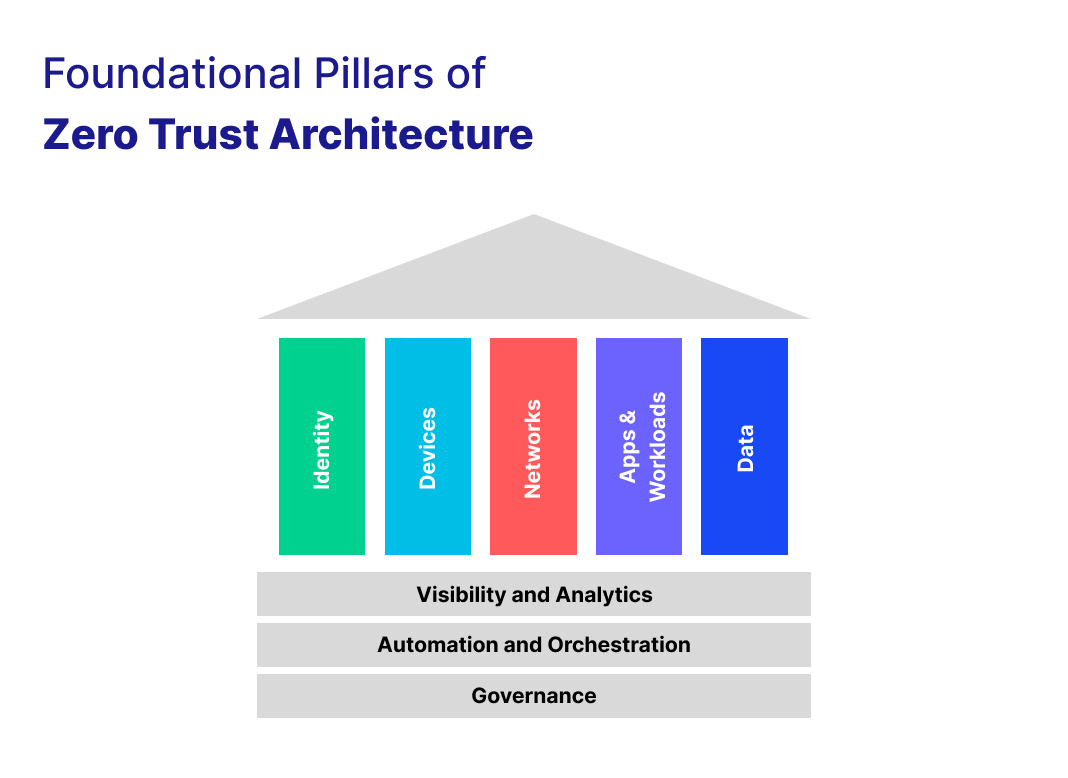
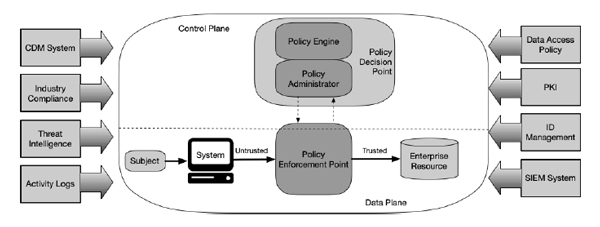
Coined originally by industry analysts and subsequently operationalized by the National Institute of Standards and Technology (NIST SP 800-207), Zero Trust is governed by a singular, unyielding axiom: "Never trust, always verify." However, within elite financial services environments, standard Zero Trust is insufficient; institutions require Adaptive Trust—a dynamic, context-aware framework that continuously evaluates risk in real time.
1. Continuous Identity Verification and Explicit Validation
In an adaptive Zero Trust architecture, authentication is never a one-time event at login. Systems continuously authenticate identity based on a constellation of telemetry data, including user behavior analytics, device health status, geolocation, and time of access. If a trader suddenly logs in from an unrecognized jurisdiction or exhibits abnormal query patterns, the system automatically steps up authentication requirements or severs session access instantly.
2. Micro-Segmentation and Least-Privilege Access
Financial networks are no longer monolithic flat topologies. Through software-defined perimeter (SDP) controls and micro-segmentation, institutions wall off critical assets—such as core ledger databases and algorithmic execution engines—into isolated zones. Users and services are granted Just-In-Time (JIT) and Just-Enough-Access (JEA), ensuring that even if an adversary compromises a credential, their lateral traversal is immediately throttled.
3. Infrastructure Scalability and Cryptographic Assurance
Modern ZTA requires modern cloud compute architecture. Financial institutions are modernizing legacy mainframes and integrating modern service meshes that encrypt data both in transit and at rest using quantum-resistant cryptographic protocols, safeguarding proprietary market liquidity data against interception.
Verified Data & Metrics Breakdown
The transition from perimeter defense to Adaptive Zero Trust involves substantial capital expenditure, yet comparative industry metrics demonstrate compelling enterprise ROI:
| Security Metric / Evaluation Parameter | Legacy Perimeter Model | Adaptive Zero Trust Architecture |
|---|---|---|
| Authentication Paradigm | Static perimeter gateway (VPN / Firewall) | Continuous, context-aware, risk-based verification |
| Lateral Movement Risk | High (Flat internal networks post-breach) | Negligible (Enforced micro-segmentation) |
| Average Breach Containment Time | 197 to 280+ Days | Minutes to Hours (Automated isolation) |
| Regulatory Compliance Alignment | Fragmented, reactive audit posture | Proactive, continuous compliance monitoring |
Industry & Market Implications: Winners and Losers
The aggressive adoption of Adaptive Zero Trust is actively redrawing the competitive and vendor landscape across global finance and enterprise technology.
- The Winners (Enterprise Tech & Agile Banks): Cybersecurity firms specializing in identity and access management (IAM), micro-segmentation, and automated orchestration are capturing record enterprise contract values. Meanwhile, tier-one financial institutions that successfully deploy ZTA are leveraging their superior cyber resilience as a trust differentiator to attract institutional asset flows and secure favorable cyber insurance underwriting terms.
- The Losers (Legacy IT Vendors & Laggard FIs): Financial institutions slow to modernize their legacy tech stacks face punitive regulatory scrutiny, rising insurance premiums, and catastrophic exposure to operational disruption. Furthermore, hardware-centric networking vendors reliant on selling traditional perimeter firewalls are seeing structural declines in addressable market share.
From a macroeconomic perspective, systemic operational resilience protects market liquidity. A major cyber incident disabling a clearinghouse or prime broker can trigger systemic credit freezes; ZTA functions as vital systemic insurance for global financial stability.
People Also Ask (FAQ)
What is the primary difference between traditional perimeter security and Zero Trust Architecture?
Traditional perimeter security operates on an implicit trust model—assuming that anyone or anything inside the network boundary is safe. Zero Trust Architecture (ZTA) eliminates implicit trust entirely, requiring continuous verification of every user, device, and application request regardless of whether the connection originates inside or outside the corporate network.
Why is Adaptive Trust particularly critical for financial institutions?
Financial institutions hold vast amounts of high-value PII, manage critical market infrastructure, and handle trillions in daily capital flows, making them prime targets for sophisticated threat actors. Adaptive Trust incorporates real-time behavioral analytics and risk scoring to dynamically adjust security controls, preventing lateral movement and minimizing financial and reputational damage during a breach attempt.
How does Zero Trust impact regulatory compliance in banking?
Zero Trust directly supports stringent regulatory mandates from bodies like the SEC, OCC, and Basel Committee by providing immutable audit trails, rigorous access controls, and automated reporting capabilities. It transforms compliance from a periodic, checklist-driven exercise into an ongoing operational state.
What are the primary hurdles financial institutions face when implementing ZTA?
The most significant challenges include retrofitting legacy mainframe applications that were never designed for modern identity protocols, managing complex multi-cloud hybrid environments, and overcoming internal cultural resistance among legacy IT teams accustomed to perimeter-based defense models.
Future Outlook: The Road Ahead for Institutional Cyber Resilience
As financial markets become increasingly digitized and interconnected through open banking APIs and cloud infrastructure, the implementation of Adaptive Trust will cease to be a competitive advantage and become a mandatory baseline for market participation. Over the next 24 to 36 months, industry analysts project that:
- Regulators will codify Zero Trust principles directly into supervisory examination manuals, transforming advisory guidelines into enforceable compliance standards.
- Artificial Intelligence and Machine Learning will be deeply embedded into ZTA orchestration layers, enabling automated threat hunting and micro-perimeter adjustments in milliseconds.
- Cyber insurance markets will increasingly deny coverage or charge prohibitive premiums to financial institutions that fail to demonstrate mature, continuous Adaptive Trust capabilities.
Ultimately, in the modern threat landscape, security is no longer about building higher walls—it is about establishing a resilient framework where trust is never assumed, but continuously earned.