The Cost of Compromise: Inside the Political Deadlock Paralyzing India’s Next Wave of Economic Reforms
NEW DELHI — A quiet but profound shift in consensus is taking hold across India’s corridors of power. Two years into Prime Minister Narendra Modi’s third term, political analysts, economists, and policy observers are reaching a sobering agreement: the aggressive, unilateral economic reform engine that characterized the previous decade has ground to an unexpected halt. India is facing a complex economic impasse, and the root cause is not a lack of technocratic solutions, but the inescapable gravity of coalition politics.
According to reports emerging from domestic observers, including The New Indian Express, a critical consensus has emerged. Analysts argue that the Modi administration has been unable to break through the policy paralysis that has gripped key structural reforms since the 2024 general election. With crucial state elections on the horizon and regional coalition partners wielding unprecedented leverage, the government's ability to execute deep, structural overhauls is being severely tested.
The Anatomy of an Impasse: Why the Reform Engine Stalled
To understand the current deadlock, one must look at the math of the 18th Lok Sabha. Lacking an outright single-party majority, the ruling Bharatiya Janata Party (BJP) relies heavily on regional allies, most notably Andhra Pradesh’s Telugu Desam Party (TDP) and Bihar’s Janata Dal (United). While this coalition has stabilized the treasury benches, it has effectively placed a veto power in the hands of regional leaders whose immediate priorities are domestic fiscal packages rather than sweeping national market reforms.
Historically, the "Modi Model" relied on decisive, top-down implementation. However, the political cost of controversial reforms—such as the repealed farm laws and the highly contested land acquisition bills—has made the administration risk-averse. Today, the executive branch finds itself caught between the demands of global rating agencies calling for fiscal consolidation and domestic allies demanding populist welfare spending.
Executive Summary: Key Friction Points in India's Economy
- The Labor Code Freeze: Despite being passed by Parliament years ago, the four landmark labor codes remain unimplemented as states hesitate to notify the rules, fearing backlash from labor unions ahead of state elections.
- The Divestment Dilemma: High-profile privatization targets, including state-owned banks and public sector enterprises, have been put on the back burner due to ideological resistance from coalition partners.
- Agricultural Reform Paralysis: Following the dramatic retreat on farm laws in 2021, any policy aimed at reforming agricultural marketing or cutting fertilizer subsidies remains politically toxic.
- The Fiscal Tug-of-War: Regional allies are demanding massive special financial packages, squeezing the central government's room for aggressive capital expenditure (capex) on infrastructure.
Policy vs. Politics: The Hard Data
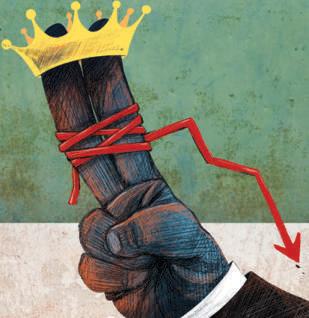
The economic impact of this political deadlock is visible in the diverging trajectories of India's macroeconomic indicators. While GDP growth remains relatively robust on paper, driven by public infrastructure spending, private domestic investment remains sluggish. Foreign Direct Investment (FDI) has also shown signs of caution as global investors assess whether India can transition from basic manufacturing assembly to deep industrial reform.
The following table outlines the current status of critical economic reform areas and the specific political bottlenecks holding them back as of May 2026:
| Reform Sector | Primary Objective | Current Status (May 2026) | The Political Hurdle |
|---|---|---|---|
| Labor Market | Consolidate 44 federal laws into 4 streamlined codes to boost manufacturing. | Stalled at state-level implementation. | Fear of labor union strikes and electoral backlash in industrial states. |
| Public Sector Divestment | Privatize inefficient state-run enterprises and public sector banks. | Targets drastically lowered; major sales deferred. | Coalition allies oppose job cuts and loss of state patronage. |
| Land Acquisition | Simplify land pooling for industrial corridors and infrastructure. | Abandoned at federal level; left to states. | High sensitivity around farmer compensation and agricultural displacement. |
| Direct Tax Code (DTC) | Overhaul the archaic Income Tax Act to simplify compliance. | Under perpetual draft review. | Reluctance to alienate urban middle-class voters with structural changes. |
The High Stakes for Global Investors
For global asset managers and multinational corporations looking to de-risk from China, India has long been positioned as the ultimate alternative. However, the current political impasse threatens to dilute this narrative. In conversations with institutional investors, the primary concern is no longer India’s geopolitical positioning, but its internal capacity to execute policy.
Without land and labor flexibility, the cost of doing business in India remains high, offsetting the benefits of production-linked incentive (PLI) schemes. "The low-hanging fruit of regulatory simplification has been plucked," notes a senior policy analyst based in Mumbai. "The next level of growth requires deep-tissue reforms that inevitably hurt entrenched interest groups. That is where this government is currently hitting a political wall."
Furthermore, the fiscal math is becoming increasingly delicate. The central government is attempting to keep the fiscal deficit below 4.5% of GDP. However, with states demanding debt relief and special status allocations, federal policymakers are forced to walk a tightrope between fiscal prudence and political survival.
Outlook: Can the Impasse Be Broken?
Breaking this deadlock will require a fundamental shift in Prime Minister Modi's governance style. The era of unilateral, high-impact policy announcements has transitioned into an era of negotiated incrementalism. To move forward, the administration will need to master the art of federal consensus-building—co-opting state chief ministers and coalition partners into the reform narrative by directly linking structural overhauls to regional financial windfalls.
As India looks toward the remaining years of this legislative term, the world is watching. The country's ability to maintain its position as a global economic engine depends entirely on whether its political class can decouple long-term economic strategy from short-term electoral calculations.
Frequently Asked Questions (FAQ)
1. Why is the Modi administration struggling with economic reforms in its third term compared to its first two?
In its first two terms, the BJP held an absolute single-party majority in Parliament, allowing it to pass major legislations with minimal domestic opposition. In its third term, the government relies on a coalition. Regional partners prioritize local electoral promises and financial aid over national structural reforms, making controversial bills politically unviable.
2. What are the immediate economic consequences of this political deadlock?
The immediate consequences include slow private capital expenditure, stalled labor market modernization, and delayed privatization of state assets. While overall GDP growth remains steady due to government spending, the lack of structural reforms limits India's ability to fully capitalize on global supply chain shifts and generate high-quality manufacturing jobs.