Executive Takeaways
Test Our Free AI & Tech Utilities Suite
Calculate LLM API token costs, analyze article dwell-time, or simulate tech DCA returns.
- Input Cost Arbitrage: By replacing volatile lithium carbonate with ubiquitous sodium precursors and eliminating copper current collectors in favor of aluminum, sodium-ion (Na-ion) cell-level bill-of-materials costs are tracking 30% to 40% below lithium iron phosphate (LFP) equivalents in 2026.
- Manufacturing Fungibility & Capex Efficiency: Leading battery manufacturers are scaling Na-ion production on existing roll-to-roll lithium-ion assembly lines, requiring minimal retrofit capital allocation while delivering drop-in infrastructure scalability.
- Safety & Zero-Volt Logistics: Na-ion cells can be completely discharged to 0.0 volts without the copper dissolution degradation that plagues lithium chemistries, drastically de-risking maritime transit, lowering commercial insurance premiums, and virtually eliminating thermal runaway under physical compromise.
- Bifurcated Market Penetration: While premium automotive segments maintain lithium nickel manganese cobalt (NMC) chemistries for maximum volumetric energy density, Na-ion has initiated a structural disruption across utility-scale Battery Energy Storage Systems (BESS), telecommunications infrastructure, and cost-sensitive urban micro-mobility.
The Alchemy of Abundance: Re-Engineering the Electrochemical Cell
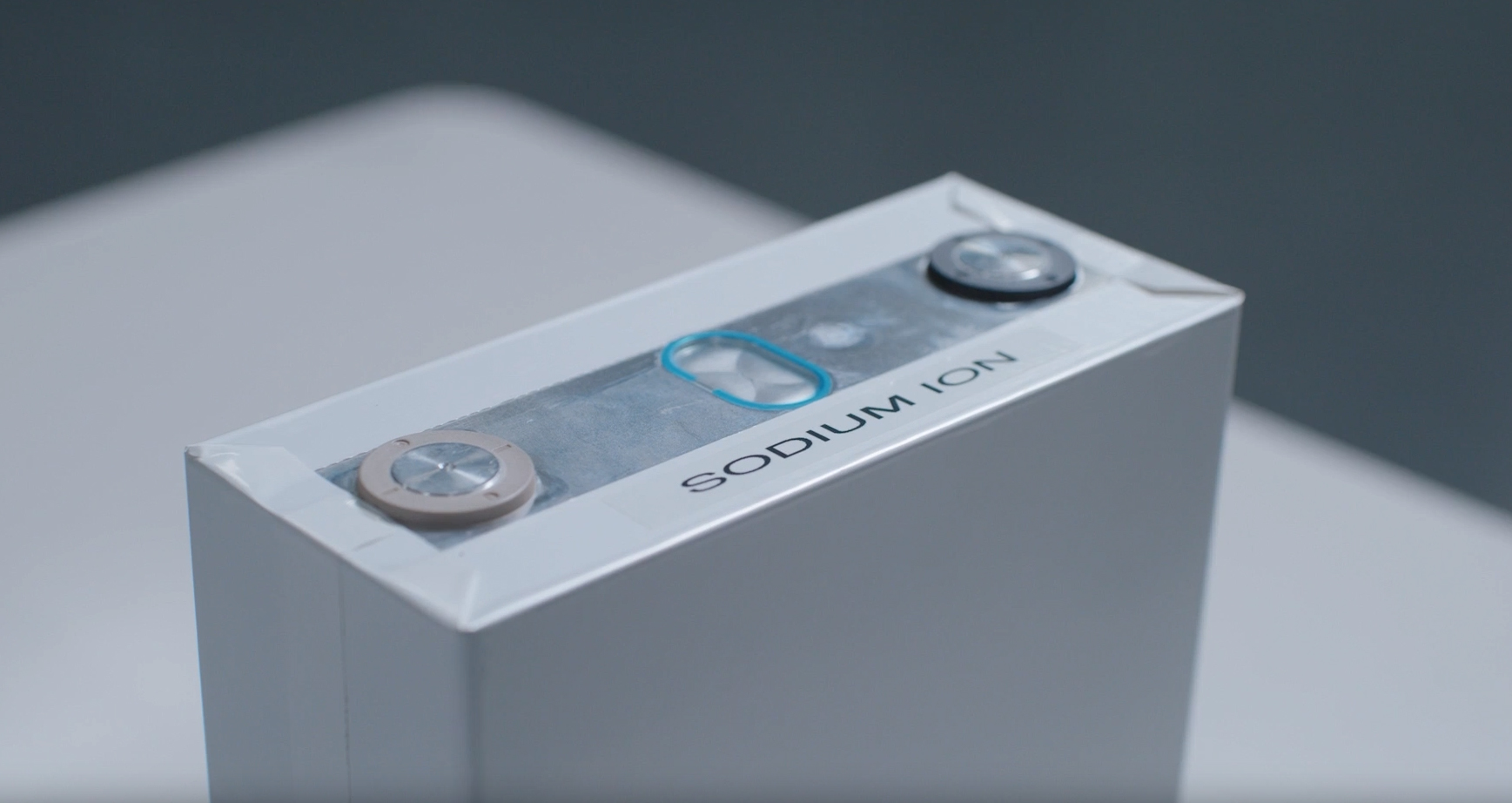
For more than three decades, the global energy transition has been tethered to the physical constraints and geopolitical choke points of the lithium-ion triangle. The periodic table, however, does not negotiate with industrial balance sheets. As grid-scale decarbonization accelerates and electric vehicle (EV) penetration deepens across emerging markets, institutional capital has confronted a recurring structural vulnerability: raw material supply elasticity. The commercial maturation of sodium-ion battery technology in 2026 marks the first genuine paradigm shift in mass electrochemical energy storage since Sony commercialized lithium-cobalt-oxide in 1991.
At the atomic level, sodium-ion architecture mirrors the intercalation dynamics of its lithium predecessor, operating as a "rocking chair" battery. During charge and discharge, sodium ions migrate between the positive and negative electrodes through a liquid or semi-solid electrolyte. The engineering challenge has historically centered on atomic scale: the sodium ion (Na+) has an ionic radius of 1.02 Å, approximately 34% larger than that of lithium (0.76 Å). This greater volume slows phase-transition kinetics, promotes mechanical degradation of host structures, and caps intrinsic gravimetric energy density.
The breakthrough entering volume production in 2026 is an optimized triumvirate of material science innovations across cathodes, anodes, and current collectors:
- Cathode Optimization: Industrial synthesis has converged on two primary frameworks: layered transition metal oxides (offering higher volumetric capacities approaching 160 Wh/kg at the pack level) and Prussian White analogues (iron- and manganese-based metal-organic frameworks delivering exceptional cycle life and low manufacturing expense without relying on cobalt, nickel, or scarce transition metals).
- Non-Graphitic Hard Carbon Anodes: Because sodium ions cannot efficiently intercalate into crystalline graphite sheets due to unfavorable thermodynamics, 2026 manufacturing deploys engineered hard carbon (non-graphitizable carbon synthesized via the pyrolysis of bio-based resins, agricultural residues, or tailored pitch). These isotropic structures feature expanded interlayer spacing and sub-nanometer closed pores, providing intercalation and pore-filling sites for sodium ions while preserving structural integrity over thousands of continuous cycles.
- Dual-Aluminum Architecture: In standard lithium-ion batteries, copper foil is mandatory at the anode because lithium alloys with aluminum at low potentials, causing irreversible structural disintegration. Sodium does not form an alloy with aluminum at standard operating voltages. Consequently, sodium-ion cells substitute heavy, expensive copper foil with lightweight, inexpensive aluminum foil on both the cathode and the anode. This single substitution strips hundreds of dollars per metric ton from manufacturing costs, reduces dead cell weight, and eliminates reliance on the tightly constrained global copper market.
The Geopolitical Imperative: Breaking the Critical Mineral Cartel
The acceleration of Na-ion deployment is as much an exercise in institutional risk mitigation as it is an advancement in electrochemistry. The concentration of lithium extraction across the Lithium Triangle (Chile, Argentina, Bolivia) and Australia, coupled with China’s refining dominance—controlling roughly 65% to 70% of downstream chemical processing—has long exposed Western automotive OEMs and power utilities to asymmetric supply shock vectors and pricing manipulation.
Sodium, by contrast, is virtually limitless. Sourced straightforwardly from ubiquitous industrial soda ash (sodium carbonate) or common sea salt, sodium precursors trade at a tiny fraction of refined lithium hydroxide or carbonate. In 2026, enterprise capital allocation is factoring in not just cell performance, but raw-material price volatility hedging. By utilizing sodium and domestic bio-pitch or recycled lignin for hard carbon anodes, regional supply chains can localize production within domestic regulatory frameworks, bypassing cross-border carbon border adjustment mechanisms (CBAM) and satisfying the stringent domestic content requirements established by the U.S. Inflation Reduction Act and the European Critical Raw Materials Act.
| Performance Metric / Economic Vector | Sodium-Ion (Na-Ion) — 2026 Commercial Standard | Lithium Iron Phosphate (LFP) | Nickel Manganese Cobalt (NMC 811) |
|---|---|---|---|
| Cell-Level Gravimetric Density | 150 – 175 Wh/kg | 180 – 210 Wh/kg | 260 – 300 Wh/kg |
| Projected Cell Manufacturing Cost ($/kWh) | $38 – $48 | $62 – $75 | $90 – $110 |
| Anode Current Collector Material | Aluminum Foil (~$3,000/ton) | Copper Foil (~$9,500/ton) | Copper Foil (~$9,500/ton) |
| Operating Retention at -20°C | 85% – 90% Discharge Capacity | 55% – 65% Discharge Capacity | 70% – 80% Discharge Capacity |
| Cycle Life (to 80% Retention) | 4,000 – 6,000 Cycles | 3,500 – 5,000 Cycles | 1,500 – 2,500 Cycles |
| Transport Safety State-of-Charge (SoC) | 0.0 Volts (Zero Energy, 0% SoC) | Must maintain >30% SoC | Must maintain >30% SoC |
Industrial Economics: Capex Arbitrage and Gigafactory Convergence
The primary barrier to commercializing novel battery chemistries has historically been the "valley of death" associated with specialized capital expenditures. Solid-state architectures, for instance, frequently demand distinct manufacturing environments, ultra-dry dry-rooms, and proprietary isobaric pressing machinery costing billions in unamortized infrastructure.
Na-ion sidesteps this trap through drop-in manufacturing fungibility. The slurry preparation, slot-die coating, calendering, winding/stacking, and electrolyte filling procedures are virtually identical to standard lithium-ion pouch, prismatic, and cylindrical form factors. Tier-1 battery conglomerates—including CATL (scaling its second-generation EnerQ platform), BYD, Faradion, and Natron Energy—have converted or co-allocated existing LFP lines to Na-ion with capital expenditures limited largely to calibration, slot-die tension adjustments, and revised electrolyte handling.
Furthermore, the operational economics deliver a decisive advantage in stationary energy storage and edge grid infrastructure. Large-scale data centers powering generative AI training clusters require uninterruptible, high-density power failover systems with high safety thresholds. Na-ion's wider thermal runaway envelope and zero-volt deep-discharge tolerance alleviate extensive HVAC cooling overhead, enhancing enterprise ROI on hyperscale cloud deployments.
Market Winners and Vulnerable Incumbents
The rebalancing of electrochemical market share creates clear lines of corporate and structural disruption:
- Winners: Global soda ash refiners and synthetic hard-carbon producers are securing long-term off-take agreements. Renewable energy developers (wind and solar operators deploying multi-megawatt-hour BESS arrays) gain improved margins as battery capital expenditure per megawatt-hour falls below critical levelized cost of storage (LCOS) barriers. Aluminum extruders benefit from doubling their addressable market within each cell.
- Vulnerable Incumbents: High-cost marginal lithium producers relying on spodumene rock mining (requiring sustained market prices above $15,000 to $18,000 per ton to support debt covenants) face sustained downward pricing pressure. Concurrently, battery-grade copper foil manufacturers stand to lose market share in entry-level automotive and utility-scale tenders.
Frequently Asked Questions (People Also Ask)
Can sodium-ion batteries fully replace lithium-ion in passenger electric vehicles?
No. Sodium-ion is not an outright replacement for lithium-ion across all segments, but rather a complementary solution that segments the market. Because the current cell-level gravimetric energy density of Na-ion peaks between 150 and 175 Wh/kg—compared to 260 to 300 Wh/kg for premium NMC chemistries—Na-ion is less optimal for long-range, high-performance EVs where pack weight directly limits driving range. However, Na-ion is well-suited for entry-level urban commuter vehicles, two-wheelers, light commercial transport fleets, and hybrid pack architectures (where Na-ion and NMC/LFP cells are paired within a single battery management system to balance cold-weather capability with peak driving range).
Why do sodium-ion batteries perform significantly better in freezing temperatures?
Sodium ions have lower desolvation energy compared to lithium ions, meaning they can shed their shell of surrounding solvent molecules and intercalate into electrode materials with considerably lower activation barriers at low temperatures. Furthermore, the specialized low-viscosity non-aqueous electrolytes developed for Na-ion cells maintain higher ionic conductivity down to -40°C. While standard LFP batteries can experience sharp capacity drops and risk lithium dendrite plating during sub-zero fast charging, Na-ion retains up to 90% of its discharge capacity at -20°C, solving a persistent pain point for fleet electrification in colder climates.
How does the ability to discharge to zero volts reduce logistics and insurance costs?
Standard lithium-ion batteries cannot be completely discharged to 0.0 volts because doing so causes the copper anode current collector to oxidize, dissolve into the electrolyte, and create internal short circuits upon subsequent recharge, which can trigger thermal runaway. Consequently, lithium-ion cells must be transported at a 30% state of charge, classifying them as Class 9 hazardous materials under international maritime, rail, and aviation protocols. Na-ion batteries utilize aluminum at the anode, which does not dissolve at zero volts. They can be shorted to zero volts and transported in a completely inert state, reducing catastrophic fire risk, avoiding hazardous transport tariffs, and lowering cargo insurance premiums.
What are the primary commercial bottlenecks facing sodium-ion scaling in 2026?
The primary scaling challenge is not raw sodium availability, but the industrial-scale supply chain for anode-grade hard carbon. Unlike synthetic or natural graphite, which has mature global refining infrastructure, commercial hard carbon yields are still standardizing around precursor purity, particle size distribution, and initial Coulombic efficiency (ICE). Additionally, ongoing lithium price cyclicality can compress the immediate cost advantage of Na-ion over LFP during cyclical lithium troughs, occasionally extending payback horizons for newly commissioned lines.
Future Outlook: Strategic Milestones to Watch
As the market moves toward 2030, sodium-ion technology is projected to claim between 15% and 23% of the global stationary energy storage market and upwards of 10% of entry-level light EV production. Strategic milestones to monitor over the next 24 to 36 months include:
- Commercialization of High-Entropy Layered Cathodes: R&D consortia are advancing cathode chemistries incorporating multi-element transition matrices capable of achieving 200 Wh/kg at the cell level, closing the density gap with mainstream LFP.
- Standardization of Bio-Hard Carbon Precursors: The emergence of dedicated domestic pyrolysis facilities converting European forest products and North American agricultural byproducts will establish localized anode processing, shielding battery cell supply chains from imported synthetic carbon inputs.
- Grid-Scale Multi-GWh BESS Procurement: Large-scale utility tenders across North America, the Middle East, and the European Union will serve as the commercial proving ground. Lower levelized costs of storage, extended calendar life, and operational resilience across extreme ambient temperatures are driving grid infrastructure operators to adopt Na-ion platforms as a primary baseline asset.
The industrial battery sector has transitioned from an era of raw chemical scarcity into an era of electrochemical optimization. In that transition, sodium-ion has shifted from an academic alternative into an anchor of global manufacturing resilience, modern grid strategy, and long-term capital allocation.