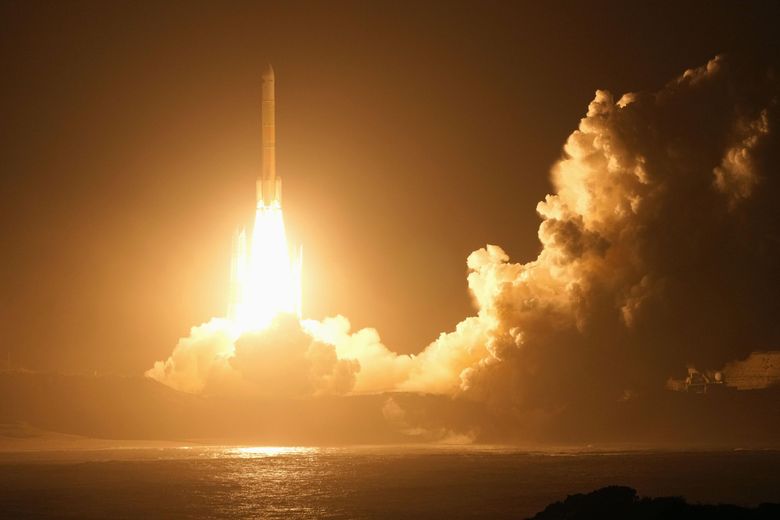
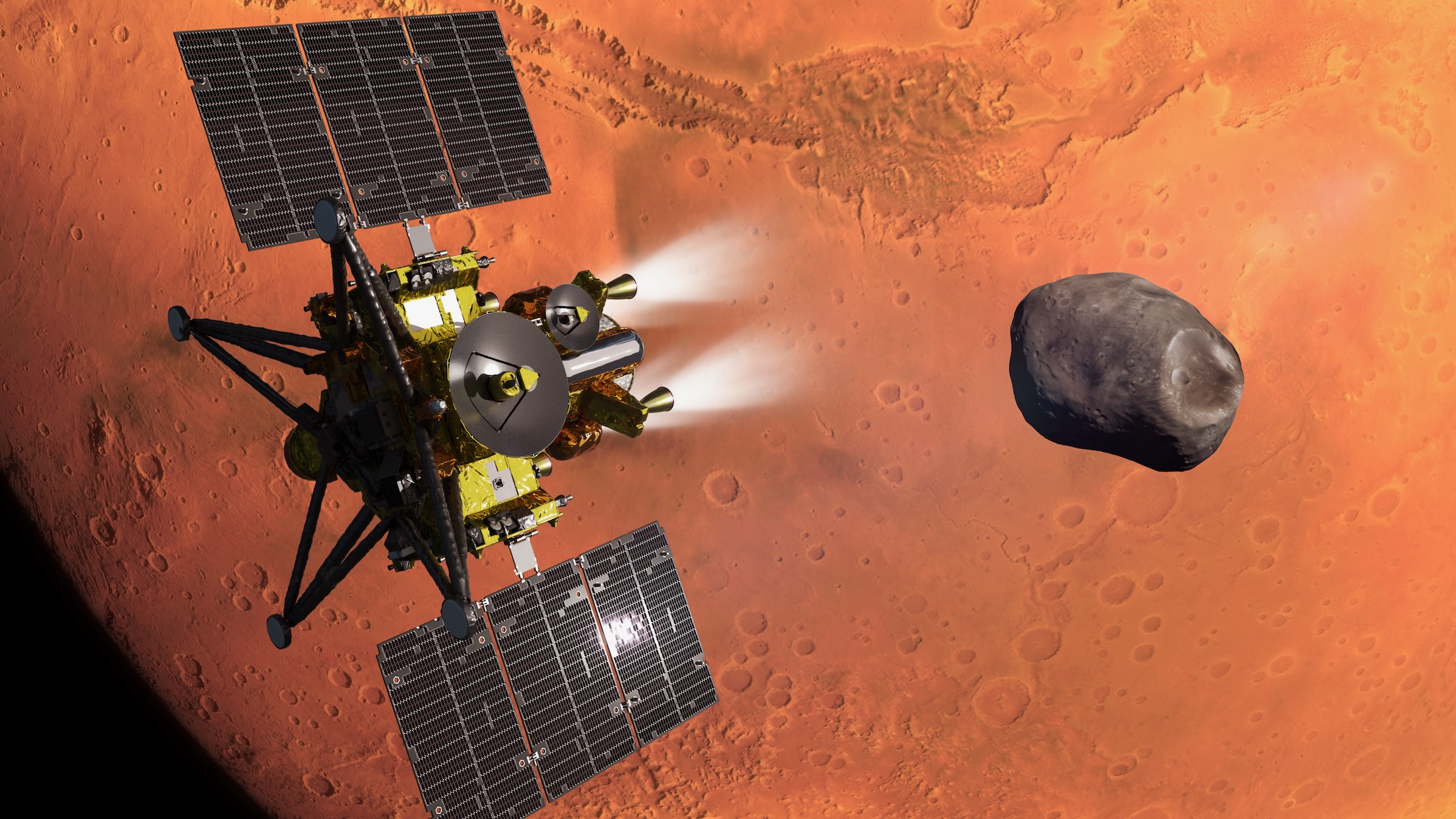
For more than four decades, a lonely ambassador of human ingenuity has been coasting through the interstellar medium, bearing the Golden Record, human laughter, musical compositions from Bach to Chuck Berry, and greetings in fifty-five languages. Today, that silence has grown deeper. NASA’s Deep Space Network has confirmed that contact with the farthest human-made object in space has been severely disrupted, pushing our most distant technological outpost into an unprecedented twilight zone nearly a full light-day away from Earth.
This development is not merely an engineering anomaly; it marks a watershed moment in the intersection of deep-space exploration, long-lifecycle asset management, and the fragility of legacy infrastructure. As the craft ventures deeper into uncharted galactic territory, the telemetry data, power degradation curves, and communication blackout windows offer profound lessons in system resilience, risk mitigation, and the staggering operational costs of pushing the boundaries of our technological footprint.
Executive Takeaways
Test Our Free AI & Tech Utilities Suite
Calculate LLM API token costs, analyze article dwell-time, or simulate tech DCA returns.
- Unprecedented Distance: The spacecraft has drifted nearly one full light-day away from Earth, pushing radio signal round-trip times past the 45-hour mark.
- Infrastructure Vulnerability: The communication blackout exposes the vulnerabilities of managing legacy space infrastructure with rapidly dwindling isotope power supplies.
- Capital & Scientific Stakes: While direct economic valuation is impossible, the loss threatens a multi-billion-dollar scientific baseline measuring the heliosphere's outer boundary.
- Engineering Recovery: NASA’s Jet Propulsion Laboratory (JPL) engineering teams are deploying high-risk software patches and executing deep-space command sequences to re-establish a carrier lock.
The Anatomy of a Deep-Space Crisis

To understand the magnitude of the current communication breakdown, one must first comprehend the extreme operational parameters governing this veteran spacecraft. Launched during the late-1970s planetary alignment window, the mission was originally designed for a four-year grand tour of the outer gas giants. Instead, brilliant capital allocation in engineering and unexpected technological durability transformed it into an open-ended interstellar probe.
However, longevity comes at an exponential cost. Powered by aging Radioisotope Thermoelectric Generators (RTGs) fueled by decaying plutonium dioxide, the spacecraft’s energy budget drops by roughly four watts every year. Mission controllers have systematically powered down non-essential thermal and scientific instruments just to keep the vital X-band transmitters operational. This delicate balancing act forms a high-stakes operational model comparable to maintaining legacy mainframe infrastructure under tightening enterprise ROI constraints.
The recent loss of contact was triggered not by a sudden catastrophic failure, but by a cascading series of orientation and antenna drift events. Due to the extreme distance, a radio signal traveling at the speed of light takes approximately 22 hours and 30 minutes to reach the spacecraft, and another 22 hours and 30 minutes for the faint telemetry reply to traverse the void back to the giant dish antennas of NASA’s Deep Space Network in Goldstone, Madrid, and Canberra. When an unintended command sequence slightly altered the probe’s high-gain antenna alignment by a mere fraction of a degree, Earth effectively fell out of its narrow transmission cone.
Data & Specifications Breakdown
| Metric / Parameter | Historical Baseline | Current Status (Interstellar Phase) |
|---|---|---|
| Distance from Earth | ~1 Astronomical Unit (Launch, 1977) | ~155+ Astronomical Units (~1 Light-Day) |
| Signal Round-Trip Time | Instantaneous to a few hours | 45+ Hours |
| Available Power Output | ~470 Watts | < 240 Watts (Decaying Plutonium-238) |
| Active Scientific Instruments | 10 Fully Operational Suites | 4 Functional Core Payloads (Power-rationed) |
| Communication Bandwidth | 160 bits per second | ~110 to 160 bps (Degraded Carrier Lock) |
Industry & Market Implications
While deep-space exploration operates outside standard market liquidity, the implications of this communication blackout resonate deeply across the aerospace, defense, and telecommunications sectors. The engineering methodologies pioneered during this crisis offer vital blueprints for modern satellite constellation operators, deep-space commercialization ventures, and autonomous cloud compute architecture.
The Winners: Commercial space enterprises focusing on autonomous navigation, AI-driven fault detection, and resilient edge-computing stand to gain substantial traction. As missions venture further into cislunar space and toward Martian outposts, reliance on real-time human intervention from Earth becomes entirely unviable. The current crisis underscores the urgent enterprise demand for decentralized, self-healing communication grids.
The Losers: Traditional centralized telemetry frameworks and rigid, manual ground-control models face harsh scrutiny. The incident highlights the vulnerabilities inherent in legacy infrastructure that lacks redundant autonomous failsafes. Furthermore, academic institutions and research consortia dependent on continuous interstellar data streams face temporary blind spots, stalling crucial cosmic ray and interstellar magnetic field modeling.
Frequently Asked Questions (People Also Ask)
How long does it take for a signal to reach the spacecraft?
Because the spacecraft is currently operating at a distance approaching one light-day, a radio command sent from Earth takes approximately 22.5 hours to arrive. Acknowledgment or telemetry sent back by the probe takes another 22.5 hours, meaning engineers must wait over 45 hours simply to know if a transmitted command was executed successfully.
Is the spacecraft permanently lost, or is recovery possible?
NASA engineers do not consider the mission lost. Similar communication anomalies have occurred in the past—most notably when an accidental attitude adjustment pointed the antenna away from Earth in late 2023, a problem engineers successfully resolved weeks later. The primary obstacle is the painstaking patience required due to the massive communication lag.
What is powering the spacecraft after more than 45 years in space?
The probe relies on three Radioisotope Thermoelectric Generators (RTGs), which convert the heat generated by the natural radioactive decay of plutonium-238 into electricity. Because the radioactive isotope has a half-life of 87.7 years, the power output has steadily dwindled over the decades, forcing mission operators to shut down non-essential heaters and instruments.
What scientific data is at risk during this blackout?
The probe is currently traversing the interstellar medium—the space between star systems—measuring plasma density, cosmic rays, and magnetic fields outside the protective bubble of our sun's heliosphere. A prolonged blackout delays the collection of irreplaceable in-situ data regarding the boundary where solar wind meets interstellar space.
Future Outlook and Strategic Milestones
As NASA’s Deep Space Network continues to beam sweeping tone commands across the vast expanse, the international aerospace community watches with bated breath. The immediate priority remains executing a hard reset of the spacecraft's flight data subsystem and confirming whether the autonomous fault-protection routines have successfully initiated a backup antenna orientation.
Looking ahead, this event serves as a stark precursor to the challenges humanity will face as private enterprise and government agencies push deeper into the solar system. The lessons learned in managing power starvation, extreme signal attenuation, and long-duration autonomous systems will dictate the regulatory compliance, risk mitigation strategies, and architectural designs of the next century of space exploration. Until the silence is broken, the farthest emissary of mankind drifts onward—a silent monument to our reach, waiting for the signal to speak once more.