
Across the capitals of Europe, a quiet electronic war is being waged in the aisles of multi-billion-dollar grocery empires. For the second time in three years, decentralized refrigeration systems powering thousands of supermarkets across the continent have been systematically breached. This is not merely a tale of digital mischief or localized vandalism; it is a profound structural failure of enterprise Internet of Things (IoT) architecture, exposing systemic vulnerabilities in the critical infrastructure of global food distribution.
As chief investigative editors tracking the intersection of finance, technology, and geopolitical cyber-risk, our deep-dive analysis reveals how legacy operational technology (OT), lax vendor management protocols, and compressed capital expenditure budgets have left Europe’s retail cold chains defenseless against remote adversaries. From Paris to Frankfurt, grocery executives are scrambling to recalibrate risk mitigation strategies as regulatory scrutiny intensifies under the European Union's stringent Network and Information Security (NIS2) directives.
Executive Takeaways
- Systemic Supply Chain Risk: The latest wave of European supermarket refrigeration hacks demonstrates that third-party vendor management remains the primary attack vector for enterprise OT infrastructure.
- Regulatory Pressures: C-suite executives now face severe financial penalties under the EU’s NIS2 directive and GDPR framework for failing to secure environmental control systems.
- Capital Allocation Shift: Enterprise ROI models in the retail sector are pivoting rapidly away from aggressive digital expansion toward rigorous cybersecurity hardening and cloud compute architecture segregation.
- Market Valuation Impact: Publicly traded grocers experiencing systemic downtime face immediate valuation multiples contraction as institutional investors reprice operational resilience risk.
Anatomy of a Cold Chain Compromise: How the Breaches Unfolded
Test Our Free AI & Tech Utilities Suite
Calculate LLM API token costs, analyze article dwell-time, or simulate tech DCA returns.
The operational blueprint of modern European retail relies heavily on centralized Building Management Systems (BMS) and Programmable Logic Controllers (PLCs) manufactured by a handful of industrial conglomerates. These systems control everything from ambient lighting to high-precision refrigeration compressors designed to maintain perishable goods at strict thermal thresholds.
In the recent coordinated intrusions, threat actors bypassed perimeter defenses not by directly assaulting core corporate networks, but by targeting third-party maintenance contractors. By compromising the Virtual Private Network (VPN) credentials of HVAC and refrigeration service providers, attackers gained unauthorized access to remote-management portals. Once inside, they executed scripts designed to manipulate temperature setpoints, disable alarm telemetry, and, in several severe instances, lock out local store managers via ransomware deployment on legacy human-machine interfaces (HMIs).
The economic fallout was immediate. Millions of euros worth of perishable inventory—ranging from dairy and pharmaceuticals to premium meats—faced thermal spoilage within hours. More critically, the incidents exposed the dangerous convergence of IT (Information Technology) and OT (Operational Technology). For decades, these two domains existed in air-gapped isolation. The push toward cloud-based enterprise resource planning (ERP) and remote predictive maintenance has dismantled those physical barriers, creating expansive attack surfaces that outpace current cybersecurity workforce capabilities.
Comparative Analysis: The 2021 vs. Current Refrigeration Incidents
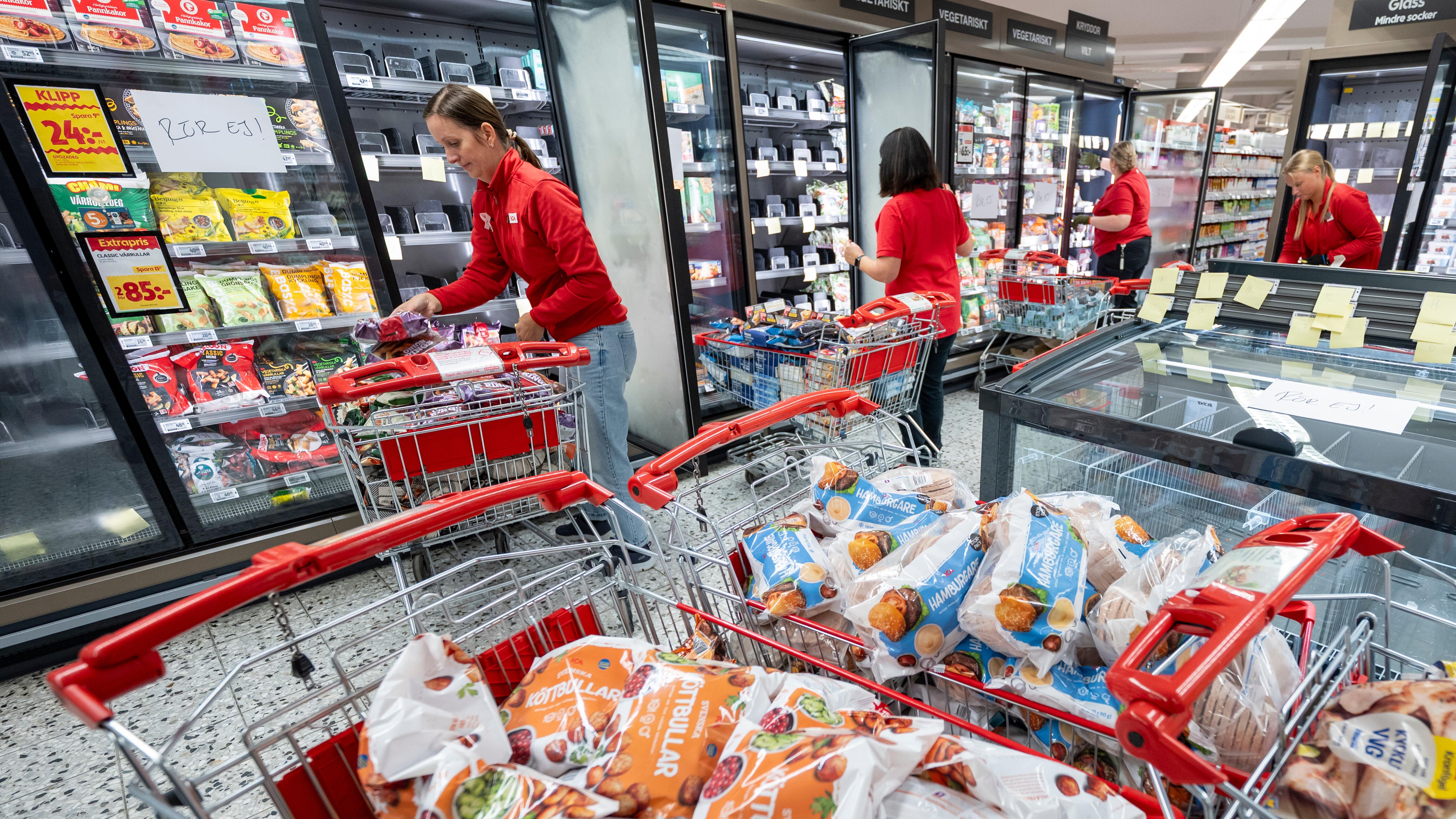
To understand the trajectory of these cyber-physical attacks, market analysts must examine the structural evolution of the threat landscape. The table below outlines the key structural, financial, and technical divergences between the initial wave of major supermarket digital compromises and the current operational crisis.
| Metric / Parameter | 2021 Initial Disruption Wave | Current 2024/2025 Crises |
|---|---|---|
| Primary Attack Vector | Software supply-chain zero-day exploits (e.g., Kaseya-style upstream impacts) | Compromised third-party HVAC vendor credentials and legacy VPN endpoints |
| Geographic Concentration | Localized primarily to the Nordic region and parts of Central Europe | Pans-European footprint spanning France, Germany, Benelux, and the UK |
| Regulatory Exposure | Fragmented national data protection inquiries; minimal direct OT penalties | Strict enforcement under EU NIS2 Directive; mandatory executive liability |
| Financial Impact Profile | Primarily inventory write-offs and short-term operational downtime | Inventory loss, brand equity erosion, and regulatory compliance fines |
| Infrastructure Scalability | Siloed on-premise controllers with manual firmware update cycles | Cloud-connected telemetry nodes lacking adequate zero-trust segmentation |
Industry & Market Implications: Winners, Losers, and Capital Reallocation
The recurrence of these hacks is triggering a fundamental reallocation of capital across the European retail sector. Institutional investors and credit rating agencies are no longer viewing cybersecurity as an auxiliary IT line item; it is now a core determinant of enterprise valuation multiples and market liquidity.
Who Loses: Legacy Retailers and Unvetted Vendors
Traditional brick-and-mortar supermarket chains operating on thin net margins (often between 1.5% and 3%) absorb disproportionate damage from these cyber events. Every hour of refrigeration downtime translates directly into thousands of euros in spoiled goods, emergency contractor fees, and brand erosion. Furthermore, smaller regional subcontractors who lack the balance sheet to invest in institutional-grade identity and access management (IAM) are finding themselves boxed out of lucrative enterprise contracts as tier-one grocers enforce draconian vendor compliance audits.
Who Wins: Cybersecurity Specialists and Industrial Resilience Firms
Conversely, a distinct cohort of market participants stands to benefit from this structural pivot. Enterprise software firms specializing in OT security, zero-trust network architecture, and continuous threat exposure management (CTEM) are experiencing unprecedented demand. Corporate budgets that were once earmarked exclusively for store modernization are being redirected toward network segmentation, immutable backup systems for industrial control data, and real-time behavioral analytics designed to detect anomalous compressor operations before catastrophic thermal failure occurs.
Frequently Asked Questions (People Also Ask)
Why are supermarket refrigerators specifically targeted by hackers?
Supermarket refrigeration units are high-leverage targets because they sit at the intersection of critical infrastructure and high financial sensitivity. By threatening to compromise temperature controls, cybercriminals can inflict immediate, high-cost damage—such as millions of euros in spoiled inventory—making targets more likely to consider extortion demands or highlighting deep vulnerabilities in connected industrial control systems.
How do hackers gain access to commercial refrigeration systems?
Attackers rarely break through the primary corporate firewalls of major grocery chains. Instead, they exploit the weakest links in the ecosystem: third-party maintenance contractors, HVAC service providers, and remote management portals that utilize outdated VPNs, weak password policies, or unpatched legacy firmware.
What role does the EU NIS2 Directive play in these incidents?
The Network and Information Security (NIS2) Directive places stringent legal obligations on operators of essential services, including large-scale food distribution networks. Under NIS2, executive management boards face personal liability, mandatory incident reporting within strict timeframes, and substantial financial penalties if they fail to implement robust supply chain security and risk mitigation frameworks.
Can these cyberattacks cause public health hazards?
While most incidents are caught and mitigated by store managers before spoiled goods reach consumers, a sustained, undetected manipulation of cold-chain temperatures creates severe food safety risks. Consuming dairy, meat, or produce exposed to unregulated thermal fluctuations can lead to serious foodborne illnesses, compounding the legal and reputational liability for affected retailers.
Future Outlook: Strategic Milestones to Watch
As the European retail sector digests the sobering reality of these recurring breaches, the next twelve to twenty-four months will serve as a definitive litmus test for corporate resilience. Executive leadership teams must navigate several critical milestones to secure their market positions:
- Mandatory OT Zero-Trust Adoption: Enterprises will increasingly phase out legacy remote-desktop protocols in favor of zero-trust network access (ZTNA) frameworks that mandate continuous multi-factor authentication for every maintenance touchpoint.
- Consolidation of Vendor Ecosystems: Expect major grocers to trim their contractor rosters, favoring large, highly capitalized facility management partners capable of meeting strict ISO/IEC 27001 and IEC 62443 cybersecurity certifications.
- vegRegulatory Enforcement Actions: The European Union’s national regulatory bodies are expected to issue benchmark fines against retailers found negligent in securing their operational technology, setting a legal precedent for future corporate governance.
Ultimately, the European supermarket refrigeration hacks serve as a stark reminder of the hidden fragilities underpinning modern consumer economies. In an era where every physical asset is increasingly digitized, operational continuity is no longer just a matter of mechanical engineering—it is an uncompromising test of enterprise cyber defense.