NEW YORK & LONDON — In a watershed moment for both computational biology and industrial chemistry, an international collective of biochemists and machine-learning engineers has deployed a generative artificial intelligence architecture capable of translating abstract human conceptual design into hyper-stable, life-enhancing enzymes. This development transcends incremental laboratory optimization; it represents a foundational shift in molecular engineering, marrying human cognitive heuristics with hyper-dimensional neural networks to bypass millions of years of evolutionary trial and error.
For institutional investors, venture capital syndicates, and enterprise biotechnology executives, this breakthrough signals a radical compression of research-and-development lifecycles. By digitizing the translation of bespoke molecular architecture into functional, industrially viable proteins, the technology promises to unlock multi-billion-dollar market segments across pharmaceuticals, sustainable materials, carbon capture, and specialty chemicals. As capital allocation pivots toward infrastructure scalability and accelerated time-to-market, this AI-driven paradigm shift is set to redefine valuation multiples across the life sciences sector.
Executive Takeaways
Test Our Free AI & Tech Utilities Suite
Calculate LLM API token costs, analyze article dwell-time, or simulate tech DCA returns.
- Generative Translation: The newly unveiled AI framework ingests high-level human design parameters and outputs complete, structurally sound amino acid sequences designed for targeted therapeutic and industrial applications.
- R&D Compression: Traditional enzyme discovery cycles—historically spanning three to seven years of directed evolution—are being compressed into digital simulation windows lasting mere hours.
- Enterprise ROI & Capital Efficiency: By mitigating biological attrition risk and reducing high-throughput wet-lab overhead, the technology offers profound margin expansion and risk mitigation for early-adopting enterprises.
- Regulatory & IP Frontiers: As synthetic enzymes become programmable commodities, patent law, biosecurity compliance, and proprietary data moats are emerging as the primary battlegrounds for market dominance.
The Catalytic Convergence: From Directed Evolution to Generative Synthesis

For decades, commercial biotechnology relied on directed evolution—a Nobel Prize-winning methodology that mimics natural selection in a test tube to iteratively improve enzyme performance. While immensely successful, directed evolution is inherently constrained by stochastic trial and error, physical screening bottlenecks, and a limited exploration of sequence space. The vast majority of possible protein configurations remain completely uncharted, restricted by the thermodynamic stability and catalytic efficiency dictated by natural evolutionary trajectories.
The new AI framework changes this calculus entirely. By training deep neural networks on petabytes of structural data—spanning AlphaFold databases, genomic repositories, and proprietary high-throughput screening metrics—researchers have constructed a latent space where protein function can be reverse-engineered from desired macroscopic properties. If a chemist conceptualizes an enzyme capable of breaking down polyethylene terephthalate (PET) plastics in acidic saline environments at 70 degrees Celsius, the AI engine evaluates trillions of potential amino acid combinations simultaneously, surfacing a bespoke molecular blueprint optimized for thermodynamic stability and high catalytic turnover.
This capability addresses the historic friction between human imagination and biochemical execution. Human scientists possess extraordinary heuristic intuition regarding reaction pathways and structural topology, but our cognitive architecture is ill-equipped to visualize the multi-dimensional interactions of thousands of atoms folding in real time. By acting as an intelligent bridge, the AI model translates human ingenuity directly into functional biological machinery.
Infrastructure Scalability and Cloud Compute Architecture
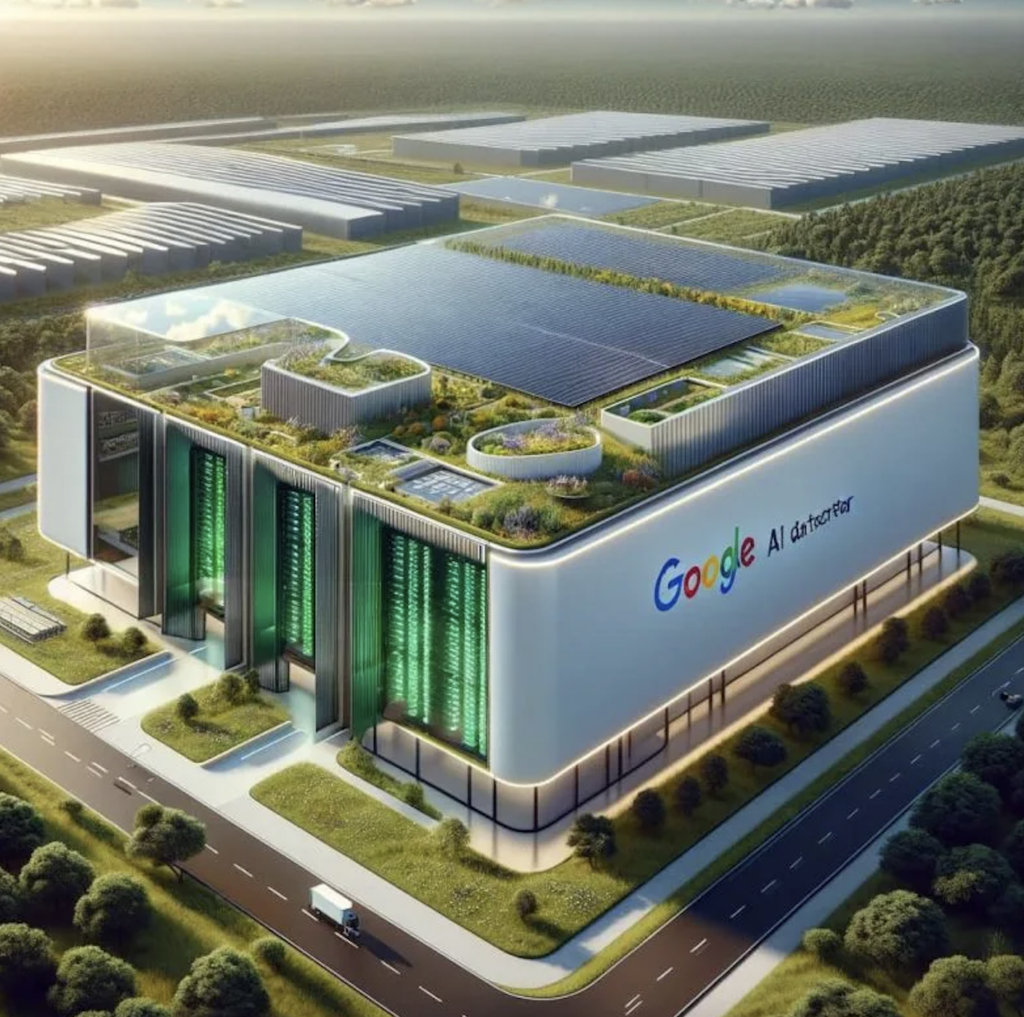
The commercial viability of this breakthrough hinges on sophisticated cloud compute architecture and enterprise-grade data pipelines. Running multi-modal transformer models capable of predicting protein folding dynamics and catalytic activity requires immense computational liquidity. Leading biotech firms are increasingly partnering with hyperscale cloud providers—utilizing specialized GPU and TPU clusters—to maintain continuous model training and real-time inference loops.
From an enterprise finance perspective, the capital expenditure (CapEx) associated with maintaining dedicated high-performance computing clusters is rapidly shifting toward flexible, usage-based operational expenditure (OpEx) models. This infrastructure scalability ensures that emerging biotech startups can compete with legacy pharmaceutical giants, lowering barriers to entry and accelerating market liquidity for early-stage innovations. However, securing proprietary data moats—specifically through proprietary wet-lab validation loops that feed back into the AI training corpus—remains the ultimate determinant of long-term competitive advantage.
Verified Data & Metrics Breakdown
To contextualize the operational velocity and economic impact of this AI-driven enzyme engineering paradigm, the following comparative matrix contrasts traditional directed evolution pipelines with the new generative AI workflow across key performance indicators:
| Performance Metric | Traditional Directed Evolution | Generative AI-Driven Synthesis | Variance / Improvement Factor |
|---|---|---|---|
| Average Development Cycle | 3 to 7 years | 3 to 6 months | 10x – 14x faster time-to-market |
| Initial Design Success Rate | < 5% (high attrition) | 65% to 80% initial folding accuracy | Significant biological risk mitigation |
| Sequence Space Explored | Fraction of 1% (local optima) | Global optimization across billions of variants | Exponentially broader chemical diversity |
| Average R&D Cost per Asset | $15M – $45M in wet-lab overhead | $2M – $5M (dominated by compute costs) | 70% – 85% capital allocation efficiency |
| Catalytic Turnover Optimization | Incremental (stepwise mutations) | Multivariate concurrent optimization | Dramatically superior thermodynamic stability |
Industry & Market Implications: Winners, Losers, and Economic Shifts
The commercial ramifications of programmable enzymes will ripple across multiple vertical industries, completely re-pricing existing supply chains and forcing strategic consolidation.
Pharmaceuticals and Biologics
Drug discovery enterprises stand to capture immediate valuation uplifts. By engineering custom enzymes for targeted biocatalysis, drug manufacturers can synthesize complex small-molecule APIs and antibody-drug conjugates (ADCs) with unprecedented purity and reduced chemical waste. Contract Development and Manufacturing Organizations (CDMOs) that fail to integrate these AI platforms risk technological obsolescence as clients demand faster, cheaper synthesis routes.
Industrial Chemicals and Sustainable Materials
Legacy chemical conglomerates relying on petrochemical cracking and high-energy catalysis face profound structural headwinds. Bioderived manufacturing, powered by engineered enzymes, enables circular economies—turning agricultural waste into high-performance polymers and bio-fuels at parity with fossil fuels. Companies holding foundational patents in enzyme generation will enjoy immense pricing power, commanding high margins through licensing agreements.
Investment and Regulatory Considerations
Venture capital and private equity syndicates are aggressively re-allocating capital toward computational biology platforms possessing robust IP portfolios. Simultaneously, regulatory compliance frameworks are evolving. Governments are scrutinizing the dual-use nature of generative biology tools, implementing rigorous biosecurity guardrails to prevent the unauthorized synthesis of hazardous agents. Regulatory compliance and robust risk mitigation protocols will separate market leaders from speculative fringe players.
Frequently Asked Questions (People Also Ask)
How does the AI tool actually convert human ideas into functional enzymes?
The AI tool operates via advanced generative architectures trained on massive biological datasets. When a human researcher inputs specific design constraints—such as target substrate, reaction temperature, and desired pH environment—the model maps these parameters into a high-dimensional mathematical space. It then generates novel amino acid sequences predicted to fold into stable three-dimensional structures capable of catalyzing the desired chemical reaction, which are subsequently validated in physical laboratories.
What are the primary commercial applications of these AI-generated enzymes?
Primary commercial applications span multiple high-value sectors, including the green synthesis of pharmaceutical active ingredients (APIs), bio-recycling of complex plastics, carbon dioxide sequestration, production of sustainable biofuels, and formulation of high-efficiency agricultural biocatalysts. These enzymes replace toxic chemical catalysts with biodegradable, highly specific biological alternatives.
How does this technology impact enterprise R&D budgets and valuation multiples?
By compressing development timelines from years to months and drastically reducing high-throughput laboratory attrition rates, the technology lowers the cost of bringing a novel biologic or chemical asset to market by up to 85%. This capital efficiency enhances operational margins, which institutional investors reward with premium valuation multiples, particularly for platform companies licensing their foundational AI engines.
What are the biosecurity and regulatory risks associated with generative protein tools?
As generative biology tools become more democratized, regulatory bodies are increasing oversight to prevent the accidental or malicious design of toxic proteins or pathogens. Enterprise platforms must incorporate rigorous screening protocols, cryptographically verified user identity checks, and strict adherence to international biosecurity standards to maintain legal operating licenses and investor confidence.
Future Outlook: Milestones and Strategic Horizons
Over the next 24 to 36 months, the trajectory of generative enzyme engineering will be defined by three critical milestones:
- Autonomous Closed-Loop Laboratories: The seamless integration of AI design engines with robotic liquid-handling systems, creating fully autonomous "self-driving" laboratories that design, synthesize, and test enzymes 24/7 without human intervention.
- Multi-Substrate Complex Pathways: Scaling the AI architecture beyond single-enzyme reactions to program multi-step metabolic pathways capable of synthesizing complex organic molecules entirely within engineered cellular factories.
- Global Regulatory Harmonization: Establishment of international standards governing the intellectual property, safety, and environmental release of AI-engineered biological entities.
For executive leadership, the mandate is clear: the transition from empirical discovery to computational synthesis is no longer an experimental frontier—it is the core operational baseline of the modern bioeconomy. Organizations that successfully integrate these AI platforms into their capital allocation and strategic planning will dictate the terms of industrial competition for decades to come.