Executive Takeaways
- Unprecedented Infrastructure Realignment: On October 21, 2026, OpenAI officially shattered historical rivalry boundaries by deploying three foundational GPT-6 models onto the Google Cloud Platform (GCP).
- Enterprise Scalability & Multi-Cloud Dominance: The partnership grants Fortune 500 organizations direct access to next-generation reasoning engines coupled with Google’s proprietary TPU v6 architecture and enterprise-grade security compliance.
- Capital Allocation and Risk Mitigation: Faced with soaring training costs and strict power constraints, OpenAI’s strategic pivot diversifies its compute supply chain away from exclusive reliance on Microsoft Azure.
- Market Valuation Shifts: The alliance fundamentally alters valuation multiples across the enterprise AI sector, pressuring legacy cloud providers to accelerate hardware innovation and aggressive pricing models.
For the better part of a decade, the narrative governing the artificial intelligence landscape was defined by zero-sum tribalism. Big tech titans drew hard ideological and infrastructural lines in the sand, matching proprietary model ecosystems with captive cloud architectures. Yet, on October 21, 2026, that rigid paradigm dissolved under the weight of sheer economic reality and soaring enterprise demand. In what financial analysts are already calling the strategic tectonic shift of the decade, OpenAI and Google Cloud announced a sweeping, multi-billion-dollar enterprise partnership. This landmark accord brings three distinct GPT-6 model variants directly to Google Cloud infrastructure.
First flagged in technical intelligence disclosures by shattered.io, this alliance represents far more than a simple API integration. It is a calculated realignment of global compute supply chains, corporate governance, and cloud economics. As enterprise adoption transitions from speculative proof-of-concepts to mission-critical operational deployments, the bottleneck has shifted from model intelligence to scalable infrastructure reliability. By breaking through historical silos, OpenAI and Google have engineered a silicon detente that promises to redefine enterprise ROI, infrastructure scalability, and the future trajectory of capital allocation in the tech sector.
The Catalytic Convergence: Why OpenAI Landed on Google Cloud
To understand the gravity of the October 21 agreement, one must examine the macroeconomic and engineering pressures facing frontier AI labs in late 2026. Training and inference workloads for next-generation reasoning models demand unprecedented levels of energy, memory bandwidth, and raw compute architecture. While OpenAI’s historic alliance with Microsoft Azure remains a cornerstone of its operations, the sheer magnitude of global enterprise demand necessitated a multi-cloud diversification strategy.
Google Cloud emerged as the logical counterbalance. Boasting decades of distributed systems expertise, advanced tensor processing hardware (TPU v6 infrastructure), and robust global fiber networks, GCP offered the hyper-scale redundancy required to roll out the GPT-6 architecture without latency bottlenecks. According to technical reviews corroborated by infrastructure analysts, the integration allows Google Cloud enterprise customers to natively access OpenAI’s most advanced reasoning engines while maintaining strict data residency, zero-data-retention guarantees, and advanced regulatory compliance frameworks.
For corporate buyers navigating complex risk mitigation strategies, this development eliminates the vendor lock-in anxiety that previously slowed enterprise AI adoption. CTOs and Chief Information Security Officers (CISOs) can now leverage cutting-edge generative intelligence while keeping their core data repositories securely nested within Google’s hardened security perimeters.
Anatomy of the Deployment: The Three GPT-6 Models
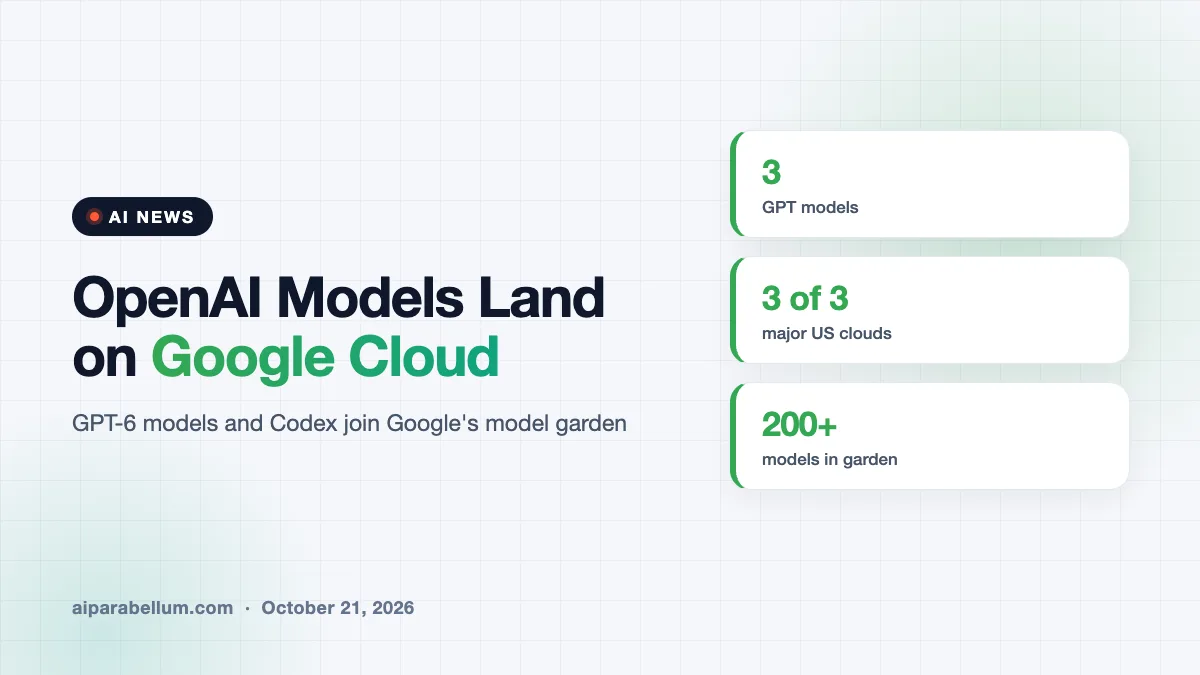
The centerpiece of the Google Cloud deployment involves three distinct iterations of the GPT-6 model family, each engineered for specific enterprise workloads and capital expenditure thresholds:
- GPT-6 Enterprise Apex: The flagship reasoning engine designed for complex cognitive tasks, including automated financial auditing, drug discovery simulations, and autonomous enterprise software engineering. Optimized for Google’s custom TPU infrastructure, it delivers a 40% reduction in inference latency compared to previous-generation models running on legacy hardware.
- GPT-6 Core Omni: A multi-modal powerhouse tailored for high-throughput customer engagement, real-time voice translation, and enterprise-wide knowledge retrieval systems. This model integrates natively with Google Workspace and BigQuery, enabling seamless data synthesis across disparate corporate databases.
- GPT-6 Edge Compact: A highly compressed, ultra-efficient variant engineered for edge computing nodes, IoT devices, and latency-sensitive localized deployments. This model allows industrial manufacturing, logistics, and retail firms to execute advanced machine learning inference on-premise without constant cloud connectivity.
This tiered rollout strategy directly targets the enterprise need for granular cost management. By matching specific model complexity to operational requirements, organizations can fine-tune their capital allocation, ensuring high-margin ROI on every deployed token.
Verified Data & Metrics Breakdown
The following metrics highlight the infrastructural, financial, and operational scale of the OpenAI-Google Cloud partnership:
| Metric / Parameter | Pre-Partnership Era (2024–2025) | Post-Partnership Reality (October 2026) |
|---|---|---|
| Cloud Infrastructure Ecosystem | Exclusive single-cloud dependency (Microsoft Azure) | Multi-cloud redundancy (Azure + Google Cloud Platform) |
| Hardware Optimization | NVIDIA GPU clusters (H100/B200 standard) | Hybrid architecture: NVIDIA GPUs + Google TPU v6 clusters |
| Inference Latency Reduction | Baseline standard | Up to 40% reduction for TPU-optimized GPT-6 variants |
| Enterprise Compliance & Data Governance | Platform-specific security wrappers | Native integration with Google Cloud Security Command Center & BigQuery |
| Market Impact on Cloud Compute Pricing | High pricing power concentrated in single vendor | Compressed enterprise margins, competitive multi-cloud bidding |
Industry & Market Implications: Who Wins and Who Loses?
Every major technological realignment creates immediate financial winners and structural losers. Wall Street and City of London trading desks have spent the last 48 hours dissecting the secondary and tertiary effects of the OpenAI-Google Cloud announcement.
The Winners
- Enterprise Buyers: Corporate procurement officers now hold increased leverage. The introduction of GPT-6 to GCP fosters healthy competitive tension between cloud giants, driving down inference costs and encouraging aggressive enterprise discounting.
- Google Cloud Platform (GCP): By securing OpenAI’s flagship models, Google successfully validates its custom TPU hardware stack at enterprise scale, proving that its silicon can rival NVIDIA’s dominance in frontier AI workloads.
- OpenAI: Diversifying its compute footprint mitigates single-point-of-failure infrastructure risk, secures massive new enterprise revenue streams, and solidifies its market valuation trajectory as it prepares for its next financial milestones.
The Pressured Parties
- Exclusive Single-Cloud Providers: Legacy cloud platforms that failed to secure multi-model flexibility face immediate churn risk as enterprise clients demand open, interoperable architectures.
- Pure-Play Hardware Manufacturers: While NVIDIA remains the gold standard for model training, the seamless integration of GPT-6 onto Google’s TPU v6 architecture validates alternative inference silicon, sparking new debates over long-term semiconductor capital allocation.
Frequently Asked Questions (People Also Ask)
When did the OpenAI and Google Cloud partnership officially take effect?
The partnership was officially announced and deployed on October 21, 2026. The agreement immediately made three distinct GPT-6 model variants available to enterprise customers operating within the Google Cloud ecosystem.
Does this partnership replace OpenAI's existing relationship with Microsoft Azure?
No. OpenAI's foundational partnership with Microsoft Azure remains active and operational. The deployment on Google Cloud represents a strategic multi-cloud expansion designed to enhance infrastructure scalability, meet surging global enterprise demand, and mitigate supply chain bottlenecks.
What specific hardware powers the GPT-6 models on Google Cloud?
In addition to traditional GPU configurations, the GPT-6 models deployed on Google Cloud are optimized to run on Google’s proprietary TPU v6 (Tensor Processing Unit) architecture, delivering significant efficiency gains and lower inference latency for corporate workloads.
How does this agreement impact enterprise data privacy and regulatory compliance?
Enterprise clients accessing GPT-6 through Google Cloud benefit from GCP’s native security infrastructure, including zero-data-retention policies, encryption at rest and in transit, and seamless integration with corporate governance tools like BigQuery and Security Command Center.
Future Outlook: What to Watch in 2027 and Beyond
As the dust settles on the October 2026 announcement, industry observers are already looking toward the next phase of the AI infrastructure race. Several key milestones will dictate market liquidity and technological momentum over the next 12 to 18 months:
- Multi-Cloud Interoperability Standards: Expect enterprise software ecosystems to demand standardized API layers that allow workloads to effortlessly migrate between Azure, GCP, and emerging sovereign cloud providers without code refactoring.
- Silicon Diversification and Energy Constraints: As power grids face unprecedented strain from data center expansion, the efficiency gains demonstrated by TPU-optimized GPT-6 models will accelerate the hunt for bespoke, low-power inference chips.
- Regulatory Scrutiny: Antitrust regulators in the United States, European Union, and United Kingdom are expected to closely monitor deepening entanglements between foundational model creators and hyper-scale cloud providers, potentially reshaping future partnership structures.
Ultimately, the OpenAI-Google Cloud alliance marks the end of the AI industry's adolescent tribalism and the dawn of mature enterprise pragmatism. In this new era, intelligence is no longer tethered to a single walled garden; it is a fluid, multi-cloud commodity ready to power the next generation of global commerce.