Executive Takeaways
- Paradigm Shift in Defense: Google Cloud's deployment of AI Threat Defense on May 27, 2026, transitions enterprise security from human-paced remediation to automated, machine-speed counteroffensives.
- Capital Expenditure Realignment: C-suites are reallocating enterprise IT budgets toward cognitive security architectures to protect cloud compute infrastructure and defend against automated, generative threat vectors.
- Risk Mitigation and Valuation Impact: Organizations adopting always-on AI defense protocols minimize catastrophic data breach liabilities, directly safeguarding market capitalization and regulatory compliance.
- The Adversarial Arms Race: As nation-state actors and cybercrime syndicates industrialize machine learning for infiltration, automated security platforms represent the new baseline for market survival.
SAN FRANCISCO & NEW YORK — In the high-stakes theater of global cybersecurity, the calendar has permanently shifted. On May 27, 2026, Google Cloud fundamentally altered the enterprise risk landscape with the commercial rollout of Google AI Threat Defense. Designed to counter adversaries who now operate at algorithmic velocity, this always-on, automated platform represents a watershed moment for corporate digital architecture. For years, Chief Information Security Officers (CISOs) have fought asymmetric warfare: human defenders manually parsing log files against machine-driven malware capable of breaching networks in milliseconds. Google's new platform seeks to bridge that capability gap, fusing planetary-scale threat intelligence with autonomous mitigation.
This investigation examines the strategic underpinnings, technical architecture, and market implications of Google AI Threat Defense. By analyzing capital allocation shifts, enterprise risk mitigation strategies, and the broader macroeconomic impact on cloud compute infrastructure, we decode what this launch means for global commerce, boardroom accountability, and the future of digital defense.
The Catalytic Moment: Why Traditional Security Architecture Failed
Test Our Free AI & Tech Utilities Suite
Calculate LLM API token costs, analyze article dwell-time, or simulate tech DCA returns.
To understand the urgency driving Google AI Threat Defense, one must examine the structural vulnerabilities plaguing modern enterprise networks. Over the past twenty-four months, the proliferation of generative artificial intelligence has democratized cybercrime. Threat actors no longer rely solely on bespoke exploit code; they deploy autonomous agents capable of probing enterprise perimeters, mutating payloads, and exfiltrating data before human security operations centers (SOCs) can even acknowledge an anomaly.
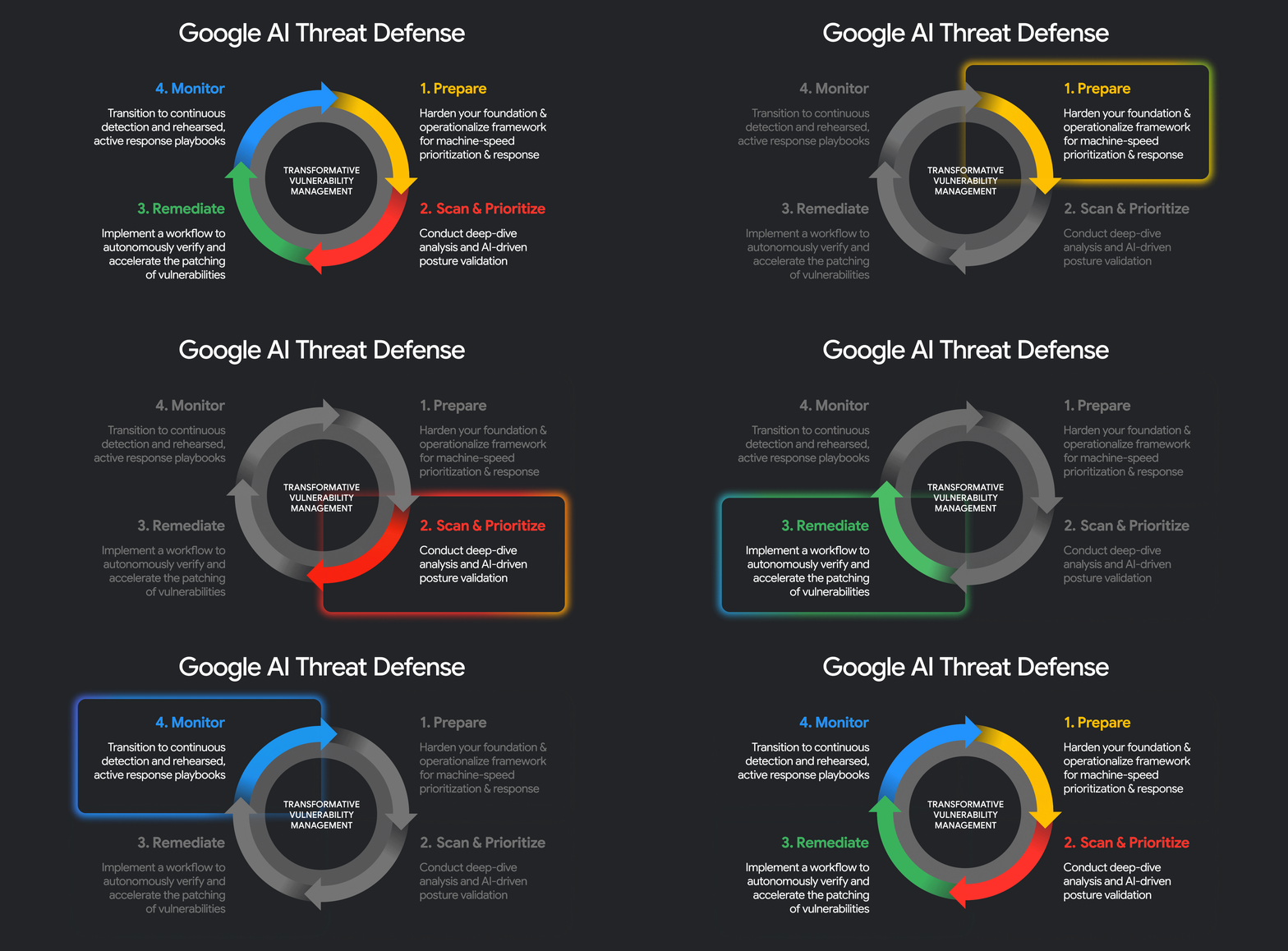
Traditional security information and event management (SIEM) tools, while essential for historical forensics, are bogged down by alert fatigue and human latency. When an adversary operates at machine speed, a human-in-the-loop response model is functionally obsolete. Google Cloud’s engineering leadership recognized that closing this velocity gap required an architectural reinvention. The result is a unified platform engineered around three core pillars: proactive hardening, continuous real-time scanning, and autonomous remediation.
Financial markets have responded with acute awareness. In an era where a single major data breach can vaporize double-digit percentages of a corporation’s valuation multiple and trigger aggressive regulatory penalties from bodies like the SEC, European Data Protection Board, and regional authorities, proactive risk mitigation is no longer an IT line item—it is a core fiduciary duty. Enterprise ROI is now directly correlated with the resilience of an organization's cloud compute architecture.
Deconstructing Google AI Threat Defense: Core Pillars
Google AI Threat Defense is not a single product upgrade; it is an integrated paradigm designed to ingest petabytes of telemetry and neutralize threats autonomously. Industry analysts tracking the rollout have identified three foundational components that differentiate Google’s approach from legacy security vendors:
- Foundation Hardening (Prepare): Before an attack materializes, the platform continuously audits enterprise cloud environments, identifying misconfigurations, identity and access management (IAM) vulnerabilities, and shadow IT assets. By automating the hardening process, it shrinks the corporate attack surface.
- Continuous Scanning: Leveraging advanced machine learning models trained on Google’s proprietary threat intelligence (informed by the Google TI Mondays series and global infrastructure monitoring), the system inspects runtime environments, container registries, and API endpoints without inducing latency bottlenecks.
- Autonomous Response: When an intrusion or anomaly is detected, the platform executes precise containment protocols at machine speed—isolating compromised workloads, revoking compromised credentials, and patching vulnerabilities instantly without requiring human intervention.
This automated loop fundamentally redefines the economics of cyber defense. By shifting from reactive firefighting to proactive, autonomous neutralization, organizations can optimize their human capital, redirecting skilled security analysts toward strategic architecture and threat hunting rather than mundane triage.
Verified Data & Metrics Breakdown
To quantify the operational shift represented by Google AI Threat Defense, the following comparative matrix contrasts legacy security frameworks with Google’s newly deployed machine-speed architecture across critical enterprise metrics.
| Evaluation Metric | Legacy SIEM / Manual SOC Model | Google AI Threat Defense Framework |
|---|---|---|
| Launch / Deployment Date | Legacy models established over past decades | May 27, 2026 |
| Mean Time to Detect (MTTD) | Hours to days (reliant on alert parsing) | Sub-second (real-time cognitive processing) |
| Mean Time to Respond (MTTR) | Hours to weeks (human triage required) | Machine-speed autonomous remediation |
| Operational Architecture | Siloed log analysis and reactive patching | Always-on, automated cognitive platform |
| Enterprise Risk Profile | High exposure to zero-day and automated AI attacks | Proactively hardened with automated containment |
Industry & Market Implications: Winners, Losers, and Economic Realities
The introduction of Google AI Threat Defense triggers immediate ripple effects across the global technology and financial sectors. In capital markets, enterprise software valuations are increasingly dictated by a company's ability to demonstrate bulletproof security posture in an AI-driven economy.
The Winners: Enterprise organizations utilizing multi-cloud and Google Cloud infrastructure stand as primary beneficiaries. By adopting automated threat defense, these entities drastically lower their cyber insurance premiums, protect their intellectual property, and satisfy stringent regulatory compliance frameworks with verifiable audit trails. Furthermore, agile cybersecurity startups that integrate seamlessly with Google’s ecosystem will likely see accelerated enterprise adoption.
The Pressured: Traditional legacy security vendors that rely on manual configuration, bloated dashboard alert systems, and high-consulting-fee remediation models face an existential pivot. If enterprise buyers can achieve automated, machine-speed protection natively within their cloud infrastructure provider, spending on disparate, bolt-on security tools will inevitably face budgetary contraction.
From a macroeconomic perspective, this platform reinforces market liquidity and investor confidence in cloud-based business models. When boards of directors know that their digital assets are guarded by cognitive systems operating at machine speed, capital allocation toward digital transformation accelerates without the paralyzing fear of unmitigated breach liabilities.
Frequently Asked Questions (People Also Ask)
What is Google AI Threat Defense and when was it launched?
Google AI Threat Defense is an always-on, automated cybersecurity platform launched by Google Cloud on May 27, 2026. It is specifically engineered to help enterprises outpace rapidly accelerating artificial intelligence threat vectors by combining foundational hardening, continuous scanning, and machine-speed autonomous remediation.
How does Google AI Threat Defense improve enterprise risk mitigation?
By eliminating human latency in the threat response lifecycle. While traditional security operations centers (SOCs) rely on manual alert triage—which can take hours or days—Google’s platform detects anomalies in real time and executes autonomous containment protocols instantly, protecting corporate infrastructure and minimizing regulatory liabilities.
Does Google AI Threat Defense replace traditional SIEM tools?
Rather than merely replacing legacy tools, the platform acts as an evolutionary leap forward, shifting organizations from reactive, log-based forensics to proactive, cognitive threat neutralization. It integrates deeply into cloud compute architectures to secure workloads against advanced automated adversaries.
How does this platform impact corporate capital allocation and IT budgets?
Enterprise buyers are increasingly reallocating IT spend away from fragmented, manual point-solutions toward integrated, cloud-native cognitive security platforms. This consolidation maximizes enterprise ROI, reduces costly breach remediation expenses, and helps secure favorable cyber insurance underwriting terms.
Future Outlook: What Comes Next
As we look toward the horizon of enterprise technology, the launch of Google AI Threat Defense marks the opening salvo in a broader transition toward fully autonomous digital governance. Over the next 12 to 18 months, industry watchers should monitor several critical milestones:
- Ecosystem Interoperability: How quickly third-party security vendors adapt their APIs to interface seamlessly with Google’s automated remediation loops.
- Regulatory Harmonization: The evolution of international compliance standards as global regulators begin to formally recognize machine-speed automated security posture as a baseline requirement for critical infrastructure.
- Adversarial Counter-Evolution: How sophisticated cybercrime syndicates and state-sponsored actors respond to automated enterprise defenses by deploying increasingly complex, multi-modal cognitive attack agents.
Ultimately, the digital economy has crossed a Rubicon. In the battle between automated threats and human defenders, human-paced security is no longer viable. With Google AI Threat Defense, the corporate world has been handed a powerful new shield—one forged in the crucible of machine learning, engineered for enterprise scale, and designed to outpace the adversary at the speed of light.