Executive Takeaways
- Escalating Financing Costs: Surging long-term US Treasury yields are amplifying government borrowing expenses, forcing a rigorous re-evaluation of federal capital allocation and fiscal sustainability.
- Market Liquidity Strain: Institutional investors and primary dealers are navigating severe valuation pressures as shifting risk-free rates compress equity valuation multiples and corporate bond pricing.
- Corporate & Infrastructure Impact: Elevated benchmark yields directly increase corporate debt-servicing burdens, potentially stalling capital expenditure on enterprise cloud compute architecture and critical infrastructure scalability.
- Strategic Risk Mitigation: Portfolio managers are prioritizing dynamic risk mitigation frameworks, pivoting away from duration risk toward shorter-duration assets and high-yield defensive positioning.
Global financial markets have entered a precarious phase of structural readjustment. As long-term US Treasury yields breach critical psychological and technical thresholds, institutional investors, central bankers, and corporate treasurers are confronting an uncomfortable reality: the era of frictionless sovereign debt financing has definitively closed. According to foundational reporting from Funds Society on August 24, 2026, acute anxiety is spreading across primary trading desks as the compounding weight of escalating federal borrowing requirements converges with quantitative tightening and shifting macroeconomic indicators.
For decades, the benchmark 10-year and 30-year US Treasury yields functioned as the untouchable anchor of global finance. They dictated everything from consumer mortgage rates to corporate capital allocation strategies, serving as the foundational baseline for the pricing of trillions of dollars in assets. Today, however, these yields are signaling deep-seated structural imbalances. The sheer velocity of debt issuance, combined with wavering foreign official demand and stubborn inflationary persistence, has forced a dramatic repricing of sovereign risk. As yields climb, the mechanics of federal debt servicing are colliding with macroeconomic reality, setting off shockwaves that reach from the inner sanctums of Wall Street investment banks to corporate boardrooms worldwide.
The Catalytic Anatomy of the Current Yield Surge
Test Our Free AI & Tech Utilities Suite
Calculate LLM API token costs, analyze article dwell-time, or simulate tech DCA returns.
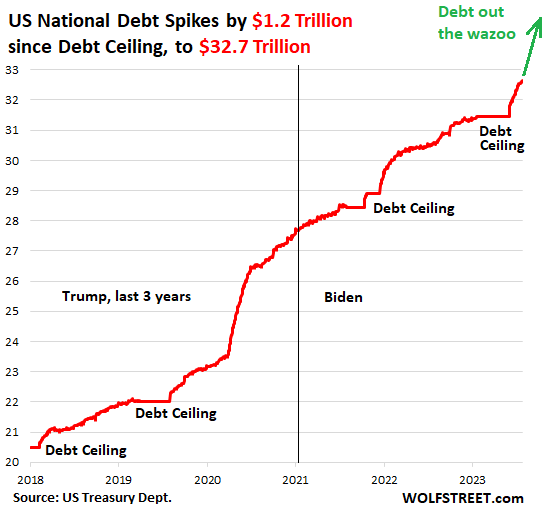
To understand the gravity of the current Treasury market dynamics, one must examine the confluence of structural supply shocks and shifting monetary policy frameworks. Following years of pandemic-era fiscal stimulus and subsequent infrastructure spending bills, the US national debt has expanded at an unprecedented trajectory. The US Department of the Treasury has been forced to consistently increase the size of its quarterly refunding auctions, flooding the primary dealer network with an unrelenting wave of sovereign paper.
However, the traditional buyer base for this debt—comprising foreign central banks, domestic commercial banks, and price-insensitive institutional accounts—has fundamentally transformed. With the Federal Reserve maintaining its commitment to balance sheet normalization through quantitative tightening, the marginal buyer of US sovereign debt now demands a significantly higher term premium. This term premium reflects not only the traditional compensation for holding long-duration fixed-income securities over time, but also a growing risk premium associated with long-term fiscal dominance and legislative gridlock over the federal budget deficit.
Market participants note that liquidity in the secondary Treasury market has experienced periodic bouts of degradation. Thinning order books on primary electronic trading platforms mean that sizable auction settlements can trigger outsized price volatility. When benchmark yields spike rapidly, the immediate casualty is market liquidity, forcing algorithmic trading desks and leveraged hedge funds to unwind long positions precipitously. This feedback loop accelerates downward price action in bonds, driving yields higher still and intensifying the pressure on federal financing mechanisms.
Macroeconomic Data & Historical Yield Dynamics

A rigorous examination of the current fixed-income landscape requires contextualizing today's metrics against historical cycles of deficit expansion and interest rate normalization. The table below outlines the critical structural shifts in US Treasury benchmarks, federal debt servicing metrics, and primary issuance volumes.
| Metric / Indicator | Pre-Pandemic Baseline (2019) | Post-Inflation Peak (2023) | Current Market State (2026) |
|---|---|---|---|
| 10-Year Treasury Yield (Average) | ~2.14% | ~4.25% | Breaching 4.75% - 5.00% |
| Federal Interest Payments (% of GDP) | ~1.8% | ~3.1% | Approaching 4.0%+ |
| Total US National Debt | ~$22.7 Trillion | ~$33.8 Trillion | Surpassing $36+ Trillion |
| Term Premium on 10-Year Notes | Negative / Neutral | Slightly Positive (~20 bps) | Significantly Expanded |
Corporate Balance Sheets and Enterprise Risk Mitigation
The implications of persistent high Treasury yields extend far beyond Washington D.C., directly impacting corporate finance and strategic planning. As the risk-free rate rises, the hurdle rate for corporate capital allocation projects increases exponentially. Chief Financial Officers across the Fortune 500 are finding that historical valuation models and enterprise ROI projections must be aggressively recalibrated.
Consider the technology and telecommunications sectors, where long-term capital expenditure is vital. Building out next-generation cloud compute architecture, expanding 5G network coverage, or funding complex artificial intelligence infrastructure requires massive upfront capital outlays. When corporate debt issuance costs track the upward trajectory of sovereign yields, corporate borrowers face a stark choice: absorb compressed profit margins or delay strategic growth initiatives. Consequently, risk mitigation has transitioned from a back-office compliance function to a frontline executive priority.
Furthermore, equity valuation multiples—particularly for growth and tech enterprises—face severe gravitational pull when risk-free yields climb. Higher discount rates reduce the present value of future cash flows, forcing a market-wide rotation away from high-multiple growth equities toward cash-generative, defensive balance sheets. This dynamic creates an unforgiving environment for firms reliant on continuous external debt financing to fund operational cash burn.
Frequently Asked Questions (People Also Ask)
Why are US Treasury yields rising despite expectations of interest rate stabilization?
While the Federal Reserve sets short-term policy rates, long-term Treasury yields (such as the 10-year and 30-year notes) are determined by supply and demand dynamics in the open market. The primary drivers behind the current yield spike include massive, ongoing federal debt issuance, declining foreign official participation in Treasury auctions, and an expanding term premium that investors demand to compensate for long-term fiscal and inflationary risks.
How do rising Treasury yields impact everyday consumers and commercial banking?
Rising Treasury yields serve as the direct benchmark for consumer borrowing costs. As sovereign yields climb, commercial banks adjust their lending rates upward. This translates directly into higher interest rates for residential mortgages, auto loans, commercial real estate financing, and credit card debt, ultimately dampening consumer discretionary spending and cooling broader economic activity.
What does "fiscal dominance" mean in the context of current debt financing challenges?
Fiscal dominance refers to a macroeconomic scenario where the sheer volume of government debt and budget deficits dictates monetary policy considerations, potentially undermining a central bank's ability to maintain price stability. When federal borrowing needs are exceptionally large, central banks may face indirect pressure to accommodate debt issuance or risk severe market dysfunctions, complicating the fight against persistent inflation.
Which sectors are most vulnerable to escalating government borrowing costs?
Capital-intensive sectors—such as utilities, telecommunications, real estate investment trusts (REITs), and high-growth technology firms—are acutely vulnerable. These industries rely heavily on continuous debt refinancing and long-term capital expenditure. As borrowing costs rise, their debt-servicing expenses surge, compressing profit margins and forcing management teams to scale back ambitious expansion programs.
Future Outlook and Strategic Milestones to Watch
Looking ahead, the trajectory of US Treasury yields will hinge on a delicate interplay between fiscal policy discipline, macroeconomic resilience, and central bank balance sheet maneuvers. As structural deficits persist without immediate legislative reform, market vigilance will remain exceptionally high.
Institutional portfolio managers and corporate strategists must monitor several key milestones over the coming quarters:
- Treasury Quarterly Refunding Announcements: Scrutiny will remain intense on the US Treasury’s borrowing estimates, specifically regarding adjustments to the issuance mix between short-term bills, nominal coupon bonds, and Treasury Inflation-Protected Securities (TIPS).
- Primary Dealer Bid-to-Cover Ratios: Auction demand metrics will serve as the definitive litmus test for institutional appetite and market liquidity absorption capacity.
- Monetary Policy Quantitative Tightening Pace: Any shifts in the Federal Reserve's balance sheet runoff velocity will directly alter the supply-demand balance in the secondary market.
- Corporate Refinancing Walls: The timing and pricing of upcoming corporate debt maturities will reveal how effectively major enterprises are executing their risk mitigation and liability management strategies.
Ultimately, the current friction in US Treasury debt financing is not a temporary market aberration, but a profound structural turning point. Navigating this environment will require rigorous financial discipline, sophisticated capital allocation models, and an unwavering commitment to proactive risk management across both public and private sectors.