
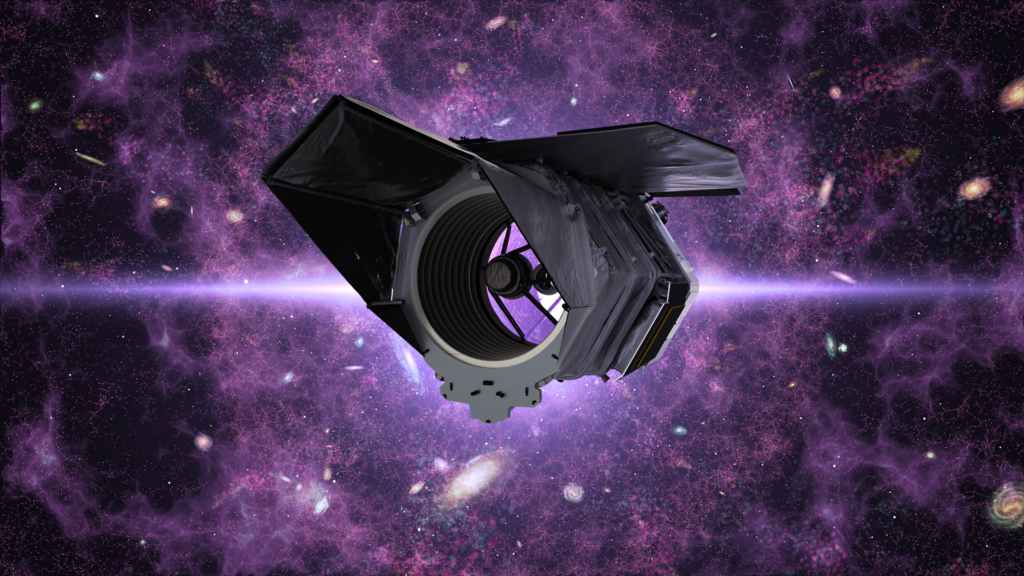
WASHINGTON — In what aerospace engineers and astrophysicists are calling the most ambitious celestial observatory since the deployment of the James Webb Space Telescope, NASA is putting the final touches on a revolutionary space instrument. Set to lift off in the coming weeks, this new telescope promises to peer deeper into the fabric of space-time, potentially unlocking answers to humanity's most enduring questions about cosmic origins, dark matter, and the architecture of the universe.
The upcoming mission, heavily spotlighted across scientific broadcasts including NPR’s Shortwave podcast, arrives at a pivotal moment for space exploration. As public fascination with the cosmos continues to surge—fueled in part by high-profile cultural milestones and figures ranging from iconic actors to pop culture royalty discussing their own cosmic inspirations—NASA's latest venture aims to translate that wonder into hard, groundbreaking data.
The Mission Profile: What Makes This Telescope Different?
Unlike its predecessors, which primarily focused on infrared or deep-field optical imaging, this upcoming launch introduces a multi-spectrum capability designed to capture unprecedented high-resolution details of distant galaxy clusters, stellar nurseries, and elusive exoplanetary atmospheres. Mission planners emphasize that the hardware on board has been engineered to bypass atmospheric distortion entirely, offering a clarity of vision that will redefine astronomical baseline metrics.
Industry insiders and senior researchers point out that the telescope's primary mirror array and state-of-the-art spectrometers will allow scientists to analyze the chemical signatures of planets orbiting distant stars with surgical precision. This could fast-track the search for biosignatures—indicators of potential alien life—in star systems light-years away from our own solar system.
- Unprecedented Resolution: Capable of capturing details magnitudes sharper than current ground-based observatories.
- Expanded Spectroscopic Range: Designed to read chemical compositions of exoplanet atmospheres in real-time.
- Cosmic Mapping: Will chart the distribution of dark matter across previously unmapped galactic voids.
- Public Engagement: Backed by a robust educational outreach initiative to inspire the next generation of STEM leaders.
At a Glance: Mission Specifications

| Parameter | Mission Detail |
|---|---|
| Primary Objective | Deep space imaging, exoplanet atmospheric analysis, and dark matter mapping |
| Launch Window | Imminent (Scheduled for the coming weeks) |
| Primary Wire Source | NPR / Specialized Scientific Briefs |
| Expected Lifespan | 10+ years of active orbital observation |
Why This Matters to the Global Economy and Science
Beyond the pure academic pursuit of knowledge, the multi-billion-dollar project represents a massive win for the high-tech aerospace sector. The development phase alone has spurred innovations in lightweight composite materials, ultra-precise cryogenic cooling systems, and advanced artificial intelligence algorithms used to process terabytes of incoming telemetry data.
Market analysts note that investments in space-based technologies frequently yield downstream commercial benefits. From medical imaging improvements born out of astronomical data processing to advanced solar power technologies, the spin-off economy generated by NASA missions pumps billions of dollars into global markets annually. Wall Street aerospace indices have already shown positive movement as launch day approaches, reflecting strong investor confidence in the sector.
"We are standing on the precipice of a paradigm shift," noted a senior astrophysicist close to the project, speaking on the condition of anonymity ahead of the official launch sequence. "What we are about to see through this lens won't just add chapters to our textbooks; it will likely force us to rewrite the introduction entirely."
Looking Ahead: The Road to Launch
As final payload checks are completed at the launch facility, mission controllers are running rigorous simulations to prepare for every contingency. The tension at NASA headquarters is palpable, tempered only by the meticulous preparation that has gone into the spacecraft over the past decade.
When the ignition sequence finally initiates and the rocket pierces the stratosphere, it will carry with it the hopes of the global scientific community—and the curiosity of millions of everyday citizens eager to see what lies beyond our cosmic backyard.
Frequently Asked Questions
When is the official launch date, and where can I watch it?
NASA is scheduled to broadcast the launch live across its official television network, website, and social media channels in the coming weeks. Exact timing remains subject to weather conditions and final technical clearance checks.
How does this telescope compare to the James Webb Space Telescope (JWST)?
While JWST revolutionized infrared astronomy and deep-space infrared imaging, this new telescope complements those findings by utilizing advanced multi-spectrum and spectroscopic tools specifically optimized for high-speed exoplanet atmospheric tracking and wide-field cosmic mapping.

:max_bytes(150000):strip_icc()/GettyImages-1961119081-cebea3048e2749ce8ac0b48cce85c24a.jpg)