By Financial Architecture & Global Markets Bureau | Published January 3, 2026
Primary Wire Context Source: ORF (Caroline Arkalji & Anit Mukherjee)
Executive Takeaways
- Structural Shift in Payment Rails: India’s Unified Payments Interface (UPI) and Brazil’s Pix have fundamentally decoupled real-time financial velocity from traditional card network interchange structures, processing over 150 billion aggregate annual transactions and re-routing trillions in Gross Merchandise Value (GMV).
- Digital Public Infrastructure (DPI) vs. Private Rents: By establishing non-excludable, public-good digital rails, central banks and state consortia have forced legacy intermediaries—namely Visa, Mastercard, and commercial acquiring banks—to re-evaluate their core transaction-fee pricing power.
- Monetization & Enterprise Capital Allocation: Zero and near-zero Merchant Discount Rate (MDR) regulatory frameworks have eliminated transaction tollbooths, forcing payment fintechs and tier-1 banks to pivot toward high-margin embedded finance, balance-sheet credit distribution, and enterprise software integration.
- Cross-Border Interoperability Frontiers: Bilateral and multilateral rail linkages (e.g., India’s UPI-PayNow and Brazil’s Pix International initiatives) are dismantling correspondent banking friction, threatening the $40 billion global remittance margin pool and challenging traditional SWIFT settlement dominance.
The Catalytic Evolution: How Public Rails Replaced Private Rent Extraction
For more than four decades, global consumer payment processing functioned as an oligopolistic utility. Legacy card networks extracted transactional rents ranging from 1.5% to 3.5% through complex interchange fee schedules, split among issuing banks, acquiring institutions, and payment gateways. This capital extraction model sustained lucrative net interest margins (NIM) and high returns on equity (ROE) across money-center banks, but imposed a structural friction cost on retail economies—disproportionately penalizing micro, small, and medium enterprises (MSMEs).
That paradigm has been decisively dismantled across major emerging markets. The rise of Digital Public Infrastructure (DPI)—anchored by India’s Unified Payments Interface (UPI) and Brazil’s Pix—demonstrates how state-orchestrated, open-access architecture can accelerate cashless conversion while driving private transaction clearing costs toward zero.
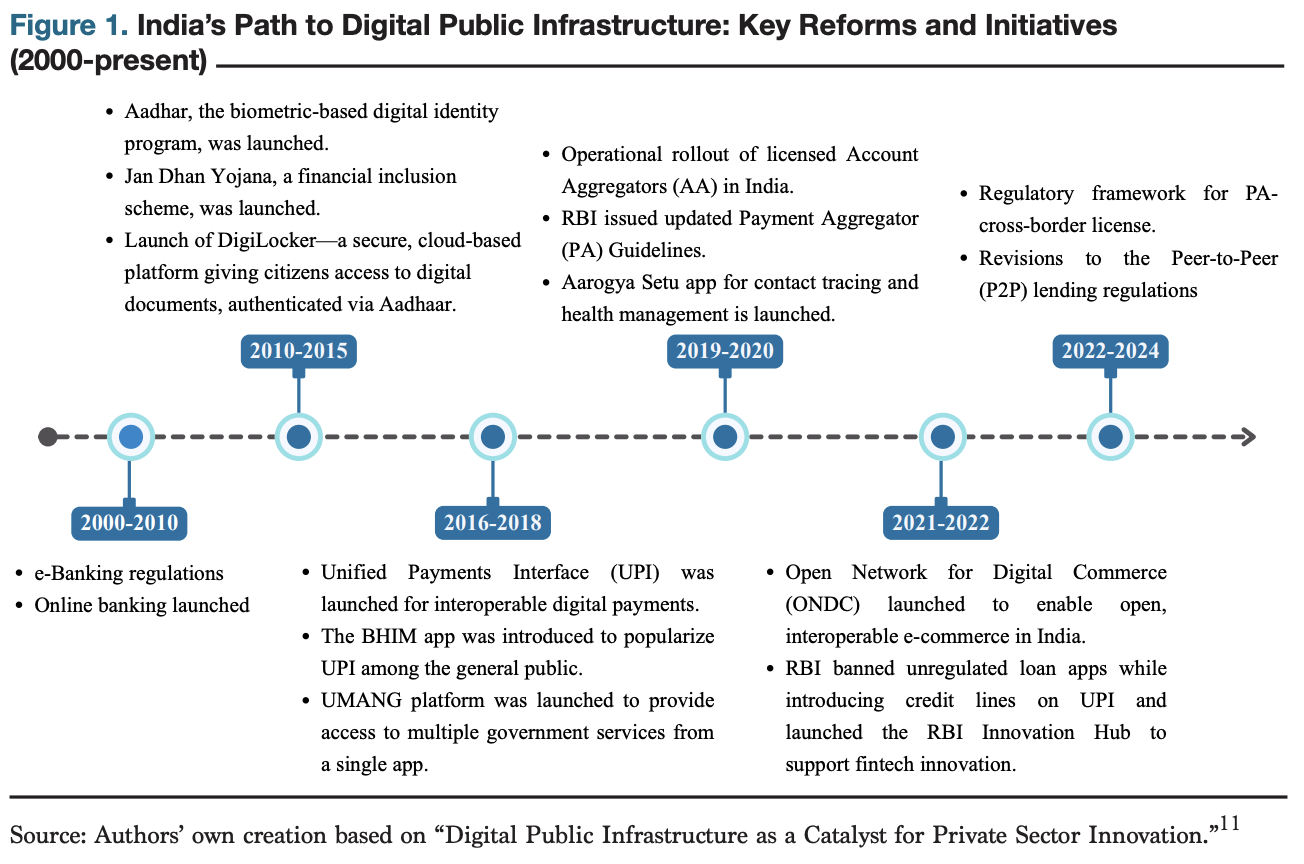
In India, the National Payments Corporation of India (NPCI)—backed by the Reserve Bank of India (RBI) and the Indian Banks' Association—launched UPI in 2016 on an open API framework. By decoupling payments from physical card form factors and routing settlements instantly via virtual payment addresses (VPAs) linked directly to core banking systems (CBS), UPI converted mobile phones into point-of-sale terminal equivalents. By late 2025, UPI was clearing upwards of 13 billion transactions monthly, accounting for over 75% of non-cash retail payments in the nation.
Concurrently, the Banco Central do Brasil (BCB) unveiled Pix in November 2020. Unlike voluntary network models, the BCB mandated participation for all financial institutions holding more than 50,000 active customer accounts. This top-down regulatory enforcement eliminated network effect fragmentation overnight. Within 36 months of launch, Pix surpassed combined credit and debit card transaction volumes in Brazil, engaging over 150 million individual users and 14 million corporate entities. By 2025, Pix reached a transaction velocity exceeding 4.5 billion operations per month, fundamentally restructuring the domestic banking ecosystem.
Technical and Economic Architecture: Open APIs vs. Legacy Silos
The architectural divergence between traditional global card networks and state-backed DPI systems lies in the protocol layer. Legacy networks operate closed-loop or four-party clearing arrangements that rely on complex authorizations, clearing, and multi-day batch settlement mechanisms. Conversely, DPI architecture functions as a unified, interoperable public layer that separates transaction authorization from client-facing application interfaces.
1. Modular Architecture and ISO 20022 Integration
Both UPI and Pix utilize modern, microservices-driven messaging formats aligned with ISO 20022 standards. The infrastructure leverages lightweight RESTful APIs that connect third-party app providers (TPAPs)—such as Google Pay, PhonePe, and Paytm in India, or digital neobanks like Nubank and Banco Inter in Brazil—directly to core central clearing engines. This allows real-time push-payment clearing with sub-second execution windows, operating 24/7/365 without intermediary processing hops.
2. The Macroeconomics of the Zero-MDR Mandate
The core economic catalyst behind UPI's scale was the Indian government's 2020 mandate abolishing the Merchant Discount Rate (MDR) on UPI transactions for retail merchants. While this eliminated direct transaction revenue for payment service providers (PSPs), it catalyzed hyper-adoption across millions of unbanked tier-3 and tier-4 micro-merchants. The loss of transaction fees was offset by massive reductions in cash-handling logistics and national currency printing costs.
Brazil selected a hybrid pricing model. While C2C (consumer-to-consumer) and C2B (consumer-to-business for micro-merchants) transactions remain entirely free for individuals, the BCB permitted acquiring institutions to charge modest fees on B2B and larger corporate C2B transactions—typically capped at a fraction of a percent (averaging 0.22%), compared to the 2.2% average for local credit card processing. This preserved commercial bank participation incentives while providing small businesses with immediate liquidity relief via real-time settlement.
Comparative Structural Metrics: UPI vs. Pix vs. Legacy Rails
| Dimension / Metric | India: UPI (NPCI / RBI) | Brazil: Pix (Banco Central) | Legacy Card Networks (Visa/Mastercard) |
|---|---|---|---|
| Primary Architecture | Open-API, Unified Federated Layer | Centralized Public Rail (SPI clearing) | Proprietary 4-Party Processing Loop |
| Settlement Window | Real-Time (Instant Bank-to-Bank) | Real-Time (Instant Centralized Clearing) | T+1 to T+3 Settlement Cycles |
| Merchant Cost Structure (MDR) | 0.00% (Government Mandated for Retail) | 0.00% C2B/C2C; ~0.22% B2B Average | 1.50% – 3.50% Interchange + Acquiring Fees |
| Message Standard | ISO 20022 / Custom XML APIs | ISO 20022 Native Standard | ISO 8583 Legacy Transitioning to ISO 20022 |
| Annualized Transaction Volume (2025) | > 140 Billion Operations | > 50 Billion Operations | ~280 Billion Combined Global Operations |
| Monetization Mechanics | Embedded Financial Products, Credit, BNPL | B2B Micro-Fees, Value-Added SaaS, Lending | Interchange Rents, Assessment Fees, FX Spread |
Industry & Market Implications: Repricing Financial Services
The structural shift toward zero-cost, instant payment rails generates profound strategic realignments across capital allocation, valuation multiples, and banking system liquidity management.
1. Decoupling Payments from Transaction Revenue
In traditional Western banking models, payment processing serves as a high-margin business line. Under a mature DPI framework, payments become a zero-margin customer acquisition utility. Global payment companies can no longer rely purely on transaction processing volume to drive enterprise enterprise valuations. FinTech platforms operating within UPI and Pix environments have been forced to monetise through alternative layers: underwriting instant unsecured consumer lines (Buy Now, Pay Later), embedded wealth management distribution, SMB inventory financing, and point-of-sale software subscriptions.
2. Liquidity Acceleration and Bank Deposit Dynamics
Real-time settlement structurally alters commercial bank liquidity operations. Under legacy clearing systems, banks held substantial float capital during multi-day settlement delays. Instant DPI transfers eliminate transaction float, requiring corporate treasuries and risk officers to adopt real-time intra-day liquidity management tools. Furthermore, instant payment rails lower customer switching costs between competing banking institutions, increasing deposit velocity and forcing banks to offer competitive yield structures to retain core retail deposits.
3. Cross-Border Liquidity and SWIFT Disintermediation
The expansion of national DPI frameworks into cross-border corridors represents a direct threat to legacy wire messaging and FX spread margins. The integration of India’s UPI with Singapore’s PayNow, alongside bilateral corridors established with the UAE, Mauritius, and France, allows cross-border peer-to-peer transfers to execute instantly at micro-fractional costs. Simultaneously, Brazil’s central bank is advancing "Pix International" frameworks to link Latin American trade channels. By routing cross-border transactions through linked real-time central bank infrastructure, sovereign states are bypassing correspondent banking fees and reducing reliance on USD-denominated clearing mechanisms.
Frequently Asked Questions (People Also Ask)
How do Pix and UPI differ from private Western payment solutions like Zelle or Apple Pay?
Private Western solutions operate as overlay applications on top of existing commercial card rails or fragmented intra-bank ACH clearing networks. They often incur back-end interchange costs, restrict interoperability across competing wallets, and maintain proprietary loops. Pix and UPI function as foundational, sovereign-backed Digital Public Infrastructure (DPI). They provide open, standardized APIs that allow any licensed bank or non-bank fintech to build consumer interfaces directly onto central clearing mechanisms without paying interchange rents.
How do commercial fintechs survive when payment fees are regulated to zero?
Under a zero-MDR mandate, payments serve as a low-cost funnel for high-margin cross-selling. FinTechs leverage high-frequency user engagement data generated by daily payment flows to build granular credit-scoring algorithms. These data assets enable providers to distribute targeted, low-CAC (Customer Acquisition Cost) financial products—such as pre-approved personal credit lines, merchant working capital loans, insurance policies, and mutual fund investments—where interest income and distribution commissions replace lost processing fees.
Can developed markets like the United States or the Eurozone adopt the Pix or UPI model?
While the United States (via FedNow) and the Eurozone (via the European Payment Initiative’s Wero) have developed instant payment clearing capabilities, full DPI adoption faces structural institutional resistance in the West. Legacy money-center banks and private card networks rely heavily on interchange revenues to fund credit card rewards programs and subsidize retail operations. Replacing these private tollbooths with public open-access infrastructure requires aggressive regulatory interventions, central bank mandates, or structural shifts in merchant acceptance behavior.
What are the primary cybersecurity and systemic risk concerns in real-time public rails?
Because real-time DPI platforms finalize settlements within seconds, they eliminate the multi-day clearing buffers historically used to identify and freeze fraudulent transactions. Systemic risks include high-velocity authorized push-payment (APP) fraud, real-time social engineering exploits, and automated botnet strikes designed to overwhelm core banking APIs. Mitigating these risks requires central banks and participating institutions to deploy AI-driven, real-time anomaly detection engines directly at the API gateway layer, monitoring transaction metadata prior to instant clearing.
Future Outlook: The Global DPI Convergence
As the market evolves toward 2030, the global digital payments architecture is converging around sovereign, open-rail infrastructure. The success of Pix and UPI has turned Digital Public Infrastructure into a blueprint for emerging markets across Latin America, Southeast Asia, Africa, and the Middle East seeking economic formalization, reduced cash dependency, and financial inclusion.
The next frontier lies in the integration of real-time payment rails with Central Bank Digital Currencies (CBDCs) and tokenized deposit frameworks. Brazil’s ongoing development of "Drex" (its wholesale digital real) and India’s digital Rupee (e-Rupee) experiments are designed to plug directly into existing Pix and UPI ecosystems. These integrations will enable programmable, smart-contract-driven transactions for enterprise supply chains and cross-border trade execution—further marginalizing high-friction legacy intermediaries and permanently redefining global financial architecture.