Executive Takeaways
- Sovereign Infrastructure Shift: Brazil’s Pix and India’s Unified Payments Interface (UPI) have transitioned digital payments from proprietary commercial moats to foundational Digital Public Infrastructure (DPI), driving systemic financial inclusion and lowering merchant acquisition costs.
- Capital Allocation & Valuation Pressures: The hyper-growth of state-backed real-time gross settlement (RTGS) rails is forcing legacy card networks, payment gateways, and traditional fintechs to re-evaluate their enterprise ROI, valuation multiples, and cross-border monetization strategies.
- The Global South Blueprint: Emerging economies are increasingly bypassing traditional Western-led credit card oligopolies, adopting modular open-source protocols that guarantee regulatory compliance, data sovereignty, and robust systemic liquidity.
For decades, the plumbing of global commerce remained enclosed within a private, high-margin cartel. Legacy credit card networks, legacy banking mainframes, and proprietary payment aggregators extracted a heavy tax on every transaction, dictating terms to merchants and locking billions of unbanked citizens out of the formal economy. Today, that monopoly is fracturing. Led by Brazil’s central bank-backed Pix and India’s Unified Payments Interface (UPI), a new paradigm of Digital Public Infrastructure (DPI) has emerged, proving that sovereign-backed, interoperable real-time payment rails can scale to billions of users while slashing transaction friction to zero.
As central banks and international financial institutions examine the structural mechanics of Pix and UPI, the implications stretch far beyond domestic convenience. This is an unfolding geopolitical and economic contest over the future of digital liquidity, cloud compute architecture, data governance, and the valuation models of global fintech. For enterprise leaders, institutional investors, and macroeconomic policymakers, understanding the architecture of the Sovereign Stack is no longer optional—it is a core determinant of future market positioning.
The Catalytic Evolution of Pix and UPI
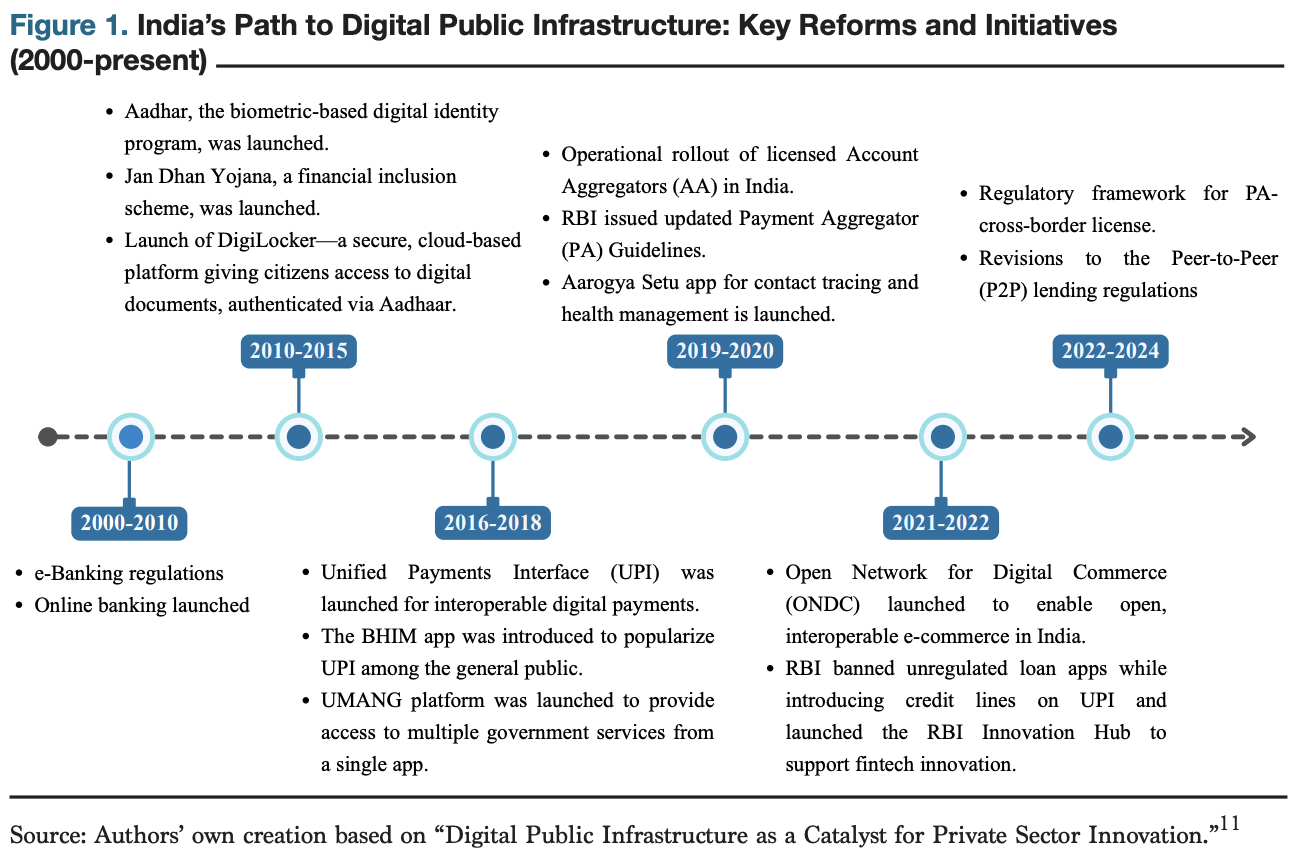
To understand the disruptive force of DPI, one must examine the baseline failures it corrected. In India, prior to the 2016 introduction of UPI by the National Payments Corporation of India (NPCI), digital transactions were plagued by multi-step authentication frictions, high merchant discount rates (MDR), and fragmented banking silos. In Brazil, the landscape prior to Pix’s November 2020 launch was characterized by high-cost wire transfers (TED/DOC), sluggish clearing times, and an entrenched duopoly of card acquirers that penalized small and medium-sized enterprises (SMEs) with exorbitant processing fees.
Both systems leveraged a fundamentally different economic and architectural philosophy. Rather than treating payment rails as proprietary profit centers, the Central Bank of Brazil (*Banco Central do Brasil*) and India’s regulatory bodies engineered open, interoperable APIs that allowed any licensed financial institution, fintech, or payment service provider (PSP) to plug directly into the national settlement layer. By eliminating intermediaries and mandating instant clearing 24/7/365, Pix and UPI transformed payments from a monetizable product into a public utility.
The catalytic impact on financial inclusion has been staggering. In Brazil, Pix onboarded tens of millions of previously unbanked citizens into the digital economy within its first 24 months of operation, simultaneously driving down informal cash usage. In India, UPI scaled to process billions of transactions monthly, encompassing everything from micro-merchants on street corners to institutional equity investments, demonstrating unprecedented infrastructure scalability under extreme load.
Verified Data & Metrics Breakdown
A rigorous quantitative analysis reveals the systemic velocity and market dominance achieved by Brazil's Pix and India's UPI compared to legacy rails.
| Metric / Indicator | Brazil (Pix) | India (UPI) | Legacy Global Card Networks |
|---|---|---|---|
| Inception Year | 2020 | 2016 | 1950s – 1960s |
| Settlement Speed | Instant (Real-time, 24/7) | Instant (Real-time, 24/7) | T+1 to T+3 business days |
| Merchant Cost (MDR) | Near-zero for individuals; capped for SMEs | Historically 0% (Merchant MDR heavily subsidized/zeroed) | 1.5% to 3.5% per transaction |
| Infrastructure Model | Central Bank-operated DICT directory | NPCI-managed centralized switch | Proprietary closed-loop corporate networks |
| Annual Transaction Volume | Tens of billions (Exponential YoY growth) | Exceeding 100+ billion annually | Trillions globally (Combined credit/debit) |
Industry & Market Implications: Winners and Losers
The rapid maturation of DPI is forcing a ruthless reallocation of capital across the global financial ecosystem. As transaction volumes migrate from fee-heavy card rails to zero- or low-cost sovereign infrastructure, the balance of power is shifting dramatically.
Who Wins
Micro-Merchants and SMEs: By eliminating interchange fees and card-processing hardware overhead, merchants enjoy immediate margin expansion and optimized working capital liquidity.
Agile Fintech Innovators: Companies that build value-added services—such as automated lending, credit scoring based on cash-flow data, and embedded finance—on top of Pix and UPI rails are capturing high-growth market share without carrying legacy infrastructure debt.
Exporting Nations & Central Banks: Emerging markets deploying DPI are asserting digital sovereignty, reducing reliance on foreign-owned payment giants, and retaining valuable transactional data within domestic borders.
Who Loses
Legacy Card Acquirers and Payment Gateways: Traditional intermediaries whose business models rely on taking a percentage point or more off the top of every retail transaction face severe margin compression and declining valuation multiples.
Traditional Banks Relying on Float: Banks that historically profited from delayed settlement windows and high domestic wire fees are seeing those high-margin revenue streams evaporate.
Frequently Asked Questions (People Also Ask)
1. How does Pix make money if transactions are free for consumers?
For individual users, Pix is mandated by the Central Bank of Brazil to be completely free. However, legal entities and merchants can be charged a merchant discount rate by their financial institutions for receiving Pix payments. Furthermore, financial institutions monetize the ecosystem indirectly by using the rich transaction data to cross-sell lending products, insurance, and investment vehicles, while significantly lowering their internal cash-handling and branch-maintenance overhead.
2. Can UPI and Pix be integrated into cross-border trade?
Yes. Both the Reserve Bank of India and the Central Bank of Brazil, alongside multilateral bodies like the Bank for International Settlements (BIS), are actively exploring or piloting bilateral linkage frameworks (such as Project Nexus). These initiatives aim to connect disparate national instant payment systems, enabling instantaneous cross-border remittances with minimal foreign exchange friction and bypassing traditional correspondent banking networks.
3. What are the primary cybersecurity risks associated with Digital Public Infrastructure?
While DPI offers unmatched efficiency, centralizing transaction directories (such as Brazil's DICT key database) or national payment switches introduces high-value honey pots for cybercriminals and state-sponsored actors. Robust risk mitigation requires end-to-end encryption, multi-factor authentication, rigorous API security standards, decentralized ledger components where applicable, and continuous real-time fraud monitoring using advanced machine learning models.
4. Are Western economies adopting similar digital public infrastructure models?
Adoption in Western economies has been slower due to entrenched legacy banking lobbies and existing private-sector infrastructure. However, the United States operates FedNow for instant business-to-business and consumer payments, and the European Union utilizes SEPA Instant Credit Transfer. Despite these rollouts, Western systems often lack the unified, open-API sovereign overlay and mandatory merchant pricing caps seen in Pix and UPI.
Future Outlook: The Next Milestone in Sovereign Tech
As we look toward the latter half of the decade, the evolution of Digital Public Infrastructure will transcend domestic borders. The next major frontier is regional interoperability and the convergence of instant payment rails with Central Bank Digital Currencies (CBDCs). As nations link their sovereign stacks, the cost of international trade and remittances will plummet, challenging the hegemony of legacy messaging networks like SWIFT and traditional correspondent banking chains.
For executive leadership teams, corporate treasurers, and institutional investors, the mandate is clear. Strategic planning must account for a world where payments are an instantaneous, low-cost utility rather than a profit center. Organizations that adapt their enterprise architecture to leverage open DPI protocols—while innovating on top of the stack with proprietary analytics and credit underwriting—will dominate the next era of global digital finance. Those that cling to legacy rent-extraction models risk structural obsolescence.