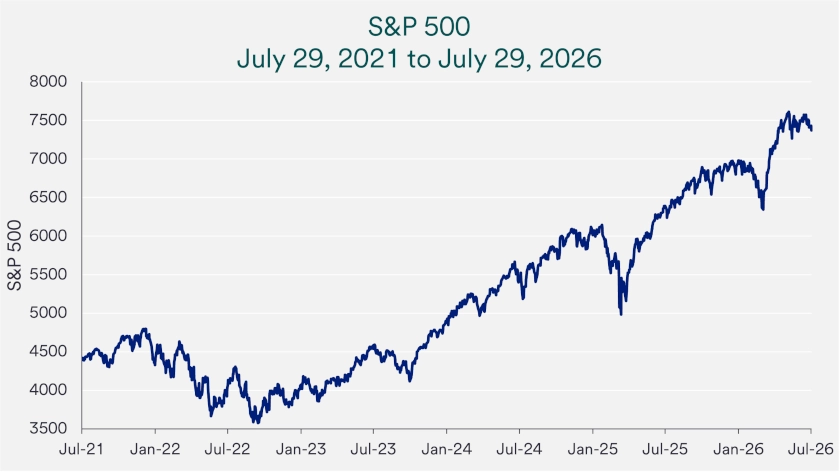
Executive Takeaways
- The Ultimate Liquidity Anchor: Japan holds more than $1.1 trillion in US Treasuries, acting as the primary foreign backstop for American federal debt issuance and long-term capital allocation.
- Yield Curve Control (YCC) Pivot: Driven by persistent domestic inflation and a weakening yen, the Bank of Japan’s exit from ultra-loose monetary policy is forcing a historic structural shift in global risk mitigation strategies.
- Capital Repatriation Pressures: As Japanese Government Bond (JGB) yields rise, institutional capital previously exported to chase higher yields in US corporate paper and Treasuries is pivoting back to domestic alternatives.
- Valuation Multiples at Risk: A synchronized tightening of liquidity across the Pacific threatens US equity valuation multiples, cloud technology infrastructure scalability investments, and broader corporate enterprise ROI metrics.
For decades, Wall Street has suffered from a dangerous geographic myopia, treating the Tokyo bond market as an esoteric backwater governed by negative interest rates and stagnant demographics. That complacency is officially over. As highlighted in recent analyses from the American Enterprise Institute (AEI) by Resident Fellow Desmond Lachman, developments in Japan's sovereign debt market carry profound, immediate consequences for the stability, valuation multiples, and structural liquidity of the United States economy. When the Bank of Japan (BOJ) sneezes, the Federal Reserve—and by extension, every American corporate balance sheet, institutional portfolio, and leveraged mortgage market—catches a cold.
To understand the current friction point, one must look past domestic American economic indicators like non-farm payrolls and consumer price index prints. The plumbing of global capitalism connects Tokyo and New York through an intricate web of cross-border capital flows, currency hedging costs, and institutional carry trades. As the BOJ dismantles its decades-long framework of unconventional monetary policy under Governor Kazuo Ueda, the shockwaves are rewriting the rules of global financial engineering.
The Anatomy of Cross-Border Financial Interdependence
Test Our Free AI & Tech Utilities Suite
Calculate LLM API token costs, analyze article dwell-time, or simulate tech DCA returns.
Japan is not merely another foreign trade partner; it is the single largest foreign creditor to the United States. With over $1.1 trillion parked in US Treasury securities, Japanese pension funds, insurance giants, and megabanks serve as foundational pillars supporting American fiscal deficits. For years, domestic structural realities—specifically, an aging population and a chronic lack of domestic yield—forced Japanese institutional allocators to look outward.
Armed with trillions of yen in postal savings and corporate cash, these investors deployed capital globally in a desperate search for basis points. They bought long-dated US Treasuries, funded infrastructure scalability projects through private credit vehicles, and pushed money into dollar-denominated assets. This relentless overseas capital deployment helped anchor US interest rates at artificially depressed levels, supporting equity valuation multiples across technology, real estate, and consumer discretionary sectors.
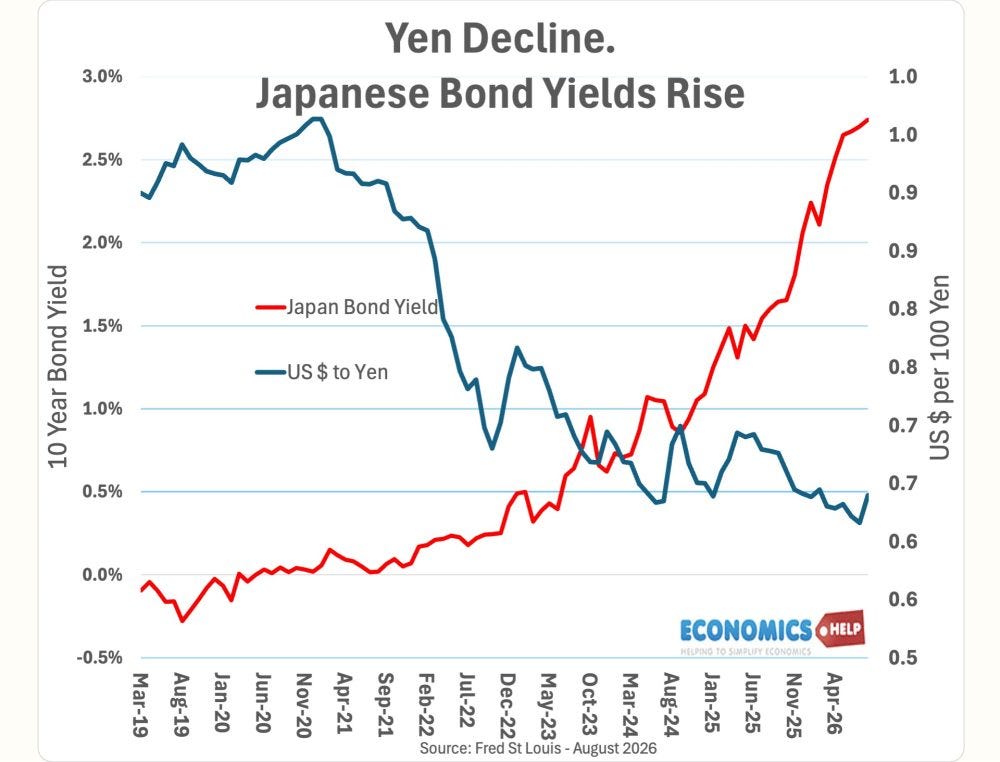
However, this macro equilibrium relied entirely on a massive divergence in monetary policy: the Federal Reserve aggressively hiking rates to combat post-pandemic inflation while the BOJ kept its policy rate pinned near zero. That divergence pushed the yen to historic lows against the dollar, importing unwelcome inflation into Japanese households and forcing the BOJ's hand. The normalization of Japanese monetary policy—marked by the abandonment of negative interest rates and the gradual dismantling of yield curve control—has fundamentally altered the calculus of international capital allocation.
The Mechanics of Capital Repatriation and US Market Stress

As Japanese Government Bond (JGB) yields march steadily upward, the fundamental risk-reward ratio for Japanese institutional investors is transforming. For a Tokyo-based life insurance executive, the opportunity cost of investing abroad has skyrocketed. When factoring in the exorbitant cost of hedging dollar currency risk—which has eaten away much of the nominal yield advantage of US Treasuries—domestic JGBs suddenly look remarkably attractive.
This dynamic triggers a multi-trillion-dollar capital repatriation cycle. As Japanese institutions roll over maturing foreign debt, a substantial portion of those funds is flowing back across the Pacific. The immediate consequence is a reduction of foreign demand for US sovereign debt precisely when the US federal government is running historic budget deficits and flooding the market with new Treasury issuances.
| Metric / Indicator | Historical Norm (Pre-2022) | Current Market Reality (2026) | Macroeconomic Impact on US |
|---|---|---|---|
| Japan Holdings of US Treasuries | Peak accumulation via aggressive overseas yield hunting. | Stabilized to declining as domestic yields rise. | Upward pressure on US long-term borrowing costs. |
| 10-Year JGB Yield | Pinned near 0.0% under strict Yield Curve Control. | Escalating significantly toward multi-decade highs. | Erosion of the US-Japan yield differential, strengthening the yen. |
| USD/JPY Exchange Rate | Relatively stable range (100 - 115). | Volatile, subject to sudden appreciation bouts. | Unwinding of levered carry trades causing sudden cross-asset liquidity crunches. |
| US Corporate Borrowing Costs | Historically low baseline across IG and HY debt. | Elevated across credit tiers, compressing corporate margins. | Stricter corporate capital expenditure and slower enterprise ROI realization. |
Reduced foreign sponsorship of US debt directly translates to higher term premia and elevated long-term interest rates in the United States. For American enterprises, this means that debt refinancing—whether for corporate cloud compute architecture expansion, logistics network upgrades, or commercial real estate acquisitions—carries a much heavier interest burden. Margin compression follows swiftly, forcing executive boards to reassess long-term capital allocation strategies and scale back ambitious growth initiatives.
Industry & Market Implications: Winners and Losers
The shifting tectonic plates of Japanese monetary policy create clear asymmetries across global sectors, separating organizations equipped for structural volatility from those reliant on perpetual cheap liquidity.
- Winners - Japanese Financial Institutions & Domestic Asset Managers: Megabanks like Mitsubishi UFJ Financial Group (MUFG) and major Japanese insurers finally escape the earnings drag of negative interest rates. Net interest margins are expanding, restoring profitability to core lending operations and rewarding domestic shareholders.
- Winners - Conservative Fixed-Income Investors: Global investors who maintained dry powder now benefit from higher risk-free rates across both dollar and yen blocs, ending the punitive financial repression era that forced capital into speculative assets.
- Losers - US Leveraged Corporates & Real Estate Developers: Entities relying on continuous, low-cost debt refinancing face severe margin headwinds. Highly leveraged private equity portfolios and commercial real estate syndicates find debt service coverage ratios strained to breaking points.
- Losers - High-Multiple Growth Equities: Technology firms and speculative growth stocks that capitalized on artificially suppressed discount rates face ongoing valuation multiple compression. Investors demand higher earnings yields to justify tech sector exposure when risk-free alternatives offer attractive returns.
Frequently Asked Questions (People Also Ask)
Why does the Japanese bond market have such a massive impact on the United States economy?
Japan is the single largest foreign holder of US Treasury debt, owning over $1.1 trillion in sovereign paper. Furthermore, Japanese institutional investors have historically supplied trillions in cross-border financing for US corporate debt, mortgage-backed securities, and equity markets. When Japanese bond yields rise, capital flows shift back to Tokyo, reducing foreign demand for US assets and driving up American borrowing costs.
What is Yield Curve Control (YCC) and why is its dismantling important to US markets?
Yield Curve Control was a monetary policy framework where the Bank of Japan targeted a specific interest rate for 10-year Japanese Government Bonds by buying unlimited amounts of debt. As the BOJ abandons YCC and permits yields to rise, the interest rate differential between US and Japanese bonds narrows. This makes domestic Japanese assets more appealing, triggering capital repatriation that pulls liquidity out of American financial markets.
How does the unwinding of the yen carry trade affect US equities?
For years, global investors borrowed low-interest yen to fund purchases of higher-yielding US assets, including equities. When Japanese interest rates rise and the yen strengthens, these carry trades become unprofitable and must be unwound. This sudden unwinding often triggers forced liquidations across US stock indices, causing sharp volatility spikes and downward pressure on high-valuation growth sectors.
Will rising Japanese bond yields cause a recession in the United States?
While rising Japanese yields alone do not automatically guarantee a US recession, they act as a potent monetary tightening mechanism. By driving up long-term US Treasury yields and tightening global liquidity, developments in Japan exacerbate existing domestic pressures on corporate balance sheets, housing affordability, and consumer debt servicing, compounding overall macroeconomic fragility.
Future Outlook and Strategic Milestones to Watch
As the global economy navigates this unprecedented monetary transition, risk mitigation and proactive portfolio adjustments are paramount for institutional fiduciaries. The era of central bank synchronicity is gone, replaced by a fractured landscape where domestic political pressures in Tokyo directly dictate the cost of capital in New York.
Chief Financial Officers and investment committees must monitor several critical indicators over the coming quarters. First, watch the pace of BOJ policy normalization; any acceleration in rate hikes will compress the USD/JPY exchange rate further and spur faster capital repatriation. Second, track Treasury auction bid-to-cover ratios, paying close attention to foreign participation metrics. A sustained dip in international sponsorship will signal that American fiscal deficits are hitting a structural funding wall.
Ultimately, the myth of American financial exceptionalism operating in a vacuum has been shattered. Japan’s bond market is no longer a localized regional footnote—it is the bellwether for global liquidity, valuation discipline, and the ultimate health of the US economy.