Executive Takeaways
- The Core Disconnect: New research published by the Federal Reserve Bank of Atlanta reveals a widening divergence between official central bank policy rates and actual market financial conditions, complicating risk mitigation for institutional capital allocators.
- Index Innovation: Developed by senior economists including Nikolay Gospodinov, a newly constructed monetary policy index provides granular visibility into asset pricing, liquidity dynamics, and credit availability, challenging traditional macroeconomic assumptions.
- Corporate Strategy Pivot: Enterprise CFOs and institutional investors must recalibrate their valuation multiples, balance sheet liquidity, and capital expenditure frameworks as transmission lags lengthen across global markets.
- Regulatory & Market Impact: The findings force a re-evaluation of regulatory compliance stress tests, cloud and infrastructure scalability investments, and long-term risk asset pricing models.
WASHINGTON & ATLANTA — In the high-stakes theater of global macroeconomic governance, the machinery connecting central bank boardrooms to Main Street credit markets has long operated as a black box. For decades, economists and institutional portfolio managers relied on blunt instruments—primarily the federal funds rate and forward guidance—to gauge the tightness or looseness of the broader economy. Today, that framework is facing its most rigorous structural challenge yet.
According to a landmark Policy Hub: Macroblog analysis released by the Federal Reserve Bank of Atlanta, traditional gauges of monetary policy are failing to capture the true velocity of market liquidity. Authored by leading econometricians, including Nikolay Gospodinov, the research introduces a sophisticated new monetary policy index designed to decode how monetary policy stances actually filter through real-world financial conditions. For enterprise executives, private equity dealmakers, and institutional risk officers, the findings signal an urgent need to re-examine capital allocation models, debt maturity profiles, and risk mitigation strategies in an era of protracted monetary ambiguity.
Decoding the Transmission Mechanism: The Theory vs. Reality
Test Our Free AI & Tech Utilities Suite
Calculate LLM API token costs, analyze article dwell-time, or simulate tech DCA returns.
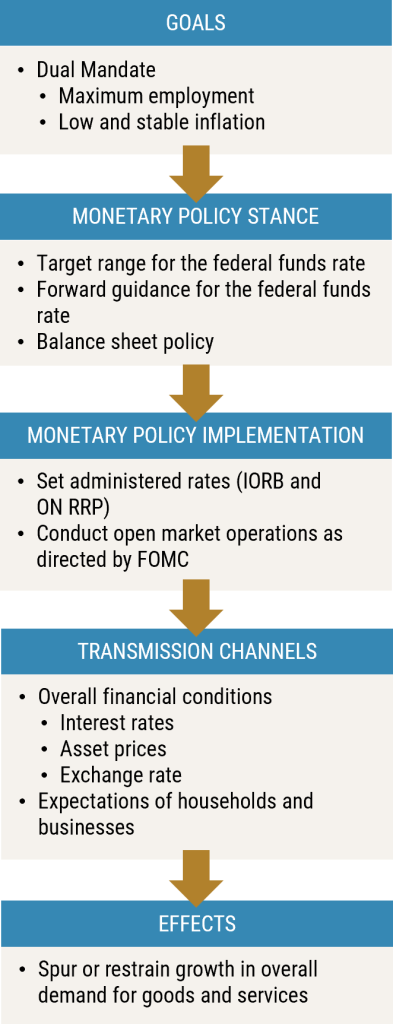
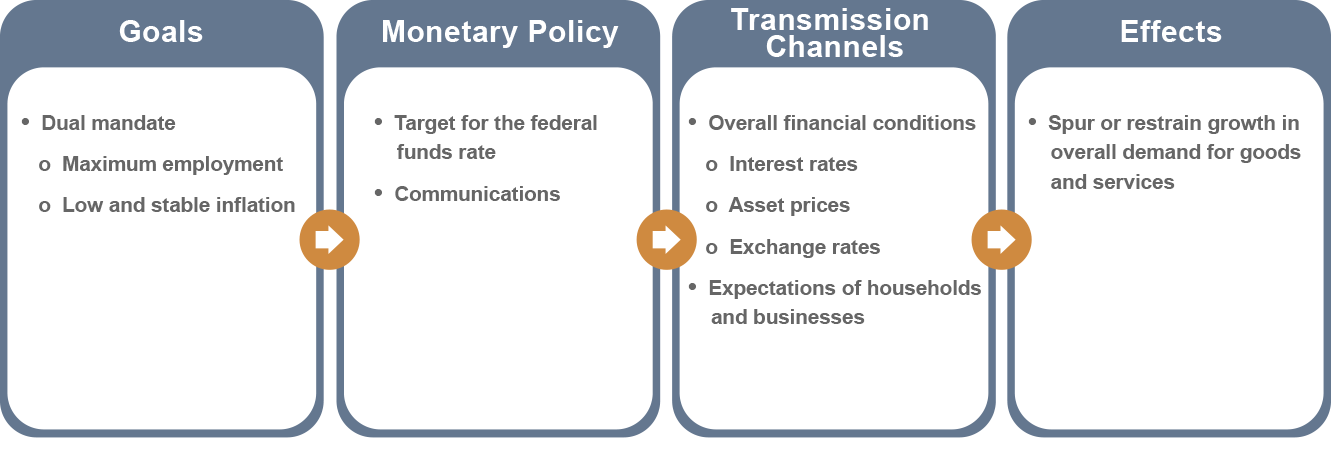
To understand the gravity of the Atlanta Fed’s findings, one must examine the anatomy of monetary policy transmission. Central banks do not directly set mortgage rates, corporate bond yields, or private credit spreads. Instead, they adjust short-term policy benchmarks, expecting those changes to ripple through the banking sector, alter asset prices, influence household wealth, and ultimately modulate aggregate demand.
However, the modern financial ecosystem has evolved far beyond traditional commercial banking channels. The rise of private credit funds, decentralized capital markets, sophisticated non-bank financial intermediaries (NBFIs), and globalized corporate treasuries has re-engineered how liquidity flows. When central banks implement restrictive policy stances to combat inflationary pressures, these non-traditional channels frequently absorb, deflect, or amplify the shocks.
The Atlanta Fed’s newly constructed monetary policy index cuts through this complexity by mapping multi-asset price responses, yield curve slopes, credit default swap (CDS) spreads, and equity market valuations into a unified metric. The core revelation of the August 2026 update is startling: financial conditions have periodically decoupled from nominal central bank targets, creating an environment where monetary tightening appears aggressive on paper while market liquidity remains surprisingly abundant beneath the surface.
The Quantitative Breakdown: Constructing the Index
Historically, researchers have relied on disparate benchmarks—such as the Chicago Fed’s National Financial Conditions Index (NFCI) or Bloomberg’s Financial Conditions Indices—to track market stress and ease. However, these legacy metrics often conflate macroeconomic data releases with pure monetary policy signals. The Atlanta Fed’s methodological breakthrough lies in isolating the specific component of financial conditions directly driven by monetary policy stance adjustments.
By utilizing dynamic factor models and vector autoregression (VAR) frameworks—building upon foundational work established in Atlanta Working Paper 2022-5—the research team successfully isolates the policy-induced component of asset price movements. This distinction is vital for enterprise financial planning. When corporate treasurers evaluate enterprise ROI and capital expenditure hurdles, knowing whether funding costs are driven by temporary market sentiment or persistent monetary stance changes dictates whether to lock in long-term debt or rely on revolving credit facilities.
| Analytical Dimension | Traditional Policy Indicators | Atlanta Fed Macroblog Index | Enterprise Strategic Impact |
|---|---|---|---|
| Primary Focus | Nominal Federal Funds Rate | Multi-Asset Transmission Mechanics | Precise cost-of-capital forecasting |
| Data Granularity | Macro-level rate decisions | Real-time credit, equity, and yield metrics | Enhanced risk mitigation and hedging |
| Lag Horizon | Variable (6 to 18 months estimated) | Dynamic, high-frequency tracking | Agile infrastructure scalability decisions |
| Market Blind Spots | Ignores shadow banking & private credit | Calibrated for non-bank financial intermediaries | Accurate valuation multiples for M&A |
Industry & Market Implications: Winners and Losers
The practical fallout of the Atlanta Fed’s framework extends deep into corporate boardrooms, investment banks, and technology sectors. As market liquidity dynamics shift independently of headline central bank pronouncements, clear divides are emerging between sectors capable of navigating the new transmission reality and those vulnerable to sudden liquidity squeezes.
The Winners: Agile Tech and Resilient Financial Intermediaries
Corporations that have optimized their cloud compute architecture and digital financial infrastructure find themselves uniquely positioned. By leveraging real-time enterprise resource planning (ERP) systems integrated with predictive liquidity analytics, agile firms can adjust pricing models, manage working capital cycles, and secure short-term yields before policy shifts fully manifest in commercial lending rates. Furthermore, elite private equity funds utilizing granular monetary condition indices are successfully timing debt issuances and executing opportunistic buyouts while competitors remain paralyzed by lagging economic indicators.
The Losers: Legacy Capital-Intensive Sectors
Conversely, asset-heavy industries—including commercial real estate, heavy manufacturing, and traditional utilities—face severe headwinds. These sectors rely heavily on long-term project financing where valuation multiples are acutely sensitive to the discount rate. When financial conditions loosen beneath a restrictive headline policy rate, capital-intensive firms often miscalculate their borrowing costs, leading to compressed margins, failed debt refinancing rounds, and forced asset divestitures.
Frequently Asked Questions (People Also Ask)
What is the primary objective of the Atlanta Fed’s monetary policy index?
The index is designed to bridge the analytical gap between official central bank policy rate announcements and real-world financial conditions. By synthesizing asset prices, credit spreads, and yield curve data, it provides economists and market participants with a high-frequency tool to measure how effectively monetary policy is actually transmitting through the broader economy.
How do financial conditions differ from the monetary policy stance?
While the monetary policy stance reflects the intentional policy settings enacted by central bank authorities (such as target interest rates and quantitative tightening measures), financial conditions represent the broader economic environment—including stock market valuations, corporate bond yields, and foreign exchange rates—which are influenced by policy but also driven by private market sentiment, global liquidity, and investor risk appetite.
Why is this research critical for enterprise CFOs and institutional investors?
Traditional metrics often exhibit significant transmission lags, obscuring the true cost and availability of capital. By utilizing advanced frameworks like the Atlanta Fed’s index, financial leaders can improve risk mitigation, optimize balance sheet liquidity, refine enterprise ROI projections, and navigate valuation multiple adjustments with greater precision.
How does non-bank financial intermediation impact monetary transmission?
Non-bank financial intermediaries (such as private credit funds, asset managers, and fintech lenders) operate outside traditional regulatory banking frameworks. Their capacity to originate credit independent of commercial bank lending standards can dilute or alter the intended impact of central bank tightening, making advanced monitoring tools essential for accurate macroeconomic forecasting.
Future Outlook: Milestones to Watch
As the global macroeconomic landscape enters its next cyclical phase, the integration of advanced monetary indices into institutional decision-making will accelerate. Central bankers are increasingly recognizing that blunt interest rate tools require supplementary diagnostic metrics to prevent policy over- or under-steering.
Key milestones for market participants to monitor over the coming quarters include:
- Expansion of Regional Fed Metrics: Watch for potential cross-collaboration between the Atlanta Fed and other Federal Reserve districts to standardize high-frequency financial condition indices across different economic sectors.
- Regulatory Compliance Shifts: Anticipate updates to banking stress-testing guidelines (such as CCAR and DFAST frameworks) that incorporate dynamic monetary transmission models rather than static rate assumptions.
- Corporate Treasury Automation: The rapid adoption of AI-driven liquidity management platforms that ingest real-time monetary policy index data to automate enterprise debt issuance and cash-flow hedging strategies.
Ultimately, the Atlanta Fed’s research serves as a stark reminder: in modern global finance, looking only at the headline interest rate is akin to navigating a supersonic jet by watching the dashboard while ignoring the weather radar. For executives steering major enterprises through volatile economic waters, mastering these underlying financial conditions is no longer optional—it is the ultimate determinant of survival and market dominance.