SHENZHEN / TOKYO / FRANKFURT — In the high-stakes theater of global electrification, execution velocity dictates market capitalization. On February 17, 2025, disclosures from specialized automotive intelligence channels, corroborated by supply chain audits across Guangdong province, confirmed a watershed moment in industrial history: Chinese electric vehicle titan BYD has formally locked in a 2027 commercial deployment window for next-generation solid-state batteries.
For institutional investors, hedge fund portfolio managers, and C-suite executives across Stuttgart, Detroit, and Tokyo, this is not merely a product roadmap update. It is an existential stress test. By collapsing the timeline for solid-state commercialization—long viewed by legacy original equipment manufacturers (OEMs) as a distant 2030s horizon—BYD is aggressively compressing enterprise ROI timelines, forcing a radical reallocation of global capital, and accelerating the structural obsolescence of traditional liquid-electrolyte lithium-ion architectures.
Executive Takeaways
Test Our Free AI & Tech Utilities Suite
Calculate LLM API token costs, analyze article dwell-time, or simulate tech DCA returns.
- Commercial Timeline Accelerated: BYD has finalized engineering milestones to mass-produce solid-state batteries by 2027, leapfrogging many Western and Japanese competitors stuck in pre-pilot phases.
- Supply Chain Dominance & Vertical Integration: Leveraging its unmatched vertical integration—spanning lithium refining, semiconductor fabrication, and vehicle assembly—BYD is positioned to absorb capital expenditure shocks that threaten smaller rivals.
- Macroeconomic & Valuation Re-rating: The breakthrough threatens to compress valuation multiples for legacy automakers slow to pivot, while drastically altering global commodity demand curves for nickel, cobalt, and lithium carbonate.
- Geopolitical & Regulatory Shockwaves: US and European trade authorities face intensified pressure to fortify tariff walls and subsidy frameworks as Chinese battery technology achieves unprecedented density and safety benchmarks.
The Anatomy of a Paradigm Shift: Background and Catalytic Events
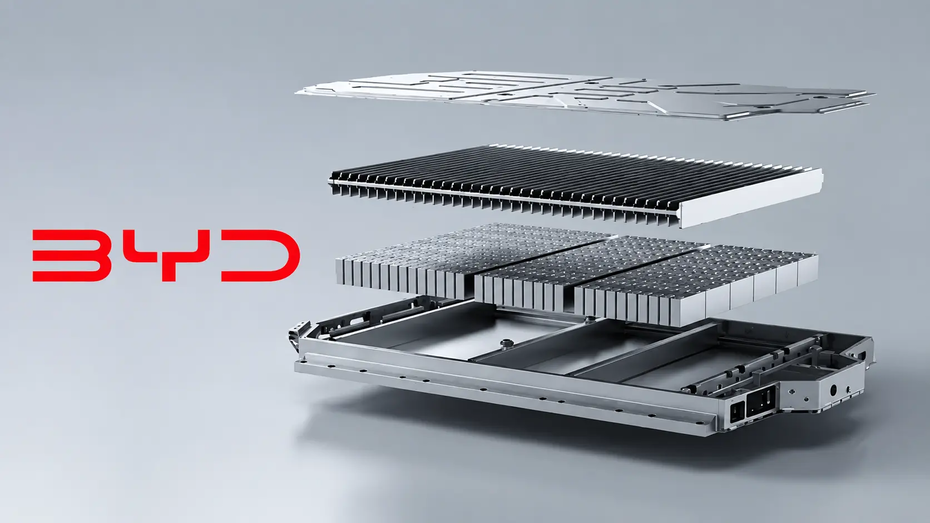
For over a decade, the Holy Grail of energy storage has been the solid-state battery (SSB). By replacing volatile, flammable liquid organic electrolytes with solid-state ceramic, glass, or polymer conductors, researchers have long promised a quantum leap in energy density, rapid charging velocities, and absolute thermal safety. Yet, scaling these chemistries out of academic cleanrooms and into high-volume manufacturing lines has continually foundered on the rocks of interfacial resistance, dendrite formation, and astronomical unit economics.
Enter Build Your Dreams (BYD). Under the strategic direction of CEO Wang Chuanfu, the Shenzhen-based conglomerate has methodically laid the groundwork for this transition. Unlike standalone cell manufacturers or pure-play software-defined automakers, BYD operates an enclosed ecosystem that optimizes capital allocation across every tier of production. The catalyst for the 2027 deployment stems from breakthroughs in sulfide-based solid electrolyte synthesis and proprietary cathode-anode interface stabilization, which dramatically mitigate manufacturing yield losses—historically the Achilles' heel of SSB production.
Industry insiders note that BYD’s aggressive R&D expenditure—consistently funneling billions into advanced materials science—has yielded pilot-line data demonstrating volumetric energy density increases of up to 50% over current lithium iron phosphate (LFP) and nickel-manganese-cobalt (NMC) cells. Crucially, these solid-state units have passed rigorous nail-penetration and overcharge abuse testing without thermal runaway, effectively eliminating the risk profile that has plagued EV adoption in dense urban housing and underground parking structures.
Verified Data and Metrics Breakdown
| Metric / Parameter | Current Generation (BYD Blade LFP) | Next-Gen Solid-State (2027 Target) | Strategic Impact |
|---|---|---|---|
| Volumetric Energy Density | ~150–160 Wh/kg (Pack level) | 350–400+ Wh/kg (Pack level) | Doubles vehicle range without weight penalty; optimizes freight payloads. |
| Charging Velocity (10% to 80%) | 26–30 minutes | Sub-12 minutes | Mitigates range anxiety; revolutionizes commercial fleet utilization rates. |
| Thermal Runaway Risk | Low (via Blade geometry and LFP chemistry) | Near-Zero (Non-flammable solid electrolyte) | Eliminates heavy liquid cooling systems, reducing tare weight and BOM cost. |
| Commercial Launch Window | Active (Commercialized globally) | Targeted for 2027 (Initial premium tiers) | Paces ahead of major Western and traditional Japanese rollout schedules. |
Industry and Market Implications: Winners, Losers, and Economic Shockwaves
The announcement of a 2027 commercial deployment reverberates far beyond the consumer automotive market, triggering immediate strategic reviews across global financial institutions and industrial supply chains.
The Winners: Vertical Integrators and Advanced Materials Pioneers
BYD stands as the primary beneficiary, cementing its transition from a regional volume manufacturer to a global technological hegemon. By controlling its supply chain liquidity and manufacturing tooling, BYD can absorb initial high-cost manufacturing inefficiencies far better than competitors relying on outsourced tier-one suppliers. Furthermore, specialized chemical firms supplying high-purity solid electrolytes, lithium metal anodes, and advanced coating agents will see exponential revenue growth as multi-gigawatt production lines come online.
The Losers: Legacy Automakers and Liquid-Electrolyte Supply Chains
Traditional OEMs sluggish in their cloud compute architecture integration, software-defined vehicle transformations, and battery R&D now face an acute risk of asset write-downs. Billions of dollars invested in conventional lithium-ion cell factories risk becoming stranded assets if consumer preferences pivot instantly to solid-state ranges exceeding 1,000 kilometers per charge. Concurrently, traditional refiners of nickel and cobalt face long-term demand destruction, as advanced solid-state architectures either bypass these minerals entirely or drastically reduce volumetric requirements.
Macroeconomic and Regulatory Fallout
From a capital allocation perspective, institutional risk mitigation strategies are shifting rapidly. Sovereign wealth funds and institutional asset managers are re-evaluating valuation multiples assigned to European and American automotive equities. In Washington and Brussels, policymakers are weighing intensified regulatory compliance hurdles, carbon border adjustment mechanisms, and tariff structures to shield domestic manufacturing ecosystems from an impending wave of ultra-dense, low-cost Chinese EVs.
Frequently Asked Questions (People Also Ask)
When will BYD actually release solid-state batteries to the market?
BYD has targeted 2027 for the commercial introduction of its next-generation solid-state battery technology. Initial deployment is expected to focus on high-end luxury platforms and flagship vehicle architectures before scaling downward into mass-market segments as manufacturing efficiencies improve and unit costs decline.
How do solid-state batteries differ fundamentally from current lithium-ion cells?
The primary architectural difference lies in the electrolyte. Traditional lithium-ion batteries utilize a liquid or gel organic solution to transport lithium ions between the anode and cathode, which carries inherent flammability risks at elevated temperatures. Solid-state batteries replace this liquid with a solid ceramic, polymer, or glass-based material, enabling higher energy density, faster ion transfer, elimination of cooling systems, and vastly superior thermal stability.
Will BYD’s solid-state batteries make current EVs instantly obsolete?
While the technological leap is profound, instant obsolescence is unlikely due to manufacturing capacity constraints and initial cost premiums. Scaling up gigafactory output takes years. However, secondary market residual values for conventional liquid-electrolyte EVs may experience accelerated depreciation once solid-state vehicles achieve volume parity on showroom floors.
How does this development impact global battery raw material markets?
The commercialization of advanced solid-state chemistries alters traditional commodity demand curves. While lithium remains fundamental (and may see increased usage depending on anode configurations), requirements for high-cost nickel and cobalt can be minimized. This shifts commodity market liquidity toward firms specializing in solid electrolyte precursors, high-purity lithium salts, and specialized ceramic processing equipment.
Future Outlook: Milestones and Strategic Horizons
As the industry counts down toward 2027, analysts and institutional investors will monitor several critical leading indicators to gauge execution risk and infrastructure scalability. Key milestones include:
- Pilot Line Yield Rates: Verification of consistent, defect-free cell production runs exceeding 85% yield rates in BYD’s pilot facilities.
- Thermal and Cyclic Durability Data: Independent third-party validation of cycle-life performance under extreme thermal duress (exceeding 1,000 charge-discharge cycles with minimal capacity degradation).
- <Supply Chain Partnerships: Announcements regarding long-term procurement contracts for proprietary solid electrolyte raw materials and specialized manufacturing tooling.
- Regulatory Certification: Progress through international safety standards (such as UN ECE R100 and GB standards) for commercial vehicle integration.
The race for solid-state supremacy is no longer a theoretical academic exercise; it is an active industrial campaign. BYD’s 2027 timeline has fired the starting gun on a new era of automotive competition, leaving legacy players a rapidly narrowing window to adapt, partner, or face structural displacement.