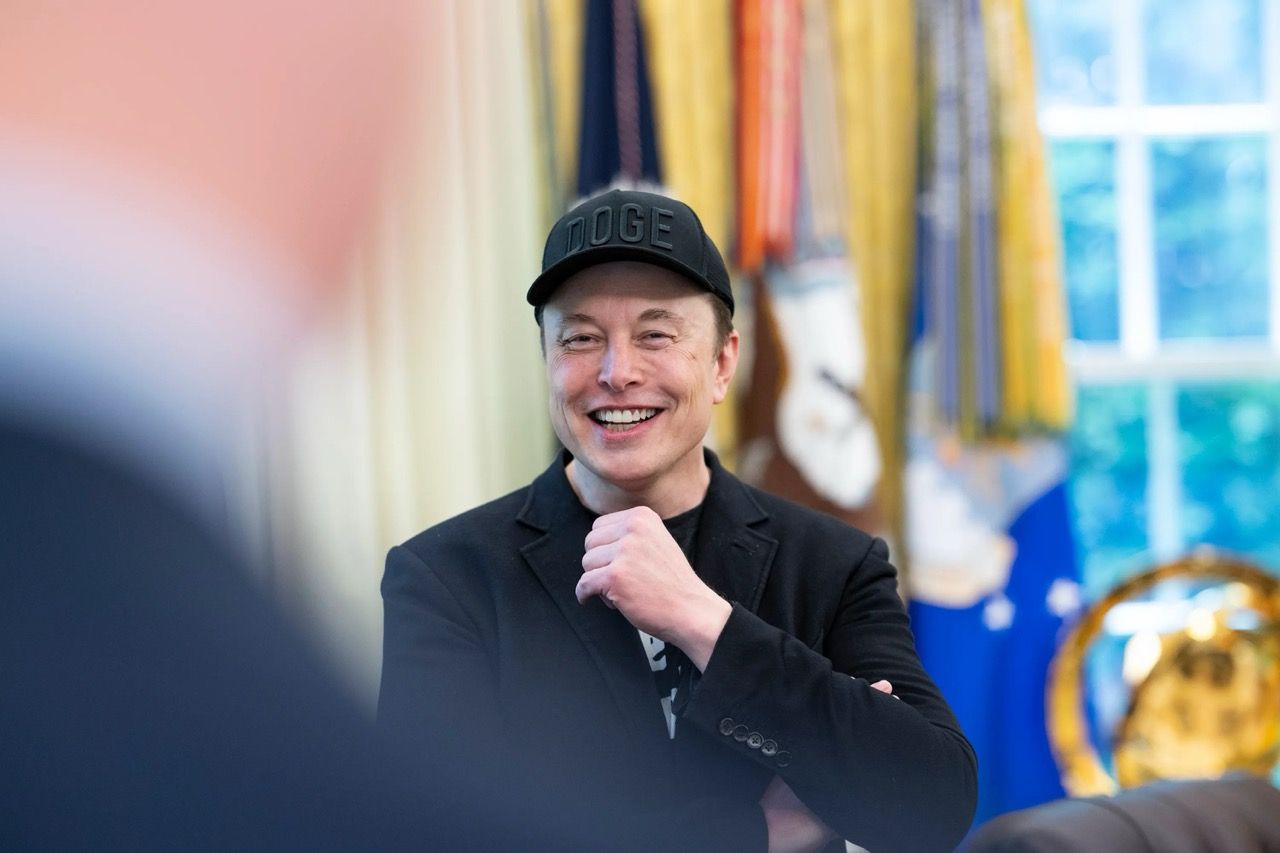
NEW YORK & AUSTIN — In the high-stakes theater of global capital allocation, few utterances carry the market-moving gravity of Elon Musk casually validating a paradigm-shifting corporate maneuver. Speaking before institutional investors and industry analysts, the world’s most scrutinized billionaire recently acknowledged that consolidating his twin corporate pillars—private aerospace titan SpaceX and publicly traded electric vehicle pioneer Tesla—is not merely feasible, but conceptually "a good idea."
For financial markets, this single admission has ignited an immediate recalculation of valuation multiples, infrastructure scalability, and cross-industry synergies. While a formal merger remains a complex undertaking fraught with regulatory compliance hurdles, minority shareholder friction, and staggering governance challenges, the mere contemplation of a unified corporate colossus demands rigorous analysis. At a combined enterprise value eclipsing $1 trillion, a SpaceX-Tesla integration would represent the most audacious corporate convergence in modern industrial history, fundamentally altering the landscape of transportation, artificial intelligence, and aerospace infrastructure.
Executive Takeaways
- Strategic Validation: Elon Musk’s recent public endorsement of a SpaceX-Tesla merger marks a definitive pivot from theoretical speculation to serious long-term corporate architecture.
- Technological Convergence: The merger thesis relies heavily on overlapping core competencies, including advanced battery chemistry, autonomous navigation algorithms, materials science, and high-performance cloud compute architecture.
- Capital Allocation & Liquidity: Combining Tesla’s public market liquidity with SpaceX’s capital-intensive deep-space infrastructure could unlock unprecedented funding mechanisms for interplanetary exploration and terrestrial energy grids.
- Regulatory & Governance Headwinds: Antitrust scrutiny, potential conflicts of interest, and the monumental task of harmonizing a public equity structure with a private aerospace entity present formidable barriers to execution.
The Catalytic Convergence: Why Now?
To understand the sudden momentum behind a potential SpaceX-Tesla merger, one must examine the blurring technological boundaries between the two enterprises. What began as two distinct entities—one manufacturing battery-electric vehicles and energy storage systems, the other building orbital-class reusable rockets and satellite constellations—have increasingly converged into a shared ecosystem of applied engineering.
At the bleeding edge of this convergence is artificial intelligence and real-time data processing. Tesla’s development of Full Self-Driving (FSD) neural networks, proprietary Dojo supercomputing hardware, and custom silicon development share profound DNA with SpaceX’s autonomous guidance systems, orbital telemetry processing, and Starlink’s global low-Earth orbit (LEO) network routing infrastructure. Both companies operate as massive data-collection engines, harvesting billions of miles of real-world operational inputs to train proprietary AI models.
Furthermore, supply chain integration offers compelling enterprise ROI. Both entities rely heavily on advanced metallurgy, proprietary alloys, precision casting, and large-scale energy storage solutions. By consolidating supply chains, a combined entity could achieve massive economies of scale, dramatically reducing component costs for both lithium-ion battery cells and aerospace-grade carbon composites.
Financial Architecture and Valuation Dynamics
Evaluating a transaction of this magnitude requires a forensic look at market liquidity, valuation multiples, and balance sheet mechanics. Tesla trades publicly on the NASDAQ, subject to rigorous quarterly earnings pressures, institutional shareholder activism, and public equity volatility. SpaceX, conversely, operates as a private juggernaut, regularly executing secondary share sales at valuations exceeding $200 billion, fueled largely by institutional venture capital, sovereign wealth funds, and ultra-high-net-worth syndicates.
A merger or reverse triangular consolidation would present a masterclass in financial structuring. Analysts suggest that integrating SpaceX into Tesla’s public umbrella—or creating a newly minted holding company—would inject high-margin aerospace and satellite communications revenue directly into Tesla’s earnings reports, fundamentally shifting Wall Street's perception of Tesla from a traditional automotive manufacturer to a diversified deep-tech conglomerate.
| Metric / Dimension | Tesla, Inc. (TSLA) | SpaceX (Space Exploration Technologies Corp.) | Combined Entity Potential |
|---|---|---|---|
| Corporate Structure | Publicly Traded (NASDAQ) | Privately Held (VC / Institutional) | Publicly Traded Super-Conglomerate |
| Core Revenue Drivers | EV Manufacturing, Energy Storage, Solar | Launch Services, Starlink Satellite Internet | Automotive, Clean Energy, Global Satellite Comm, Aerospace |
| Key Technological Synergy | AI Neural Nets, Autonomous Driving, Battery Tech | Orbital Guidance, Rocket Propulsion, Materials Science | Unified AI Training (Dojo/Optimus), Advanced Compute Architecture |
| Market Positioning | Global EV Leader & Energy Infrastructure | Monopoly in Reusable Launch & LEO Satellites | Dominant Interplanetary Infrastructure Provider |
Industry & Market Implications: Who Wins, Who Loses?
The macroeconomic ramifications of a unified SpaceX-Tesla entity would send shockwaves across multiple global sectors, forcing legacy competitors to reevaluate their strategic positioning.
The Winners: Forward-thinking institutional investors and retail shareholders holding Tesla equity would gain direct exposure to the lucrative, near-monopoly economics of Starlink and commercial space launch services. Additionally, suppliers specializing in high-grade aerospace materials, specialized semiconductors, and advanced robotics would benefit from streamlined, high-volume procurement pipelines.
The Losers: Legacy automotive incumbents (such as Ford, General Motors, Volkswagen, and Toyota) would face an increasingly insurmountable competitor capable of cross-subsidizing automotive R&D with high-margin orbital revenues. Similarly, traditional aerospace contractors (Lockheed Martin, Boeing, Northrop Grumman) and telecommunications giants would find themselves competing against a vertically integrated beast possessing unmatched cost structures and technological agility.
Frequently Asked Questions (People Also Ask)
1. Is an official SpaceX and Tesla merger confirmed to happen?
No. Elon Musk’s recent comments validate the concept as strategically logical from an engineering and operational standpoint, but no formal merger agreement, board resolution, or regulatory filing has been initiated. Any such move would require extensive shareholder votes and regulatory approvals.
2. How would a merger affect current Tesla shareholders?
For Tesla shareholders, a merger would dilute automotive-only focus by introducing SpaceX’s high-risk, capital-intensive space exploration and Starlink operations. However, it would also grant public market investors direct exposure to the booming commercial space and global satellite internet sectors.
3. What are the biggest regulatory hurdles facing a potential consolidation?
The primary obstacles include intense antitrust scrutiny from agencies like the Department of Justice and the Federal Trade Commission, potential conflicts of interest regarding cross-company transactions, and complex governance structures involving federal defense and national security contracts held by SpaceX.
4. What role does artificial intelligence play in connecting the two companies?
AI serves as the primary technological bridge. Tesla’s advancements in real-time computer vision, neural network training (via Dojo), and humanoid robotics (Optimus) share deep architectural synergies with SpaceX’s autonomous flight control systems, orbital docking algorithms, and Starlink’s automated constellation management.
Future Outlook and Key Milestones to Watch
While the prospect of a SpaceX-Tesla merger remains on the horizon rather than the immediate docket, market observers must monitor several critical leading indicators over the next 12 to 24 months. First, watch for any formal restructuring of Elon Musk’s broader corporate umbrella, particularly following ongoing battles over executive compensation packages and governance reforms at Tesla.
Second, pay close attention to the financial trajectory and potential independent public spin-off of Starlink. If SpaceX successfully floats Starlink as a separate publicly traded entity, the path toward a comprehensive reunification with Tesla becomes vastly more complex. Conversely, if capital requirements for Mars colonization and planetary infrastructure scale faster than private markets can absorb, a direct consolidation with Tesla's robust balance sheet may transition from a theoretical "good idea" to an absolute operational necessity.
As the boundaries between terrestrial transportation, clean energy, and space exploration continue to dissolve, Musk’s vision of a vertically integrated technological empire inches closer to reality. For investors, engineers, and regulators alike, navigating this trillion-dollar nexus will define the cutting edge of global enterprise for decades to come.