
Executive Takeaways
- Capital Allocation Shock: Major technology conglomerates have collectively committed over $828 billion to artificial intelligence infrastructure, triggering severe anxiety over diminished near-term enterprise ROI and compressed valuation multiples.
- Market Liquidity Drainage: A sudden wave of risk mitigation by institutional asset managers resulted in a $1 trillion capitalization wipeout across major indices, led by sharp sell-offs in semiconductor, cloud compute architecture, and legacy software equities.
- AIScalability Bottlenecks: Energy grid constraints, silicon shortages, and uncertain monetization paths are forcing Wall Street analysts to question whether the current capital expenditure cycle represents generational innovation or a destructive overbuilding bubble.
NEW YORK — The structural divergence between aggressive corporate ambition and sober financial reality reached a boiling point on Wall Street this week. A staggering $1 trillion was systematically erased from the equity markets as institutional investors abruptly reassessed the financial viability of Big Tech’s unprecedented $828 billion artificial intelligence spending spree. What began as a routine quarterly earnings cycle quickly transformed into a broader crisis of confidence, exposing deep divisions between Silicon Valley’s unyielding pursuit of artificial general intelligence (AGI) and Wall Street’s strict demands for near-term capital efficiency and measurable enterprise ROI.
For nearly two years, mega-cap technology firms have operated under a permissive investment paradigm, convincing shareholders that aggressive capital allocation toward cloud compute architecture, proprietary large language models (LLMs), and advanced GPU clusters was an existential necessity. However, as capital expenditure (CapEx) projections scaled to historic heights, institutional portfolio managers began demanding concrete evidence of monetization. The market’s sudden, violent pivot underscores a growing realization: building the foundational scaffolding for the generative AI revolution is proving vastly more expensive—and its near-term commercial payback period far more elusive—than initial corporate forecasts suggested.
The Anatomy of a $1 Trillion Sell-Off: Catalysts and Market Mechanics
Test Our Free AI & Tech Utilities Suite
Calculate LLM API token costs, analyze article dwell-time, or simulate tech DCA returns.
The roots of this market correction lie in a compounding series of earnings reports and forward-looking guidance statements from the world’s most influential technology enterprises. As hyperscalers outlined their upcoming fiscal roadmaps, cumulative spending commitments aimed at securing advanced silicon, expanding hyper-scale data centers, and locking down specialized energy supply agreements surpassed $828 billion.
Wall Street’s reaction was swift and unforgiving. Quantitative trading desks and fundamental long-only funds simultaneously initiated broad risk-mitigation strategies. The mechanism of the sell-off was accelerated by compressed valuation multiples. For quarters, high-growth technology equities had traded at a steep premium, anchored by assumptions of expanding profit margins and high-return-on-capital investments. When cumulative CapEx figures revealed that billions of dollars were being funneled into depreciating physical assets without a guaranteed, immediate revenue counterpart, forward earnings estimates were forced downward.
Furthermore, the contagion quickly spread beyond the primary hyperscalers. Downstream beneficiaries—including semiconductor foundries, networking hardware manufacturers, and specialized cooling-system providers—experienced sharp intraday corrections. Market liquidity thinned as algorithmic stop-losses were triggered across major exchanges, converting a rational reassessment of risk into a textbook liquidity squeeze.
Infrastructure Scalability and the Cost of Computing Supremacy
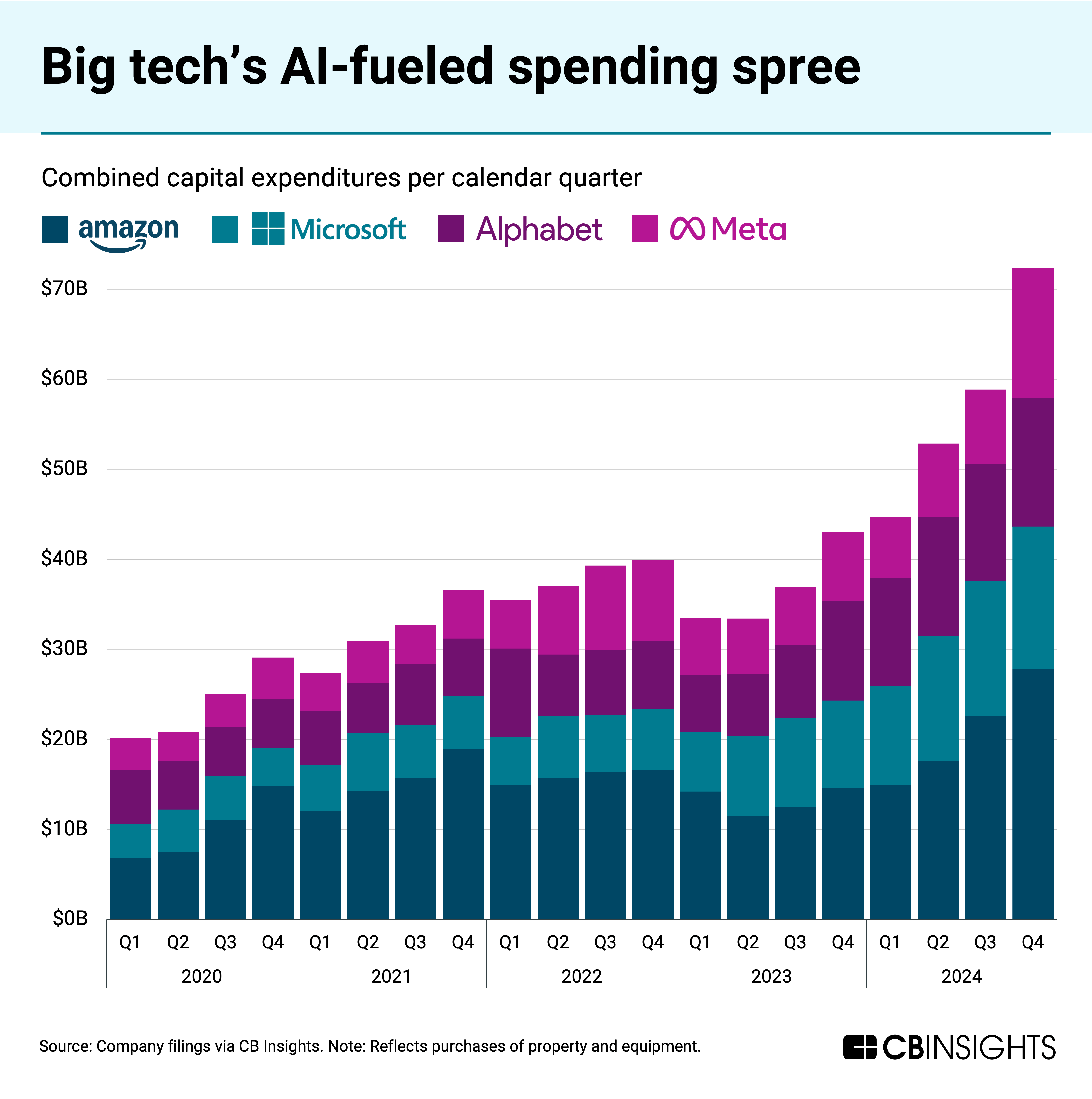
At the heart of Wall Street’s anxiety is the sheer logistical and financial weight of infrastructure scalability. Training and running advanced neural networks demands a complete re-engineering of modern data center architecture. Firms are no longer simply upgrading legacy servers; they are constructing massive, multi-gigawatt computing campuses that require unprecedented electrical capacity and advanced liquid-cooling systems.
This insatiable demand has collided with hard physical limits. The global supply chain for extreme ultraviolet (EUV) lithography machines, high-bandwidth memory (HBM), and specialized networking switches remains constrained. Consequently, the cost of deployment has skyrocketed, compressing the expected internal rate of return (IRR) for these multi-billion-dollar clusters.
Compounding the financial exposure is the rapid rate of technological obsolescence. In a hyper-competitive landscape, hardware purchased today risks becoming economically unviable within 24 to 36 months as next-generation microarchitectures emerge. Financial analysts are increasingly vocal about the depreciation risks sitting on corporate balance sheets, warning that aggressive capital expenditures could morph into heavy asset-impairment charges if enterprise software adoption fails to keep pace.
Verified Data and Financial Metrics Breakdown
To contextualize the scale of capital deployment and the subsequent market reaction, the following comparative breakdown illustrates the financial commitments of key industry participants versus market capitalization shifts.
| Metric Category | Pre-Correction Baseline | Current Status / Shift | Market Implication |
|---|---|---|---|
| Collective AI CapEx | ~$550 Billion (Trailing) | $828 Billion (Committed/Forward) | Intensified pressure on free cash flow and dividend yields. |
| Total Market Cap Erasure | All-Time High Valuations | -$1.03 Trillion (Across Tech Index) | Broad liquidity withdrawal and portfolio rebalancing. |
| Average P/E Multiple Compression | 32.5x Forward Earnings | 26.8x Forward Earnings | Reflects diminished growth expectations and higher risk premiums. |
| Data Center Energy Demand | Baseline Grid Utilization | +45% Projected Surge by 2027 | Forces direct corporate investment in nuclear and renewable power. |
Industry and Market Implications: Winners, Losers, and Economic Ripple Effects
The $1 trillion market correction is not merely a transient trading spasm; it is a fundamental reallocation of capital that will reshape the technology ecosystem for the remainder of the decade. The fallout creates distinct winners and losers across the financial and industrial landscape.
The Losers: High-Burn Startups and Asset-Heavy Hyperscalers
Firms lacking a diversified revenue stream or substantial balance sheet liquidity are bearing the brunt of the correction. Venture capital funding for early-stage generative AI application layers has tightened dramatically. Investors are no longer willing to back firms with high customer-acquisition costs and weak pricing power. Concurrently, hyper-scale cloud providers whose capital expenditure outpaces their immediate operating cash flow are seeing their credit ratings scrutinized and their equity values penalized.
The Winners: Power Generators, Infrastructure Enablers, and Disciplined Value Creators
Conversely, select sectors are capitalizing on the structural shift. Energy producers—particularly nuclear, natural gas, and renewable infrastructure providers capable of supplying dedicated, uninterrupted power to next-generation data centers—have emerged as unexpected prime beneficiaries. Furthermore, semiconductor firms that maintain a diversified customer base and high pricing power continue to hold strong institutional support, provided their forward delivery schedules remain secure.
From a macroeconomic perspective, this correction serves as a necessary disciplining mechanism. By forcing technology conglomerates to scrutinize their capital allocation strategies, the market is filtering out speculative excess and redirecting resources toward projects with genuine, demonstrable enterprise utility.
Frequently Asked Questions (People Also Ask)
Expert Answers to Key Market Inquiries
Why is Wall Street suddenly punishing tech companies for AI spending?
Wall Street's shift from enthusiastic support to aggressive skepticism is driven by the sheer scale of the $828 billion capital expenditure cycle versus the timeline of actual monetization. Institutional investors are concerned that the massive upfront investments in data centers, silicon, and energy will compress corporate profit margins and free cash flow before artificial intelligence products generate equivalent, sustainable enterprise revenues.
How does infrastructure scalability impact the financial ROI of artificial intelligence?
Infrastructure scalability requires building and maintaining massive, power-intensive computing environments under strict physical and supply-chain constraints. Because specialized hardware faces rapid depreciation and high energy costs, the capital outlay required to achieve operational scale is exceptionally high, thereby extending the payback period and lowering the immediate internal rate of return for enterprise buyers.
What role do valuation multiples play in this $1 trillion market correction?
Valuation multiples act as a pricing mechanism for future growth expectations. Prior to the sell-off, technology equities were priced under the assumption of explosive, high-margin revenue expansion. When aggregate CapEx figures forced analysts to downgrade near-term earnings forecasts, those lofty valuation multiples contracted rapidly, triggering algorithmic sell-offs and institutional portfolio rebalancing.
Are we witnessing the collapse of the artificial intelligence boom or a healthy market correction?
Most senior market strategists view the $1 trillion wipeout as a rational, albeit painful, correction rather than a fundamental collapse of the technology itself. It marks the transition from a speculative 'hype cycle' phase to a rigorous 'execution and monetization' phase, separating companies with sound economic models from those relying purely on narrative momentum.
Future Outlook: Milestones and Strategic Imperatives Ahead
As Wall Street digests the implications of the $828 billion capital expenditure cycle, market participants are shifting their focus to critical upcoming milestones. The coming quarters will test whether mega-cap technology firms can successfully translate their massive infrastructure investments into sticky, high-margin enterprise software solutions.
Key indicators to monitor include:
- Enterprise Adoption Metrics: Verifiable data on corporate renewal rates, seat-based pricing retention, and productivity gains derived from deployed AI tools.
- CapEx Discipline and Guidance: Management commentary regarding future spending restraint, with investors favoring firms that demonstrate a willingness to moderate infrastructure growth if revenue realization lags.
- Energy and Regulatory Frameworks: Progress on securing clean, reliable power sources for data centers, alongside evolving regulatory compliance standards governing data privacy, model training transparency, and antitrust oversight.
Ultimately, the current market turbulence demonstrates that even the most transformative technological paradigms are ultimately subject to the laws of financial gravity. Big Tech’s AI ambitions remain vast, but the era of unchecked, unquestioned capital allocation has officially come to an end.