
Executive Takeaways
- Macro Divergence: US GDP and corporate valuation multiples continue to break historical records, yet consumer sentiment indices for households earning under $75,000 mirror recessionary lows.
- Asset-Driven Disparity: The wealth gap is structurally reinforced by real estate equity appreciation and stock market concentration, leaving wage-dependent workers vulnerable to persistent inflation.
- Corporate Capital Allocation: Enterprise leaders prioritize margin protection, infrastructure scalability, and technology automation over broad-based headcount expansion.
- Policy Impasse: Federal Reserve monetary tightening has successfully moderated headline inflation, but the downstream credit squeeze disproportionately penalizes small-to-medium enterprises (SMEs) and lower-income borrowers.
To walk through the glass-clad corridors of Midtown Manhattan or the sprawling corporate campuses of Silicon Valley is to witness an economic miracle. Balance sheets across the Fortune 500 showcase robust liquidity, enterprise ROI metrics are outperforming historical averages, and cloud compute architecture investments are fueling a generative AI boom that commands astronomical valuation multiples. By traditional macroeconomic measurements—gross domestic product growth, corporate earnings per share, and aggregate market capitalization—the American economy is not merely recovering; it is rocketing ahead at a velocity that leaves G7 peers trailing in its wake.
Yet, step outside the financial centers into the Rust Belt townships, rural agricultural counties, or urban working-class corridors, and an entirely different macroeconomic reality presents itself. Here, families grapple with a persistent cost-of-living crisis, depleted pandemic-era savings, and revolving credit card debt carrying punishing double-digit interest rates. This is the central paradox of contemporary American capitalism: a high-velocity economic engine that generates historic wealth for asset owners while systematically leaving wage-dependent workers behind on the platform.
The Anatomy of the Divergence: Capital vs. Labor
Test Our Free AI & Tech Utilities Suite
Calculate LLM API token costs, analyze article dwell-time, or simulate tech DCA returns.
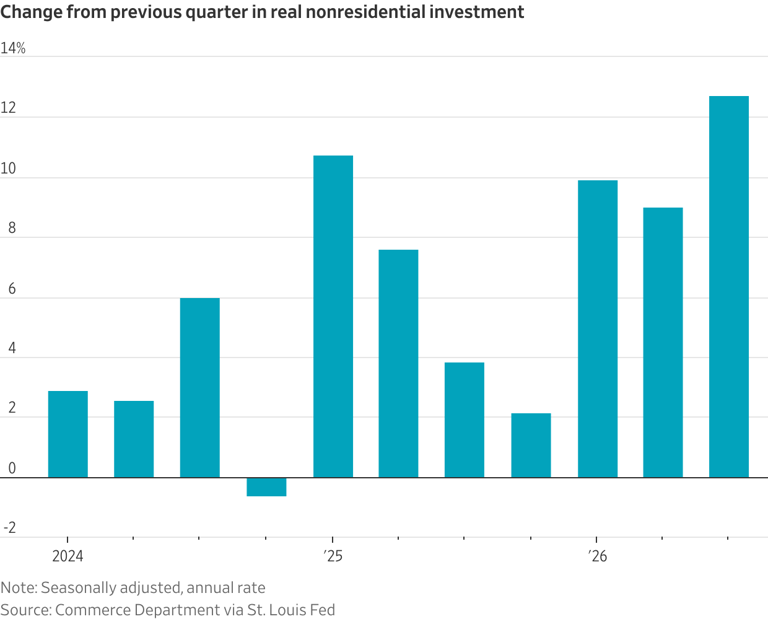
The root cause of this bifurcated economy lies in the structural decoupling of corporate capital allocation from broad-based domestic labor compensation. Over the past three years, as post-pandemic supply chain frictions eased and corporate pricing power reached historic zeniths, executive boards focused intensely on margin preservation and risk mitigation. Rather than broad-based hiring, capital expenditure was systematically channeled into automation, software infrastructure scalability, and supply chain reshoring.
While these strategic maneuvers successfully protected earnings reports and satisfied institutional investors, they widened the chasm between capital holders and wage earners. According to recent labor market analyses, real wages for the bottom quartile of earners have stagnated when adjusted for localized inflation in housing, energy, and food costs. Conversely, executive compensation packages, heavily weighted toward equity grants and stock options, have scaled alongside rising market indices.
This dynamic has created a feedback loop where asset ownership dictates economic resilience. Households holding diversified stock portfolios and appreciating residential real estate have seen their net worth swell, insulating them from the cumulative bite of inflation. Meanwhile, renters and those living paycheck to paycheck absorb the full force of elevated price levels, resulting in a dramatic divergence in consumer sentiment indices across income brackets.
Monetary Policy, Credit Squeezes, and Main Street Fallout
The Federal Reserve’s aggressive monetary tightening cycle—designed to cool an overheated labor market and anchor inflationary expectations—has acted as a blunt instrument with uneven regional and demographic side effects. While large enterprises locked in low-cost debt during the zero-interest-rate policy (ZIRP) era, smaller enterprises face severe credit constraints.
Commercial real estate refinancing walls, higher borrowing costs for inventory, and tightening bank lending standards have disproportionately impacted small-to-medium enterprises (SMEs). These local businesses form the backbone of employment in mid-tier American cities. As regional banks pull back on commercial lending to shore up regulatory compliance and risk management metrics, Main Street capital liquidity dries up, forcing defensive layoffs and curbing local wage growth.
| Economic Indicator | Top Quintile Households (Top 20%) | Bottom Quintile Households (Bottom 20%) | Macroeconomic Trend / Implication |
|---|---|---|---|
| Net Worth Growth (2019–Present) | +34.2% (Driven by equities & real estate) | +4.8% (Primarily liquid cash/depleted savings) | Widening generational and structural wealth gap. |
| Revolving Debt Delinquency Rates | 1.2% (Historically low, high credit scores) | 8.4% (Elevated credit card & auto loan stress) | Consumer credit health is deeply bifurcated. |
| Primary Source of Income Growth | Dividend yields, capital gains, executive bonuses | Hourly wages in service and retail sectors | Asset-heavy households outpace wage earners. |
| Housing Affordability Index | Comfortable (Low mortgage-to-income ratios) | Severely Burdened (>40% of income on rent) | Shelter inflation acts as a regressive tax. |
Industry Winners and Losers in the Two-Track Economy
The structural transformation of the American economy has clear victors and vanquished across industry verticals:
- The Winners: Enterprise technology providers, cloud computing hyperscalers, defense contractors, and financial institutions specializing in wealth management and private credit. These entities command robust pricing power, attract premium talent, and benefit from structural trends like artificial intelligence adoption and automation.
- The Losers: Traditional brick-and-mortar retail, hospitality operators exposed to low-end consumer discretionary spending, regional community banks with high commercial real estate exposure, and wage-dependent households in non-tech hubs. These sectors face margin compression, rising labor strife, and diminished consumer purchasing power.
Frequently Asked Questions (People Also Ask)
Why is GDP growing if so many Americans report feeling financially insecure?
Gross Domestic Product measures total economic output, heavily weighted by corporate profits, high-tech capital expenditures, and government spending. It does not measure the distribution of wealth. An economy can post robust GDP figures driven by high-margin technology sectors and asset appreciation while the median household experiences stagnant purchasing power due to high housing and grocery costs.
How does inflation disproportionately impact lower-income households?
Inflation is inherently regressive. Lower-income households spend a significantly higher percentage of their disposable income on inelastic goods—specifically shelter, food, and energy. When the prices of these essentials outpace wage growth, these households must deplete savings or take on high-interest debt, destroying their long-term financial resilience.
Are small businesses experiencing the same growth as large corporations?
No. Large corporations possess strong balance sheets, locked-in low-interest debt, and diverse revenue streams that insulate them from macroeconomic volatility. Conversely, small-to-medium enterprises rely heavily on regional bank credit and local consumer spending, both of which have faced acute pressure from high interest rates and cautious consumer behavior.
What role does the housing market play in the economic divide?
The housing market is the primary engine of middle-class wealth creation in America. Homeowners who locked in 3% mortgage rates prior to 2022 enjoy stable housing costs and substantial equity gains. Meanwhile, prospective first-time buyers and renters face record home prices and elevated mortgage rates, locking them out of generational wealth accumulation.
Future Outlook and Strategic Milestones to Watch
As the American economy navigates the remainder of the decade, policymakers and market participants must monitor critical inflection points that will determine whether this two-track divergence hardens into a permanent fixture or moderates through structural reform.
Key milestones include the trajectory of Federal Reserve rate cuts, the velocity of regional bank commercial real estate workouts, and the potential adoption of targeted fiscal policies aimed at housing supply and workforce reskilling. For corporate leaders and investors, risk mitigation strategies must account for consumer bifurcation—balancing high-end luxury and enterprise technology exposure with value-oriented consumer realities.
Ultimately, the long-term sustainability of American economic exceptionalism depends not solely on the height of its stock market indices, but on the breadth of its economic participation. Until the growth engine successfully pulls Main Street along with Wall Street, the paradox of booming growth amid widespread financial anxiety will remain the defining narrative of the modern US economy.