Executive Takeaways
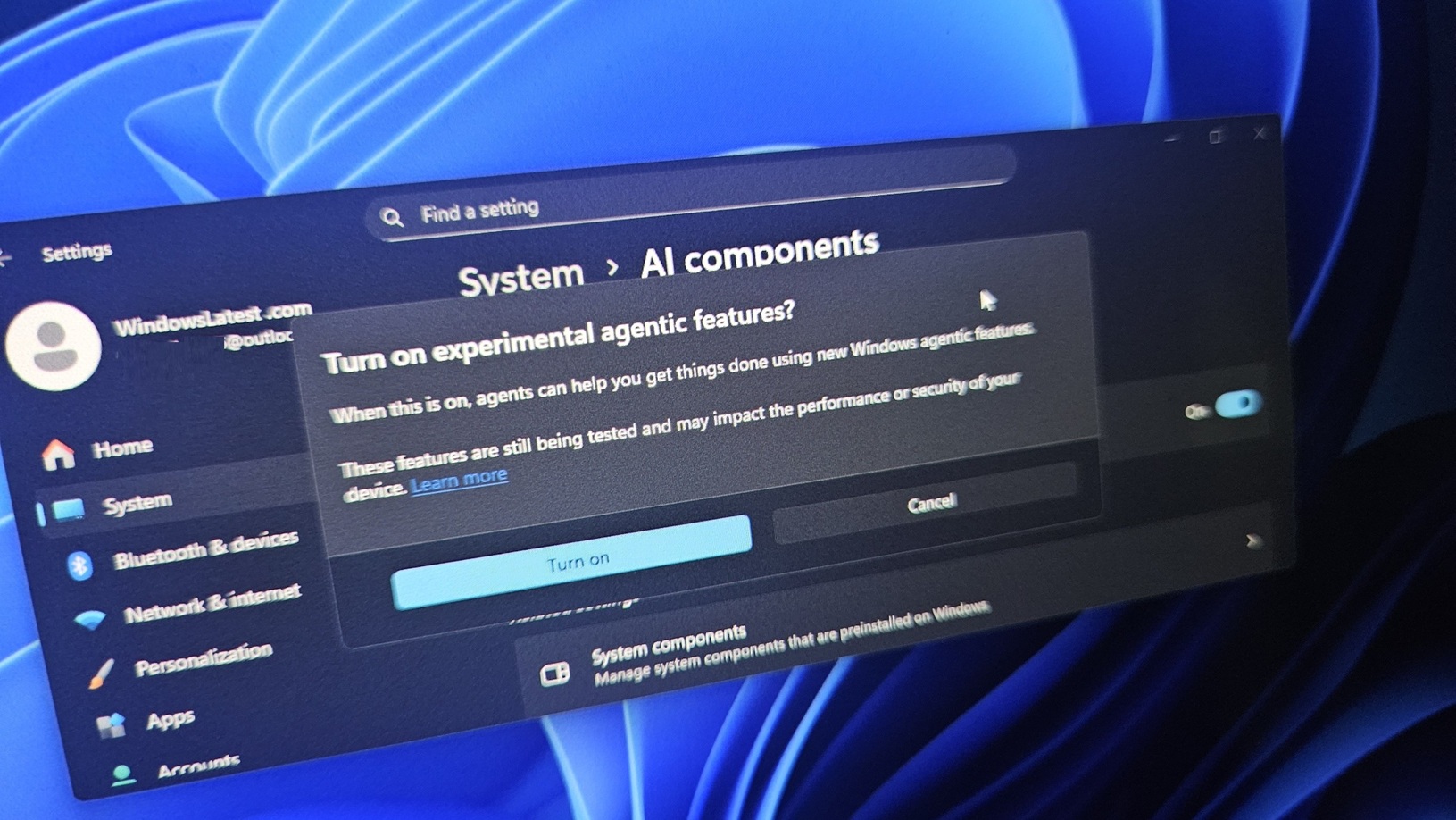
- The Breakthrough: Microsoft claims an internal Windows 11 feature was constructed almost entirely via generative AI code-generation pipelines, requiring only sporadic human intervention during off-hours.
- The Economics: The development cycle challenges traditional enterprise software valuation multiples, promising lower infrastructure scalability costs and accelerated time-to-market metrics.
- The Risk Factor: Despite bypassing traditional "AI slop" pitfalls, the experiment highlights severe corporate governance issues regarding technical debt, IP provenance, and long-term risk mitigation.
- The Industry Pivot: CIOs and CTOs are recalibrating capital allocation strategies, moving from manual developer headcount scaling toward fully automated, agentic code synthesis.
SAN FRANCISCO & REDMOND — In the high-stakes corridors of enterprise software development, a quiet revolution has crossed from speculative corporate PR into audited reality. Microsoft’s recent revelation that a core Windows 11 feature was architected primarily by artificial intelligence—with a human engineer supposedly reviewing and refining the codebase merely "in their spare time"—has triggered an intense debate across Wall Street and Silicon Valley. For years, skeptics have dismissed AI-generated code as "slop": bloated, insecure, non-performant boilerplate text requiring extensive refactoring. Yet, Redmond’s latest admission suggests that frontier models have crossed a critical technical threshold, forcing institutional investors and engineering leaders to re-evaluate infrastructure scalability, capital allocation, and developer headcount valuations.
This development arrives at a delicate moment for the technology sector. As venture capital and enterprise budgets face tightening constraints, corporate boards are aggressively demanding concrete enterprise ROI from billions of dollars in cumulative artificial intelligence capital expenditures. If generative models can autonomously assemble production-grade operating system components while demanding only fractional human supervision, the fundamental economics of software engineering face their most disruptive paradigm shift since the invention of the compiler.
The Anatomy of the Breakthrough: Beyond Boilerplate
Test Our Free AI & Tech Utilities Suite
Calculate LLM API token costs, analyze article dwell-time, or simulate tech DCA returns.
To understand the gravity of Microsoft’s disclosure, one must examine the traditional lifecycle of operating system development. For decades, building features for an ecosystem as sprawling and fragile as Windows 11 required thousands of man-hours spent navigating legacy Win32 APIs, modern Fluent Design frameworks, security sandbox protocols, and rigorous kernel-mode compliance checks. Technical debt accumulated over decades meant that even minor user-interface enhancements could trigger cascading regressions.
According to internal engineering disclosures, the AI-constructed Windows 11 feature bypassed many of these traditional bottlenecks. Instead of relying on human squads writing line-by-line syntax, advanced LLM agents—acting as autonomous coding loops—handled system architecture design, functional logic implementation, and automated test-suite generation. The human oversight role was demoted from active authoring to passive curation, functioning essentially as an architectural auditor during off-hours.
Industry analysts point out that this milestone redefines the boundary between deterministic programming and probabilistic generation. By leveraging specialized code-generation models fine-tuned on Microsoft’s proprietary repositories, the system successfully managed complex state-management logic without succumbing to the hallucinations or syntax errors that plagued earlier iterations of AI coding assistants. This execution has electrified proponents of cloud compute architecture, who argue that automated software synthesis will soon decouple feature velocity from human labor constraints.
Financial and Market Implications: Valuation Multiples and Capital Allocation

The macroeconomic ramifications of this shift extend far beyond operating system design. Software-as-a-Service (SaaS) business models have historically been valued on gross margins and engineering efficiency ratios. If software development costs plummet due to autonomous code generation, market liquidity and valuation multiples across the technology sector will experience a violent reallocation.
| Development Paradigm | Average Time-to-Market | Human Headcount Requirement | Primary Cost Driver |
|---|---|---|---|
| Legacy Manual Engineering | 6 to 18 Months | High (Full Scrum Teams) | Developer Salaries & Benefits |
| Assisted AI Coding (2023–2024) | 3 to 6 Months | Moderate (Continuous Refactoring) | Tool Subscriptions & Compute |
| Autonomous Synthesis (Current) | Weeks to Days | Minimal (Auditing / "Spare Time") | Inference Compute & Cloud Infra |
For corporate treasurers and Chief Financial Officers, the implications are profound. Capital expenditure is shifting rapidly from human capital budgets to specialized GPU clusters and inference APIs. Organizations that successfully master agentic software engineering stand to compress product lifecycles dramatically, undercutting legacy competitors who remain tethered to traditional hiring and scaling models.
Conversely, enterprise risk officers urge caution. Relying on AI-generated architectures without rigorous, full-time human oversight introduces profound compliance vulnerabilities. Intellectual property provenance, latent security exploits, and unpredictable edge-case failures present massive regulatory compliance hurdles. In highly regulated sectors such as financial services, healthcare, and defense, unvetted AI code could invite catastrophic liabilities, erasing short-term cost savings through subsequent regulatory fines and remediation expenditures.
Frequently Asked Questions (People Also Ask)
What specific Windows 11 feature was built using AI?
While Microsoft has kept certain proprietary implementation details confidential to protect its competitive edge, the feature in question involves integrated user-interface subsystems designed to streamline modern desktop navigation and telemetry processing within the Windows environment.
Does "AI-built" mean zero human intervention occurred?
No. Microsoft's disclosures emphasize that a human engineer performed oversight, code review, and fine-tuning—though notably describing the required effort as taking place in their "spare time." This implies that the model handled the heavy lifting of raw code synthesis, while human participation was restricted to high-level validation and edge-case correction.
How does this impact enterprise software development budgets?
This milestone signals a structural shift in enterprise resource allocation. Companies are expected to reallocate budgets away from large, specialized engineering workforces toward high-performance inference infrastructure, cloud compute architecture, and automated testing pipelines.
What are the primary risks associated with fully autonomous code generation?
Key risks include the introduction of subtle, hard-to-detect security vulnerabilities, opaque intellectual property provenance that could trigger copyright litigation, and the long-term accumulation of complex technical debt that automated systems may struggle to diagnose or refactor independently.
Future Outlook: Milestones to Watch
As the industry digests Microsoft’s high-profile experiment, attention turns toward the broader ecosystem and upcoming technology milestones. Over the next twelve to twenty-four months, market observers will monitor several critical indicators to determine whether this event represents a permanent industry-wide transformation or an isolated proof-of-concept:
- Regulatory and IP Litigation: Watch for copyright challenges from open-source maintainers whose repositories were used to train the underlying coding models. Legal clarity on IP provenance will dictate corporate adoption rates.
- Enterprise Security Audits: Independent security evaluations of AI-synthesized operating system features will reveal whether autonomous pipelines maintain parity with human-vetted code in resisting zero-day exploits.
- Developer Workforce Restructuring: Track enterprise headcount trends among major tech firms. A sustained decoupling of revenue growth from engineering headcount expansion will validate the economic thesis of agentic software engineering.
- Next-Generation Model Capabilities: The release of specialized reasoning models featuring native, closed-loop debugging environments will test whether human oversight can be reduced even further—moving from "spare time" auditing to entirely hands-off deployment.
Ultimately, Microsoft’s demonstration has forced a reckoning across global markets. The era of dismissing generative AI output as mere "slop" is drawing to a close, replaced by a complex, high-stakes operational reality where human engineers act less as builders and more as overseers of an automated digital domain.