Executive Takeaways
- Record-Breaking Top Line: Nvidia reported an unprecedented Q4 revenue of US$39.3bn for the period ended January 26, cementing its status as the definitive backbone of global enterprise AI infrastructure.
- The Blackwell Inflection Point: The explosive commercial deployment of the Blackwell architecture completely invalidated bearish theses regarding enterprise ROI deceleration and compute bottlenecks.
- Capital Allocation & Margin Resilience: Despite unprecedented supply chain complexities and fabrication costs at advanced nodes, gross margins remain extraordinarily robust, signaling unmatched pricing power.
- Macroeconomic Repercussions: The earnings beat reverberates across global markets, forcing institutional asset managers to recalibrate valuation multiples, cloud compute architecture investments, and tech sector market liquidity.
NEW YORK & LONDON — In the high-stakes theater of global enterprise technology, few moments match the sheer gravity of an Nvidia earnings release. When Chief Executive Officer Jensen Huang and his executive team unveiled the financial results for the fourth quarter ended January 26, they did not merely beat consensus estimates; they obliterated the historical ceilings of corporate financial performance. Posting a staggering US$39.3bn in quarterly revenue, Nvidia has provided definitive empirical proof that the artificial intelligence infrastructure super-cycle is not cooling, but accelerating into an entirely new phase of industrial adoption.
This investigative report breaks down the anatomy of Nvidia’s historic quarter, examining the catalysts behind the Blackwell architecture ramp, the ripple effects across cloud compute architecture, and the broader economic implications for global markets, enterprise capital allocation, and regulatory compliance.
The Genesis of a Super-Cycle: Background and Catalytic Events
Test Our Free AI & Tech Utilities Suite
Calculate LLM API token costs, analyze article dwell-time, or simulate tech DCA returns.
To understand the profound significance of the US$39.3bn Q4 print, one must examine the perilous narrative that dominated Wall Street boardrooms throughout late 2024. Skeptics, short-sellers, and cautious institutional asset managers routinely questioned whether enterprise ROI on generative AI could sustain the blistering capital expenditure (capex) trajectory established by hyperscalers like Microsoft, Alphabet, Meta, and Amazon Web Services (AWS).
Doubts surrounding thermal management issues, advanced packaging constraints via TSMC, and the sheer logistical complexity of deploying next-generation liquid-cooled server racks created palpable risk mitigation anxiety across the technology sector. Bears argued that a transitional lull was inevitable as customers paused orders of the legacy Hopper architecture while waiting for Blackwell systems to clear manufacturing validation.
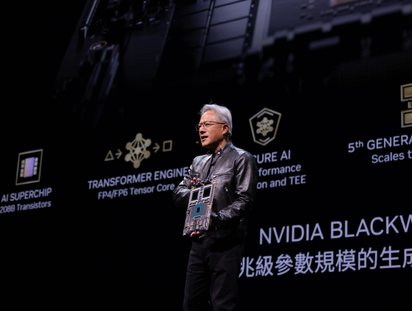
Nvidia’s latest earnings report comprehensively dismantles that thesis. Rather than encountering a demand vacuum, the market experienced a synchronized surge driven by enterprise clients realizing that inference and training workloads at scale demand nothing short of Blackwell-class performance. The architecture—engineered from the silicon up to solve trillion-parameter model bottlenecks—transitioned from a promising blueprint to the most successful product launch in the history of enterprise computing.
Deconstructing the Numbers: Financial Performance & Operational Metrics

A closer inspection of the financial disclosures reveals an operational machine operating at peak efficiency. The US$39.3bn quarterly figure represents not just an incremental climb from previous quarters, but a structural decoupling from traditional semiconductor cyclicality. The Datacenter segment remains the indisputable engine room of this growth, propelled by relentless hyper-scaler demand and an expanding tier of sovereign AI initiatives.
| Metric / Indicator | Q4 FY25 (Ended Jan 26) | Sequential / YoY Trajectory | Strategic Implication |
|---|---|---|---|
| Quarterly Revenue | US$39.3bn | Substantial double-digit YoY expansion | Validates sustained high-growth enterprise demand curve. |
| Primary Growth Driver | Blackwell Architecture & Ecosystem | Rapid commercial scaling phase | Proves seamless manufacturing yield and customer integration. |
| Gross Margin Profile | Industry-Leading Highs | Resilient despite node ramp costs | Demonstrates absolute pricing power and technological moat. |
| Infrastructure Focus | Full-Stack AI (Compute + Networking) | Deepening ecosystem lock-in | Hardware and CUDA software integration deters commoditization. |
The resilience of Nvidia’s gross margins is particularly noteworthy to financial analysts. While historical semiconductor paradigms dictate that introducing complex, bleeding-edge architectures like Blackwell inevitably compresses margins during initial yield optimization phases, Nvidia’s proprietary software ecosystem (CUDA) and holistic system design (combining GPUs, CPUs, and NVLink networking switches) insulate the company from pure commodity pricing pressures.
Industry & Market Implications: Winners, Losers, and Systemic Risk
The reverberations of a US$39.3bn quarter extend far beyond Nvidia’s balance sheet, triggering profound shifts across global financial and industrial ecosystems:
- The Hyperscale Winners: Cloud providers—including Microsoft Azure, Amazon AWS, Google Cloud, and Oracle Cloud Infrastructure—who secured early allocations of Blackwell-based systems gain a decisive competitive advantage in offering low-latency, high-throughput foundation model training to enterprise customers.
- The Legacy Competitors Under Pressure: Traditional CPU-centric hardware vendors and alternative accelerator developers face mounting strategic displacement. The market has definitively signaled that enterprise capital allocation favors accelerated computing ecosystems over traditional server refreshes.
- Supply Chain Stakeholders: Foundries like TSMC, advanced packaging specialists, and liquid-cooling infrastructure providers find themselves locked into a virtuous cycle of high-volume, high-margin production, though managing component bottlenecks remains a vital operational priority.
- Geopolitical and Regulatory Headwinds: As Nvidia deepens its footprint across global markets, export controls, trade compliance frameworks, and cross-border regulatory scrutiny remain significant risk factors that executive leadership must continually navigate.
Frequently Asked Questions (People Also Ask)
Frequently Asked Questions
A: The primary catalyst was the aggressive, commercial-scale deployment of Nvidia’s new Blackwell architecture, paired with sustained, high-volume demand for accelerated computing infrastructure from major cloud service providers and global enterprise clients.
A: Blackwell delivers exponential leaps in training and inference performance while dramatically reducing total cost of ownership (TCO) and energy consumption per token. This efficiency directly addresses enterprise concerns regarding return on investment for large-scale AI deployments.
A: Key risks include global supply chain dependencies (particularly advanced packaging and fabrication bottlenecks), evolving geopolitical trade restrictions and regulatory compliance mandates, and the potential for macroeconomic cyclicality affecting hyperscaler capital expenditure budgets.
A: While headline valuation multiples remain elevated compared to traditional industrial stocks, institutional asset managers increasingly view Nvidia's earnings consistency, unmatched pricing power, and monopolistic software moat as justification for premium market valuation.
Future Outlook: Strategic Milestones and What Comes Next
As Nvidia looks past the record-breaking close of fiscal year 2025, the strategic horizon is defined by the global scaling of the Blackwell platform and the preliminary groundwork for subsequent generation architectures. Executive leadership faces the enviable challenge of managing supply constraints while simultaneously expanding enterprise software monetization through enterprise AI subscriptions and industrial automation frameworks.
For institutional investors, corporate strategists, and technology leaders, the imperative moving forward is clear. The conversation has shifted permanently away from whether artificial intelligence is a passing technological fad. Instead, market participants must now operate within an economic reality where Nvidia’s hardware and software stack dictates the pace of global digital transformation. As infrastructure scalability requirements expand across healthcare, finance, manufacturing, and sovereign states, Nvidia’s ability to execute on its product roadmap will remain the ultimate barometer for the modern technology economy.