By Our Senior Bureau Chief & Chief Investigative Editor
The Supply Chain Trap: Why Third-Party Vendors Are the C-Suite’s Most Dangerous Blind Spot
In the modern corporate landscape, the perimeter of the enterprise no longer stops at the firewall. Driven by the relentless pursuit of operational efficiency, cost optimization, and infrastructure scalability, modern corporations have outsourced vast swaths of their digital operations—from payroll processing and customer relationship management to cloud compute architecture and software development. But this hyper-connected ecosystem has birthed a systemic vulnerability: the third-party supplier.
Recent intelligence from industry leaders, including warnings highlighted by Armata Cyber Security, underscores a critical reality that boards of directors are struggling to price into their risk models. Hackers no longer need to breach a Fortune 500 titan’s fortress directly; they simply need to compromise a small, unassuming software vendor, payroll provider, or HVAC contractor downstream. As digital supply chains expand, third-party risk has evolved from a routine IT compliance checkbox into a direct threat to enterprise valuation multiples, regulatory compliance, and market liquidity.
Executive Takeaways
- The Perimeter Illusion: Direct enterprise defenses are increasingly robust, prompting cybercriminal syndicates to pivot toward vulnerable third-party vendors as soft-target entry points.
- Capital Allocation Shift: C-suites are being forced to reallocate significant budget toward continuous vendor risk monitoring, shifting from reactive security postures to proactive supply chain auditing.
- Regulatory Pressures Mount: Global regulators, including the SEC and EU authorities, are tightening accountability, holding executives personally and financially liable for downstream third-party breaches.
- The Valuation Penalty: A catastrophic third-party breach no longer just damages reputation; it directly erodes enterprise ROI, compresses valuation multiples, and triggers sudden capital flight.
The Anatomy of the Modern Supply Chain Attack
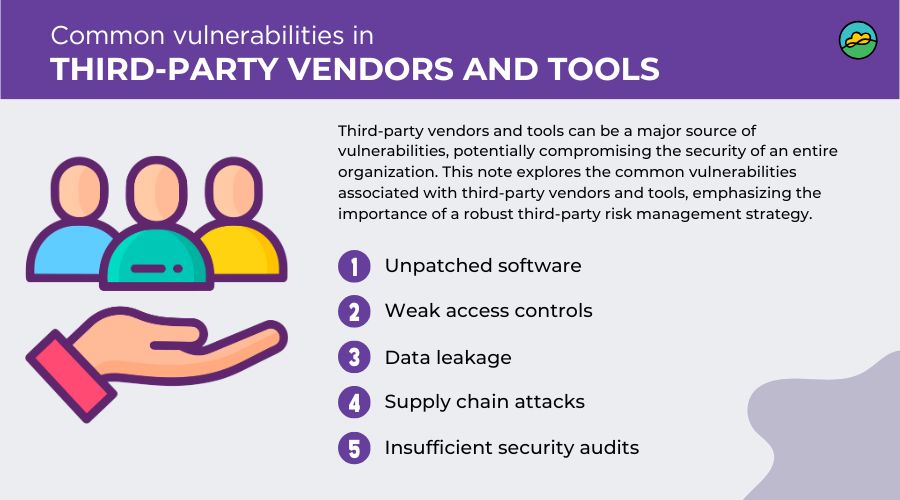
For decades, enterprise risk mitigation focused inward. Chief Information Security Officers (CISOs) built elaborate castles featuring advanced endpoint detection, zero-trust network access, and rigorous identity management. However, this inward-facing strategy ignored a fundamental economic truth of the 21st century: the modern enterprise is a heavily integrated mosaic of external dependencies.
Consider the typical Fortune 1000 corporation. It relies on upward of thousands of active vendors. Each vendor possesses varying degrees of network connectivity, API access, and employee credential hygiene. When a threat actor targets an enterprise, they conduct exhaustive reconnaissance to map out the weakest link in this digital ecosystem. A minor marketing analytics firm, a third-party logistics provider, or an outsourced helpdesk vendor suddenly becomes the Trojan horse.
Recent disclosures and analytical frameworks, such as those emphasized by Armata Cyber Security, reveal that traditional point-in-time vendor risk assessments are entirely obsolete. A supplier might have maintained pristine security credentials during their annual audit twelve months ago, but a single unpatched vulnerability, a compromised employee credential, or a malicious insider update can compromise their environment overnight. Because these vendors often possess authorized, high-privilege access to core enterprise networks, threat actors can bypass traditional perimeter security entirely, moving laterally through corporate systems undetected for weeks or months.
Financial and Operational Implications: The True Cost of Downstream Failure
The financial fallout of a third-party breach extends far beyond immediate ransom payments or forensic investigation fees. In the current economic climate, institutional investors and credit rating agencies are evaluating cybersecurity hygiene as a core component of corporate governance. When a supply chain breach disrupts operations, the resulting market reaction is swift and punishing.
Enterprise ROI takes an immediate hit as business operations stall, proprietary data is exfiltrated, and customer trust evaporates. Furthermore, public companies face severe regulatory scrutiny. Under modern disclosure rules enforced by bodies like the Securities and Exchange Commission (SEC), material cybersecurity incidents—including those originating from third-party vendors—must be disclosed rapidly. The resulting stock price volatility can wipe out billions of dollars in market capitalization within hours of public disclosure.
Insurance markets are reacting in lockstep. Cyber insurance premiums have skyrocketed, and underwriters are increasingly inserting exclusions for systemic supply chain attacks or demanding rigorous proof of continuous third-party monitoring before issuing policies. For CFOs and treasurers, this translates directly to higher cost of capital and tighter liquidity constraints as risk management budgets expand to cover blind spots.
Verified Data & Metrics: The Third-Party Risk Landscape
| Metric Category | Industry Average / Statistic | Strategic Enterprise Impact |
|---|---|---|
| Proportion of Breaches Originating via Vendors | Approx. 50% to 60% of modern enterprise compromises | Shifts focus from internal security hardening to external ecosystem visibility. |
| Average Remediation Time (Third-Party vs Direct) | 30% longer resolution cycles for supply-chain incidents | Increases operational downtime, data loss severity, and ultimate financial remediation costs. |
| Regulatory Fine Exposure (EU DORA / SEC) | Up to 2% to 4% of global annual turnover for non-compliance | Directly impacts net income and forces board-level accountability for vendor oversight. |
| Cost of Point-in-Time Audits vs Continuous Monitoring | Annual audits miss 85% of dynamic operational changes | Mandates a shift toward automated, real-time threat intelligence feeds. |
Frequently Asked Questions (People Also Ask)
1. Why are third-party suppliers becoming the primary target for cybercriminals?
Cybercriminals follow the path of least resistance. As large enterprises invest heavily in hardening their direct networks, endpoint detection, and firewalls, third-party suppliers—such as small software vendors, consultants, and service providers—frequently maintain lower security budgets and less sophisticated defenses. Compromising a single supplier often grants malicious actors backdoor access to dozens of large enterprise clients simultaneously, maximizing their return on investment.
2. How can enterprises transition from annual vendor audits to effective continuous monitoring?
Moving beyond static annual questionnaires requires implementing automated vendor risk management (VRM) platforms. These tools continuously scan external-facing vendor assets for open ports, unpatched vulnerabilities, leaked credentials, and suspicious network traffic. Integrating these feeds directly into the enterprise security operations center (SOC) allows security teams to flag anomalies in real-time rather than discovering a breach months after the fact.
3. What are the regulatory consequences for executives failing to manage third-party cyber risk?
Global regulatory bodies are increasingly holding C-suites and boards personally and professionally accountable for systemic cyber negligence. Frameworks like the European Union’s Digital Operational Resilience Act (DORA) and updated SEC guidelines impose strict obligations on financial and public entities to oversee third-party ICT (Information and Communication Technology) risk. Failure to maintain adequate oversight can result in multi-million-dollar fines, personal liability, and severe reputational damage.
4. What role does artificial intelligence play in mitigating or exacerbating supply chain risks?
AI is a double-edged sword in the supply chain security debate. On one hand, threat actors utilize generative AI and machine learning to rapidly scan third-party software repositories for zero-day vulnerabilities and craft sophisticated, targeted social engineering campaigns against vendor employees. On the other hand, enterprise security teams are deploying AI-driven behavioral analytics to detect unusual data exfiltration patterns and automated privilege escalations originating from third-party integration points before damage occurs.
Future Outlook: The Road Ahead for Supply Chain Resilience
As we look toward the remainder of the decade, the concept of corporate sovereignty will be inextricably linked to supply chain resilience. Enterprises can no longer afford to treat vendor management as a purely administrative procurement function. It must become a core discipline of executive leadership and risk management.
Key milestones to watch over the next 24 months include the widespread adoption of cryptographic software bills of materials (SBOMs), stricter enforcement of international cyber resilience regulations, and the integration of automated zero-trust frameworks for all external API connections. Companies that successfully re-engineer their third-party risk protocols will safeguard their valuation multiples, protect their customer trust, and secure a definitive competitive advantage in an increasingly hostile digital economy.