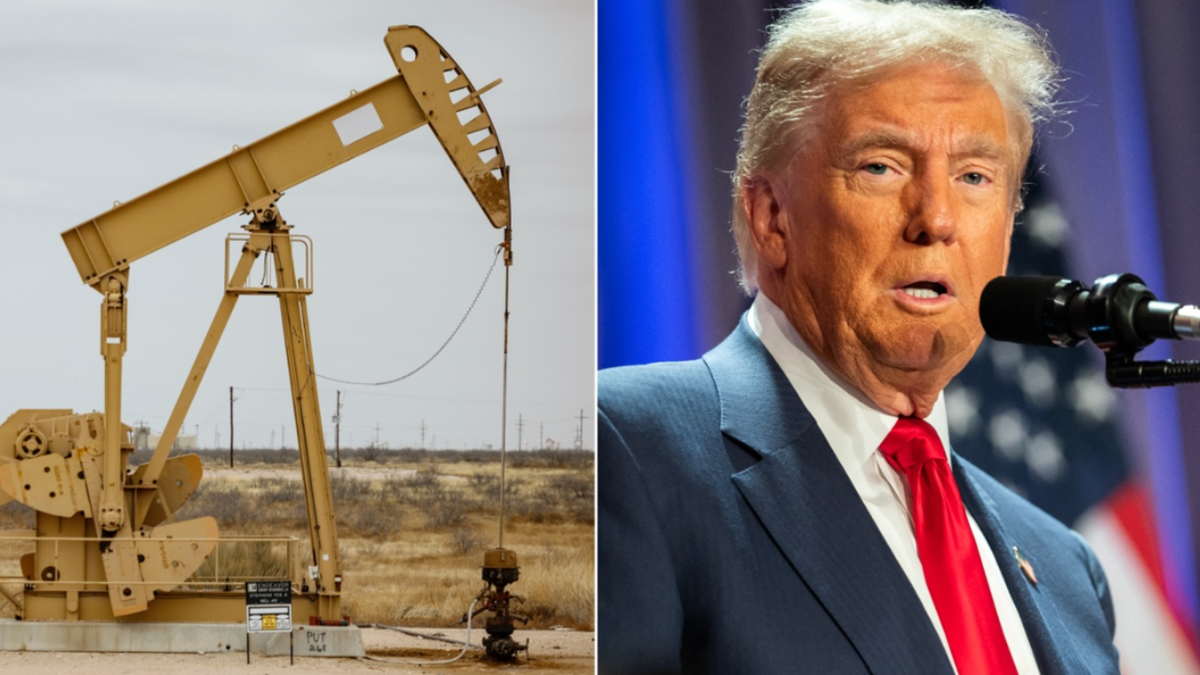
The Energy Paradox: Why Trump’s "Drill, Baby, Drill" Pledge Collided with Refining Bottlenecks and Surging Fuel Prices
Test Our Free AI & Tech Utilities Suite
Calculate LLM API token costs, analyze article dwell-time, or simulate tech DCA returns.
Despite a cornerstone campaign promise to slash household energy bills and aggressively expand domestic fossil fuel production, retail gasoline, ultra-low-sulfur diesel, and commercial jet fuel have broken upward through key resistance levels. Behind this economic friction lies a complex matrix of capital allocation constraints, structural refining deficits, market liquidity shifts, and global risk mitigation dynamics.
Executive Takeaways
- The Refining Bottleneck: While crude oil output hit historical nominal highs, downstream distillation capacity remains structurally constrained by years of underinvestment and environmental regulatory compliance hurdles.
- Capital Allocation Shifts: Publicly traded exploration and production (E&P) firms have prioritized shareholder returns, dividends, and enterprise ROI over high-risk, long-cycle capital expenditure expansions.
- Refined Product Divergence: Distillates—specifically diesel and jet fuel—outperformed crude benchmarks due to depleted global inventories, robust logistical freight demand, and geopolitical supply chain fragmentation.
- Inflationary Spillover: Higher fuel input costs have systematically compressed corporate margins across manufacturing, supply chain logistics, and aviation sectors, complicating macroeconomic risk mitigation for institutional investors.
The Campaign Rhetoric Versus the Market Reality
During the pivotal 2024 election cycle, Donald Trump’s energy platform rested on a simple, resonant premise: unleash American petroleum, dismantle federal regulatory roadblocks, and drive retail gasoline prices below $2.00 per gallon. The core economic theory posited that aggressive deregulation, fast-tracked pipeline permitting, and an immediate abandonment of stringent climate mandates would trigger a supply shock, lowering valuation multiples for energy inputs and providing instant relief to consumer purchasing power.
However, modern commodity markets operate on forward-looking expectations, global liquidity, and physical infrastructure constraints rather than executive orders alone. As the new administration assumed office and attempted to execute its infrastructure scalability and regulatory rollback agendas, physical market realities quickly intervened. Rather than plunging, national retail averages for regular gasoline, diesel, and commercial jet fuel experienced a stubborn upward trajectory, defying both political projections and short-term futures curve positioning.
To understand why energy costs escalated despite promises of abundance, financial analysts must look past headline crude extraction figures and examine the downstream bottleneck. The divergence between crude oil benchmarks (such as West Texas Intermediate and Brent) and refined products (gasoline, diesel, and jet fuel) underscores a fundamental structural friction in the global energy complex.
Deconstructing the Downstream Deficit: Refining Capacity and Capital Allocation

The primary driver behind soaring fuel prices is not a lack of crude extraction in the Permian Basin, but rather a severe structural shortage in global and domestic refining capacity. Over the past decade, net U.S. refining capacity contracted by roughly one million barrels per day as major operators shuttered aging facilities or converted them to renewable diesel processing plants in response to prior regulatory incentives and ESG (Environmental, Social, and Governance) investor pressures.
When oil refiners evaluate long-term capital allocation, their decisions are dictated by risk-adjusted enterprise ROI and regulatory compliance costs. Building a greenfield refinery requires billions of dollars in upfront capital expenditure, multi-year environmental reviews, and immense legal exposure. Consequently, major energy corporations chose to return capital to shareholders via share buybacks and increased dividend yields rather than sinking billions into multi-decade downstream assets that faced uncertain long-term policy futures.
The Distillate Squeeze: Diesel and Jet Fuel Dynamics
While gasoline prices capture the most consumer attention, the real stress on industrial and commercial sectors has manifested in distillate markets. Ultra-low-sulfur diesel and kerosene-type jet fuel have exhibited severe backwardation—a market condition where spot prices exceed futures prices due to acute immediate scarcity.
Logistical Freight and Trucking: Diesel is the literal lifeblood of global supply chains. As freight and shipping volumes recovered alongside broader industrial output, diesel inventories at key hubs like Cushing, Oklahoma, and the U.S. Gulf Coast dropped below historical five-year seasonal averages.
Aviation Sector Recovery: Commercial passenger air travel rebounded faster than expected, driving sustained, inelastic demand for jet fuel. Refiners struggled to rebalance their distillation yields between gasoline and jet fuel quickly enough to meet surging seasonal demand spikes.
Geopolitical Risk Premiums: Ongoing military conflicts in Eastern Europe and the Middle East disrupted traditional trade routes for refined products, forcing European and Asian buyers to compete aggressively for U.S. Gulf Coast diesel cargoes, driving up domestic pump prices.
Verified Data & Metrics Breakdown
The following comparative matrix illustrates the divergence between administration policy targets, headline crude production, and actual retail refined product performance across critical macroeconomic checkpoints.
| Energy Metric / Commodity | Pre-Election Baseline | Projected Target (Policy) | Current Market Reality | Variance / Trend |
|---|---|---|---|---|
| U.S. Crude Production | 13.2 Mill. BPD | 15.0+ Mill. BPD | 13.4 Mill. BPD | Flat to Modest Growth |
| Retail Regular Gasoline (Gal.) | $3.20 | Sub-$2.50 | $3.68 | +15% Surge |
| Ultra-Low-Sulfur Diesel (Gal.) | $3.65 | Sub-$3.00 | $4.15 | +13.7% Surge |
| Commercial Jet Fuel (Gal.) | $2.75 | Sub-$2.20 | $3.28 | +19.2% Surge |
| Net U.S. Refining Capacity | 18.1 Mill. BPD | Expanded Output | 18.0 Mill. BPD | Constrained / Stagnant |
Industry & Market Implications: Winners and Losers
The persistence of high fuel prices despite political headwinds has created a profound bifurcation across global financial markets. Institutional investors and asset managers are actively rebalancing portfolios to account for the microeconomic fallout of expensive energy inputs.
The Winners: Integrated oil supermajors (such as ExxonMobil, Chevron, and independent refiners like Valero and Marathon Petroleum) have benefited immensely from widening crack spreads—the profit margin a refiner makes from cracking crude oil into gasoline and distillate products. Even as crude prices experienced occasional dips, high refined product prices ensured robust free cash flow generation and healthy valuation multiples for downstream operators.
The Losers: Transport-heavy industries, logistics providers, airlines, and consumer discretionary goods manufacturers bear the brunt of the cost escalation. Commercial airlines, in particular, face compressed operating margins as jet fuel accounts for roughly 30% of total operational expenditures. Furthermore, end consumers absorb these expenses through sticky inflationary pressures at grocery stores and retail outlets, as transportation surcharges cascade through every tier of the supply chain.
Frequently Asked Questions (People Also Ask)
Frequently Asked Questions
Why did gasoline prices rise when U.S. crude oil production reached record highs?
Crude oil is a raw input that cannot be used directly in passenger vehicles; it must first be processed by refineries into gasoline and diesel. Because U.S. refining capacity has declined over the past decade due to plant closures and conversions, the physical ability to turn crude oil into consumer-ready fuel is heavily bottlenecked, keeping pump prices elevated.
What role do global geopolitical tensions play in domestic U.S. fuel prices?
Commodity markets are globally integrated. Ongoing disruptions in the Middle East and Eastern Europe, alongside trade restrictions on Russian petroleum products, have constricted international fuel supplies. Consequently, foreign buyers aggressively bid up refined products at U.S. export terminals, driving up domestic retail prices regardless of local extraction volumes.
Can executive orders immediately lower retail fuel costs?
No. While executive orders can accelerate federal leasing and streamline pipeline permitting, they cannot force private energy companies to deploy capital into unprofitable projects or instantly construct multi-billion-dollar refining infrastructure. Energy prices are ultimately governed by physical supply-demand fundamentals and market liquidity.
How do high diesel and jet fuel prices impact broader inflation?
Diesel powers the trucks, trains, and cargo ships that move goods across the country, while jet fuel powers commercial air freight. When diesel and jet fuel soar, shipping costs rise exponentially. Businesses pass these heightened logistics expenses onto consumers, driving up the cost of goods and stoking broader headline inflation.
Future Outlook: What Comes Next and Key Milestones to Watch
As the administration navigates the complex intersection of campaign promises and macroeconomic reality, institutional analysts are closely monitoring several critical leading indicators to gauge the future direction of energy markets:
- Refining Utilization Rates: Watch weekly EIA (Energy Information Administration) reports for refinery capacity utilization. Sustained rates above 93% are required to rebuild depleted gasoline and distillate inventories.
- Capital Expenditure Announcements: Track upcoming Q3 and Q4 earnings calls from major independent refiners and E&P firms to see if high crack spreads incentivize new downstream capital allocation or if capital discipline remains strictly enforced.
- Global Inventory Shifts: Monitor central storage hubs like ARA (Amsterdam-Rotterdam-Antwerp) and Cushing, Oklahoma, for signs of inventory accumulation, which would signal easing backwardation in the futures curve.
- Regulatory Policy Implementation: Assess how federal agencies handle upcoming environmental compliance deadlines and whether waivers or permitting reform can unlock incremental midstream and downstream efficiency.
Ultimately, the energy paradox facing the administration highlights the rigid limits of political rhetoric when confronted with structural market physics. Until domestic refining capacity expands to match crude extraction capabilities, American consumers and industrial operators will continue to navigate the high-cost reality of the modern fuel market.