Executive Takeaways
- The Capital Allocation Dilemma: NASA is weighing the enterprise ROI and risk mitigation strategies of a commercial servicing mission against the permanent decommissioning of the world’s most scientifically productive space telescope.
- The Orbital Decay Threat: Operating without reboost capabilities since the final Space Shuttle mission in 2009, Hubble’s altitude has degraded to approximately 510 kilometers, placing it at the mercy of atmospheric drag driven by solar cycle fluctuations.
- Private Sector Intervention: Proposed partnerships involving billionaires, private capital allocation, and advanced commercial spacecraft—specifically SpaceX and Jared Isaacman's Polaris Dawn initiative—have transformed what was once an unviable bureaucratic cost center into a testbed for public-private infrastructure scalability.
- The Financial & Scientific Stakes: Retiring Hubble risks a catastrophic data vacuum and loss of deep-space multi-wavelength infrastructure, yet executing an unproven orbital rescue introduces non-trivial mission-failure liabilities.
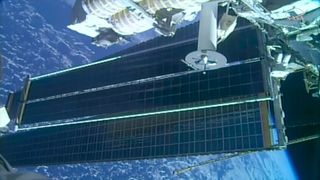
WASHINGTON — For more than three decades, the Hubble Space Telescope has served as the empirical bedrock of modern astrophysics, reshaping humanity’s understanding of cosmological expansion, dark energy, and planetary formation. Yet, as the spacecraft completes its orbits in the harsh thermosphere, NASA’s leadership is confronting a sobering infrastructural reality. The agency is locked in high-level deliberations over a bifurcated roadmap: authorize a daring, privately-financed commercial servicing mission to extend the telescope's operational life, or initiate preparations for a controlled, destructive deorbit into the Earth’s atmosphere.
This institutional crossroads is far more than an academic debate among astronomers. It is a defining case study in long-term infrastructure asset management, high-risk capital allocation, and the shifting dynamics of public-private partnerships in Low Earth Orbit (LEO). As commercial spaceflight disrupts traditional aerospace valuation multiples and operational paradigms, Hubble represents both an invaluable historical asset and a ticking orbital liability.
The Catalytic Shift: Orbital Decay and the End of the Shuttle Era
Test Our Free AI & Tech Utilities Suite
Calculate LLM API token costs, analyze article dwell-time, or simulate tech DCA returns.
To understand the gravity of NASA’s current deliberations, one must examine the mechanical vulnerabilities that have accumulated since the Space Shuttle program was grounded in 2011. Hubble was architected from its inception to be a serviceable platform. Five dedicated Space Shuttle servicing missions between 1993 and 2009 replaced failing gyroscopes, upgraded scientific instruments with cutting-edge optical sensors, and installed fresh battery assemblies.
However, the retirement of the Shuttle fleet severed Hubble’s technological umbilical cord. Without a heavy-lift vehicle equipped with a robotic manipulator arm and human astronauts capable of executing complex extravehicular activities (EVAs), Hubble has operated on borrowed time.
Orbital mechanics offer no mercy. Placed initially at an altitude of approximately 540 kilometers, atmospheric drag—exacerbated by solar radiation pressure and heightened solar activity during Solar Cycle 25—has steadily dragged the telescope down to roughly 510 kilometers. At this altitude, friction with trace atmospheric gases is relentless. Without an orbital reboost, aerodynamic drag will inexorably pull Hubble toward an uncontrolled atmospheric re-entry sometime in the mid-2030s, risking the survival of heavy structural components that could impact populated regions.
The risk mitigation equation shifted dramatically in late 2022 when NASA and billionaire-backed SpaceX signed a Space Act Agreement to fund a feasibility study. The objective: determine whether SpaceX’s Crew Dragon spacecraft, paired with private funding from the Polaris program spearheaded by astronaut and entrepreneur Jared Isaacman, could safely rendezvous with Hubble, attach a propulsion module, and physically elevate the telescope to a higher, stable orbit while simultaneously performing minor avionics maintenance.
The Technical and Financial Calculus

From an enterprise risk management perspective, the proposed servicing mission introduces a complex matrix of variables. NASA’s internal review boards must balance the scientific upside of securing another decade of ultraviolet and optical observation against the potential catastrophic downside of a botched docking maneuver that could prematurely destroy the observatory.
| Metric / Parameter | Hubble Servicing Mission (Proposed) | Controlled Deorbit Scenario |
|---|---|---|
| Primary Objective | Orbital reboost, gyro replacement, and life extension. | Safe, targeted atmospheric burn over ocean waters. |
| Estimated Timeline | Late 2025 – 2027 (Dependent on flight readiness). | Targeted for late 2030s based on drag models. |
| Funding Structure | Unfunded Space Act Agreement (Private capital driven). | Federally funded NASA programmatic budget. |
| Scientific ROI | High continuity for multi-wavelength astrophysics. | Zero future data; complete transition to James Webb / Roman. |
| Operational Risk | High (Complex autonomous/human docking with vintage hardware). | Low-to-Moderate (Standard orbital mechanics calculation). |
The study results, while heavily guarded, revealed that a rendezvous and reboost is technically feasible. However, NASA’s Office of Safety and Mission Assurance remains conservative. The agency must ensure that any commercial intervention does not compromise the structural integrity of a multi-billion-dollar national asset whose original engineering drawings date back to the late 1970s.
Industry and Market Implications
The decision on Hubble’s fate carries profound resonance far beyond the astrophysics community, directly impacting the aerospace manufacturing sector, commercial launch providers, and the broader market for orbital debris mitigation.
- Commercial Space Infrastructure Validation: If NASA sanctions a private servicing mission, it establishes a formal regulatory and operational precedent. This validates the commercial market for in-space servicing, assembly, and manufacturing (ISAM)—a sector projected to capture billions in institutional investment over the coming decade.
- Aerospace Valuation and Contracting: Legacy defense primes and new-space unicorns alike are watching closely. Winning contracts to maintain, refuel, and upgrade aging LEO infrastructure represents the next major frontier in government procurement, shifting the paradigm from disposable hardware to sustainable capital assets.
- Risk Mitigation and Regulatory Compliance: As global regulators crack down on orbital congestion and space debris, NASA is under intense international scrutiny to demonstrate exemplary stewardship of Low Earth Orbit. A botched deorbit or a collision during a servicing attempt carries severe reputational and diplomatic liabilities.
Frequently Asked Questions (People Also Ask)
Why can’t NASA just use the James Webb Space Telescope (JWST) instead of saving Hubble?
Answer: JWST and Hubble are complementary, not interchangeable assets. While JWST is optimized for infrared astronomy, peering deeper into the early universe through dust clouds, Hubble specializes in optical and ultraviolet wavelengths. Maintaining both instruments provides astronomers with simultaneous multi-wavelength data crucial for comprehensive cosmological research.
Who is funding the proposed Hubble rescue mission?
Answer: The proposed servicing mission was initiated under an unfunded Space Act Agreement between NASA and SpaceX, with commercial backing from the Polaris Dawn program, led by billionaire entrepreneur Jared Isaacman. This model aims to leverage private capital allocation to achieve government scientific goals without drawing heavily from constrained federal appropriations.
What happens if Hubble is not reboosted?
Answer: Without a propulsion boost, atmospheric drag will continue to decay Hubble's orbit. Eventually, the telescope will enter the denser layers of Earth's atmosphere. To prevent a random, dangerous uncontrolled re-entry over populated landmasses, NASA would be forced to design and execute a dedicated, uncrewed controlled deorbit mission to steer the remnants safely into remote ocean waters.
Is Hubble still actively conducting scientific observations?
Answer: Yes. Despite battling intermittent gyroscope failures and operating on older computing architectures, Hubble remains exceptionally productive. It continues to publish groundbreaking papers, monitor transient cosmic events, and support collaborative observations alongside ground-based telescopes and space observatories.
Future Outlook and Key Milestones to Watch
As NASA weighs its final determination, industry stakeholders should monitor several critical catalysts. First, the formal release of safety findings from the NASA-SpaceX technical study will signal whether regulatory hurdles can be cleared. Second, shifts in federal science budgeting under upcoming congressional appropriations will dictate whether public funds can be allocated to support risk-reduction tests.
Ultimately, the choice facing NASA administrator Bill Nelson and agency leadership transcends a single telescope. It is a bellwether moment for how humanity manages its technological footprint in space. Whether Hubble is granted a new lease on life through commercial ingenuity or gently guided to a watery grave in the Pacific, the decision will permanently set the baseline for public-private stewardship of orbital assets for generations to come.