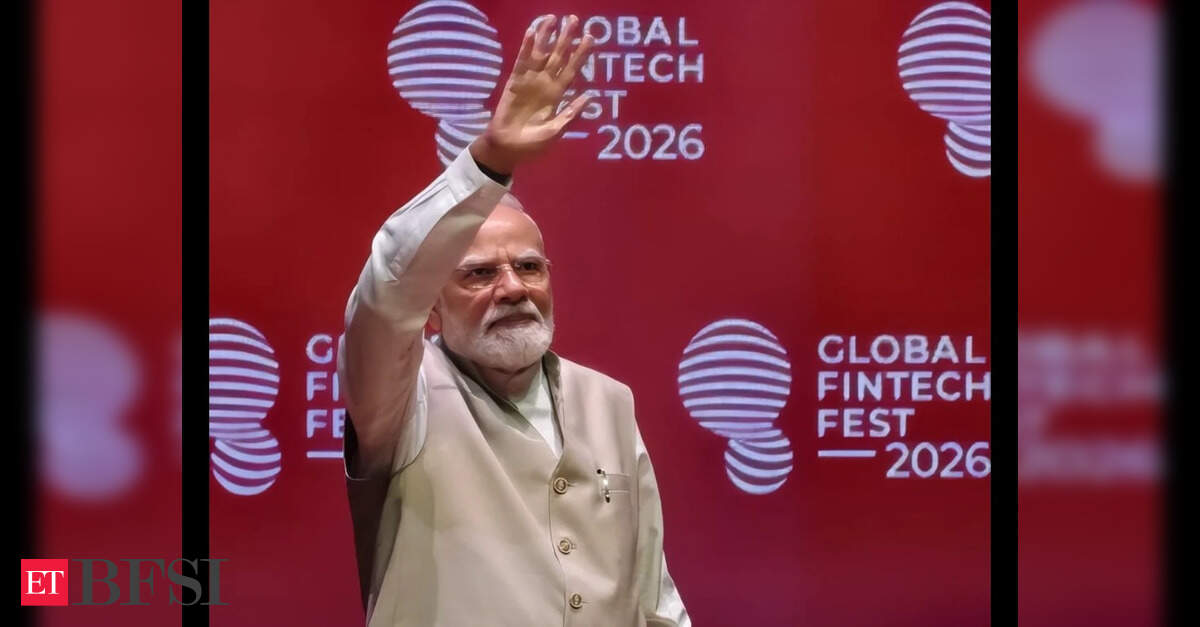
Prime Minister Narendra Modi’s decisive address at the Global Fintech Fest (GFF) 2026 has fundamentally altered the trajectory of sovereign financial infrastructure, issuing a clear directive: the Unified Payments Interface (UPI) must decisively transcend India’s borders and integrate deeply with advanced digital economies like Singapore. As cross-border settlements face archaic friction and high intermediary costs, New Delhi is championing a blueprint for decentralized, interoperable real-time gross settlement (RTGS) networks that promise to rewrite the economics of global trade and international remittances.
Executive Takeaways
- Strategic Globalization: PM Modi mandates that UPI pivot from domestic saturation to aggressive international expansion, mirroring its successful integration blueprint with Singapore's PayNow.
- Enterprise ROI & Cost Mitigation: Cross-border corridor integration targets a dramatic reduction in foreign exchange conversion friction and correspondent banking fees, optimizing capital allocation for global enterprises.
- Infrastructure Scalability: The National Payments Corporation of India (NPCI) is deploying cloud-native compute architecture and robust API gateways to handle multi-currency, high-concurrency sovereign transaction loads.
- Geopolitical Shift: India's export of public digital goods (India Stack) directly challenges legacy SWIFT-dependent networks, offering emerging markets a resilient, sovereign alternative for international liquidity management.
The Geopolitical and Economic Imperative at GFF 2026
The Global Fintech Fest (GFF) 2026 served as the premier stage for a profound macroeconomic realization: while domestic financial inclusion has achieved near-saturation within India—processing billions of monthly transactions with near-zero latency—the next frontier of valuation multiples and enterprise growth lies in international interoperability. Prime Minister Modi’s keynote underscored that domestic success is merely a proof-of-concept for a much larger global mandate.
For multinational corporations, supply chain operators, and migrant workforces, the traditional cross-border payment architecture remains an expensive relic. Legacy systems rely on multi-hop correspondent banking relationships that introduce settlement delays ranging from 24 to 72 hours, alongside opaque foreign exchange spreads and steep compliance overheads. By calling for an aggressive scaling of UPI-style architectures across global financial hubs, PM Modi has signaled that India is ready to export its financial technology stack as a global public good.
This push is not merely about retail remittances; it is an executive strategy designed to secure macroeconomic dominance through digital infrastructure. By reducing friction in international commerce, India aims to position UPI as a foundational layer for bilateral trade agreements, directly competing with Western-dominated payment rails and alternative central bank digital currency (CBDC) initiatives.
Deconstructing the Singapore Blueprint: A Masterclass in Interoperability

The template for this global expansion was successfully established through the landmark linkage between India’s UPI and Singapore’s PayNow. Executed through a technical partnership between the Reserve Bank of India (RBI) and the Monetary Authority of Singapore (MAS), this real-time payment link eliminated the need for users to onboard new intermediaries.
Under the hood, the technical execution relied on deep cloud compute architecture and secure API protocols that map virtual payment addresses (VPAs) across disparate national switches. Users can initiate fund transfers instantly simply by using a mobile number or VPA, with backend liquidity managed via designated settlement banks participating in multi-currency clearing frameworks.
| Metric / Parameter | Legacy Cross-Border Rails (SWIFT / Wire) | UPI-PayNow Interoperable Model |
|---|---|---|
| Settlement Speed | 24 to 72 Business Hours | Real-Time (Under 60 Seconds) |
| Intermediary Fees | High (3% to 7% total cost including FX) | Low / Transparent (Optimized FX spreads) |
| Regulatory Compliance | Siloed AML/KYC checks per hop | Integrated sovereign API compliance |
| Operational Availability | Limited to banking hours / weekdays | 24/7/365 Continuous Availability |
The success of the Singapore corridor has validated the commercial viability of direct sovereign rails. Enterprises operating across the ASEAN corridor have reported immediate improvements in working capital velocity, validating the Prime Minister's vision to replicate this success across the Middle East, Europe, and Southeast Asia.
Industry & Market Implications: Who Wins and Who Loses?
The aggressive globalization of UPI introduces a tectonic shift in the financial services ecosystem, creating clear winners and losers across the banking, fintech, and enterprise technology sectors.
The Winners
- Export-Oriented Enterprises & SMEs: Reduced transaction costs and instantaneous settlement cycles directly improve cash flow management, removing traditional barriers to international trade.
- Cloud Infrastructure & API Security Providers: The technical scaling required to handle multi-jurisdictional transaction volumes drives massive demand for enterprise-grade cloud compute architecture and fraud-mitigation software.
- Forward-Thinking Regional Banks: Financial institutions that embrace API-first banking models and integrate early with NPCI’s international gateways will capture lucrative market share in trade finance and remittance liquidity.
The Losers
- Legacy Remittance Operators & Wire Services: Traditional money transfer operators built on high-fee, slow-settlement models face existential margin compression as users migrate to sovereign, low-cost rails.
- High-Fee Correspondent Banks: International banks relying on revenue streams derived from multi-day clearing floats and opaque foreign exchange margins will see their transactional dominance steadily erode.
People Also Ask (FAQ)
What was the primary message of PM Modi regarding UPI at GFF 2026?
Prime Minister Modi emphasized that UPI must move beyond India's domestic borders and actively connect with more international financial hubs, specifically citing the successful blueprint established with Singapore, to drive global real-time digital payments.
How does the UPI-Singapore PayNow linkage work technically?
The system connects India's National Payments Corporation of India (NPCI) switch directly with Singapore's PayNow switch using secure API gateways and cloud infrastructure. This enables users to send and receive funds instantly across borders using mobile numbers or virtual payment addresses without traditional intermediary bank hops.
What are the economic benefits for enterprises utilizing cross-border UPI rails?
Enterprises benefit from significantly lower transaction costs, elimination of multi-day settlement lags, enhanced working capital liquidity, and transparent foreign exchange rates, driving superior enterprise ROI and operational efficiency.
Which countries are next in line for UPI integration following Singapore?
While negotiations and technical rollouts are fluid, emphasis is being placed on major trade partners across the Middle East, Europe, and Southeast Asia, aligning with India's broader diplomatic and economic integration strategies.
Future Outlook and Strategic Milestones to Watch
As India enters the next phase of its financial diplomacy, the execution timeline over the next 24 to 36 months will determine whether UPI achieves true global ubiquity. Key milestones for institutional investors and technology analysts to monitor include:
- Multilateral Currency Clearing Agreements: Watch for RBI-led initiatives establishing direct bilateral settlement mechanisms that bypass US dollar intermediation for specific regional trade corridors.
- API Standardization and Compliance Frameworks: The ability of NPCI International Payments Ltd (NIPL) to seamlessly integrate foreign regulatory requirements, anti-money laundering (AML) protocols, and know-your-customer (KYC) mandates without compromising transaction speed.
- <Enterprise Adoption Metrics: Quarterly transaction volumes and total value settled across international corridors, serving as the definitive benchmark for market penetration and capital efficiency.
Ultimately, PM Modi’s directive at GFF 2026 signals that sovereign digital infrastructure is no longer confined by national boundaries. For the global financial ecosystem, the message is clear: the future of cross-border settlements is instant, interoperable, and decentralized.