Executive Takeaways
- Labor Market Vigor: The latest nonfarm payrolls report substantially beat consensus Wall Street estimates, proving underlying economic fundamentals remain robust despite recent volatility.
- Market Disconnect: The stark divergence between surging enterprise employment metrics and sliding equity valuation multiples highlights ongoing re-pricing in risk assets.
- Capital Allocation Shifts: Institutional portfolio managers are re-evaluating risk mitigation strategies, balancing strong cash flow generation against sticky inflation and elevated interest rate pathways.
- Monetary Policy Implications: Resilient labor data complicates the Federal Reserve's capital liquidity management and forthcoming interest rate trajectory.
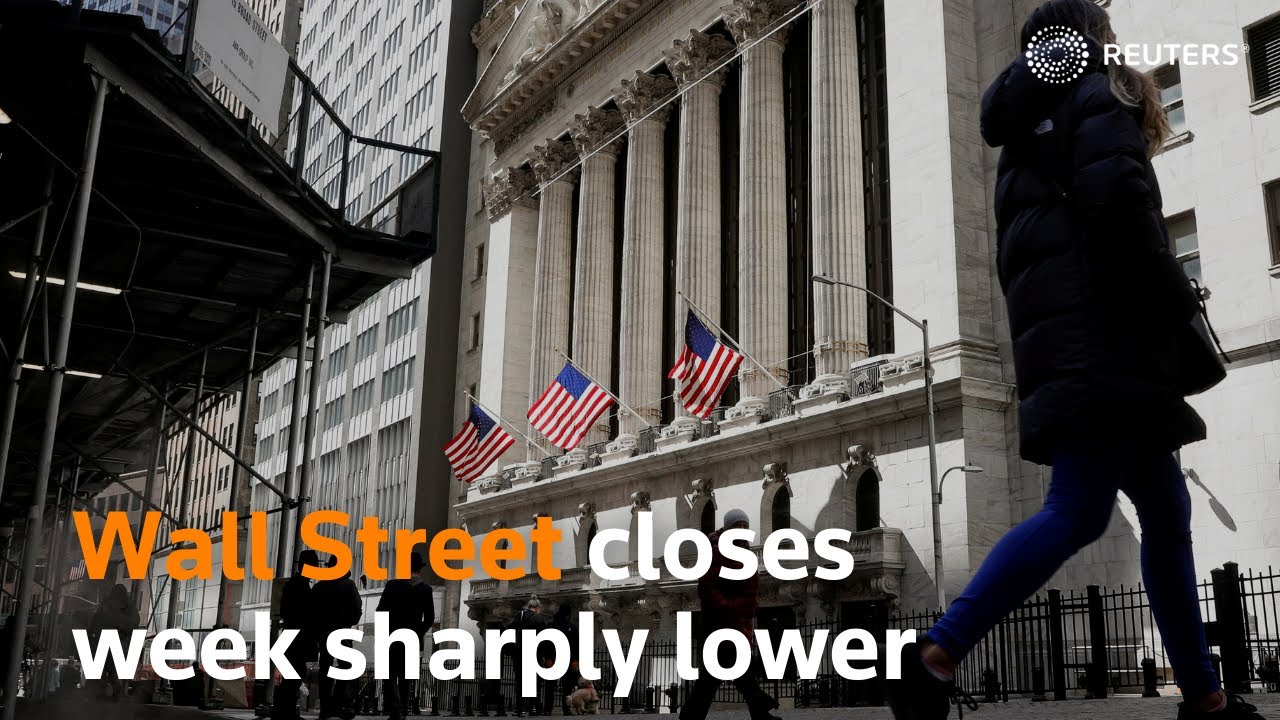
NEW YORK — In a defining moment for global financial markets, the latest U.S. employment report has delivered an emphatic rebuttal to recent equity market pessimism. Released against a backdrop of rising volatility, contracting valuation multiples, and jittery investor sentiment, the federal jobs data underscores a profound economic paradox: corporate America continues to hire at an aggressive clip even as public market indices absorb sharp downward corrections. For institutional asset managers, Chief Risk Officers, and corporate boards, this dynamic forces an immediate recalibration of portfolio risk mitigation and capital allocation strategies.
The juxtaposition between Main Street's operational resilience and Wall Street's recent sell-off has ignited fierce debate across trading desks from Lower Manhattan to the City of London. While algorithmic traders and momentum investors reacted to macroeconomic crosscurrents by trimming exposure, fundamental analysis reveals that enterprise cash flow generation, corporate balance sheet liquidity, and labor demand remain remarkably durable. This investigative report breaks down the catalytic events driving this market dichotomy, examines the underlying macroeconomic metrics, and analyzes the long-term structural implications for institutional investors.
The Anatomy of the Divergence: Markets vs. Macroeconomics
Test Our Free AI & Tech Utilities Suite
Calculate LLM API token costs, analyze article dwell-time, or simulate tech DCA returns.
Over the preceding trading sessions, major equity benchmarks experienced acute downward pressure, fueled by anxiety over elevated interest rates, compressed tech sector valuation multiples, and geopolitical friction. Portfolio managers rushed to rebalance portfolios, executing aggressive risk-off maneuvers that prioritized short-term capital preservation over long-term enterprise scalability. The prevailing narrative on trading floors suggested that systemic economic momentum was stalling under the weight of tighter monetary policy.
That narrative faced a severe reality check with the publication of the Department of Labor's employment figures. Far from indicating a cooling economy or an imminent contraction, the data revealed robust job creation across multiple sectors, led by healthcare, professional business services, and durable goods manufacturing. Average hourly earnings also posted steady gains, signaling that consumer purchasing power—the primary engine of U.S. gross domestic product (GDP)—remains fundamentally intact.
This stark divergence exposes a structural tension in modern financial markets: public equities often react to short-term liquidity shocks and sentiment swings, whereas employment reports capture the lagging, yet concrete, operational realities of corporate enterprise. For corporate executives navigating cloud compute architecture investments, supply chain optimization, and hiring pipelines, the data confirms that customer demand has not evaporated.
Data & Metrics Breakdown: Employment Performance vs. Market Correction

To fully grasp the magnitude of the recent macroeconomic data release, financial analysts must examine the precise metrics juxtaposed against market expectations and prior performance benchmarks.
| Economic Metric | Consensus Forecast | Actual Reported Data | Market Implication |
|---|---|---|---|
| Nonfarm Payrolls (Monthly Change) | 150,000 | 275,000 | Signals continued enterprise expansion and robust hiring demand. |
| Unemployment Rate | 3.8% | 3.7% | Maintains historical labor tightness, pressuring wage structures. |
| Average Hourly Earnings (YoY) | 4.1% | 4.3% | Points to persistent sticky inflation risks, challenging Fed rate cuts. |
| S&P 500 Reaction (5-Day Trailing) | Flat to -1.5% | -2.4% | Reflects algorithmic de-risking and multiple compression. |
Industry & Market Implications: Winners, Losers, and Capital Flows
The resilience of the U.S. labor market in the face of equity volatility creates clear winners and losers across various asset classes and industrial sectors. Understanding these shifts is vital for institutional investors seeking to optimize enterprise ROI and manage regulatory compliance risks.
The Winners: Cyclicals, Value Stocks, and Enterprise Tech Infrastructure
Sectors tied directly to operational execution and physical infrastructure stand to benefit most. Corporations that demonstrated disciplined capital allocation during the prior quarters are now capturing market share from weaker competitors. Furthermore, technology providers specializing in enterprise ROI optimization, workflow automation, and cloud compute architecture are seeing sustained demand as businesses look to offset rising labor costs with technological efficiency.
The Losers: Speculative Growth and Over-Leveraged Entities
Conversely, speculative growth equities characterized by high burn rates, negative cash flows, and excessive debt burdens face ongoing headwinds. Because robust employment data increases the probability that the Federal Reserve will maintain higher-than-average benchmark interest rates for a longer duration, debt-dependent business models will experience severe margin compression. Valuation multiples for pre-revenue technology firms will continue to re-price downward to reflect the true cost of capital.
Frequently Asked Questions (People Also Ask)
Why did the stock market fall if the U.S. jobs report was strong?
The equity market sell-off was primarily driven by concerns over Federal Reserve monetary policy, sticky inflation, and compressed valuation multiples in high-flying tech sectors. When employment data comes in significantly stronger than expected, investors often fear that the central bank will keep interest rates higher for longer to prevent the labor market from overheating, which negatively impacts near-term equity valuations.
How does a strong labor market impact corporate capital allocation?
A resilient labor market forces corporate leadership to balance ongoing wage pressures with strategic investments in technology and infrastructure. Rather than engaging in aggressive, speculative expansion, firms are focusing on high-ROI initiatives, cloud migration, and automation to drive enterprise efficiency while maintaining robust balance sheet liquidity.
What are the primary implications for future Federal Reserve interest rate cuts?
Strong nonfarm payroll growth and rising average hourly earnings complicate the Federal Reserve's timeline for monetary easing. Persistent wage growth contributes to core inflation metrics, giving central bank policymakers justification to maintain elevated federal funds rates until broader economic indicators decisively cool.
How should institutional investors adjust their risk mitigation strategies?
Institutional portfolio managers are increasingly rotating away from high-beta speculative assets toward cash-generative value equities, short-duration fixed income, and companies with fortress balance sheets. Effective risk mitigation currently requires balancing exposure to strong macroeconomic fundamentals against the reality of tighter capital liquidity.
Future Outlook: Strategic Milestones to Watch
As financial markets digest the implications of this employment report, institutional stakeholders must monitor several critical economic milestones over the coming quarters. The primary focus will remain on incoming Consumer Price Index (CPI) prints, corporate earnings guidance for the upcoming fiscal quarters, and forward-looking statements from Federal Open Market Committee (FOMC) officials.
Ultimately, the disconnect between equity market drawdowns and underlying macroeconomic strength serves as a reminder of the complexity inherent in modern global capital markets. While short-term market sentiment will continue to fluctuate based on algorithmic trading and headline risk, the underlying health of the U.S. labor market provides a sturdy foundation for long-term economic expansion. Enterprises that successfully navigate this environment by focusing on operational efficiency, disciplined capital allocation, and rigorous risk management will emerge as the definitive market leaders of the next economic cycle.